Construction debris disposal in San Jose comes down to three decisions: right container size, correct loading, and a disposal endpoint that won't stall your schedule. Get those three right and cleanup stops being the bottleneck on your job.
- Match container size to debris volume before delivery, not after the pile is already sorted, to avoid a second pickup.
- Valley Services runs its own C&D transfer station in San Jose, so drop-off scheduling doesn't depend on a third-party site's hours.
- A 20-yard roll-off container handles most single-room remodels; multi-phase demo jobs need 30 or 40-yard capacity.
- Mixed loads with hazardous material, tires, or e-waste get flagged at the transfer station and delay closeout.
Why this matters
A jobsite without a debris plan turns into a jobsite with debris everywhere: blocked access, tripping hazards, and a Cal/OSHA housekeeping violation waiting to happen. Contractors who plan disposal before demo starts move debris off the site as it's generated instead of stockpiling it.
The endpoint matters as much as the container. Some rental companies broker their loads to third-party disposal sites, which means your schedule depends on somebody else's yard hours and somebody else's backlog. Valley Services owns and operates its own C&D transfer station at 1611 S 7th St in San Jose, so the container that leaves your site goes straight to a facility Valley controls. One call covers the roll-off container, and if the job also needs temporary fencing, K-rail, or restrooms, that's the same phone line, same crew.
What you'll need
- An estimate of debris volume in cubic yards, or at minimum the square footage of the space being demoed
- A clear idea of debris type: concrete and asphalt, wood framing, drywall, mixed C&D, or roofing material
- A spot on site with clear overhead clearance and drive access for delivery
- Street use permit paperwork if the container sits in a public right-of-way in San Jose, Santa Clara, Sunnyvale, Mountain View, or Milpitas
- A roll-off container sized to the job, reserved ahead of demo day, not the day debris starts piling up
The steps
1. Sort debris by type before you call for a container
Mixed C&D loads, wood, drywall, and concrete together, cost you nothing extra to load but they slow down processing at the transfer station. Separating heavy material like concrete and asphalt from lighter framing debris also affects which container size actually makes sense, since weight limits kick in before volume limits on dense material.
Expected outcome: you walk into the container size conversation with real numbers instead of a guess. Common mistake: estimating by square footage of the building instead of by the actual pile of debris, which usually overshoots the size needed.
2. Choose the right roll-off container size
A 10-yard container fits a small bathroom gut or a single-room flooring tear-out. A 20-yard container is the standard for kitchen remodels and mid-size demo. A 30 or 40-yard container is built for whole-house demo, multi-unit turnovers, or a commercial tenant improvement job running multiple trades at once.
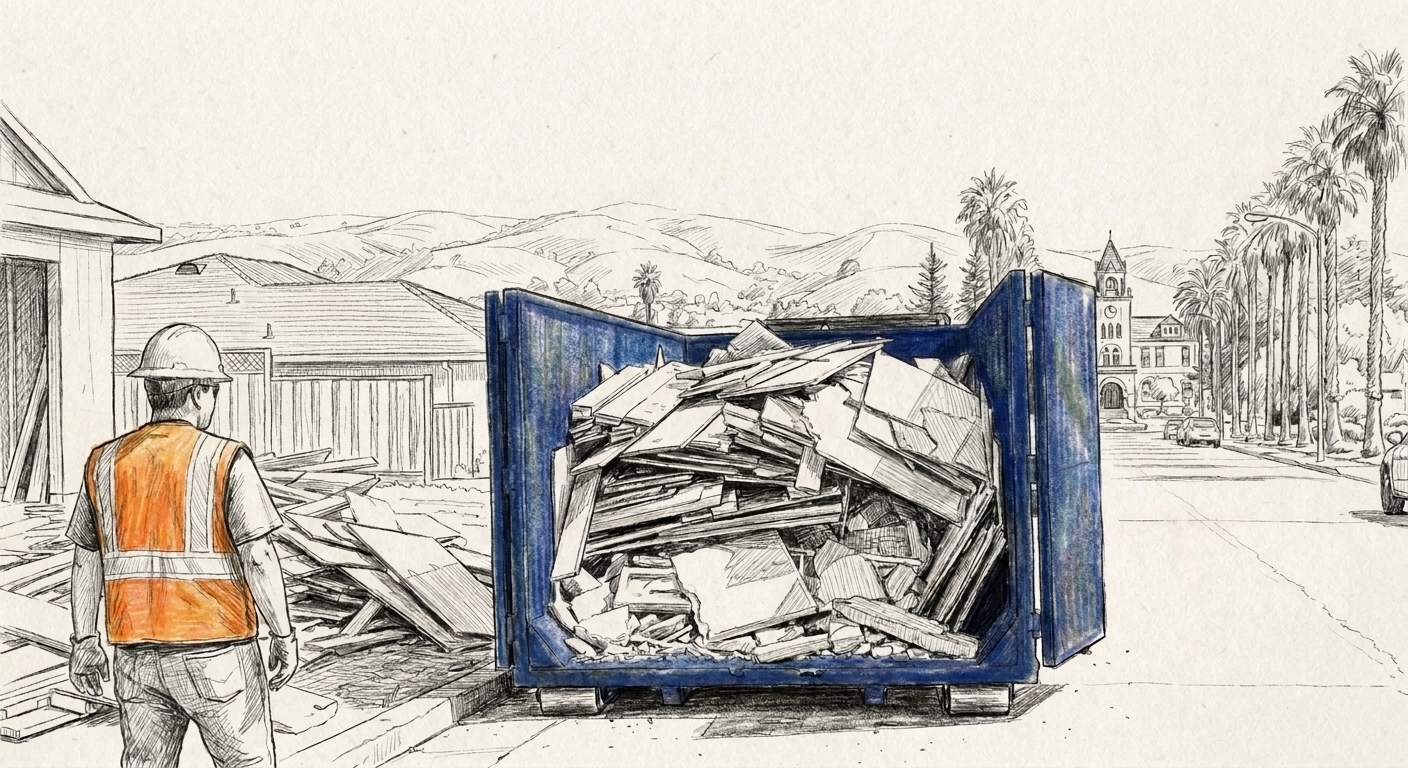
Sizing wrong in either direction costs you: too small means a second container mid-job, too large means paying to move air. Expected outcome: one container that covers the phase of work you're actually running in 2026. Common mistake: sizing for the whole project instead of the current phase, which leaves an oversized blue steel container sitting mostly empty for weeks.
3. Schedule delivery around your demo timeline, not the other way around
Book the container for delivery the morning demo starts, not a week ahead. A container sitting empty on a San Jose street or driveway for days is dead space and, if it's in the public right-of-way, extra permit exposure with no debris in it yet.
Expected outcome: the container lands exactly when the crew starts generating debris. Common mistake: scheduling delivery around subcontractor availability instead of the demo start date, which leaves the container idle or, worse, blocks access for other trades.
4. Place the container for real load-in and load-out
The container needs a flat, stable surface and enough clearance for the delivery truck to lift and set it without hitting overhead lines, trees, or a garage door. On tight urban lots in San Jose or Santa Clara, this often means the container goes in the street, which requires a permit from the city.
Expected outcome: a container placed once, correctly, that doesn't need to be relocated mid-job. Common mistake: placing the container to save a few feet of walking distance instead of protecting truck access for pickup day, which turns pickup into a delay.
5. Load heavy material low and flat, not on top
Concrete, tile, and roofing material go in first and spread across the container floor. Framing lumber, drywall, and lighter debris stack on top. Loading heavy material on top shifts the container's center of gravity and risks a load that can't be safely lifted at pickup.
Expected outcome: a load that comes in under weight limits and lifts clean on pickup day. Common mistake: tossing debris in as it's generated without regard for weight distribution, which usually means the crew has to re-stack the load before pickup anyway.
6. Keep prohibited material out of the container
Hazardous material, tires, batteries, appliances with refrigerant, and liquids do not go in a C&D roll-off container. These items get flagged at the transfer station and can hold up the whole load's processing while the material gets separated out.
Expected outcome: a load that clears the transfer station on the first pass. Common mistake: crews tossing in whatever doesn't fit the regular trash, assuming a construction container is a catch-all.
7. Call for pickup and confirm the transfer station drop-off
Once the container is full or the phase is done, schedule pickup. Because Valley Services runs its own transfer station in San Jose rather than brokering to a third party, pickup and drop-off happen on one continuous schedule instead of waiting on an outside facility's availability.
Expected outcome: debris off site and processed without a multi-day gap between pickup and disposal. Common mistake: waiting until the container is overflowing to call, which pushes pickup scheduling into a tighter window than necessary.
Get a roll-off container scheduled
One call covers container size, delivery, and drop-off at Valley's own San Jose transfer station.
Troubleshooting
Container filled faster than expected. Call ahead of the original pickup date rather than overloading past the fill line, since an overloaded container can't be safely lifted.
City flags the street placement. Street use permits in San Jose require lead time. If the container's already on site without one, contact the city permit office directly and keep the container in place until the permit clears.
Mixed hazardous material shows up in the load. Pull it before pickup. A single battery or aerosol can in an otherwise clean C&D load can delay processing for the whole container.
Site access gets blocked mid-job. Temporary fencing or K-rail placed early in the project keeps a clear path for the container truck on pickup day, which matters most on tight urban lots in Santa Clara and Mountain View.
Weather delays pickup. Rain doesn't stop a scheduled pickup in most cases, but standing water around the container base can. Keep the placement area graded so pickup isn't weather-dependent.
Debris type changes mid-project. A demo job that shifts from wood framing to concrete removal partway through may need a different container size. Reassess and swap rather than forcing dense material into a container sized for light debris.
Tools and resources
- Roll-off container sizing guidance from Valley Services, matched to demo phase rather than total project scope
- Temporary fencing and K-rail for site control during multi-phase demo
- The C&D transfer station at 1611 S 7th St, San Jose, for direct drop-off scheduling
- Restroom rental for crews on multi-week demo and construction jobs
- (408) 297-5404 for same-week scheduling questions
What to do next
Once the container size and schedule are locked in, the next planning step is site control for the full project duration: fencing, K-rail, and restrooms for the crew. Handling all four services through one phone call keeps delivery and pickup on a single schedule instead of coordinating multiple vendors across a San Jose jobsite.
FAQ
What is the best way to dispose of construction debris in San Jose?
Rent a roll-off container sized to your debris volume and haul it to a C&D transfer station rather than mixing debris with regular trash pickup. Valley Services operates its own transfer station in San Jose, which keeps delivery, pickup, and drop-off on one schedule.
How much C&D debris can a roll-off container hold?
A 10-yard container holds roughly a single-room demo, a 20-yard container covers a kitchen or bathroom remodel, and 30 to 40-yard containers handle whole-house or commercial demo. Weight limits matter as much as volume for dense material like concrete.
Do I need a permit to place a roll-off container on the street in San Jose?
Yes, if the container sits in the public right-of-way rather than on private property like a driveway. Cities including San Jose, Santa Clara, and Sunnyvale require a street use permit for container placement.
Can I mix construction debris and household trash in the same container?
No, C&D containers are meant for construction and demolition debris, not household trash or hazardous material. Mixed loads with prohibited items get flagged at the transfer station and can delay processing.
How do I know what size container I need for a remodel?
Size the container to the current demo phase, not the entire project, based on actual cubic yards of debris rather than the square footage of the space. A 20-yard container covers most single-phase kitchen or bathroom remodels in 2026.
Is C&D disposal different from regular trash pickup?
Yes, construction and demolition debris goes through a separate transfer station process, not standard municipal trash routes. Regular trash pickup isn't equipped to handle concrete, framing lumber, or roofing material in bulk.
Where does construction debris go after pickup in San Jose?
It goes to a C&D transfer station for processing. Valley Services runs its own transfer station in San Jose rather than brokering loads to a third-party facility, which keeps the schedule under one operator's control.
Can Valley Services provide restrooms and fencing along with a container?
Yes, Valley Services rents roll-off containers, temporary fencing, K-rail, and restrooms, so a single call at (408) 297-5404 covers site services for the whole jobsite instead of coordinating separate vendors.
One last thing
The detail most contractors miss isn't container size, it's the endpoint. A rental company that brokers disposal to a third-party site can quote you a delivery date but not a guaranteed drop-off slot, because that depends on another yard's schedule. Valley Services has run its own transfer station and yard at the same San Jose address since 1986, third generation, same family, which is why the container that leaves your site and the drop-off that clears it happen on one continuous schedule instead of two separate ones.