Book your roll-off container when you know the work start date, debris type, and proposed placement, before the crew starts demolition or the cleanout. The notice you need depends on confirming the delivery window, truck access, and any placement approval, not a universal number of days. For a 2026 project, treat delivery confirmation as a prerequisite for work that will generate debris.
- Book roll-off container delivery before debris-producing work starts, once your date, material, and placement are clear.
- A requested delivery date is not a confirmed delivery window. Resolve access and placement approval before mobilizing.
- Valley Services owns its San Jose C&D transfer station, giving it control of the disposal endpoint.
Why booking notice matters
A demolition crew needs somewhere to put debris when work begins. Booking notice gives you time to confirm the container, clear the delivery route, and resolve placement questions before those tasks become jobsite problems.
Set the delivery around the first debris-producing task, not around the day the entire project starts. Survey work, protection, and material deliveries can happen on a different schedule from tear-out. Your roll-off container belongs on the schedule where debris handling begins.
Valley Services provides roll-off container rentals and operates its own C&D transfer station in San Jose. That connects the container service and disposal endpoint, but your job still needs a confirmed delivery window and a workable placement location.
How much notice do I need to book a roll-off container rental?
Start the booking process as soon as you can describe the job accurately. Do not wait until debris is already stacked in the driveway or the demolition crew is checking in.
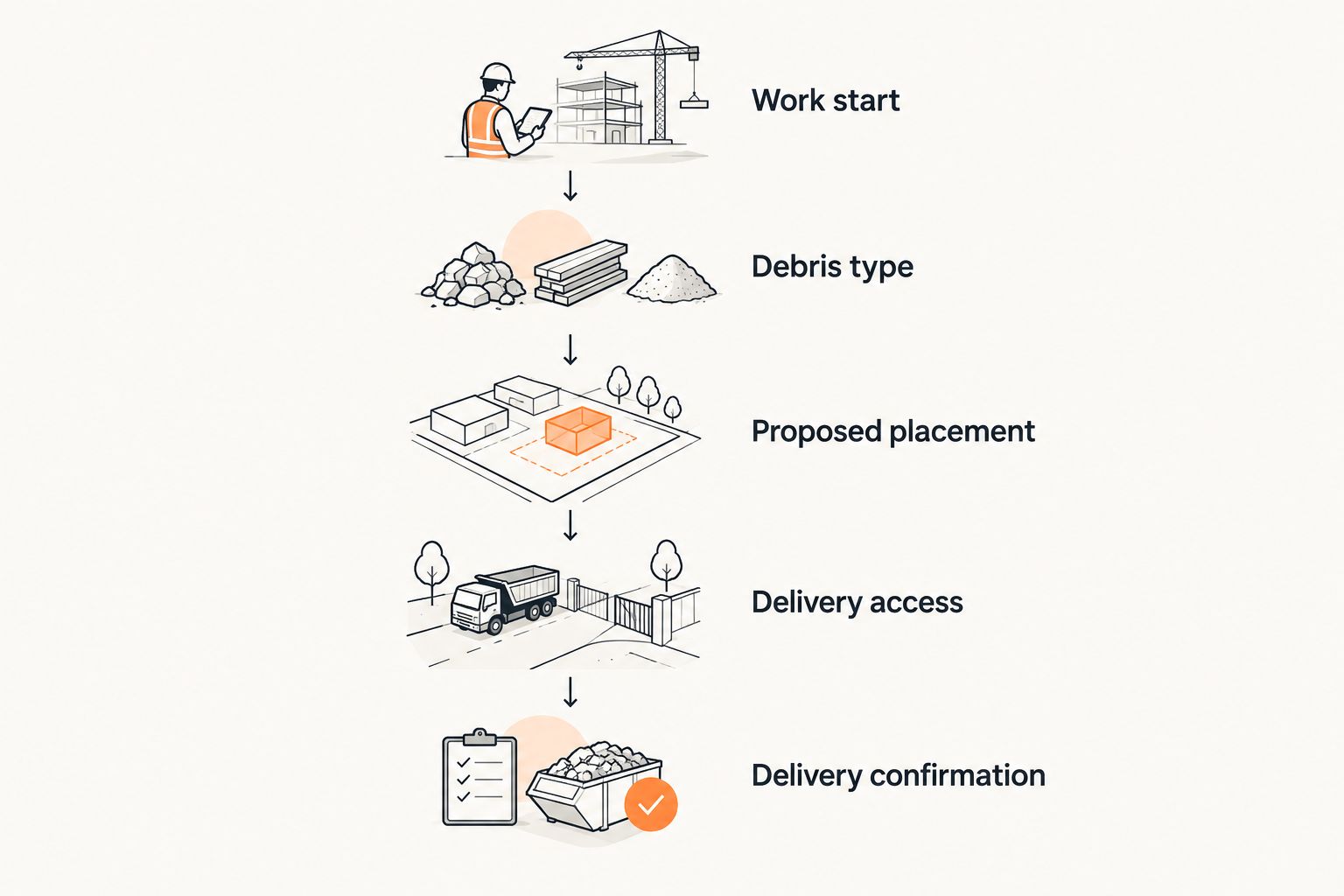
The practical sequence is straightforward:
- Identify the first debris-producing task. Use the demolition, tear-out, or cleanout start date. Tell the rental company whether that date is fixed or still being coordinated.
- Describe the debris. Explain what you are removing, including dense materials or materials that need separate acceptance review. Do not describe every job as a general cleanout.
- Choose a proposed placement. Identify the driveway, private loading area, or other location. Explain who controls that space and whether approval is required.
- Review delivery access. Flag gates, parked vehicles, overhead obstructions, shared driveways, and other scheduled deliveries. Request the access requirements for the proposed container.
- Confirm the delivery and removal plan. Establish the delivery window, site contact, pickup request process, and any anticipated exchanges before committing the crew to the work sequence.
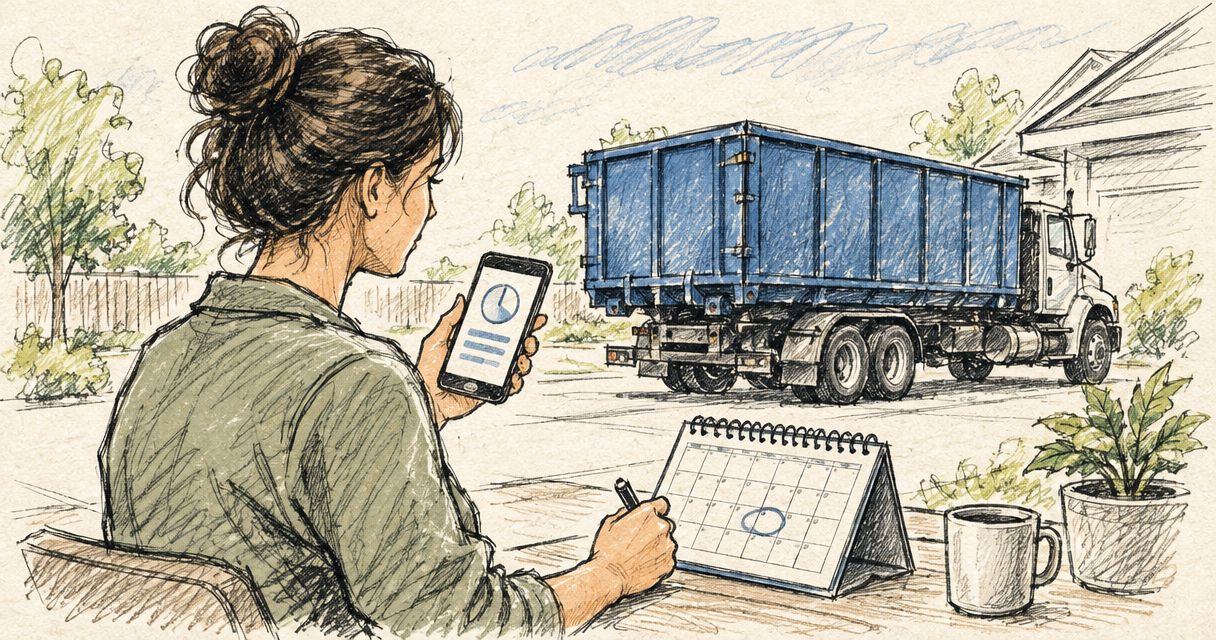
These steps establish readiness. They do not create a fixed lead-time promise. A requested date becomes useful for scheduling only after the delivery window is confirmed.
How should I book a roll-off container in 2026?
Use a complete request rather than asking only how soon a container can arrive. The dispatcher needs information that connects the delivery to the actual job.
Have these details ready:
- Jobsite address and the person responsible for receiving the delivery.
- Requested delivery date and the first debris-producing task.
- Description of the material, including concrete or other dense debris.
- Proposed container location and who can authorize its use.
- Access restrictions, gate arrangements, and conflicting deliveries.
- Expected work sequence and anticipated pickup or exchange needs.
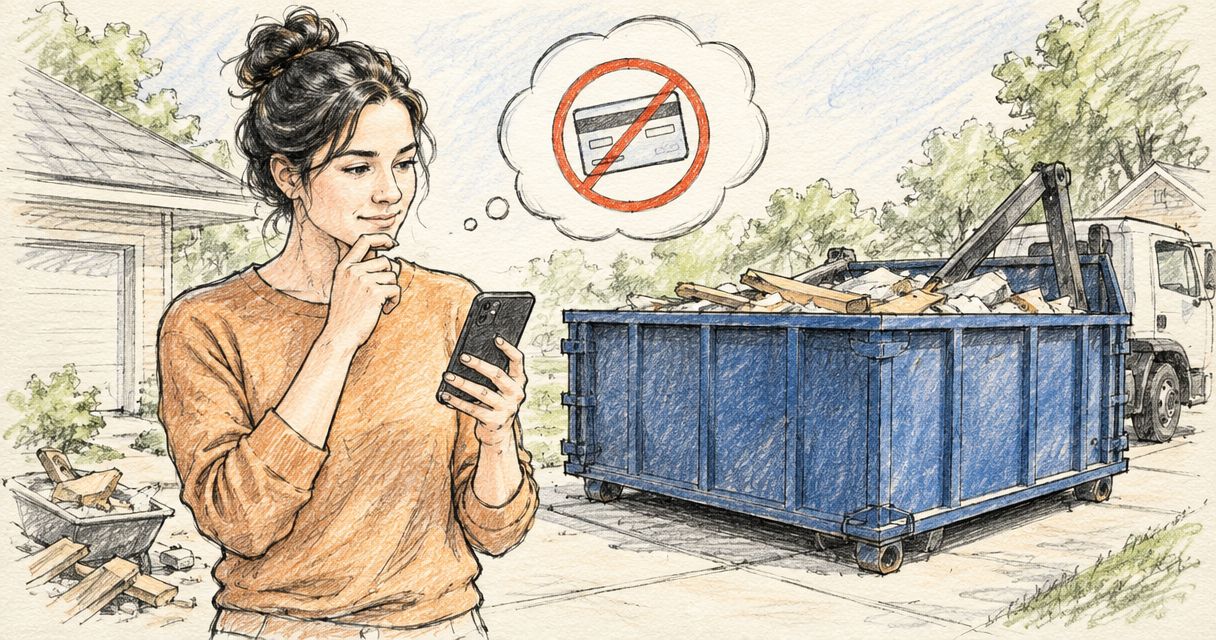
Say which details are confirmed and which are unresolved. A proposed driveway location is not the same as owner-approved placement. An estimated demolition date is not the same as a crew commitment.
For a homeowner, the receiving contact might be you or your contractor. For a commercial site, identify someone who can direct the driver without waiting for approval from a person who is elsewhere. Keep that contact informed when the schedule changes.
Why booking notice varies between Bay Area jobs
The calendar is only part of the booking decision. The following job details need review before delivery:
- Work-date certainty. A fixed demolition start gives the delivery request a clear target. An unresolved start date requires coordination before you commit other trades.
- Placement approval. Private property permission and public right-of-way requirements are separate questions. Check the proposed location with the responsible owner or local authority.
- Truck access. A container space does not prove that the delivery truck can reach it. Review the approach, gate, turning area, and overhead conditions.
- Debris type and container sizing. Bulky furniture and dense demolition debris require different loading decisions. Confirm the material before selecting a container.
- Shared-site logistics. Fencing, restrooms, equipment, and incoming materials compete for space. Establish the delivery order and keep the approach open.
A longer notice period does not fix an unresolved placement. Use the time before delivery to remove the constraints, not just to put a date on the calendar.
When should I book for a renovation, cleanout, or phased job?
Match the booking decision to the work sequence. Each situation below has a different scheduling advantage and a different constraint.
| Job situation | Book when | Scheduling advantage | Constraint to resolve |
|---|---|---|---|
| Renovation with a fixed demolition start | The tear-out date and debris scope are established | Delivery can be coordinated with the crew's first debris-producing task | Placement must not block material deliveries or the work area |
| Property turnover or estate cleanout | Property access and the cleanout date are established | Loading can be organized around access to the building | Keys, parking, and owner authorization must be settled |
| Multi-phase construction | The debris-producing phases are identified | Container service can be discussed alongside the phase schedule | Pickup and exchanges require their own coordination |
For a fixed-start job, confirm delivery before committing labor to debris-producing work. For a flexible cleanout, use that flexibility to coordinate the work and delivery together. Do not turn a flexible project into a hard deadline before the logistics are settled.
For phased work, explain the transitions. Initial demolition, framing, and finish work do not necessarily produce the same material or need the same container plan.
What should I check before choosing a container size?
Describe the material first. Container volume alone does not establish a suitable loading plan, especially for dense C&D debris.
The blue steel roll-off container range at Valley Services runs from 8 cubic yards to 40 cubic yards. That range describes capacity options, not a recommendation to select the largest unit for every project. Match the container to the debris, placement, and loading instructions.
Give the rental company a concrete description: cabinets and fixtures from a remodel, furniture from a property cleanout, or concrete from demolition. Identify mixed materials rather than assuming every item can go into the same load.
Do not substitute container size for material review. Confirm acceptance and loading requirements before work begins. If the scope changes after booking, discuss the new material before loading it.
A larger container also needs a placement review. Keep the loading area usable and preserve access for the truck, workers, and other deliveries.
Do I need a permit before booking in San Jose?
Check placement requirements before you commit to a location in a street or other public right-of-way. Do not assume a rental order authorizes use of that space.
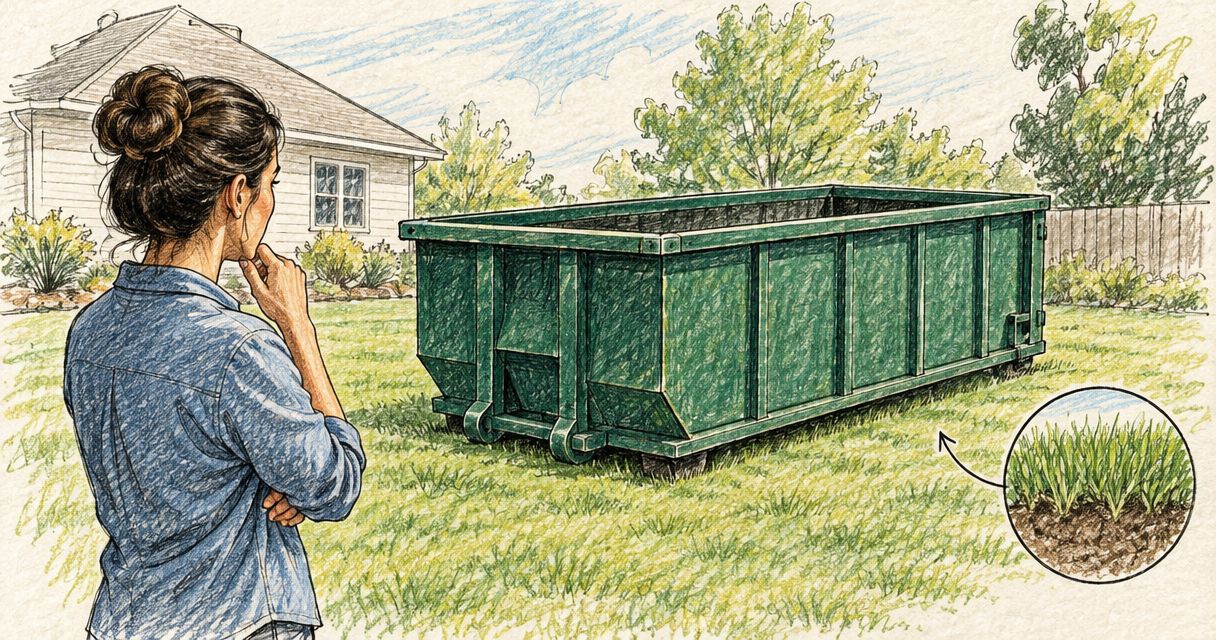
Private-property placement also needs review. Obtain permission from the person who controls the driveway or loading area, and check whether building rules or site restrictions affect the proposed location.
For San Jose, Santa Clara, Sunnyvale, Mountain View, and Milpitas projects, ask the relevant local authority about the specific placement. Requirements belong to the location and jurisdiction. Do not apply an answer from another city to your job without checking.
Bring the proposed placement into the booking conversation early. Resolving it after the truck is scheduled puts the work sequence at risk.
How do I prepare the site before delivery?
Walk the approach and placement area before delivery day. Review the entire truck route, not just the rectangle where you want the container to sit.
Move vehicles and stored materials out of the agreed access path. Check gate arrangements and identify overhead obstructions. Tell the rental company about surface conditions and ask what preparation is needed for the proposed placement.
Coordinate the container location with temporary fencing, restrooms, and scheduled material deliveries. Preserve required exits and access routes. A convenient loading position is not acceptable if it interferes with site access or safety.
Name a receiving contact who knows the agreed location. If that location changes, discuss it before delivery rather than asking the driver to resolve a new site layout on arrival.
Can I request delivery on short notice?
Request urgent delivery directly and provide the full job information immediately. Short notice does not remove the need to review debris, placement, access, and the delivery window.
Explain the deadline and its reason. An unexpected demolition start, a property handover, and a flexible garage cleanout present different scheduling constraints. Say whether the work can move or whether a specific milestone is fixed.
Do not mobilize on the strength of an urgent request alone. Confirm the delivery arrangement first. If delivery is not confirmed, adjust the debris-producing work sequence rather than assuming the container will arrive.
Does owning the transfer station change booking notice?
Ownership of the disposal endpoint gives Valley Services control over a part of the hauling process that would otherwise sit with a third-party facility. Its public C&D transfer station is in San Jose. That operational fact does not establish a universal delivery lead time.
Valley Services roll-off container rental suits Bay Area contractors who want container service and the C&D disposal endpoint under one operator. The company also provides restrooms and temporary fencing for jobsite coordination.
The constraint remains practical: endpoint control does not remove placement approvals, access problems, or the need to confirm delivery. Discuss those details alongside the work schedule.
Should I arrange pickup when I book delivery?
Discuss pickup and exchange needs during the initial booking conversation. Delivery gets the container to the job; removal needs a separate plan tied to the work sequence.
Tell the rental company when loading is expected to finish and whether another phase follows. Ask how to request pickup, report a schedule change, or coordinate an exchange.
Keep the truck approach clear throughout the rental. A placement that works on delivery day must remain accessible when the loaded container needs to leave. Do not let parked equipment or later material deliveries close off that route.
FAQ
How early should I book a roll-off container for a 2026 renovation?
For a 2026 renovation, start booking once the demolition date, debris type, and proposed placement are known. Confirm the delivery window before committing the crew to debris-producing work.
Can I request same-day roll-off container delivery?
You can request urgent delivery, but the delivery arrangement needs confirmation before you schedule work around it. Provide the address, debris type, placement, access details, and deadline when you call.
What information do I need before booking a roll-off container?
You need the jobsite address, requested date, debris description, proposed placement, access details, and receiving contact. Discuss pickup or exchanges at the same time.
Should I book before checking placement approval?
Discuss the rental early, but resolve placement approval before treating the delivery location as settled. Check public right-of-way requirements with the relevant local authority and private-property permission with the responsible owner.
Does a larger roll-off container solve every cleanout or demolition job?
No. Container selection depends on material, volume, loading requirements, and placement. Dense debris needs material-specific review rather than a decision based only on cubic yards.
What should I do if my demolition date changes after booking?
Notify the rental company when the demolition date changes and reconfirm the delivery arrangement. Also review whether the pickup plan, receiving contact, or other site deliveries need adjustment.
Where is the Valley Services C&D transfer station?
The Valley Services C&D transfer station is at 1611 S 7th St, San Jose, CA 95112. Call (408) 297-5404 to discuss material acceptance and your job's container or drop-off needs.
One last thing
Before you lock your 2026 demolition schedule, check the pickup route as carefully as the delivery route. The container can become harder to reach as fencing, equipment, and stored materials arrive.
Preserve truck access from delivery through removal. Include the container location in your site plan and tell every trade which approach must stay open.
Related guides
- How to schedule roll-off container delivery and pickup
- How to prepare a driveway for a roll-off container
- How to check container placement permits in San Jose
Call Valley Services at (408) 297-5404 to talk through your work date, debris, and placement.