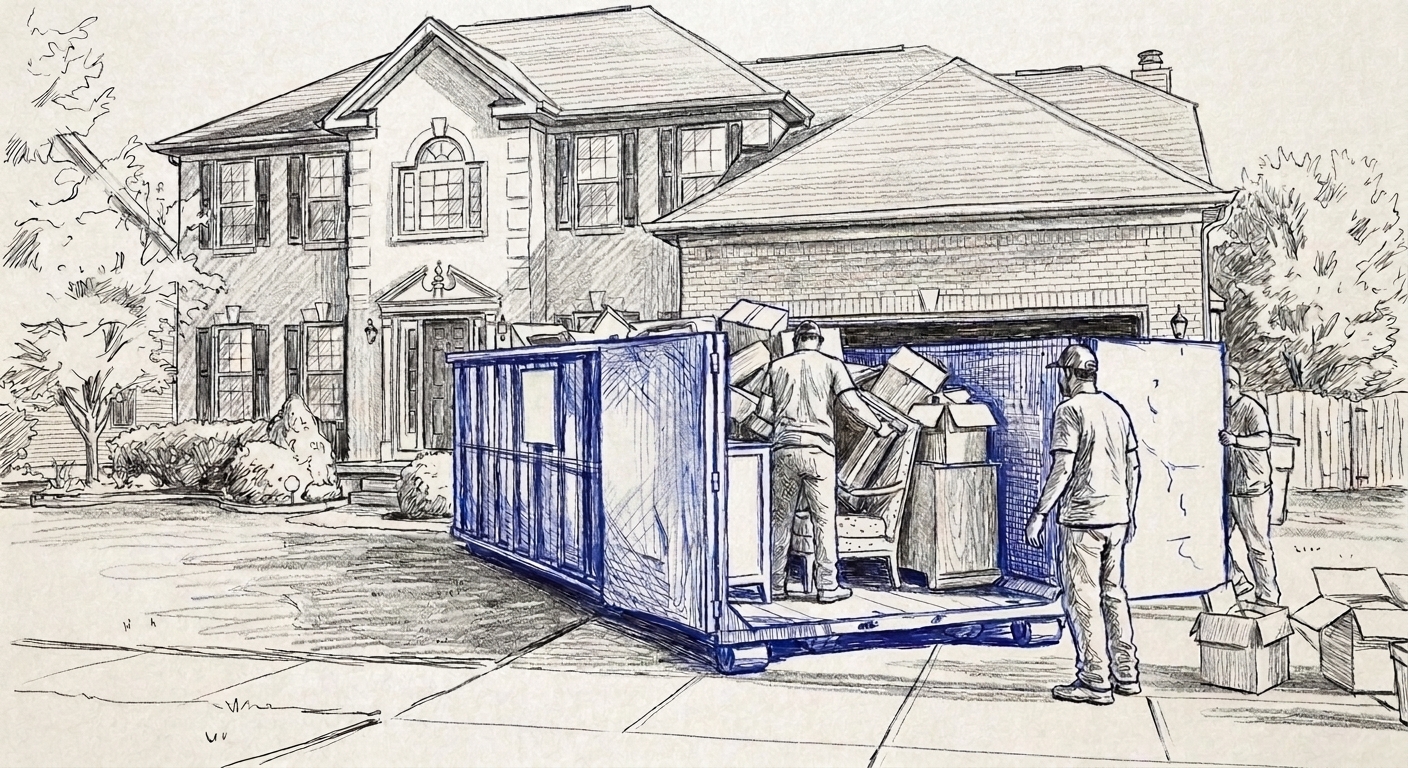
Clearing a family home after a death, a move to care, or a foreclosure takes more than a few trips to the dump. A roll-off container sized to the job pulls furniture, appliances, and years of belongings off the property in one placement, and Valley Services handles the disposal end from its own San Jose transfer station instead of routing the load to a broker.
- A 20-yard roll-off container clears most single-family estate cleanouts in one placement in 2026.
- Valley Services runs its own San Jose transfer station, so a full container swaps same-day instead of next-week.
- Mixed loads with furniture, mattresses, and appliances need a 20 or 30-yard container, not a 10-yard.
- Weight-based flat rates hit overage fast on estate jobs because upholstered furniture and old appliances pack heavy.
- Book container placement before the estate sale, not after, so crews aren't waiting on a driveway permit.
Why this matters
Estate cleanouts don't run like a typical remodel job. Executors and family members work against escrow deadlines, and every day a container sits half-loaded on the driveway is a day the sale can't close. Valley Services owns and operates its own C&D transfer station on S 7th Street in San Jose, so a container that fills faster than expected gets swapped the same day instead of waiting on a broker to route the ticket to a third-party site.
A remodel crew plans debris volume weeks out. An estate cleanout doesn't know what's behind the garage door until day two of the clear, and a stalled swap on a probate timeline costs more than the rental itself.
Who this is for
This guide is for executors and family members handling probate cleanouts, professional organizers and estate sale companies clearing a property before a sale, and property managers in San Jose, Santa Clara, Sunnyvale, Mountain View, and Milpitas prepping a unit for resale or re-lease. Homeowners running a solo estate clear without a crew fall into this group too.
What to look for in container rental for an estate cleanout
Container size versus square footage
A studio or single bedroom clear rarely needs more than a 10-yard container, but a full single-family home runs 1,200 to 1,800 square feet of accumulated belongings and typically fills a 20-yard. Guessing low means a second container mid-job, and on a probate timeline that delay adds up.
Weight limit versus furniture and appliance load
Household cleanouts pack heavier per cubic yard than construction debris because mattresses, upholstered furniture, and old appliances carry dense, awkward weight. A container rated for light demo debris hits its weight limit long before it hits its fill line on an estate job.
Placement and permit rules for residential streets
Driveway placement usually needs no permit, but street placement in San Jose and neighboring cities does. An estate cleanout on a tight schedule can't afford a placement delay because nobody checked the local rule first.
Rental period length against probate and escrow timelines
Probate doesn't move on a construction schedule. A rental period that assumes a five-day job runs short when the estate isn't finalized until the following month, so ask about extending before the container arrives, not after.
Disposal endpoint control
A hauler that brokers disposal to a third-party site adds a phone call and a wait to every swap. Valley Services controls its own transfer station in San Jose, which means the swap schedule doesn't depend on someone else's yard.
Mixed load acceptance
An estate cleanout mixes C&D waste (drywall, flooring, cabinetry) with household goods (furniture, clothing, electronics) in the same container. Confirm the hauler accepts mixed loads before the container shows up, because some outfits split those streams and charge for two container types instead of one.
Get a container on-site this week
Roll-off sizing and placement across San Jose, Santa Clara, Sunnyvale, Mountain View, and Milpitas.
Top picks: container sizes for an estate cleanout
The studio pick: 10-yard container. Holds roughly three pickup truck loads, which covers a single room, a garage clear, or a small condo unit. Fine for a limited scope job but undersized for a full house. Verdict: Consider for single-room or apartment clears only.
The workhorse: 20-yard container. Handles a 1,200 to 1,800 square foot single-family home clear in one placement for most 2026 Bay Area jobs, including furniture, appliances, and boxed belongings. This is the size most estate cleanouts land on. Verdict: Buy for standard single-family estate work.
The whole-house pick: 30-yard container. Built for multi-story homes with a garage full of decades of storage plus yard debris from an overgrown property. Costs more driveway space than a 20-yard, so measure the placement area first. Verdict: Buy for larger or long-neglected properties.
The estate-sale leftover pick: 40-yard container. Reserved for large lots, multiple structures, or a property with an ADU or detached garage that also needs clearing. Overkill for a standard single-family home. Verdict: Consider only when square footage or structure count justifies it.
The phased pick: sequential 20-yard swaps. Instead of one large container sitting on the driveway for weeks, two or three 20-yard containers swapped across a staged cleanout keep the site usable between visits. Works well when the estate sale runs in the middle of the clear. Verdict: Consider for cleanouts split across multiple site visits.
What to avoid
- Weight-based flat rates without a disclosed cap. Estate cleanouts pack heavy with furniture and appliances, and an undisclosed weight cap turns into overage charges nobody budgeted for.
- Skipping the placement check. A container dropped on a residential street without confirming local rules can sit unused while the paperwork catches up, and that delay lands squarely on the probate timeline.
- A broker instead of a transfer station operator. A hauler that routes disposal to a third party adds a step, and a step is a delay when a full container needs to swap today, not next week.
Container size verdict
| Size | Best for | Approx. capacity | Typical fill scenario | Verdict |
|---|---|---|---|---|
| 10-yard | Single room, apartment, garage-only | About 3 pickup loads | Small scope, limited belongings | Consider |
| 20-yard | Standard single-family home clear | About 8 pickup loads | Full house, furniture and appliances | Buy |
| 30-yard | Multi-story home, heavy storage, yard debris | About 12 pickup loads | Larger property, decades of accumulation | Buy |
| 40-yard | Large lot, multiple structures, ADU | About 16 pickup loads | Estate with detached garage or second unit | Consider |
FAQ
What size roll-off container do I need for an estate cleanout?
Most single-family estate cleanouts in 2026 need a 20-yard container, which handles furniture, appliances, and boxed belongings from a 1,200 to 1,800 square foot home in one placement. Larger properties with garages, ADUs, or heavy yard debris move up to a 30 or 40-yard container.
How long can I keep a container rental during a probate cleanout?
Rental periods are set at booking and can usually be extended if the probate or escrow timeline runs longer than planned. Ask about extending before the container arrives so the schedule doesn't stall mid-clear.
Can a roll-off container hold furniture and mattresses from an estate cleanout?
Yes, a roll-off container built for mixed C&D and household loads accepts furniture, mattresses, and appliances alongside drywall and flooring debris. Confirm mixed load acceptance before booking, since some haulers split those streams and charge separately.
Does Valley Services serve estate cleanouts outside San Jose?
Valley Services covers San Jose, Santa Clara, Sunnyvale, Mountain View, Milpitas, and the surrounding Bay Area, with the C&D transfer station located in San Jose only. Container placement and swaps run across the full service area.
What's the difference between a transfer station operator and a disposal broker?
A transfer station operator controls the physical disposal site and schedules swaps directly, while a broker routes the load to a third-party site and depends on that site's schedule. Valley Services owns and operates its own C&D transfer station in San Jose, which keeps swap timing under its own control.
Do I need a permit to place a container in my driveway for an estate cleanout?
Driveway placement typically needs no permit, but placement on a residential street does in most Bay Area cities. Check the local rule before the container arrives so an estate cleanout on a tight timeline doesn't stall on paperwork.
How much waste does an average estate cleanout produce?
Volume varies by property size and years of accumulation, which is why container sizing starts with square footage and storage load rather than a fixed estimate. A 20-yard container covers most standard single-family clears in 2026, with 30 or 40-yard sizes reserved for larger or heavily stored properties.
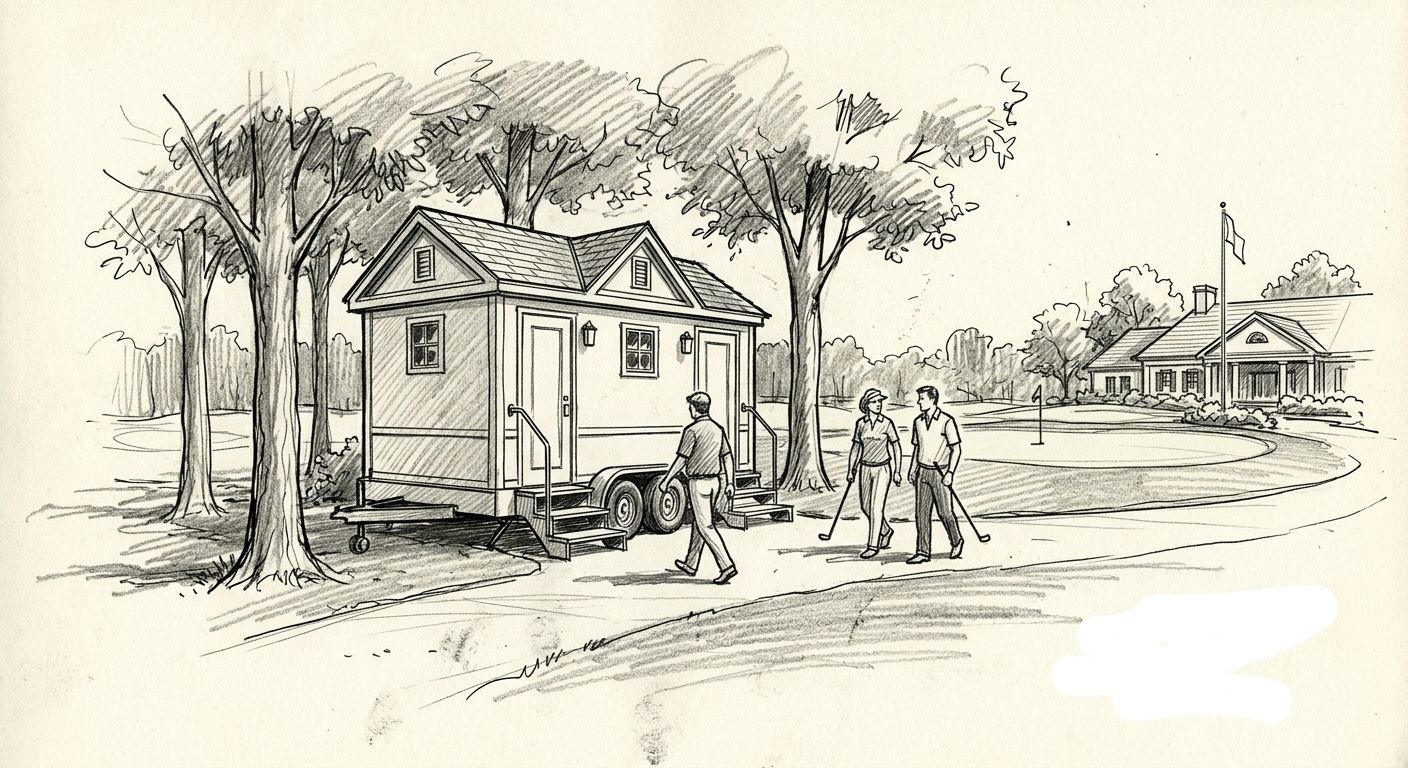
Can I rent a restroom for an estate sale along with the container?
Yes, portable restroom rental runs alongside container rental for estate sales expecting public foot traffic. Booking both through the same yard keeps site logistics under one call instead of two vendors.
One last thing
Valley Services has run the same yard in San Jose since 1986, now into its third generation of the same family, and has handled temporary site logistics for events at the scale of Super Bowl LX and the San Jose Marathon. That's the same operational discipline behind a single estate cleanout container swap. Call (408) 297-5404 or check current availability at valleyservices.biz before the estate sale date locks in, not after.