Home renovations generate more debris than most homeowners expect, and picking the wrong roll-off dumpster rental for home renovation work costs you a second haul, a blocked driveway, or a fine from the city. This guide breaks down container sizing, permit rules, and what actually belongs in a construction dumpster in the San Jose and greater Bay Area.
- A 20-yard roll-off container covers most kitchen and bathroom remodels in 2026 without overfilling.
- Valley Services runs its own San Jose transfer station, so scheduling doesn't depend on a third-party disposal site.
- Street placement in San Jose usually requires a permit, driveway placement usually doesn't.
- Mixed loads with paint, tires, or batteries get rejected at drop-off. Sort those out before the container is delivered.
Why this matters
A renovation dumpster that's too small means a second delivery mid-project, which stalls your crew and pushes your schedule. One that's too large sits half-empty on a residential street, which annoys neighbors and sometimes draws a city code complaint. Getting the size and placement right the first time keeps the job moving.
Valley Services has operated out of the same San Jose yard since 1986, now running as a third-generation family business. The company owns its own C&D transfer station, which means container turnaround doesn't depend on a broker's disposal contract elsewhere. Valley Services has also handled site services for events like Super Bowl LX and the San Jose Marathon, so the same logistics discipline applies to a single-driveway kitchen remodel.
Who this is for
This guide is for homeowners in San Jose, Santa Clara, Sunnyvale, Mountain View, Milpitas, and the surrounding Bay Area running a renovation, a cleanout, or an estate clear. If you're managing debris from a kitchen gut, a bathroom remodel, a room addition, or a whole-house declutter, the sizing and placement rules below apply directly to your job.
What to look for in a roll-off dumpster rental for home renovation
Debris type and mixed-load rules
Drywall, wood framing, flooring, and old cabinetry can usually go in the same container, but paint cans, tires, batteries, and refrigerants get rejected at drop-off. Know what your project is generating before the container shows up, because a rejected load means sorting on-site after the fact.
Driveway and placement clearance
A 20-yard container needs roughly 22 feet of clear length and about 8 feet of width to load safely on delivery. Measure your driveway before booking, since a container that doesn't fit means placement on the street, which triggers a different set of rules.
Permit requirements for street placement
San Jose generally requires a permit for a roll-off container placed on a public street, but driveway placement typically does not. Confirm this with the city before delivery day, because a container without a required permit can get a citation left on it.
Fill line and weight limits
Every roll-off container has a fill line stamped or painted on the interior wall, and every size carries a weight limit tied to what the hauling truck and the road can legally carry. Concrete, tile, and dirt are heavy per cubic yard even when the container looks half full, so weight limits matter more than volume for demo debris.
Rental duration matched to project phase
A bathroom remodel might need the container for a week. A whole-house renovation with staged demo, framing, and finish work might need it for a month or longer with a swap in between. Match the rental window to your actual project timeline instead of guessing.
Access to a real transfer station versus a broker
Some companies broker your load to a third-party disposal site they don't control, which adds a scheduling dependency you can't see from the homeowner side. Valley Services owns and runs its own C&D transfer station in San Jose, which keeps the container pickup and drop-off schedule under one roof instead of two.
Top picks by project type
10-yard container: the tight-driveway pick
A 10-yard roll-off container fits in a standard single-car driveway and handles a single-room bathroom remodel or a small garage cleanout. It holds roughly 3 pickup-truck loads of mixed debris. Verdict: Buy for a single-room job with limited driveway space.
15-yard container: the mid-size bathroom or small kitchen pick
This size splits the difference between a small cleanout and a full remodel, handling a kitchen refresh without full-gut demo. It's the size most homeowners underestimate needing until the drywall comes down. Verdict: Consider if your project scope isn't fully locked yet.
20-yard container: the whole-kitchen or bathroom-gut pick
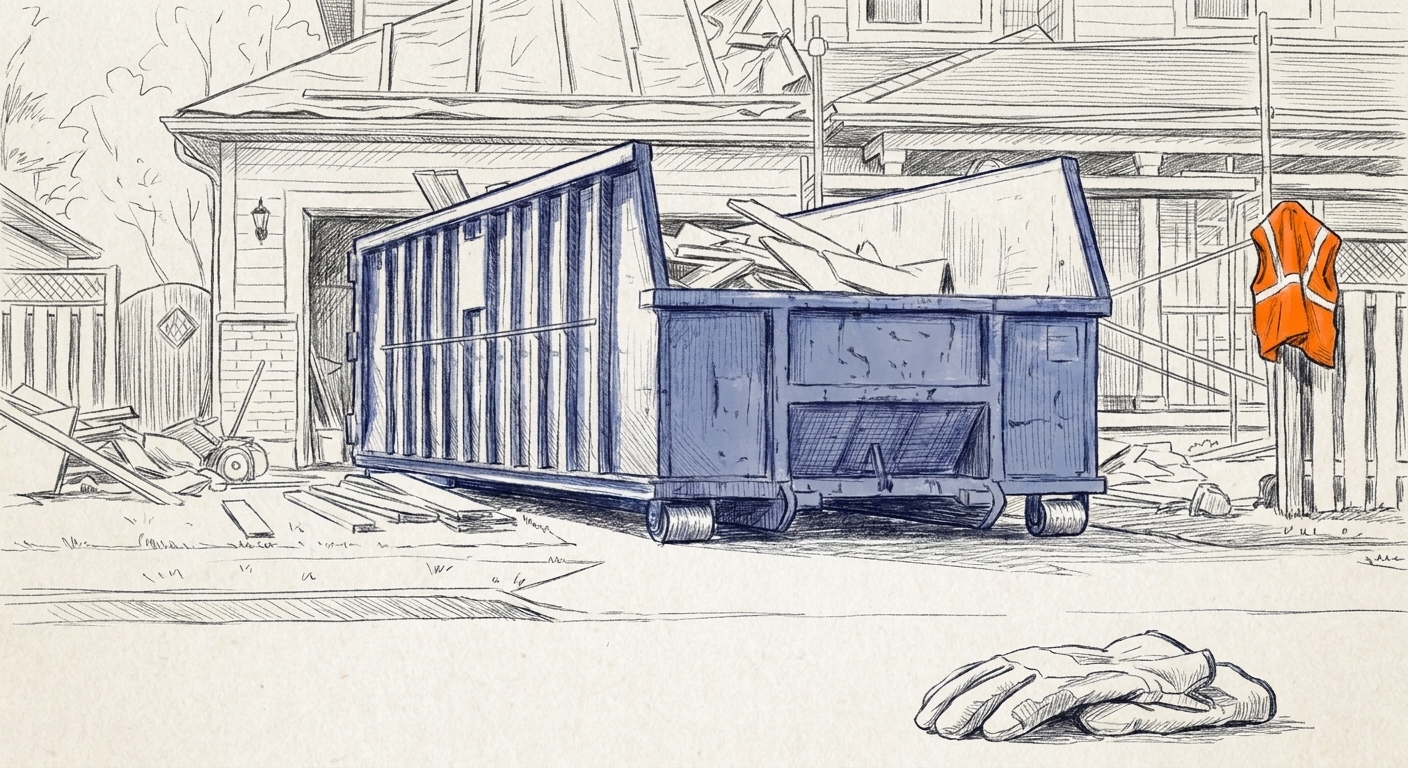
A 20-yard roll-off container is the most common size ordered for a full kitchen remodel or a bathroom gut down to the studs in 2026, covering cabinetry, drywall, flooring, and fixtures in one container. It needs the driveway clearance noted above. Verdict: Buy for most single-phase remodels.
30-yard container: the addition or whole-house pick
A 30-yard container covers a room addition, a major structural renovation, or a whole-house declutter ahead of a remodel. It's too large for most residential driveways and usually requires street placement with a permit. Verdict: Buy for large-scope projects, but confirm street permitting first.
Multiple small containers swapped mid-project: the flexible pick
Instead of one large container sitting for a month, some homeowners book a smaller container with a scheduled swap once it fills. This keeps the footprint small but adds a coordination step. Verdict: Consider for phased projects where debris volume is uneven week to week.
Get your renovation container sized right
Call (408) 297-5404 or check availability for San Jose and the Bay Area.
What to avoid
- Overloading past the fill line. A container packed above the marked fill line gets flagged at the transfer station and can delay pickup entirely.
- Assuming any yard controls its own disposal endpoint. A broker that doesn't operate its own transfer station adds a scheduling layer you can't control from your driveway.
- Skipping the permit check for street placement. A container placed on a public San Jose street without a permit is a citation waiting to happen, not a shortcut.
Verdict comparison
| Container size | Best for | Driveway fit | Verdict |
|---|---|---|---|
| 10-yard | Single-room remodel, small cleanout | Standard driveway | Buy |
| 15-yard | Kitchen refresh, mid-size bathroom | Standard driveway | Consider |
| 20-yard | Full kitchen or bathroom gut | Needs ~22 ft clearance | Buy |
| 30-yard | Room addition, whole-house project | Usually street placement | Buy with permit |
| Swapped smaller units | Phased, uneven debris volume | Depends on size chosen | Consider |
FAQ
What size roll-off dumpster do I need for a bathroom remodel?
Most single-bathroom remodels fit a 10-yard or 15-yard container. A full gut down to the studs with tile and tub removal often needs a 20-yard container instead.
How long can I keep a rental dumpster for a home renovation?
Rental windows for a home renovation project typically run from a few days for a small cleanout to several weeks for a staged remodel in 2026. Match the window to your actual demo, framing, and finish schedule rather than a fixed default.
Do I need a permit to put a dumpster in my driveway in San Jose?
Driveway placement generally does not require a permit in San Jose, but placement on a public street usually does. Confirm with the city before delivery to avoid a citation.
Can I put drywall or concrete in a roll-off container?
Drywall goes in a standard mixed-debris roll-off container without issue. Concrete and dirt are allowed but count heavily against the container's weight limit, so check the limit before loading a full slab tear-out.
What's the difference between a disposal broker and a company with its own transfer station?
A broker schedules your container pickup around a third-party disposal site it doesn't control, adding a scheduling dependency. Valley Services owns and operates its own C&D transfer station in San Jose, which keeps pickup and drop-off under one schedule.
How much weight can a 20-yard dumpster hold?
A 20-yard roll-off container's weight limit depends on what's inside it: wood framing and drywall are light per cubic yard, while concrete, tile, and dirt hit the weight limit long before the container looks full. Ask about the weight limit for your specific debris mix before ordering.
Can I mix paint cans or tires in with construction debris?
No. Paint, tires, batteries, and refrigerants are rejected at most transfer stations and need separate disposal. Sort these out of your renovation debris before the container is delivered.
What happens if my roll-off container is overfilled?
An overfilled container that exceeds the marked fill line typically can't be picked up safely and gets flagged at drop-off, which delays your project timeline. Load debris flat and below the line rather than mounding it.
One last thing
The detail most homeowners miss in 2026 is that a container's weight limit, not its size, is usually what stops a renovation project cold. A 20-yard roll-off container looks half-empty and still hits its weight cap if it's loaded with tile, concrete, or wet drywall, so separate the heavy debris and load it first if you're mixing material types.