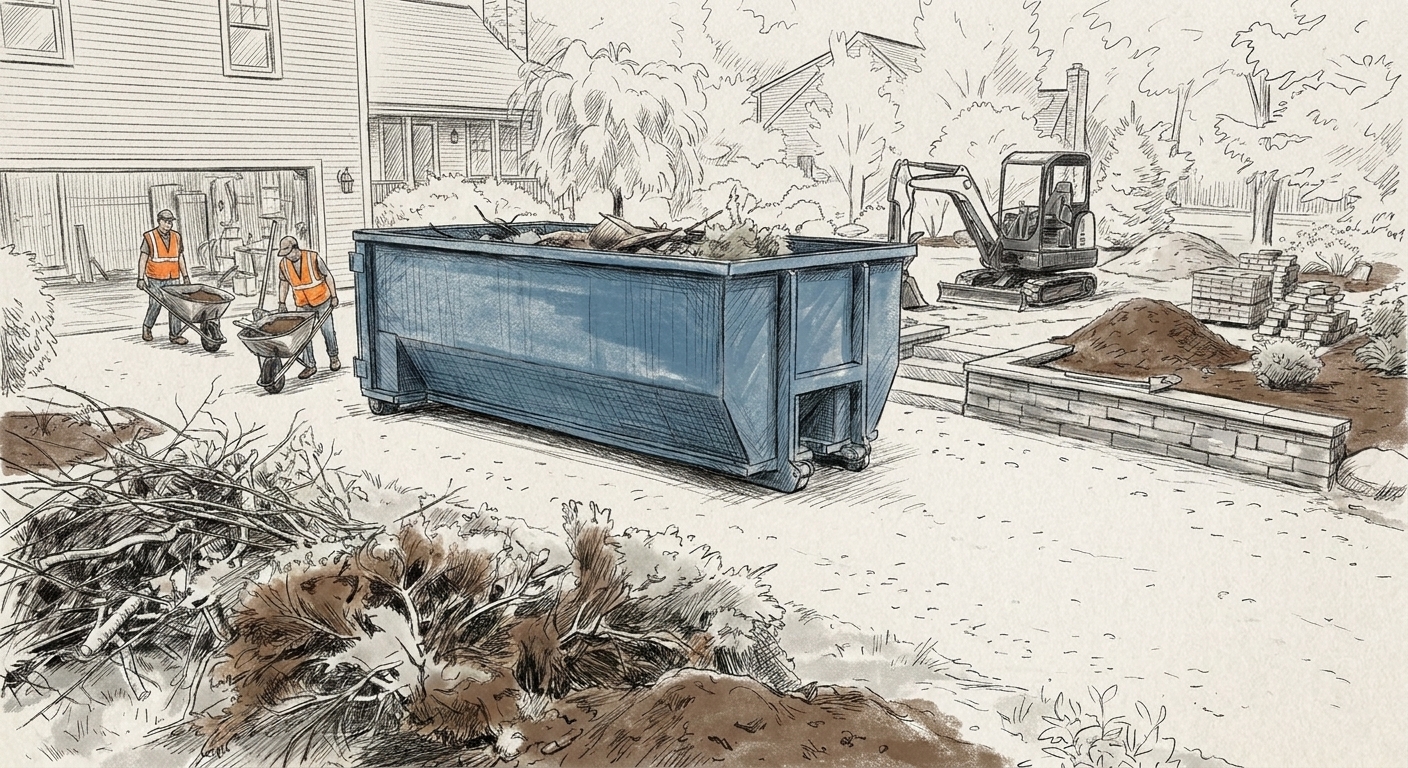
Landscaping jobs generate a mix of debris that most disposal setups aren't built for: wet sod, root balls, broken concrete edging, spoiled soil, and the occasional pallet of unused pavers. A roll-off container sized and placed correctly keeps the crew moving instead of hauling truckloads to the transfer station themselves.
- A 20-yard roll-off container handles most single-phase landscaping jobs in 2026 without hitting weight limits.
- Wet sod and soil are heavy per cubic yard, size for weight before you size for volume.
- Valley Services runs its own San Jose transfer station, so container swaps land same-day instead of next-week.
- Skip the 10-yard for full yard tear-outs, it fills on soil alone before the crew finishes demo.
Why this matters
A roll-off dumpster rental for landscaping project work is not the same math as a home renovation cleanout. Drywall and lumber are light and bulky. Soil, sod, and broken concrete are dense and heavy, and most container rentals cap out on weight long before they cap out on visible space. Guess wrong on size or material mix and you're paying for a second pickup mid-job, or worse, stopping work because the container is full and the truck can't get back out until tomorrow.
Valley Services has run the same yard in San Jose since 1986, and container sizing for landscape crews is one of the most common calls the yard fields. Get the right roll-off container on site before demo day and the rest of the schedule holds.
Who this is for
This guide is for landscape contractors, hardscape crews, and property managers coordinating yard tear-outs, sod replacement, irrigation trenching, or full backyard renovations across San Jose, Santa Clara, Sunnyvale, Mountain View, and Milpitas. It's also for homeowners managing a DIY yard overhaul who need one container to handle demo, planting debris, and leftover materials without three separate hauls.
What to look for in a roll-off dumpster rental for landscaping projects
Weight capacity, not just size
Soil runs roughly 2,000 to 3,000 pounds per cubic yard when wet. A 20-yard container that looks half empty by volume can already be at its weight limit if it's loaded with sod and dirt. Ask about weight thresholds before the container drops, not after the crew has already filled it.
Debris type separation
C&D debris (concrete, broken pavers, old fencing) and green waste (sod, branches, root balls) often need to travel differently once they hit the transfer station. Mixing loads without checking first can slow processing and add handling time you didn't plan for.
Site access and placement
Driveway width, overhead wires, low tree limbs, and sprinkler lines all affect where a container can sit. A 30-yard container needs more clearance than most residential driveways offer. Confirm placement before delivery day, not when the truck is already backing in.
Load-in timing across project phases
A full backyard renovation runs demo, then hauling, then hardscape, then planting. A single container swapped once mid-project handles this better than one oversized box sitting half-loaded for three weeks while material sits and compacts.
Multi-service coordination
Larger landscape jobs often need restrooms for the crew and temporary fencing around excavation or trenching. Coordinating containers, restrooms, and fencing through one call keeps the schedule in one place instead of three vendor calls with three different delivery windows.
Local pickup turnaround
A yard that owns its own transfer station controls its own truck schedule. A yard that brokers disposal to a third-party site is at the mercy of that site's hours and backlog. In 2026, same-day or next-day swaps matter more on a landscaping schedule than a general renovation, because green waste sitting in a container degrades and gets heavier by the day.
Get your container sized right
Call before demo day and lock in size, placement, and pickup timing.
Top picks by container size
The starter pick: 10-yard container. Handles small bed edging jobs, single-tree removal, or a patio refresh under 500 square feet. Holds roughly 3 pickup truck loads. Skip this for any full yard tear-out, soil alone fills it before demo wraps.
The workhorse: 15-yard container. Fits mid-size sod replacement or a single-zone hardscape swap. Handles about 4 to 5 pickup truck loads of mixed green waste and light debris. Consider this for jobs under 1,000 square feet with no heavy concrete removal.
The safe pick: 20-yard container. Covers most single-phase landscaping jobs in 2026, from full sod tear-out to moderate hardscape demo. Holds roughly 6 pickup truck loads. Weight capacity is the limiting factor here more often than volume. Buy this as the default for a standard backyard renovation.
The wildcard: 30-yard container. Built for large-lot jobs with substantial concrete, old fencing, and heavy root removal combined. Needs real driveway clearance, often 60 feet of straight access with no overhead obstruction. Consider this only if site access confirms clearance first.
The overkill: 40-yard container. Reserved for commercial landscape contracts or full-property regrades with high debris volume across multiple structures. Rarely justified for residential yard work. Skip this unless the job spans more than one property or a full commercial lot.
What to avoid
- Sizing by volume alone. A container that looks like it has room left can already be over its weight limit if it's loaded with wet soil or sod. Ask about weight caps before the container drops.
- Placing the container without checking overhead clearance. Low branches and utility lines catch crews off guard on residential lots more than any other placement issue.
- Assuming one container size fits every phase. Demo debris, planting waste, and leftover hardscape material behave differently in a container. A swap mid-project often costs less schedule time than forcing everything into one oversized box.
Verdict comparison table
| Size | Best for | Typical truck-load equivalent | Verdict |
|---|---|---|---|
| 10-yard | Small edging or single-tree removal | 3 loads | Skip for full tear-outs |
| 15-yard | Mid-size sod or single-zone hardscape | 4-5 loads | Consider for under 1,000 sq ft |
| 20-yard | Standard backyard renovation | 6 loads | Buy as the default |
| 30-yard | Large-lot demo with concrete and fencing | 8-9 loads | Consider with confirmed access |
| 40-yard | Commercial or multi-structure regrades | 10+ loads | Skip for typical residential jobs |
FAQ
What size dumpster rental is best for a landscaping project?
A 20-yard roll-off container handles most single-phase landscaping jobs in 2026, covering sod removal and moderate hardscape demo without hitting weight limits common on smaller containers.
Can I put dirt and sod in a regular roll-off dumpster?
Yes, but weight limits apply. Wet soil and sod run 2,000 to 3,000 pounds per cubic yard, so a container that looks partly empty by volume can already be at capacity by weight.
How much yard debris fits in a 20-yard container?
A 20-yard container holds roughly 6 pickup truck loads of mixed green waste and light hardscape debris, though weight caps out sooner with wet soil than with dry branches.
Do I need a permit to place a roll-off container in my driveway?
Driveway placement usually doesn't require a permit, but placement on a public street in San Jose, Santa Clara, or nearby cities often does. Confirm before delivery day.
Can concrete and green waste go in the same container?
Mixing C&D debris like broken concrete with green waste like sod and branches is possible, but check with the rental yard first since separated loads move through the transfer station faster.
How long can I keep a roll-off container on site for a landscaping job?
Rental duration varies by project phase and yard policy. Multi-phase landscape jobs often benefit from a mid-project swap instead of one container sitting loaded for weeks.
What's the difference between a 15-yard and 20-yard container for landscaping?
A 15-yard container fits a single-zone hardscape swap or moderate sod job under 1,000 square feet, while a 20-yard covers full backyard renovations with more demo debris and heavier loads.
Does Valley Services deliver roll-off containers for landscaping jobs in San Jose?
Valley Services delivers roll-off containers across San Jose, Santa Clara, Sunnyvale, Mountain View, and Milpitas, and runs its own C&D transfer station in San Jose for faster pickup turnaround.
One last thing
Most yards broker disposal to a third-party transfer station, which means their pickup schedule depends on someone else's hours and backlog. Valley Services owns and operates its own C&D transfer station in San Jose, so a full container on a landscaping job doesn't wait on another company's truck rotation. That difference shows up most on multi-phase jobs where a mid-project swap decides whether the crew works tomorrow or waits.
Call (408) 297-5404 or visit valleyservices.biz to size a container against your specific job phase before demo day.