Roofing tear-offs produce dense, heavy debris that behaves nothing like framing lumber or drywall scraps, and the wrong roll-off container size stalls a crew before lunch. This guide breaks down container sizing, weight limits, and site placement for a dumpster rental for roofing tear off jobs across the Bay Area in 2026.
- A 20-yard roll-off container handles most single-family reroofs in 2026: Buy.
- 10-yard containers fit tight driveways but fill fast on multi-layer tear-offs: Consider.
- 30-yard containers look efficient but hit weight limits before they hit volume limits on shingles: Skip.
- Valley Services runs its own San Jose transfer station, which keeps a dumpster rental for roofing tear off jobs on schedule.
- Overloaded containers get red-tagged at the scale, not at the curb: plan tonnage before you order.
Why this matters
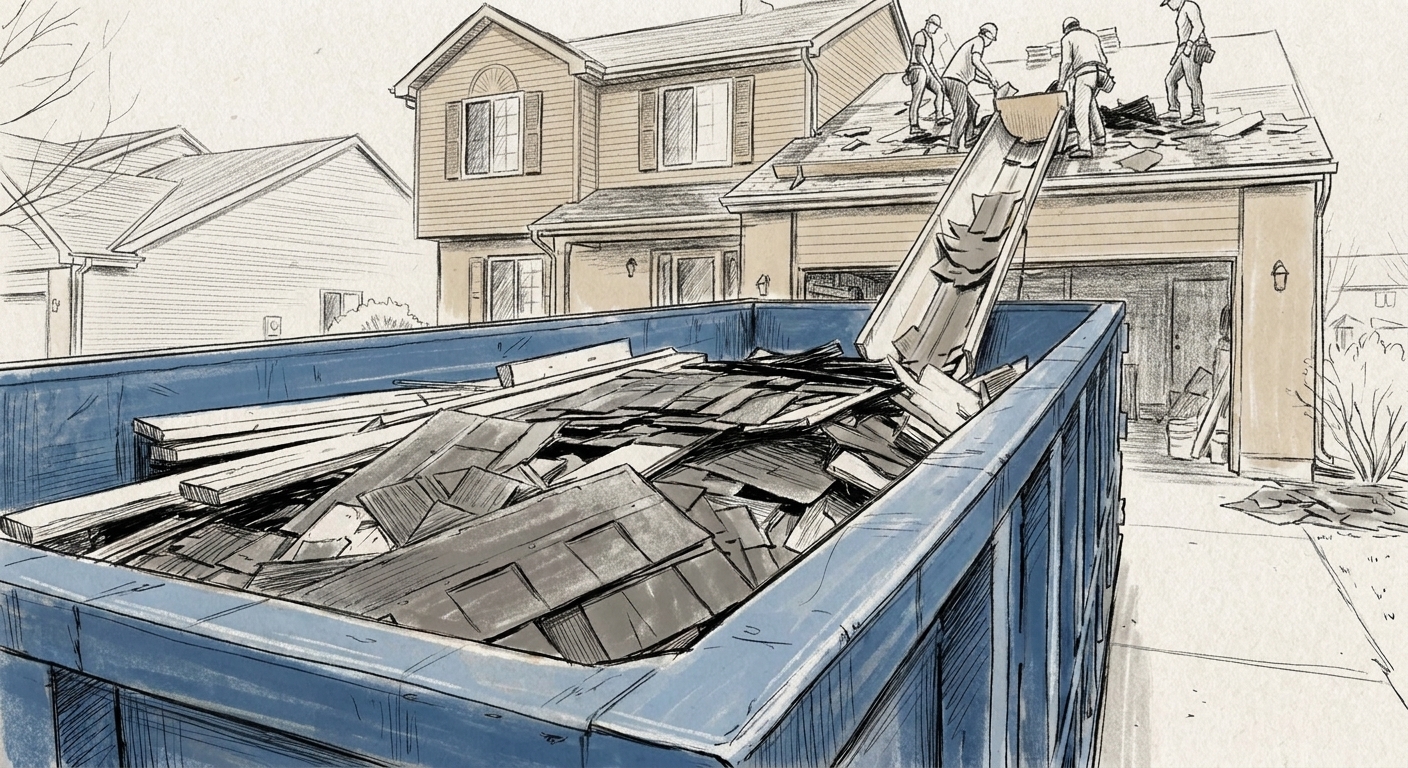
Asphalt shingles run 200 to 400 pounds per square depending on layer count and whether they're wet. A driveway full of tear-off debris looks like nothing next to a framing job, but it can weigh three times as much in the same container volume.
Order by cubic yards without checking tonnage limits and you'll pay for an overage or watch a hauler refuse a pickup at the scale. That's a schedule problem on a reroof, where the crew has an open deck and a weather window, not a minor billing footnote.
Valley Services sizes roll-off containers for tear-off jobs specifically, factoring layer count and square footage before the container hits the driveway. That distinction matters more on a roofing job than on almost any other trade.
Who this is for
This guide is built for roofing contractors and subcontractors managing single or multi-layer tear-offs across San Jose, Santa Clara, Sunnyvale, Mountain View, Milpitas, and the surrounding Bay Area, plus general contractors coordinating a reroof as part of a larger renovation. Homeowners handling a reroof through their own contractor will also find the sizing logic useful when a contractor hands them the container decision.
What to look for in a dumpster rental for roofing tear off
Weight capacity, not just cubic yards
Shingle debris is a weight problem before it's a volume problem. A container rated for 2 tons will fill up on tonnage long before it fills up on space if the load is wet, multi-layer, or includes old wood shakes underneath.
Low-profile design for driveway loading
Roofing crews sling debris off the roof edge or down a chute, and a taller container wall makes that harder without adding height to the throw. A low-profile roll-off container keeps the load-in angle manageable for a crew working off a ladder or a lift all day.
Placement footprint and driveway access
Most residential reroofs place the container in the driveway, but tight lots sometimes require street placement. Street placement in San Jose and neighboring cities typically requires a permit and, in some cases, K-rail or temporary fencing to hold the container clear of traffic.
Turnaround time on the swap
A reroof with an open deck has no tolerance for a container sitting full for two extra days while a hauler routes around other jobs. Confirm same-week swap availability before the tear-off starts, not after the deck is exposed to weather.
How the transfer station handles mixed tear-off loads
Tear-off debris is C&D waste: shingles, felt paper, flashing, and sometimes plywood decking. A hauler that brokers disposal to a third-party site adds a layer between your job and the disposal endpoint. Valley Services operates its own C&D transfer station in San Jose, which keeps the container's turnaround on the yard's schedule instead of a broker's.
Permit and street-placement requirements
If the driveway can't hold the container, street placement means a city permit and, depending on the location, K-rail to separate the container from vehicle traffic. Confirm this before the tear-off is scheduled, since permit lead time can run longer than the roofing job itself.
Container sizes for roofing tear-offs
10-yard low-profile roll-off container The tight-driveway pick. Best for single-layer tear-offs under roughly 1,500 square feet, where driveway space is limited and the crew needs a container that doesn't block a garage door. It fills on weight fast if the layer underneath is wood shake instead of a second asphalt layer. Verdict: Consider for small single-story reroofs, Skip for anything with two layers of shingles.
20-yard roll-off container The standard reroof pick. Handles most single-family tear-offs in the 2,000 to 3,500 square foot range with a single layer of asphalt shingles, and still leaves margin if the crew finds a hidden second layer once the deck is exposed. This is the size most Bay Area reroofs land on in 2026. Verdict: Buy.
30-yard roll-off container The multi-layer tear-off pick, on paper. Volume-wise it looks efficient for a large roof or a job stacking two tear-offs, but shingle weight hits the tonnage limit long before the container looks full. Crews that order a 30-yard for a straightforward asphalt tear-off often pay for capacity they never use in cubic feet, while crews that load it with wet, multi-layer debris risk an overweight load at the scale. Verdict: Skip for standard single-family tear-offs, Consider only for large commercial roofs with confirmed low-density decking material.
K-rail and temporary fencing for street placement The street-placement companion, not a size at all. When the driveway can't hold a container, K-rail keeps the roll-off container clear of traffic and defines the work zone for a crew loading off a ladder or lift near the curb. Verdict: Buy whenever street placement is the only option.
Size your tear-off container correctly
Call before the tear-off starts, not after the deck is exposed.
What to avoid
- Ordering by volume alone. A container that looks right for square footage can still hit its weight limit halfway through the load if the tear-off includes a hidden second layer or wet decking.
- Skipping the street-placement permit. A container parked in the street without a permit or K-rail on a Bay Area jobsite in 2026 is a citation risk, not a shortcut.
- Mixing tear-off debris with green waste or household trash. C&D debris and general waste get sorted differently at the transfer station, and mixed loads slow down processing at the scale.
Verdict comparison
| Container | Best for | Weight risk | Verdict |
|---|---|---|---|
| 10-yard low-profile | Single-layer tear-off, under 1,500 sq ft | High if wood shake underneath | Consider |
| 20-yard | Standard single-family reroof, 2,000-3,500 sq ft | Moderate, standard margin | Buy |
| 30-yard | Large commercial roofs only | High, hits tonnage before volume | Skip for residential |
| K-rail / fencing | Street placement when driveway won't fit | N/A | Buy when needed |
FAQ
What size dumpster do I need for a roofing tear off?
Most single-family reroofs in 2026 use a 20-yard roll-off container for a single layer of asphalt shingles up to about 3,500 square feet. Multi-layer tear-offs or wood shake decking often need a size check before ordering, since weight limits, not volume, decide the right container.
Can I put roofing shingles in a regular dumpster rental?
Yes, but only if the container is rated for the tonnage. Asphalt shingles run 200 to 400 pounds per square, and a standard container ordered for lumber or drywall debris can hit its weight limit long before it looks full.
Is a 30-yard container better for a large reroof?
Not usually for residential asphalt tear-offs. A 30-yard container hits its tonnage limit on dense shingle debris before it fills on volume, so most single-family jobs are better matched to a 20-yard container sized for weight, not cubic feet.
Do I need a permit to place a roll-off container on the street in San Jose?
Yes, street placement typically requires a city permit, and K-rail or temporary fencing is often required to separate the container from traffic. Driveway placement avoids this requirement whenever the lot allows it.
How long can I keep a roll-off container on a roofing job?
Rental duration depends on the provider and the job schedule, and a reroof with an open deck should confirm same-week swap availability before the tear-off starts. Confirm turnaround timing directly with the provider before scheduling the tear-off.
What happens if I overload a roll-off container with shingles?
An overloaded container gets flagged at the transfer station scale, which can delay pickup and swap scheduling on an active tear-off. Sizing for weight up front, not just square footage, avoids this on shingle-heavy jobs.
Does mixing shingles with wood decking change the container size I need?
Yes, wood decking adds volume without adding as much weight as shingles alone, which changes the balance between tonnage limits and cubic yard limits. A crew expecting a hidden second layer or rotten decking should size up rather than risk a mid-job swap.
One last thing
Most reroof crews don't find out the deck has a hidden second layer of shingles until the tear-off is already underway, and that's exactly when a container ordered on volume alone runs out of weight capacity. Valley Services owns its San Jose transfer station instead of brokering disposal to a third party, which means a mid-job size swap moves on the yard's schedule, not a broker's. Call (408) 297-5404 before the tear-off starts if there's any chance the deck has more than one layer underneath.