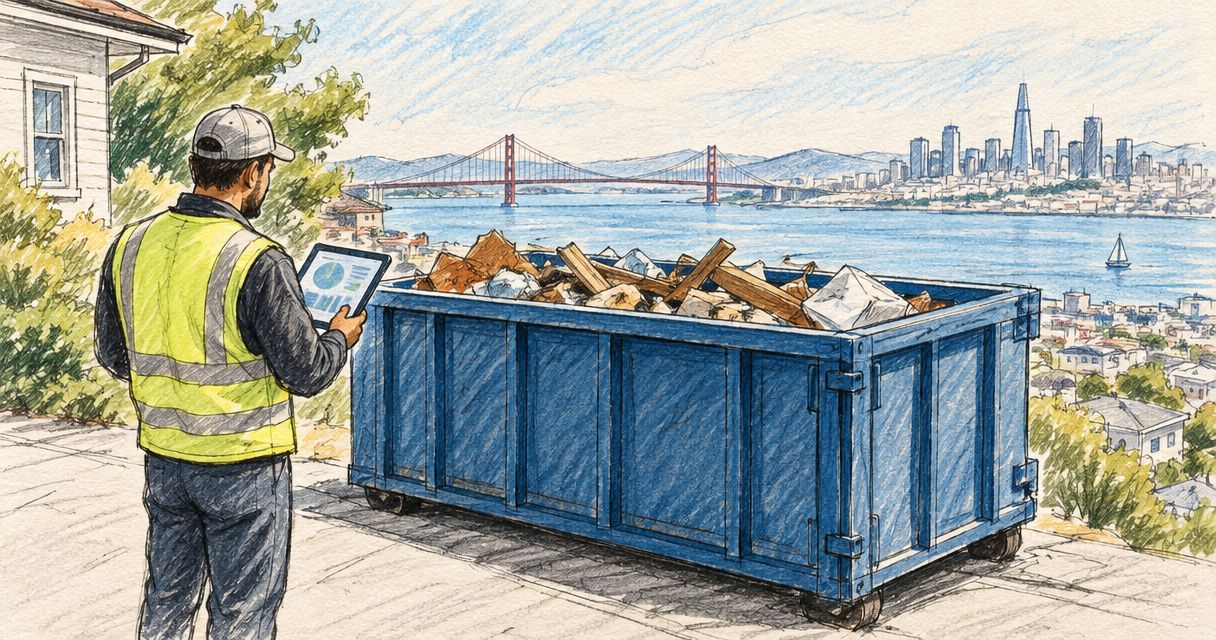
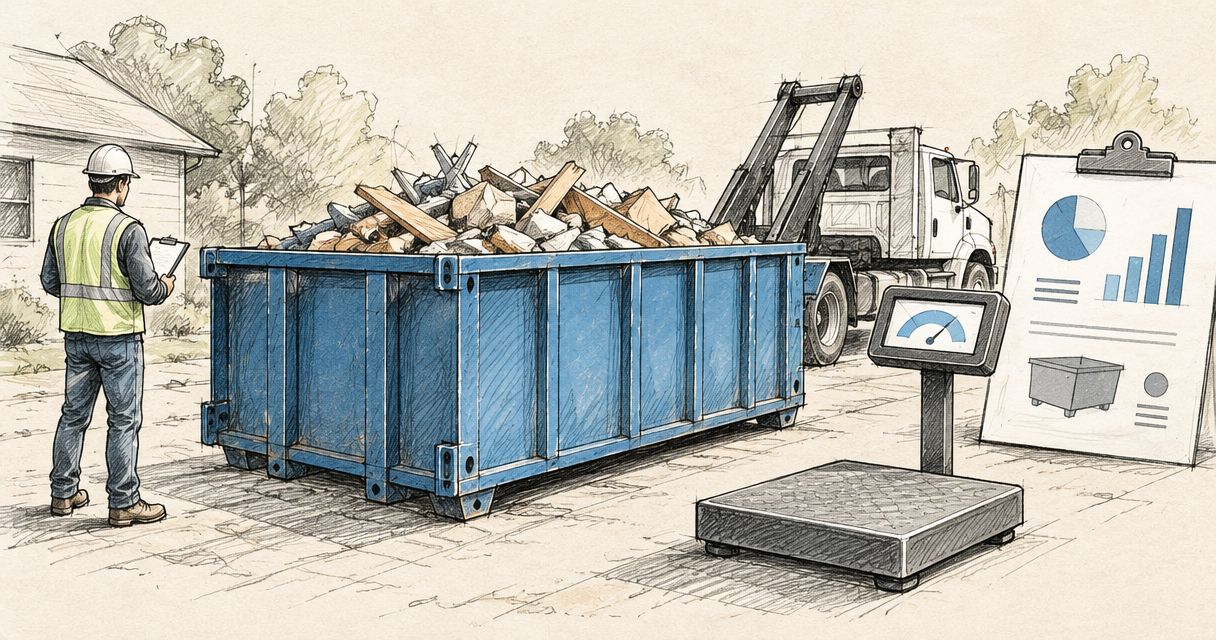
A 10 yard dumpster carries a weight allowance, not just a size, and that allowance is what actually decides your total cost in 2026. Most 10 yard roll-off containers on the market include 1 to 2 tons of debris before overage charges apply, and heavier materials like concrete, dirt, or roofing shingles can hit that limit while the box still looks half empty.
- 10 yard dumpster rental cost by weight limit comes down to tonnage included in the rental, typically 1 to 2 tons in 2026.
- Concrete, dirt, and roofing shingles hit a 10 yard container's weight limit long before the box looks full.
- Furniture, cardboard, and general household junk rarely push a 10 yard unit past its included allowance.
- Overage charges are billed per ton past the included allowance, not per inch of container space left unused.
- Valley Services weighs loads at its own San Jose transfer station, so the tonnage on your invoice comes from a scale it owns.
Why this matters
A lot of quotes get built around cubic yards and nothing else. A contractor books a 10 yard dumpster expecting to fill it with tile, thinset, and old subfloor, and the container comes back at its weight limit with three feet of empty space still showing above the debris line. The size was never the constraint. The tonnage was.
This matters more in 2026 than it used to, because more haulers are pricing job sites by weight ticket rather than a flat load rate. Knowing the weight limit on a 10 yard dumpster before you order tells you whether you need that size at all, or whether you are paying for volume you will never use because the weight limit hits first.
What is the weight limit on a 10 yard dumpster in 2026
Most 10 yard roll-off containers carry an included weight allowance of 1 to 2 tons. That range holds across most Bay Area and national haulers in 2026, though the exact number printed on your rental agreement can run higher or lower depending on the yard and the transfer station receiving the load.
| Container Size | Typical Included Weight Allowance | Debris That Hits This Limit First |
|---|---|---|
| 10 yard | 1-2 tons | Concrete, dirt, roofing shingles |
| 20 yard | 2-3 tons | Drywall, mixed C&D debris |
| 30 yard | 3-4 tons | Framing lumber, bulky demo waste |
| 40 yard | 4-5 tons | Large-scale commercial teardown debris |
The 10 yard container carries the tightest allowance in the lineup at 1 to 2 tons. The 40 yard unit tops out around 4 to 5 tons, roughly two to three times the 10 yard allowance, even though it holds four times the cubic yardage. The weight allowance does not scale at the same rate as the volume. Load a 40 yard box with concrete and you hit the weight limit long before the container looks full. Load a 10 yard box with cardboard and old furniture and you may never get close to the limit at all.
These ranges reflect weight allowances commonly published across the roll-off container industry in 2026, not one fixed number from a single hauler. Ranges shift by market and by the tipping weight rules set at the specific transfer station or landfill receiving the load. The one thing this table cannot tell you is your exact tonnage allowance. That number is printed on your rental agreement, and it can differ container to container even at the same yard.
Which materials hit a 10 yard dumpster's weight limit first
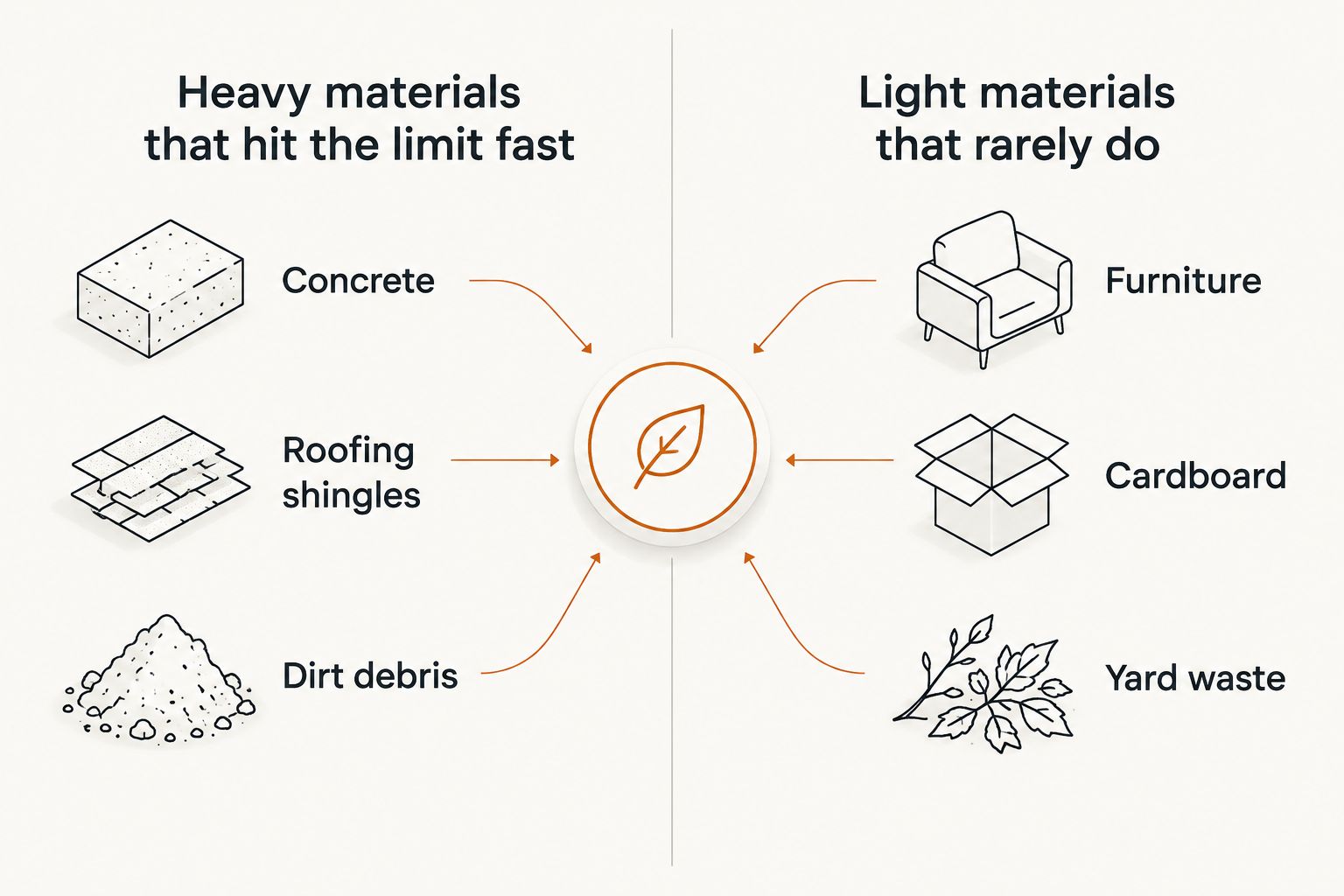
Weight limit problems are almost always a material problem, not a volume problem. Some debris is dense enough to hit 1 to 2 tons in a fraction of the container's cubic space.
Heavy, hits the limit fast:
- Concrete, brick, and masonry
- Dirt, sod, and rock
- Roofing shingles, especially wet tear-off loads
Light, rarely reaches the limit:
- Furniture and mattresses
- Cardboard and packaging
- Dry yard waste and trimmings
A 10 yard dumpster full of shingles or dirt can hit its 1 to 2 ton allowance while barely half loaded. The same container full of household furniture and boxes might never reach the limit even when it is stacked to the fill line.
If your job is mostly concrete, dirt, or tear-off shingles, sizing up to a 20 yard or 30 yard container does not necessarily buy you more room to work with. It buys you a higher weight allowance, which is the number that actually matters for that kind of debris.
How overage charges work once you pass the weight limit
Overage on a 10 yard dumpster rental is billed by the ton, not by the inch. Once the loaded container crosses its included allowance, every additional ton gets charged on top of the base rental. That structure holds whether the extra tonnage came from one heavy load of concrete or a slow accumulation of dense debris over a multi-day job.
The fix starts before the container ever leaves the yard: know the weight limit in writing, know your material, and load with that number in mind rather than the fill line. Loading a dumpster the right way keeps heavy debris distributed and keeps you off the overage list entirely.
“The weight limit on a 10 yard dumpster, not the size of the container, is what turns a flat rental into an overage bill.”
How to use these benchmarks
- Match the container to the material, not the job size. A small concrete tear-out needs a heavier weight allowance sooner than a large furniture cleanout does.
- Get the tonnage allowance in writing before drop-off. Verbal estimates do not hold up when the scale ticket comes back higher than expected.
- Separate heavy debris from light debris when you can. Mixing concrete into a load of cardboard and furniture pushes the whole container toward its weight limit faster.
- Ask where the load gets weighed. A hauler that owns its own transfer station controls the scale and the schedule. A hauler that brokers disposal to a third-party site adds a step you cannot verify directly.
Get your weight allowance in writing
Call before you order and confirm the exact tonnage limit for your job.
FAQ
What is the weight limit on a 10 yard dumpster in 2026?
Most 10 yard roll-off containers include a weight allowance of 1 to 2 tons in 2026. The exact figure is printed on the rental agreement and can vary by market and by the transfer station receiving the load.
How much does a 10 yard dumpster rental cost in 2026?
Cost depends on the weight loaded relative to the included tonnage allowance, plus rental duration and material type. Contact Valley Services at (408) 297-5404 for a quote scoped to your job.
What happens if I go over the weight limit on a 10 yard dumpster?
Overage is billed per ton beyond the included allowance. The charge applies once the scale ticket at drop-off shows tonnage above the number on your rental agreement.
How many tons fit in a 10 yard dumpster?
A 10 yard dumpster is built to carry roughly 1 to 2 tons of debris. Dense materials like concrete or roofing shingles can reach that limit while the container is still visibly under-filled.
Is a 10 yard dumpster big enough for concrete or dirt?
It can hold concrete or dirt, but the weight limit hits fast with these materials. A dedicated heavy-debris container or a smaller weight-based order often makes more sense than a bigger box.
What materials count against a 10 yard dumpster's weight limit fastest?
Concrete, brick, dirt, rock, and roofing shingles are the densest common debris types and push a container toward its weight limit fastest. Furniture, cardboard, and dry yard waste rarely come close.
Does the weight limit change by location in the Bay Area?
Weight allowances can vary by market because local transfer stations and landfills set their own tipping weight rules. Valley Services operates its own transfer station in San Jose and confirms tonnage on its own scale.
How do I avoid an overage charge on a 10 yard dumpster rental?
Confirm the weight allowance before drop-off, separate heavy debris from light debris, and avoid overloading dense material into one section of the container. Loading below the fill line does not help if the material is dense.
One last thing
Most dumpster rental quotes only ever mention cubic yards. The number that actually determines your final cost is the tonnage allowance printed on the rental agreement, and it is worth reading before the container gets dropped, not after the scale ticket comes back. Valley Services weighs loads at its own San Jose transfer station rather than routing them through a third-party site, which means the tonnage on your invoice comes from a scale the company runs directly.
Call (408) 297-5404 or visit valleyservices.biz to confirm the weight allowance on a 10 yard container before you order.