Picking the wrong dumpster size costs you twice: once on the overage fee for going over the weight limit, and again on the extra hauling call when the container fills up mid-project. Here's how the 10 through 40 yard roll-off sizes actually compare for Bay Area jobs in 2026, and which one fits your project without guesswork.
- The 20 yard roll-off container is the best overall pick for most Bay Area renovation and cleanout jobs in 2026.
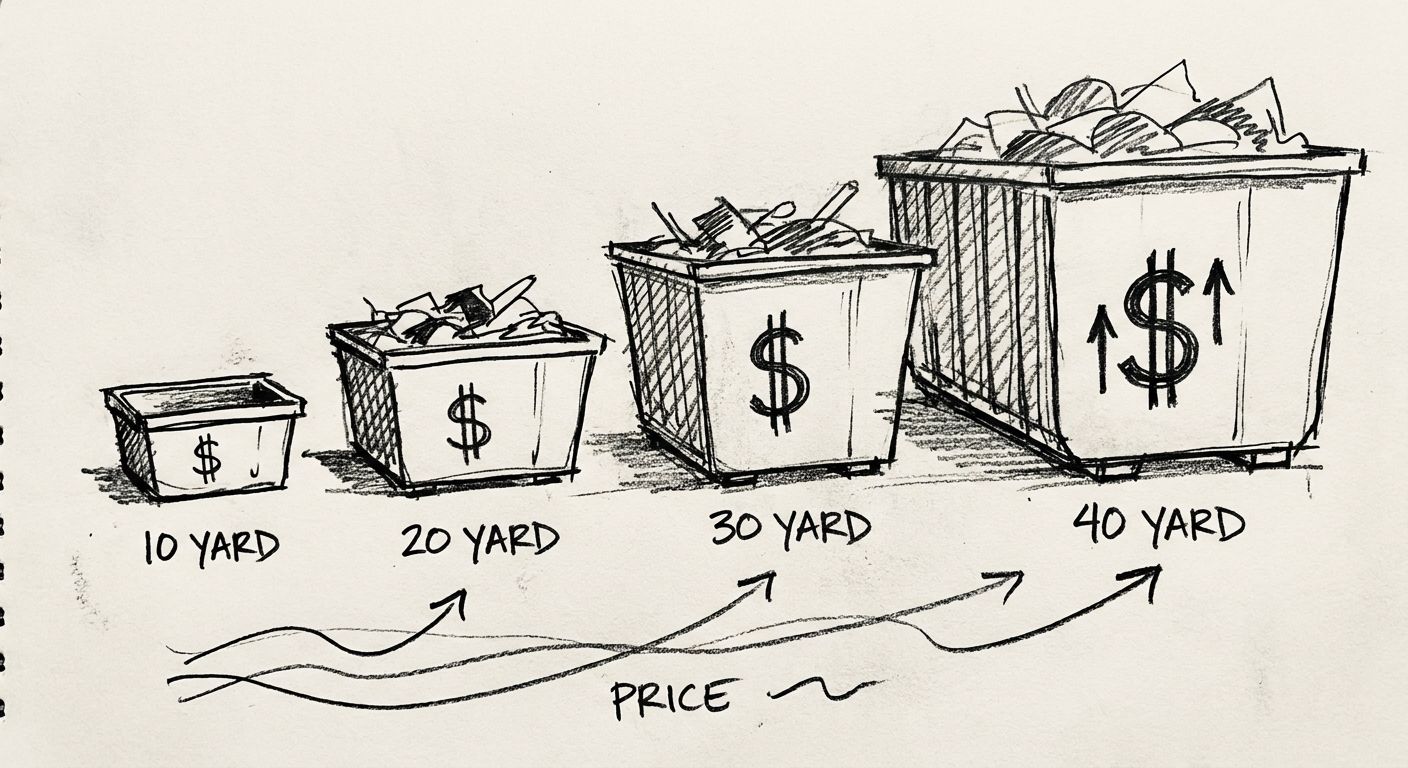
- Dumpster rental prices by size depend on debris weight, material type, and rental duration, not yard count alone.
- A 10 yard container fits tight driveways and garage cleanouts; a 40 yard unit suits full commercial demolition.
- Valley Services runs its own San Jose transfer station, which keeps container turnaround and pickup scheduling predictable.
Why this matters
Yard size is only half the sizing question. The other half is weight. A 20 yard container full of light framing debris behaves nothing like a 20 yard container full of concrete or tile.
Roll-off pricing structures are built around both volume and weight, plus the material's disposal category at the transfer station. Get the size wrong and you either pay for a second pickup or pay an overage charge on the first one.
Valley Services operates its own C&D transfer station in San Jose, which means the endpoint for your debris is fixed and the pickup schedule doesn't depend on a third-party disposal site's hours or backlog. That matters more on tight-schedule jobs than the yard number printed on the container door.
What makes the best dumpster size choice
- Driveway and curb length. A 40 yard container needs roughly 22 feet of clearance. A tight urban driveway rules it out before weight even enters the conversation.
- Debris weight versus volume. Concrete, dirt, and roofing shingles hit the weight limit long before the container looks full.
- Fill line limits. Every roll-off has a marked fill line. Material stacked above the top rail can't legally travel on the street.
- Rental duration. Multi-phase jobs need a size that survives several weeks of debris accumulation, not just one weekend of demo.
- Local permit rules. Placing a container on a public street in San Jose or a neighboring city usually requires a permit; driveway placement usually doesn't.
- Transfer station acceptance. Mixed C&D loads, clean wood, and metal each move through disposal differently, which affects which size makes sense for the job.
At a glance: dumpster sizes 10 to 40 yard compared
| Container size | Best for | Approx. dimensions | Key limitation |
|---|---|---|---|
| 10 yard | Garage cleanouts, small remodels | 12 ft L x 8 ft W x 3.5 ft H | Fills fast with heavy debris like tile or concrete |
| 15 yard | Kitchen and bathroom remodels | 16 ft L x 8 ft W x 4 ft H | Not enough volume for whole-house jobs |
| 20 yard | General contractor and whole-home cleanouts | 22 ft L x 8 ft W x 4.5 ft H | Still hits weight limits on dense material |
| 30 yard | New home construction, additions | 22 ft L x 8 ft W x 6 ft H | Needs significant driveway or street clearance |
| 40 yard | Commercial demolition, large tear-offs | 22 ft L x 8 ft W x 8 ft H | Too large for most residential driveways |
1. 10 yard container: best for garage cleanouts and small remodels
The 10 yard roll-off holds about three pickup truck loads of debris. It fits in a standard driveway and clears most side-yard access without issue.
10 yard pros:
- Fits tight driveways and narrow side yards
- Easiest size to load without a ramp
- Lowest weight-limit risk for mixed household debris
10 yard cons:
- Fills quickly with heavy material like drywall or tile
- Not enough capacity for a full room renovation
- Undersized for anything beyond a single-room job
Best for: Garage cleanouts, small bathroom tear-outs, single-room decluttering. See how it plays out on a 10 yard dumpster rental for a garage cleanout. Verdict: Buy if your project fits inside one weekend.
2. 15 yard container: best for kitchen and bathroom remodels
The 15 yard sits between the 10 and 20 yard units. It handles cabinet tear-outs, drywall, and flooring from a single-room remodel without the footprint of a full-size roll-off.
15 yard pros:
- Middle-ground capacity without a large footprint
- Handles mixed remodel debris: cabinetry, drywall, flooring
- Reasonable fit for driveways that can't take a 20 yard unit
15 yard cons:
- Still limited on dense debris like tile or concrete
- Less common size, so availability can vary by week
- Underpowered for whole-home projects
Best for: Single kitchen or bathroom remodels where the driveway is limited. Verdict: Hold on this size unless your driveway specifically rules out a 20 yard unit.
3. 20 yard container: best overall for general contractors and whole-home cleanouts
The 20 yard roll-off is the size most Bay Area contractors default to, and for good reason: it balances volume against weight limits better than any other size on this list. It handles a full-room remodel, a whole-home cleanout, or a mid-size construction phase without the access demands of a 30 or 40 yard unit.
20 yard pros:
- Handles most single-phase residential and light commercial jobs
- Fits standard driveways in San Jose, Santa Clara, and Sunnyvale
- Versatile enough for mixed debris: framing, drywall, flooring, fixtures
20 yard cons:
- Concrete or dirt loads still hit weight limits fast
- Overkill for a single-room job under 500 square feet
- Longer jobs may need a swap-out mid-project
Best for: General contractors running whole-home renovations or multi-room cleanouts. This is the go-to size referenced in construction dumpster rental for general contractors. Verdict: Buy, the default choice when you're not sure which size to pick.
4. 30 yard container: best for new home construction and additions
The 30 yard unit is built for jobs that generate steady debris over weeks, not days. New construction, room additions, and larger demolition phases fall into this range.
30 yard pros:
- Handles high-volume framing, drywall, and packaging waste
- Fewer pickup swaps needed over a multi-week job
- Matches the pace of new-construction debris generation
30 yard cons:
- Requires real driveway or street clearance to place
- Weight limits still apply hard on concrete or masonry
- Not practical for compact residential lots
Best for: New home builds and additions with sustained debris output over weeks. Verdict: Buy for multi-week construction phases, Skip for anything smaller than a full addition.
5. 40 yard container: best for commercial demolition and large tear-offs
The 40 yard is the largest standard roll-off size and the one most often reserved for commercial demolition, large roofing tear-offs, and full structure teardowns.
40 yard pros:
- Maximum volume capacity in the standard lineup
- Fewest pickup trips for large-scale demolition
- Matches the pace of commercial-scale debris
40 yard cons:
- Needs significant clearance, rarely fits a residential driveway
- Weight limits on dense debris cap effective capacity well below the volume number
- Overkill for anything short of a full teardown
Best for: Commercial demolition and large-scale tear-offs. Details specific to that use case sit in 40 yard dumpster rental for commercial demolition. Verdict: Buy for full demolition scope, Skip for residential remodels.
How we ranked
Every size on this list gets measured against the same six factors: driveway and access clearance, debris weight-to-volume ratio, fill line limits, rental duration fit, permit requirements, and transfer station acceptance for the material type. The 20 yard container wins overall because it clears the most of those factors for the widest range of Bay Area job types in 2026, not because it's the biggest or the smallest option on the list.
Which dumpster size should you choose?
If you're not sure, start with the 20 yard container. It handles the widest range of residential and light commercial jobs without the access problems that come with a 30 or 40 yard unit.
Drop to a 10 or 15 yard if your driveway is tight or the job is a single room. Move up to a 30 or 40 yard only when the project scope is new construction, a full addition, or commercial demolition.
Before you commit to a size, estimating your rental costs for the remodel against your actual debris volume and weight avoids the two most common mistakes: undersizing and paying for a second pickup, or oversizing and paying for capacity you never use.
Talk through your container size
Call Valley Services or request a quote for your job site.
FAQ
What's the best dumpster size for a home renovation project?
A 20 yard roll-off container fits most whole-home renovation projects in 2026. Drop to a 15 yard for a single-room remodel or move up to a 30 yard for a multi-week addition.
How much does a 20 yard dumpster cost in 2026?
Cost depends on debris weight, material type, and rental duration, not the yard size alone. Contact Valley Services for a quote based on your specific project scope.
Is a 15 yard or 20 yard dumpster better for a kitchen remodel?
A 15 yard container works for a single kitchen remodel with limited driveway space. A 20 yard container is the safer choice if the job includes flooring, cabinetry, and drywall together.
What size dumpster do I need for a garage cleanout?
A 10 yard container handles most single-garage cleanouts. It fits standard driveways and clears in one pickup for typical household debris.
Can I fill a roll-off dumpster past the top rim?
No. Every container has a marked fill line at the top rail, and material stacked above it can't legally travel on the street. Overfilling risks a refused pickup.
What's the biggest dumpster size available for commercial demolition?
The 40 yard roll-off is the largest standard size and the one typically used for full commercial demolition and large structure teardowns.
Does San Jose require a permit for a roll-off dumpster on the street?
Placing a container on a public street in San Jose usually requires a permit, while driveway placement typically does not. Check with the city before scheduling delivery.
How is dumpster weight limit different from yard size?
Yard size measures volume, while weight limit measures mass, and dense debris like concrete or tile hits the weight cap long before the container looks full. Match your debris type to the size, not just the project square footage.
One last thing
The yard number on the container door tells you volume, not what you can actually load. A 20 yard container full of concrete debris hits its weight limit at a fraction of the volume a 20 yard container of framing lumber would need to fill. Match the size to the material, not just the room count, and you skip both the overage fee and the second pickup call.
Valley Services has run the same San Jose yard since 1986, third generation, same family. One call covers the roll-off container, the restrooms, and the fencing for the same job site, and the transfer station endpoint stays under Valley's own control rather than a third party's schedule. Call (408) 297-5404 or visit valleyservices.biz to talk through sizing for your specific project.