A roll-off container that fills past the rim line before pickup day doesn't just look bad on a job site. It triggers overage fees, slows down pickup, and can get flagged as a road hazard once the driver tries to haul it. Loading it right the first time is the cheapest thing you'll do on the whole project.
- Fill roll-off containers level with the rim, never mounded above it, to avoid 2026 overage fees.
- Weight limits cause more overage charges than volume: concrete, dirt, and shingles hit tonnage caps fast.
- Sort prohibited materials before loading. Mixed loads with tires, batteries, or appliances add extra charges.
- Valley Services sizes container rentals by project type in San Jose and the South Bay, so you load once and haul once.
- Schedule pickup the day the container reaches the fill line to avoid extra rental days.
Why Roll-Off Container Overage Fees Happen
Overage fees come from two things: loading past the fill line, and loading past the weight limit for the container size you rented. Both are avoidable with a plan.
A roll-off container rental is priced around a size and a weight allowance. Go over either one and the hauler charges for the extra. In 2026, most Bay Area crews still lose money on this the same way they did a decade ago: they load fast, load heavy on top, and don't think about tonnage until the truck is already loaded.
Valley Services has operated its own transfer station in San Jose since 1986, third generation, same yard. That matters here because Valley controls its own scale and its own drop-off schedule instead of brokering to a third-party site. When a weight ticket comes back high, the resolution is faster because the company that weighed it is the company that answers the phone.
What You'll Need Before You Load
- The right container size for your debris type and volume, not just what fits in the driveway
- A clear idea of your material mix: construction debris, yard waste, concrete, or mixed demo
- Basic PPE: gloves and closed-toe boots for anyone loading by hand
- A loading plan: heavy first, bulky broken down, light and bulky last
- A driveway or curb spot with clear delivery access for the truck
- Your local prohibited materials list (tires, batteries, paint, refrigerant appliances, and similar items usually need separate disposal)
The Steps: How to Load a Roll-Off Container Without Overage Fees
1. Confirm the container size before anything goes in
Sizing wrong is the single biggest driver of overage charges. A container that's too small for the job gets overloaded by day two. Match the container to the project type, not to what's sitting in the yard that day. A sizing guide built for cleanout projects walks through the volume math for common Bay Area jobs. Common mistake: ordering a 10-yard container for a full kitchen tear-out because it's what's available, then paying for a second pickup.
2. Know your weight limit, not just your volume limit
Every container size carries both a yardage rating and a tonnage rating. A 20-yard container that's half full of wet concrete can hit its weight limit before it's half full of volume. Ask what the tonnage allowance is for your specific rental before you start loading, and weigh your heaviest material category mentally against it. Common mistake: assuming an empty-looking container has room left when it's actually at its weight cap.
3. Load heavy debris first and spread it flat
Concrete, dirt, tile, and shingles go in first, flat across the floor, not dumped in one corner. Spreading heavy material evenly keeps the container balanced for the truck and prevents one axle from bearing the load. Common mistake: dumping a wheelbarrow load in the same spot repeatedly, which creates a lean that shifts during transport.
4. Break down bulky items before they go in
Cabinets, doors, and framing lumber take up three times the volume intact that they do broken down. Break cabinets apart at the joints, cut lumber to shorter lengths, and flatten cardboard. This step alone can save a full size upgrade on a remodel. Common mistake: tossing whole doors and intact furniture in first, which wastes cubic footage fast.
5. Stack low across the whole floor before going high
Fill the container in layers, covering the entire floor before building height in any one section. This uses the full volume the container is rated for instead of creating a pyramid in the middle with empty corners. Common mistake: piling material in the center, which looks full at a glance but leaves ten percent of usable space untouched.
6. Stop loading at the fill line
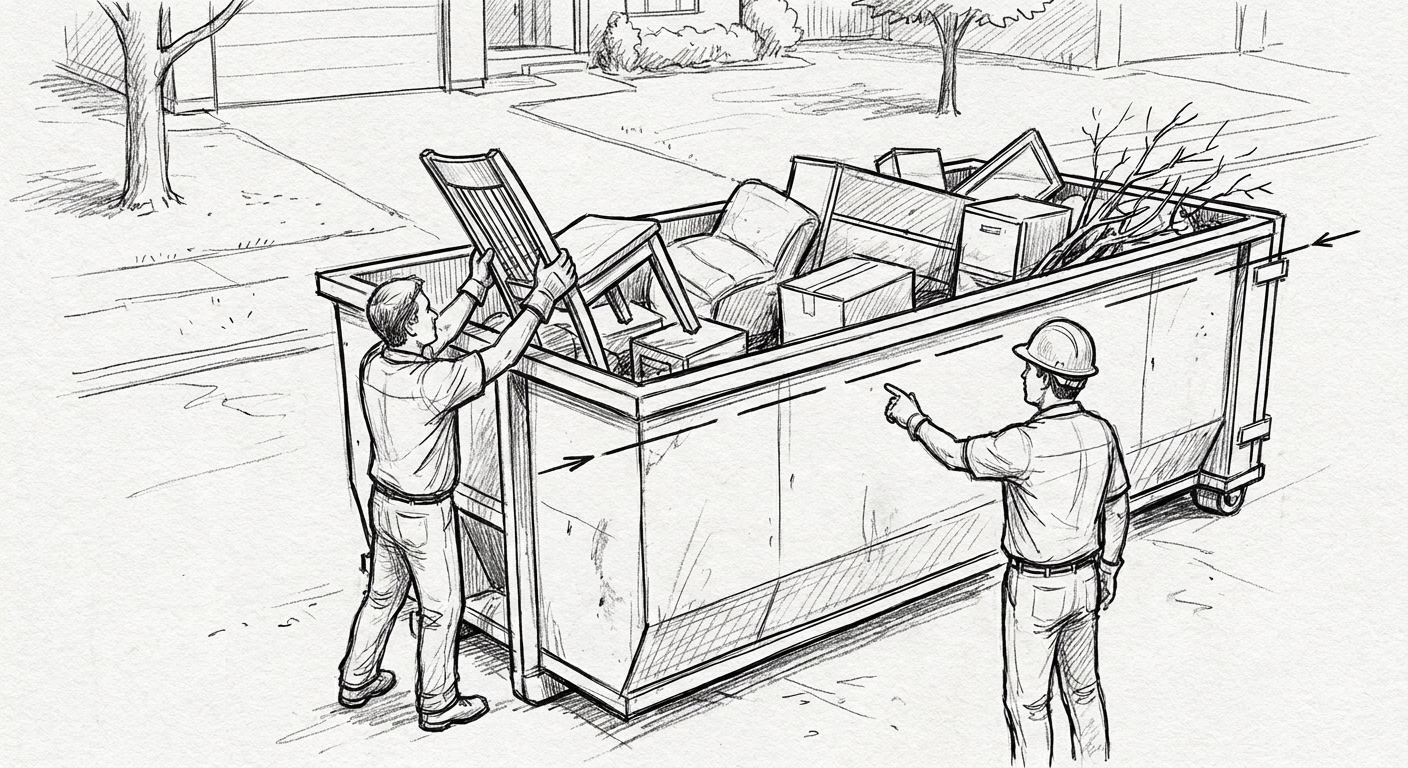
Most roll-off containers have walls around four feet high, and the fill line is the top edge of those walls, not above it. Material mounded above the rim is illegal to haul on most Bay Area roads and gets flagged before pickup. Common mistake: crews keep loading because the container "still has room" once material starts leaning past the top edge.
7. Separate prohibited materials before pickup day
Tires, batteries, paint cans, and appliances with refrigerant lines usually can't go in a standard C&D load. Mixed loads with these items get flagged at the transfer station and cost more to process. Set a separate pile for these items from day one instead of sorting them out at the end. Common mistake: finding a mattress or a propane tank buried under debris the morning of pickup.
8. Schedule pickup the day the container hits the line
A container sitting full for extra days adds rental time without adding value. Once you're at the fill line, call for pickup instead of trying to squeeze in one more load. Coordinating delivery and pickup timing around your actual project pace, not a fixed weekly schedule, keeps rental days and overage risk both down.
Troubleshooting Common Loading Problems
Container filled faster than expected mid-project. Call to swap for a larger size or add a second pickup rather than overloading the one you have. A swap costs a delivery run. An overage charge costs more and delays the truck.
Load sits above the rim and the driver won't take it. This is a legal hauling issue, not a preference. Pull material back below the fill line before the scheduled pickup window, even if that means a second container.
Weight ticket comes back over the limit. Check whether wet material, concrete, or dirt made up a bigger share of the load than planned. These materials weigh far more per cubic yard than mixed construction debris.
Prohibited material found in the load. Pull it and arrange separate disposal. A single flagged item can hold up the whole load at the transfer station.
Container shifts or leans during loading. Redistribute weight toward the center and lower height on the heavy side. An uneven load is a safety issue before it's a billing issue.
Driveway shows cracking after delivery. Plywood or a protective mat under the container's contact points before delivery prevents most of this on older concrete or asphalt.
Tools and Resources
- Estimating rental costs for a remodel before you commit to a size
- Preparing your driveway for a roll-off container before delivery day
- A tape measure for confirming delivery access width
- Work gloves and a hand truck for breaking down bulky items
What to Do Next
Line up delivery and pickup before the debris starts piling up. Crews that book pickup reactively, after the container is already full, lose a day or two waiting on a truck. Set the pickup window when you book delivery, then adjust it once you see how fast the container is filling.
FAQ
How do I load a roll-off container safely and avoid overage fees in 2026?
Load heavy debris first, spread it flat across the floor, stop at the fill line, and keep prohibited materials out of the load. Overage fees in 2026 mostly come from exceeding the weight limit, not just the volume.
What counts as overloading a roll-off container?
A container is overloaded when material sits above the top edge of the walls or when the total weight exceeds the tonnage allowance for that size. Both trigger extra charges and can stop the driver from hauling it.
Does the size of the container affect overage fees?
Yes. A container sized too small for the job gets overloaded fast, since crews keep adding material past the fill line trying to avoid a second rental. Matching size to project type upfront avoids this.
Can I put concrete or dirt in a roll-off container?
Concrete and dirt are heavy per cubic yard and hit weight limits faster than mixed construction debris. Ask about weight allowances before loading these materials in volume.
What items are usually not allowed in a construction debris load?
Tires, batteries, paint cans, and appliances with refrigerant lines are commonly excluded from standard C&D loads. Check the prohibited materials list for your area before loading.
How full can a container be before pickup?
Material should sit level with the top of the walls, not mounded above it. Loads above the rim are unsafe to haul on public roads and get flagged before pickup.
What happens if my load is overweight at pickup?
An overweight load gets billed for the excess tonnage above the allowance for that container size. Pulling heavy wet material or excess concrete before pickup can bring a load back under the limit.
How do I know what size container to rent?
Size depends on project type and debris volume, not just what fits the driveway. A kitchen remodel and a whole-home cleanout need very different sizes even on similar-sized homes.
One Last Thing
Most overage disputes happen because nobody at the yard can explain the weight ticket. Valley Services runs its own transfer station in San Jose, so the scale that weighs your load and the company that billed you are the same operation. That's a straight line back to an answer, not a call center reading a printout. Third generation, same yard since 1986.
Call Valley Services at (408) 297-5404 or visit valleyservices.biz to talk through container sizing before your next load.