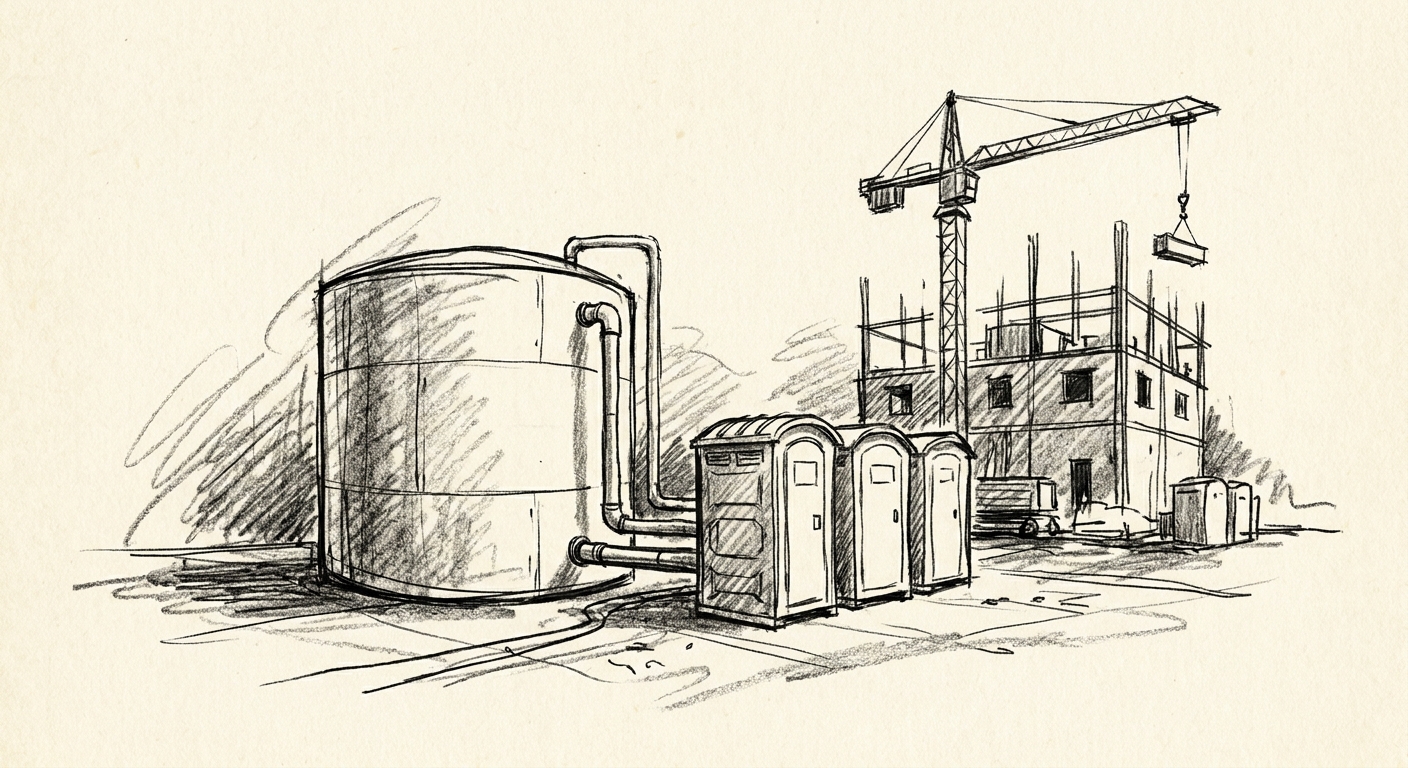
Job site restrooms fail for one reason more than any other: the holding tank runs out of capacity before the service truck shows up. Ranking the right holding tank rental for job site restrooms in 2026 comes down to crew size, water access, and how often the unit gets serviced, not just which flyer looks cleanest.
- A standard single-stall unit with a built-in holding tank is the best holding tank rental for job site restrooms for crews under 15: Buy.
- Crews over 15 or jobs running past 30 days need a deluxe unit with a larger holding tank and weekly service: Consider.
- Sites with no water hookup need a standalone holding tank or trailer setup, not a standard flush-tank unit: Buy for that use case.
- A single small unit left on a job past 30 days without adding a second service day: Skip.
Why this matters
A holding tank on a job site restroom is not a set-and-forget fixture. Tank capacity buys you time between service visits, not a waiver from Cal/OSHA sanitation expectations. Undersize the tank or under-schedule the service, and a crew of 20 will overwhelm a unit built for six in under a week.
Many Bay Area contractors plan for one restroom per 10 to 15 workers on a standard eight-hour shift, adjusting up for two-shift jobs or hot months when water use spikes. Get that math wrong and the complaint isn't about the restroom, it's about the whole site losing an hour a day to a line at the door.
Valley Services has serviced South Bay job sites since 1986, third generation, same yard on 7th Street in San Jose. One call arranges the restroom, the roll-off container, and the temporary fencing for the same job site, which matters when a general contractor is coordinating three vendors instead of one.
How this was ranked
Each setup below is ranked against four variables that actually decide whether a holding tank rental works on a Bay Area job site in 2026: crew size, water access, job duration, and required service interval. A unit that's a perfect fit for a two-week remodel is the wrong call for a six-month commercial build, and a unit built for a landscaping crew with no water hookup is the wrong call for a downtown office renovation with full plumbing on site.
The rankings assume standard Bay Area conditions: San Jose, Santa Clara, Sunnyvale, Mountain View, and Milpitas job sites with normal access for a service truck. Sites with restricted access or unusual grading need a site visit before locking in a unit.
The ranked list
1. Standard single-stall restroom with a standard holding tank The default pick for most construction crews. Built for a crew of 10 to 15 on a standard job running 30 to 60 days, with a holding tank sized for routine weekly service. This is the unit most general contractors order first and only upgrade from if the crew size or job length changes. Buy for standard construction crews. See the restroom rental for construction sites breakdown for sizing by crew.
2. Deluxe unit with hand-wash station and a higher-capacity holding tank The upgrade pick once a crew tops 15 workers or a job runs past 60 days. The larger holding tank stretches the interval between pump-outs, and the built-in hand-wash station matters on any site with food, chemicals, or Cal/OSHA hygiene requirements. Consider this for larger crews or extended-duration jobs in 2026.
3. ADA-accessible unit Required on any job site with public access, larger crews, or a general contractor enforcing a compliant jobsite standard across all trades. The wider stall and holding tank capacity match a standard unit, but the access requirement is non-negotiable once a site crosses certain crew thresholds. Buy when compliance applies, Skip the extra unit if the site has under 10 workers and no public access.
4. Unit built for no-hookup sites Landscaping crews, remote grading jobs, and sites without a water line on the property need a unit where the holding tank does all the work, since there's no fresh water line to rely on. This setup gets ranked above a standard flush unit for these jobs specifically because the standard unit assumes access that doesn't exist here. Buy for landscaping and remote-access crews. Details on scheduling by crew size are in the restroom rental for landscaping crews guide.
5. Restroom trailer with onboard fresh water and a holding tank The pick for multi-week jobs with foot traffic beyond the crew, larger events, or production sets that need a step up from a standard unit without full building plumbing. The trailer's onboard holding tank and fresh water tank run independently of the site, which matters when a job site has no permanent utilities yet. Consider for jobs over 90 days or sites hosting visitors, clients, or inspectors regularly. More on sizing for attendance-driven jobs is in the restroom rental for large events guide.
6. High-traffic unit with frequent service scheduling Built for festivals, concerts, and any site where hundreds of people cycle through in a single day rather than a fixed crew showing up on shift. The holding tank capacity matters less here than the service interval, since a high-traffic site can fill a standard tank in hours, not days. Buy for single-day or multi-day public events, Skip for a standard construction crew where this level of service frequency is overkill.
7. Standard unit with aesthetic upgrades for weddings and private events The holding tank and service needs are close to a standard unit, but the finish matters more than the tank capacity for this use case. Order this when the client cares how the unit looks near a ceremony site, not because the plumbing requirements changed. Consider for private outdoor events where guests will see the unit up close.
Talk through your job before you order
Confirm crew size, tank capacity, and service schedule with Valley Services.
Comparison table
| Setup | Best for | Tank service interval | Verdict |
|---|---|---|---|
| Standard single-stall | Crews of 10 to 15, 30 to 60 day jobs | Weekly | Buy |
| Deluxe unit | Crews over 15, jobs past 60 days | Weekly to twice weekly | Consider |
| ADA-accessible | Compliance-required sites | Weekly | Buy where required |
| No-hookup unit | Landscaping, remote grading | Weekly | Buy |
| Restroom trailer | Multi-week jobs, client foot traffic | Weekly | Consider |
| High-traffic unit | Festivals, concerts, single-day events | Daily or twice daily | Buy for events |
| Aesthetic standard unit | Weddings, private outdoor events | Weekly | Consider |
How to rent the right holding tank setup
- Match the tank to the crew, not the job title. A 20-person framing crew and a 20-person finish crew both need the same tank capacity and service interval, regardless of trade.
- Confirm the service day before the delivery day. A holding tank rental scheduled for weekly service on a Friday needs to line up with the site's actual work week, not a generic calendar slot.
- Ask about access before ordering a trailer. A restroom trailer with an onboard holding tank needs level ground and truck access for both delivery and service, which not every 2026 job site has once framing starts.
FAQ
What is the best holding tank rental for job site restrooms?
A standard single-stall restroom with a built-in holding tank is the best fit for most construction crews of 10 to 15 workers on jobs running 30 to 60 days in 2026. Larger crews or longer jobs need a deluxe unit with a bigger tank and more frequent service.
How often does a restroom holding tank need to be serviced?
Most standard job site units get serviced weekly, but high-traffic sites like festivals or concerts need daily or twice-daily service. Crew size and job duration, not just tank capacity, determine the right interval.
Is a restroom trailer better than a standard unit for a construction job?
A restroom trailer makes sense for jobs running past 90 days or sites with regular client and inspector foot traffic, since the trailer carries its own fresh water and holding tank. A standard unit is the right call for most shorter jobs.
Do job sites without water access need a different holding tank setup?
Yes. Sites without a water hookup, like landscaping and remote grading jobs, need a unit built to run entirely off the holding tank rather than a standard flush unit that assumes a water line nearby.
How many restrooms does a job site need?
Many Bay Area contractors plan for one restroom per 10 to 15 workers on a standard shift, adding a second unit for two-shift jobs or crews over 20. Public-facing sites often need an ADA-accessible unit added to that count.
Does a bigger holding tank mean less frequent service?
A larger tank stretches the time between pump-outs but does not replace the need for regular service, especially in warm months when water use goes up. Tank size buys schedule flexibility, not a waiver from routine servicing.
What's the difference between a construction unit and an event unit?
A construction unit is sized for a fixed daily crew with weekly service, while an event unit is sized for high, short-burst traffic that can fill a standard tank in hours. The tank capacity may look similar, but the service schedule is completely different.
One last thing
The part of a holding tank rental that gets skipped most often isn't the tank, it's the service day. A unit with a large holding tank sitting on a weekly schedule during a stretch of 90-degree Bay Area weeks will still smell and fill faster than the calendar assumes. Match the service interval to the season, not just the crew size, and the tank capacity stops being the variable that decides whether the restroom holds up.
Call (408) 297-5404 or visit valleyservices.biz to talk through crew size, job length, and the right holding tank setup for your site.