Festival and concert producers in the Bay Area size restrooms by headcount, not by guesswork, and the count changes everything from bathroom lines to health department sign-off. This guide breaks down what to order, how many units per guest, and where producers get it wrong on multi-day events in 2026.
- Standard portable stalls cover general admission at 1 unit per 75-100 guests: Buy for single-day festivals.
- ADA-accessible units are a California code requirement for public outdoor events, not an upgrade: non-negotiable.
- Luxury restroom trailers fit VIP and backstage zones on multi-day festivals: Consider, skip for general admission fields.
- Book restroom rental for festival dates 60-90 days ahead during Bay Area peak season, May through September 2026.
- Valley Services has supplied restroom and site services for Super Bowl LX and the San Jose Marathon.
Why this matters
A restroom shortage at hour four of an eight-hour concert is a producer's problem, not a vendor's. Lines back up past the beer garden, guests start looking for the fence line, and the health inspector who signed your permit gets calls.
County health departments in Santa Clara and Santa Crumaren tie permit approval directly to restroom-to-attendee ratios. Get the math wrong on the permit application and you delay load-in, not just risk a bad night. Valley Services has run restroom and site logistics for Bay Area events since 1986, three generations in the same yard.
Who this is for
This guide is built for festival producers, concert promoters, venue managers, and municipal event staff running outdoor events across San Jose, Santa Clara, Sunnyvale, Mountain View, and Milpitas. If you're planning headcount past 500 guests, multi-day gates, or a permit that requires ADA documentation, the sizing rules below apply directly to your site plan.
What to look for in restroom rental for festivals and concerts
Headcount-to-unit ratio
General admission festivals need roughly 1 restroom unit per 75 to 100 guests for an 8-hour event day. Beer and wine service pushes that ratio tighter because alcohol increases restroom frequency. Undercounting here is the single biggest driver of long lines and negative reviews after the event.
ADA-accessible units
California requires ADA-accessible restroom units at any public outdoor event, and the number scales with total unit count, not a flat minimum. Health departments in Santa Clara County check this line item on permit applications before signing off. Skipping it or under-ordering it is the fastest way to get a permit kicked back.
Hand-wash stations near food and beverage
Food vendor zones need separate hand-wash stations, not just restrooms with attached sinks. Health inspectors check this at food booth walkthroughs, and it's a common miss on first-time festival permits. Pair every cluster of food vendors with a dedicated hand-wash station, not a shared restroom bank.
Service schedule during multi-day events
A restroom that isn't pumped between day one and day two of a festival is a restroom nobody uses on day two. Multi-day events need a locked-in service schedule, not a one-time drop and pickup. Confirm pump-out frequency and timing before the contract is signed, not during load-in.
Site access for load-in and load-out
Restroom units get placed before fencing goes up and before the stage crew starts blocking access roads. Coordinate restroom placement with the site map early, because a truck that can't reach a placement zone on load-in day means a restroom bank sitting in the wrong spot for the whole event.
Placement near crowd flow, not just convenience
Restrooms placed too close to the stage create bottlenecks during set changes. Placed too far, and guests skip the walk during a headliner set. Map restroom clusters against expected crowd density at peak hours, not against the easiest spot on the lot.
Top picks by event zone
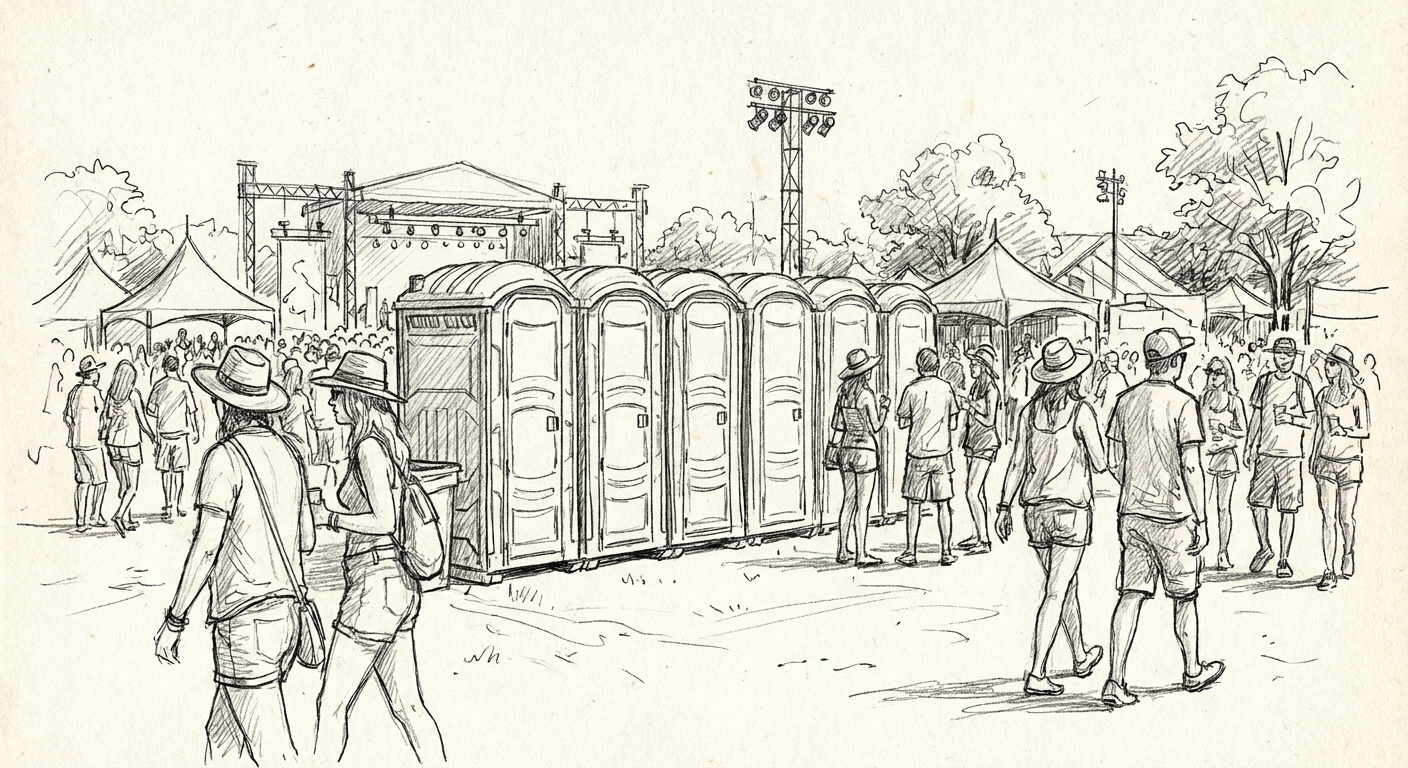
The general admission workhorse. Standard portable stalls handle GA fields at 1 unit per 75-100 guests over an 8-hour day. No hand-wash sink built in, so pair with a separate station near food zones. Buy for any single-day GA festival.
The compliance non-negotiable. ADA-accessible units scale with total restroom count under California code and get checked on permit applications in Santa Clara County. Skipping this line delays load-in more than any other item on the site plan. Buy, every time, no exceptions.
The food-zone fix. Standalone hand-wash stations pair with restroom clusters near vendor rows and satisfy health inspector walkthroughs. They're not restrooms, they're sanitation stations, and inspectors check for them separately. Buy for any event with food vendors.
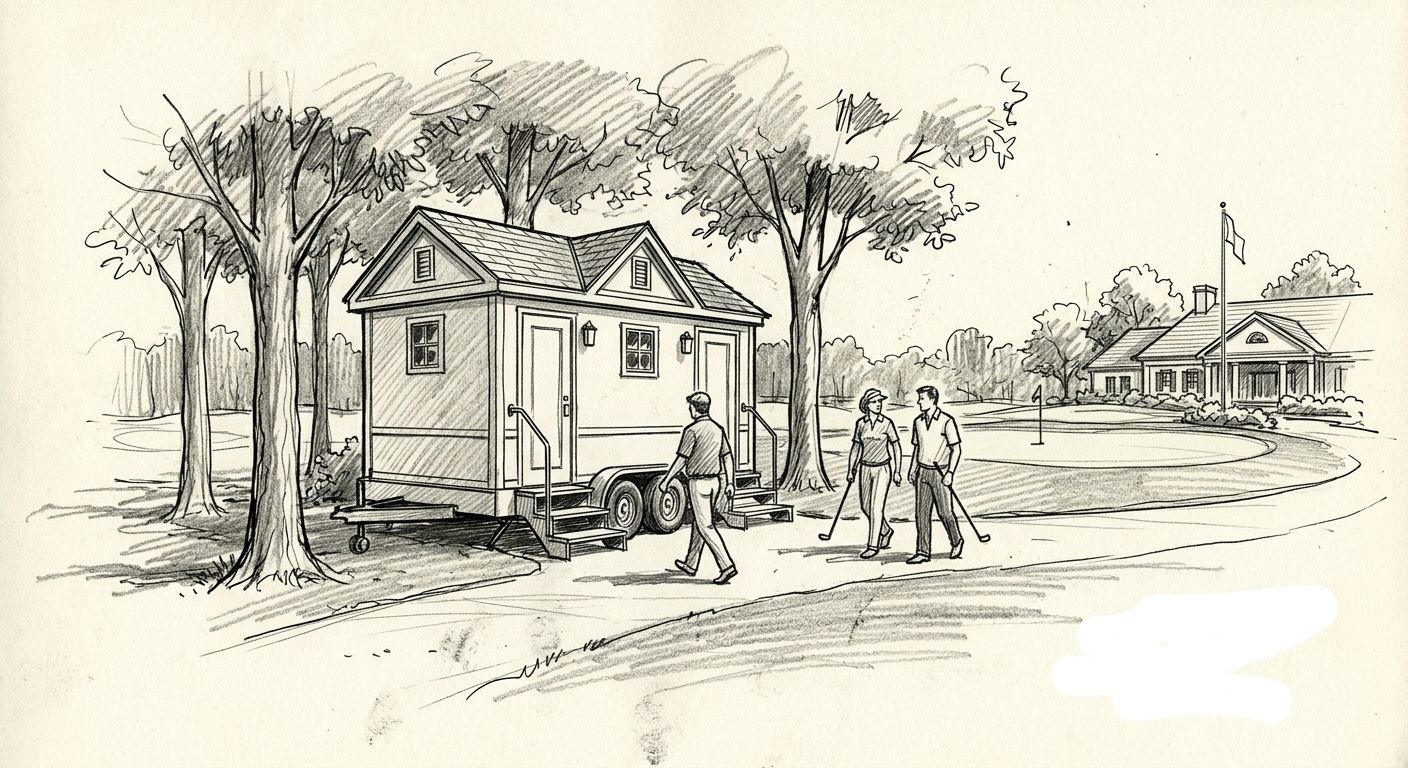
The backstage upgrade. Luxury restroom trailers with sinks and mirrors fit VIP zones, artist hospitality, and multi-day backstage areas where a standard stall reads as a downgrade. They add real weight and footprint to a site plan, so confirm placement before the stage design locks. Consider for VIP and backstage, Skip for general admission fields.
The multi-day survivor. High-capacity flush units hold up better over three-day festivals with 10,000-plus daily attendance, provided the service schedule includes daily pump-outs. Without a locked service schedule, capacity doesn't matter. Consider, contingent on the pump-out contract, not the unit spec alone.
What to avoid
- Ordering by "feel" instead of headcount math. A producer who orders the same restroom count as last year's smaller event runs short when attendance grows, and the shortfall shows up as a line, not a line item.
- Skipping hand-wash stations to save on unit count. Health inspectors check for hand-wash near food vendors specifically. Cutting this to trim the order risks the permit itself.
- Booking without confirming a multi-day service schedule. A restroom bank that looks fully staffed on day one and unserviced on day two creates a worse guest experience than fewer, better-maintained units.
Restroom logistics rarely happen alone on a festival site. Fencing, K-rail, and roll-off containers for teardown debris all get scheduled against the same load-in window, and coordinating one vendor for site services cuts the number of trucks crossing your access road on setup day.
Plan restroom rental for your event
Call to size units, hand-wash stations, and ADA counts before the permit deadline.
Verdict comparison table
| Restroom Type | Best For | Units per 100 Guests | Hand-Wash Included | Verdict |
|---|---|---|---|---|
| Standard portable stall | Single-day GA festivals | 1 per 75-100 | No, add separate station | Buy |
| ADA-accessible unit | Permit compliance | Scales with total count | Yes, ramp access | Buy |
| Hand-wash station | Food and beverage zones | Paired with stalls | Yes | Buy |
| Luxury restroom trailer | VIP and backstage | 1 per 50 VIP guests | Yes, sink and mirror | Consider |
| High-capacity flush unit | Multi-day, 10,000-plus daily | 1 per 100 | Yes | Consider |
If your site plan also includes post-event debris pickup, the same load-in coordination applies to teardown waste. See the guide on roll-off dumpster rental for landscaping projects for grounds restoration after a festival strikes its fencing and staging.
FAQ
How many portable restrooms do I need for a festival of 5,000 people?
A 5,000-guest single-day festival needs roughly 50 to 65 standard restroom units at a 1-per-75-to-100-guest ratio. Alcohol service and food vendor density push that number higher, and ADA-accessible units scale on top of the base count.
Is an ADA-accessible restroom required for outdoor events in California?
Yes, California requires ADA-accessible restroom units at public outdoor events, scaled against total unit count. Health departments in Santa Clara County check this on permit applications before approving an event.
How often do restrooms get serviced during a multi-day festival?
Multi-day festivals need daily pump-out service, confirmed in the rental contract before load-in, not arranged on site. A restroom bank serviced once on day one and left through day three creates a worse guest experience by the final day.
What's the difference between a portable restroom and a luxury restroom trailer?
A standard portable stall has no built-in sink and serves general admission crowds at high volume. A luxury restroom trailer includes a sink, mirror, and interior finish suited for VIP or backstage zones, not GA fields.
Do festivals need hand-wash stations separate from restrooms?
Yes, food and beverage vendor zones require standalone hand-wash stations checked separately by health inspectors during vendor walkthroughs. A restroom with an attached sink does not satisfy this requirement on its own.
How far in advance should I book restroom rental for a festival in the Bay Area?
Book 60 to 90 days ahead for events during peak season, May through September 2026, when demand across San Jose, Santa Clara, and Sunnyvale runs highest. Shorter windows work for smaller events but limit unit availability during peak months.
Can restrooms and fencing be delivered to the same event site?
Yes, coordinating restroom, fencing, and K-rail delivery through one vendor reduces the number of trucks crossing an access road during load-in. Valley Services runs all three lines out of the same San Jose yard.
What permits are needed for portable restrooms at outdoor events in San Jose?
San Jose and Santa Clara County require a restroom count and placement plan as part of the event permit application, tied to expected attendance. ADA-accessible unit counts and hand-wash station placement near food vendors are both checked at review.
One last thing
Most producers size restrooms off last year's headcount instead of this year's ticket cap, and that gap is where lines start. Pull the ratio from the permit application, not the memory of how the last event felt, and add hand-wash stations to the food vendor budget line before the site map locks.
Valley Services has run restroom and site services out of the same San Jose yard since 1986, third generation, same family, including event work for Super Bowl LX and the San Jose Marathon. Call (408) 297-5404 or reach out through valleyservices.biz to talk through unit counts before your permit deadline.