Ground protection mats keep an outdoor event's load-in and load-out routes intact when trucks, forklifts, catering vehicles, and foot traffic cross grass, gravel, or soft ground. Renting them starts with site dimensions and ground type, not a price call: you measure the paths first, then match panel type to the load crossing them, then schedule delivery around your event's setup and teardown windows.
- Renting ground protection mats for an outdoor event starts with site dimensions, ground type, and equipment weight, not a price quote.
- 4-by-8-foot composite panels cover roughly 32 square feet each and handle foot traffic, carts, and light vehicles.
- Heavier truck or forklift routes need contractor-grade panels rated for repeated equipment passes, not standard foot-traffic mats.
- Book mat delivery the same week you lock fencing and restroom placement so one site visit covers the whole footprint.
- Valley Services coordinates ground protection mats with temporary fencing and restroom trailers for the same event site.
Why this matters
A wedding venue or festival grounds crew doesn't care about your equipment schedule. They care about turf damage, tripping hazards on cable runs, and whether a catering truck rutted the lawn during load-in. Venue contracts in the Bay Area increasingly require ground protection mats under any vehicle path or generator footprint before a permit gets signed.
Get the mat plan wrong and you're either paying for turf repair after the event or watching a truck get stuck on soft ground during load-out, which delays every vendor behind it. Get it right in 2026 and mats become a routine line item next to temporary fencing for outdoor events and restroom placement, not a scramble two days before the gates open.
How to Rent Ground Protection Mats for an Outdoor Event
Follow these steps in order. Skipping the site walk is the most common reason event producers under-order mats and end up short on the day of setup.
- Walk the site and map every load-in and load-out route. Note where catering trucks, generator delivery, and forklifts will cross grass or soft ground.
- Measure the running length and width of each path. A walkway that's 100 feet long and 10 feet wide covers 1,000 square feet before you factor overlap.
- Identify the ground surface and moisture. Wet turf, decomposed granite, and dry gravel all behave differently under repeated equipment passes.
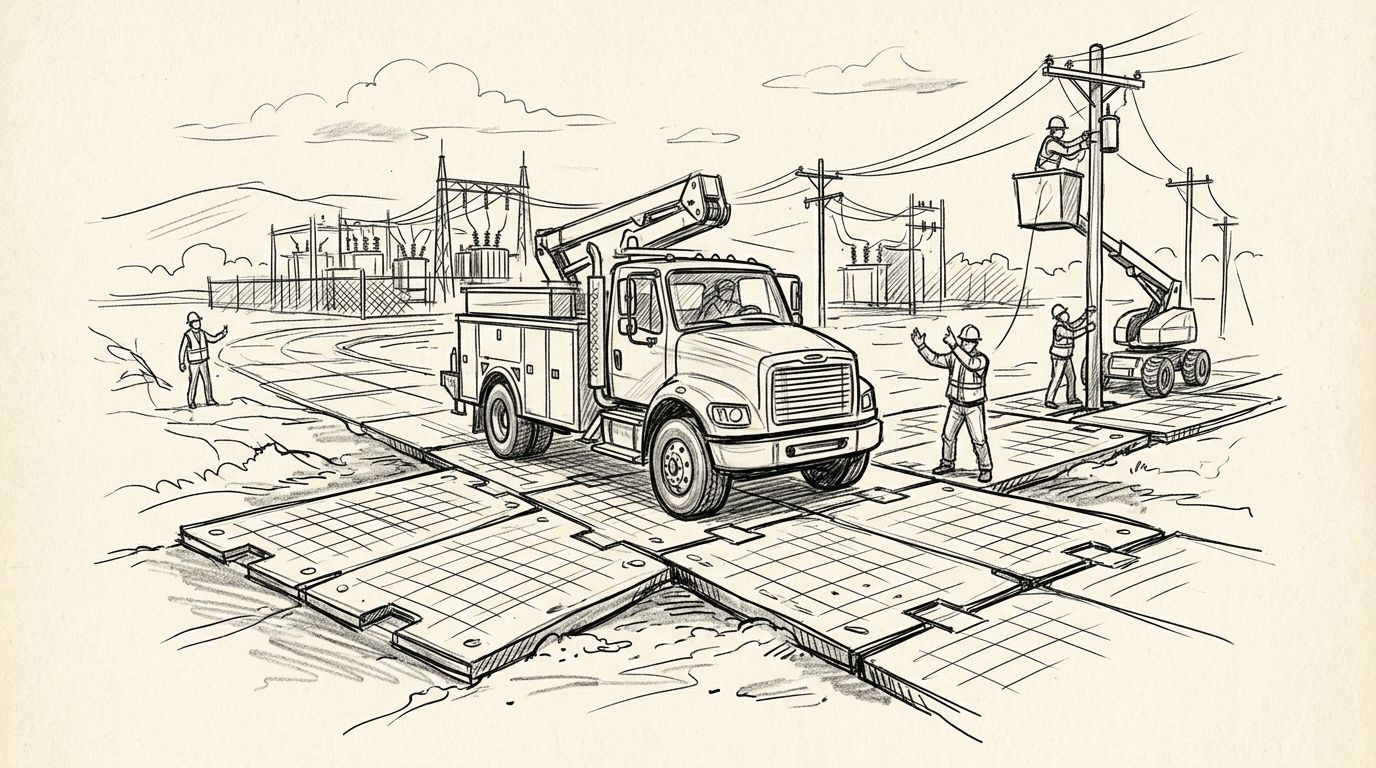
- Match panel type to the heaviest load crossing the mats. Foot traffic and golf carts need lighter composite panels; trucks and forklifts need contractor-grade matting.
- Call the rental yard with your dimensions, surface type, and access window. Ask for delivery and pickup dates tied to your actual load-in and load-out schedule, not just the event date.
- Confirm the anchoring or overlap method if wind or crowd movement is a factor. Yards that also handle ground protection mat rental for construction sites usually know how to secure panels for a one-day event as well as a six-month job site.
Composite Mats: 4-by-8-Foot Panels for Equipment Access
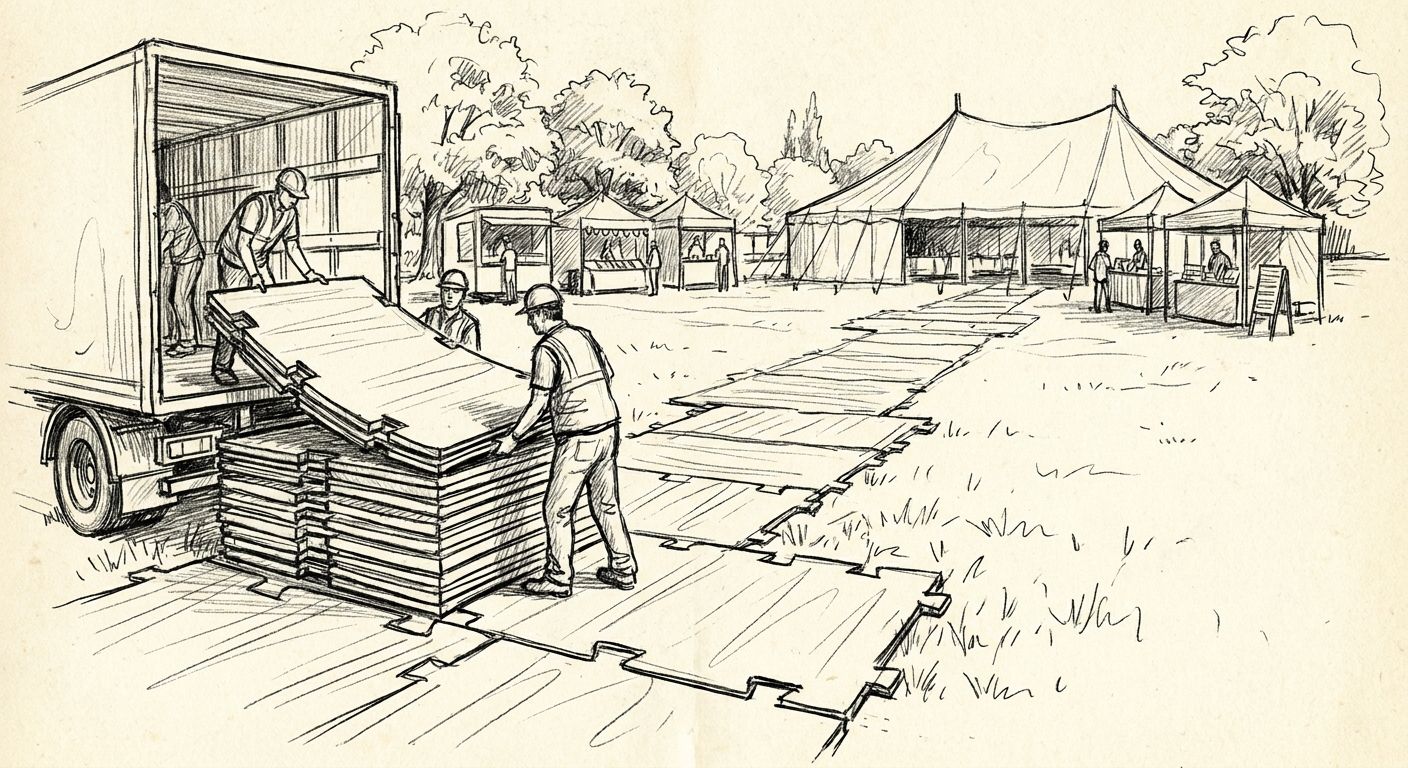
Most rental fleets stock composite panels in 4-by-8-foot sections, each covering roughly 32 square feet. These handle forklifts, small delivery trucks, and catering vehicles crossing turf or landscaped areas during setup and breakdown.
They're the standard choice for the vehicle lanes behind a tent or stage, where the load is heavier and repeated but the surface still needs to look presentable to guests once the panels come up. Verdict: buy composite panels for any route a vehicle or heavy equipment crosses.
Interlocking Panels: 3-by-8-Foot Sections for Foot Traffic and ADA Paths
Lighter 3-by-8-foot interlocking panels work for pedestrian walkways, ADA-compliant paths, and areas where guests cross grass in heels or wheelchairs rather than trucks crossing with equipment. These panels lock edge to edge, which matters for a wedding aisle or festival walkway where a gap or lip becomes a tripping hazard.
Sites that need both vehicle and foot traffic coverage, like a corporate outdoor event with a stage build and a guest entrance, typically order both panel types for ground protection mats for outdoor weddings and events. Verdict: buy interlocking panels for guest paths, skip them for equipment lanes.
Why ground protection mat needs vary
- Ground surface and moisture. Saturated turf after rain needs full coverage; dry gravel may only need partial matting at pinch points.
- Vehicle and equipment weight crossing the mats. A generator delivery truck loads panels differently than a golf cart.
- Event duration. A multi-day festival puts far more repeated passes on the same panels than a single-day wedding.
- Path length and width. Longer load-in routes and wider ADA paths both increase the panel count.
- Venue or permit requirements. Some Bay Area venues specify matting under any vehicle or generator footprint as a lease condition.
- Weather during load-in and load-out week. A dry forecast changes the surface prep compared to a wet one.
How many ground protection mats do I need for an event?
A 100-foot by 10-foot path covers 1,000 square feet, which runs roughly 31 standard 4-by-8-foot panels before accounting for overlap at the edges. Measure every route separately, add foot-traffic paths and vehicle lanes together, then round up rather than down since a short mat run just means a truck tire finds the gap.
Do outdoor wedding venues require ground protection mats?
Many Bay Area venues require mats under any vehicle or generator path as a condition of the site contract, even if they don't specify it for guest walkways. Check the venue's rental agreement before you finalize your mat order, since some properties also restrict stake-down anchoring on protected turf.
How far in advance should mat rental be scheduled for an event?
Mat rental should be scheduled the same week you confirm fencing and restroom placement, so one site visit covers the full footprint instead of three separate trips. Producers who lock matting late often find their preferred delivery window already booked for the same weekend across other events in San Jose and the South Bay.
Valley Services handles ground protection mats alongside temporary fencing and restroom trailers for the same event footprint, which means one call covers the load-in route, the perimeter, and the guest facilities instead of three separate vendors on three separate schedules.
Plan your event site services
One call covers mats, fencing, and restrooms for your event site.
FAQ
How do I rent ground protection mats for an outdoor event?
Measure every load-in and load-out path, identify the ground surface, and match panel type to the heaviest equipment crossing the mats before calling a rental yard. Give the yard your dimensions and access window so delivery and pickup align with your event's setup and teardown schedule.
What size are standard ground protection mats?
Standard composite panels run 4-by-8-feet, covering roughly 32 square feet each, with 3-by-8-foot interlocking panels common for pedestrian paths. Panel count depends on the total path length and width you measured on the site walk.
Do I need different mats for trucks versus foot traffic?
Yes, vehicle lanes need contractor-grade or 4-by-8-foot composite panels rated for repeated heavy passes, while guest walkways can use lighter interlocking panels. Mixing the two on the wrong path is the most common ordering mistake.
Can ground protection mats be used on grass without damaging it?
Properly sized mats distribute weight across the panel instead of concentrating it under a tire or forklift wheel, which is why venues require them under vehicle and generator paths. Coverage still needs to match the full path length, not just the busiest section.
How long does it take to set up ground protection mats before an event?
Setup time depends on total square footage and crew size, so confirm the install window directly with the rental yard when you book delivery. Scheduling mats alongside fencing and restroom placement keeps one crew on site instead of staggered deliveries.
Are ground protection mats required by event venues in the Bay Area?
Many venues in San Jose and the South Bay require matting under any vehicle or generator path as a condition of the site agreement in 2026. Check your venue contract before finalizing the mat order since requirements vary by property.
What ground surfaces need ground protection mats the most?
Wet or soft turf needs the most coverage since equipment can rut or sink the ground, while dry gravel or asphalt may only need matting at pinch points. Surface moisture on the day of load-in changes the calculation more than the surface type alone.
One last thing
Mats do more than protect turf. A well-placed mat run also doubles as a level, stable surface for tent stakes and cable ramps, which matters more to your load-in crew in 2026 than it does to a guest walking past in heels. Plan the mat route with your fencing and cable layout at the same time, not after.
Related guides
For mats, fencing, or restrooms on your next event site, call Valley Services at (408) 297-5404 or visit valleyservices.biz.