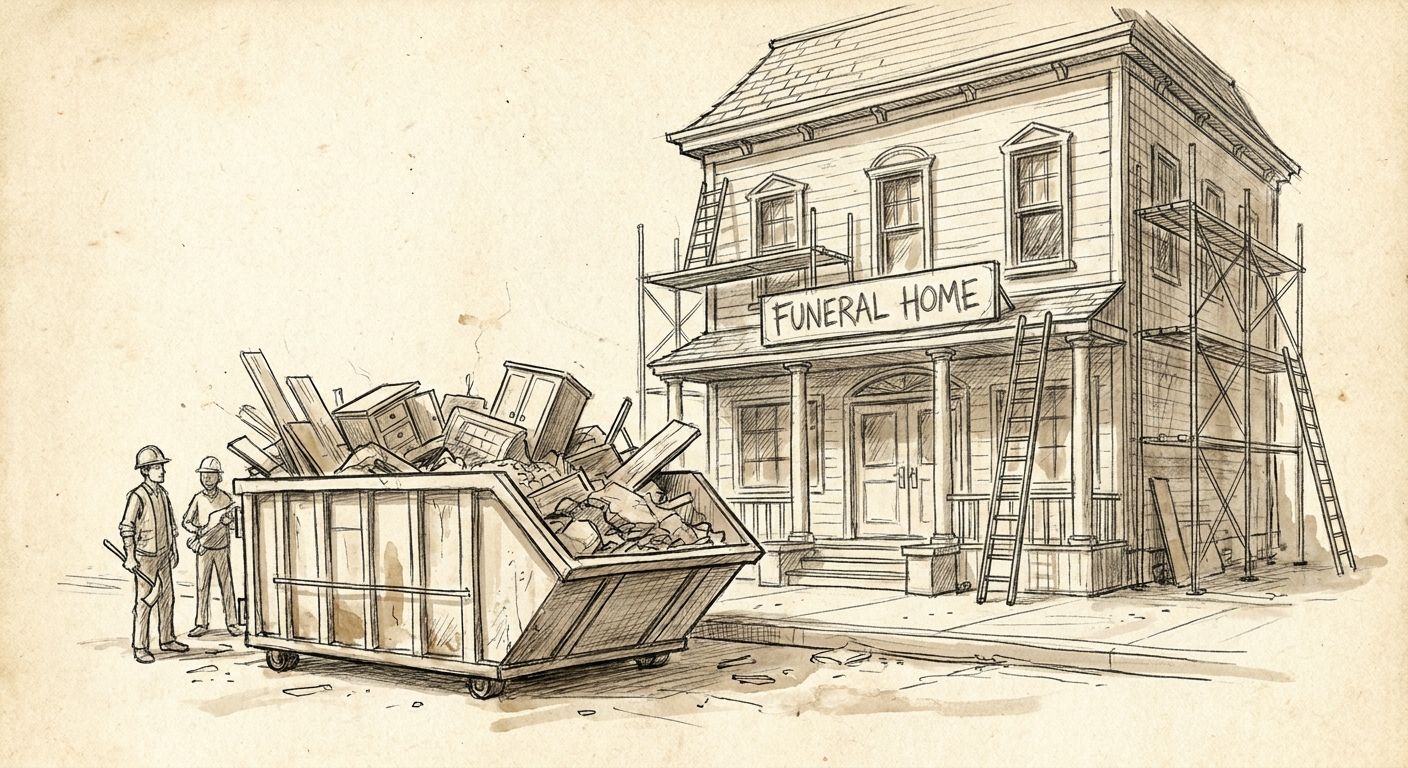
A funeral home renovation is not a job you can run like a typical retail remodel. Services keep happening in the chapel while your crew tears out the prep room next door, and every dumpster placement, restroom swap, and fence line has to respect grieving families walking through the parking lot. This guide ranks the container sizes and site services that actually fit funeral home and mortuary renovation work in 2026, so you can match the setup to the phase of the job instead of guessing.
- 20-yard roll-off container wins for prep and embalming room strip-outs: enough volume for cabinetry and fixtures without blocking a family parking lot.
- 15-yard container is the right call for chapel or viewing room touch-up work: paint, flooring, trim, nothing structural.
- 30-yard container is the move for a full facility remodel or a reception build-out generating heavy, multi-room debris.
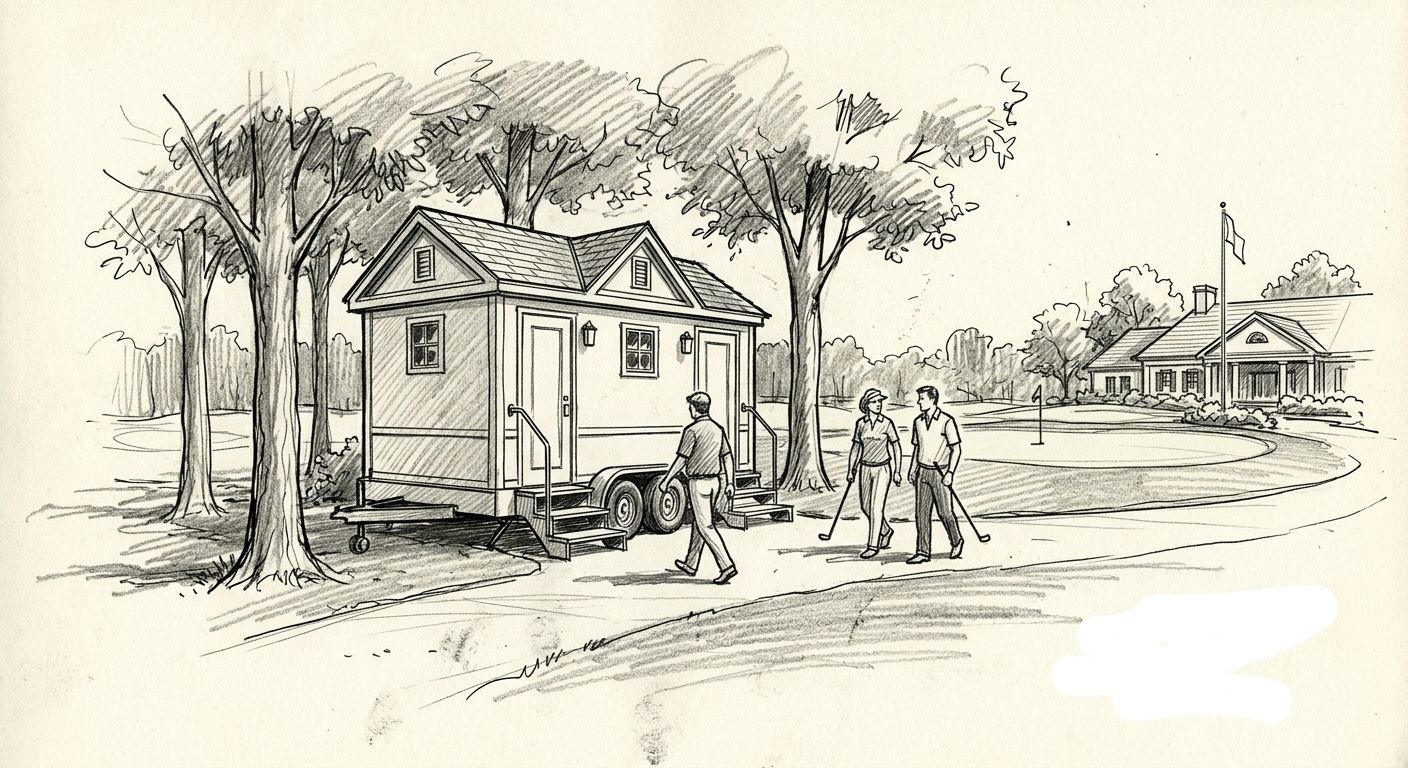
- A restroom trailer keeps visitation running when the funeral home's own restrooms go offline mid-renovation.
- Temporary fencing is the cheapest way to keep an active demo site out of view of arriving families.
Why this matters
Funeral homes can't shut down for six weeks the way a vacant retail space can. Visitations, services, and embalming work often continue in one wing while another gets gutted. That means container size, placement, and site screening decisions carry more weight than on a standard commercial job. Get the container too small and you're paying for a second pickup mid-week. Get it placed wrong and it's the first thing a grieving family sees pulling into the lot.
Valley Services has run roll-off containers, restroom rentals, and temporary fencing out of the same San Jose yard since 1986, third generation, same family. The yard also runs its own C&D transfer station, which means delivery and pickup timing isn't dependent on a third-party disposal site's schedule. For a job where you can't have a container sitting full during a scheduled service, that control matters.
What makes the best dumpster rental for a funeral home renovation
- Size matched to the renovation phase, not the whole project. A chapel touch-up and a prep room strip-out generate very different debris volumes.
- Placement that respects the front-of-house. Containers belong near the loading or service entrance, never visible from the main family parking area.
- Site discretion during active construction. Screening and fencing matter more here than on a typical commercial job.
- Restroom continuity. If the facility's restrooms go offline for plumbing or ADA work, visitors and staff still need somewhere to go.
- Scheduling flexibility around services. Delivery and pickup windows need to work around visitation hours, not the other way around.
- A single point of contact for multiple services. Coordinating a container, a restroom, and fencing through one call cuts down on the back-and-forth between vendors mid-project.
Funeral home renovation site services at a glance
| Item | Best for | Standout feature | Key limitation |
|---|---|---|---|
| 15-yard roll-off container | Chapel or viewing room touch-up | Small footprint fits tight rear-lot placement | Fills fast on any demo involving flooring or drywall |
| 20-yard roll-off container | Prep or embalming room strip-out | Handles cabinetry, tile, and fixture volume in one pull | Still not rated for chemical or biohazard waste |
| 30-yard roll-off container | Full facility remodel or reception build-out | Covers multi-room debris without a mid-week swap | Needs real clearance; not for narrow side lots |
| Luxury restroom trailer | Keeping visitation running during renovation | Climate-controlled, multi-stall, no visible construction feel | Needs a level pad and power or generator hookup |
| Temporary fencing | Site discretion and family privacy | Screens active demo from arriving visitors | Adds a setup step most contractors skip until asked |
1. 15-yard roll-off container: best for chapel and viewing room touch-up
A 15-yard container handles the debris from cosmetic work: paint stripping, carpet and flooring tear-out, trim replacement, minor drywall patching. It's the smallest unit that still makes sense for a funeral home job, since anything smaller fills before the crew finishes day one.
15-yard container pros:
- Small enough to sit in a rear service lane without blocking family parking
- Loads fast for single-room jobs with a tight timeline between services
- Easiest size to schedule same-week when a viewing room needs a quick refresh
15-yard container cons:
- Fills quickly if the job scope grows past cosmetic work
- Not sized for any flooring tear-out involving concrete or tile underlayment
Best for: Chapel or viewing room cosmetic refresh between services. Verdict: Book it for touch-up work only. Anything involving subfloor or fixtures, size up.
2. 20-yard roll-off container: best for prep and embalming room strip-outs
The 20-yard is the workhorse size for a prep or embalming room renovation: cabinetry removal, tile, plumbing fixtures, and the mixed construction debris that comes with a room built around specialized equipment. One important limit applies across every size: roll-off containers are for construction and demolition debris only. Embalming chemicals, sharps, and any biohazard material never go in a C&D container, and a licensed medical waste hauler has to handle that stream separately.
20-yard container pros:
- Enough volume for a full cabinetry and fixture strip-out without a mid-week swap
- Fits most side-yard and rear-access placements at a typical mortuary building
- Matches the debris mix (wood, tile, drywall, metal fixtures) common in prep room work
20-yard container cons:
- Not rated for chemical, biohazard, or medical waste under any circumstance
- Requires coordination with a separate medical waste vendor if the prep room had active use
Best for: Embalming or prep room strip-out generating mixed construction debris. Verdict: Book it, and line up medical waste disposal separately before demo starts.
3. 30-yard roll-off container: best for full facility remodel or reception build-out
When the renovation covers multiple rooms, chapel expansion, or a reception area build-out, the 30-yard container avoids the cost and disruption of scheduling a second pull mid-project. This is the size for a gut-and-rebuild phase, not a single-room job.
30-yard container pros:
- Covers heavy, multi-room debris volume without a second delivery
- Reduces the number of times a container has to be repositioned near an active facility
- Best value on a per-pull basis for large-volume jobs
30-yard container cons:
- Needs real clearance for delivery; narrow side lots or tight alley access won't work
- Overkill and wasted space for anything short of a full remodel
Best for: Multi-room remodel or a reception area build-out generating heavy debris volume. Verdict: Book it once the scope is confirmed as full-facility, not room-by-room.
4. Luxury restroom trailer: best for keeping visitation running during renovation
When plumbing or restroom areas go offline for renovation, a restroom trailer keeps the facility functional for staff and visiting families without construction feeling visible from the front of the building. This matters more here than on almost any other renovation type: a job site restroom setup with a construction look is the wrong call for a space families are actively grieving in.
Restroom trailer pros:
- Climate-controlled, multi-stall interior that doesn't read as a job site
- Keeps visitation and service operations running through a plumbing or restroom renovation phase
- Available alongside a container and fencing order through the same point of contact
Restroom trailer cons:
- Needs a level, accessible pad and a power source or generator hookup
- Adds a setup and teardown step most crews don't plan for until the restroom scope is confirmed
Best for: Any renovation phase that takes the facility's own restrooms offline. Verdict: Book it any time restroom access is part of the renovation scope, skip it if restrooms stay operational.
5. Temporary fencing: best for site discretion and family privacy
Active demo, exposed framing, and staged debris are the last thing a family should see walking into a service. Temporary fencing with screening solves that with a straightforward setup, and it doubles as site security after hours.
Temporary fencing pros:
- Screens active construction from view at the main entrance and parking areas
- Keeps unauthorized foot traffic off an active demo zone after hours
- Sets up fast enough to add mid-project if the scope grows
Temporary fencing cons:
- Adds a line item most contractors don't budget for until someone asks about visibility
- Needs a walk-through to confirm sightlines from the parking lot and main entrance
Best for: Any renovation phase visible from a parking lot, entrance, or service area. Verdict: Book it for any job where visitors are on site during construction. Skip it only for a fully vacant, closed-to-public renovation.
Talk through your renovation scope
Call to match container size, restroom needs, and fencing to your job.
How we ranked these
Each item was ranked against the criteria above: debris volume by renovation phase, placement flexibility near a public-facing entrance, site discretion, restroom continuity, and scheduling flexibility around visitation hours. No two items compete for the same job phase. A prep room strip-out and a chapel touch-up need different container sizes, and a restroom trailer or fencing decision runs independently of container size entirely.
Which setup should you choose for a funeral home renovation?
For most single-phase jobs, a 20-yard roll-off container covers the debris volume without oversizing the footprint. If the project touches restrooms or plumbing, add a restroom trailer to keep the facility operating through the work. If any part of the job is visible from the parking lot or main entrance, add temporary fencing before demo starts, not after a family complains.
Multi-room remodels or reception build-outs should move straight to a 30-yard container to avoid a mid-project swap. Cosmetic-only jobs, paint and flooring in a single room, stay at 15 yards. Confirm the medical waste plan separately any time the prep or embalming room is part of the scope. A container, a restroom trailer, and fencing can all be scheduled through one call, which cuts down on coordination between three separate vendors mid-project.
FAQ
What size dumpster do I need for a funeral home renovation?
A 15-yard container covers cosmetic touch-up work like paint and flooring in one room. A 20-yard handles a prep or embalming room strip-out with cabinetry and fixtures. A 30-yard covers a full facility remodel or reception build-out.
Can construction debris and embalming waste go in the same dumpster?
No. Roll-off containers are rated for construction and demolition debris only. Embalming chemicals, sharps, and biohazard material require a licensed medical waste hauler and cannot go in a C&D container under any circumstance.
Do I need a permit to place a dumpster outside a funeral home in San Jose?
Placement in a public right-of-way, like a street or curb lane, typically requires a permit in San Jose. Placement fully on private property, such as a rear service lot, usually does not. Confirm placement location before delivery.
How do I keep restrooms available during a mortuary renovation?
A restroom trailer keeps visitors and staff covered when the facility's own restrooms go offline for plumbing or renovation work. It needs a level pad and a power source or generator hookup on site.
Is temporary fencing required for funeral home construction sites?
It's not legally required in most cases, but it's the standard way to screen active demo from view at entrances and parking areas where families are arriving for services.
How far in advance should I schedule a dumpster for a funeral home project?
Book as soon as the renovation scope and debris volume are confirmed. Same-week delivery is possible for smaller jobs, but larger multi-room projects should be scheduled with more lead time to avoid conflicts with visitation hours.
What happens if a dumpster gets overloaded on a small renovation job?
An overloaded container risks overage charges and delayed pickup. Sizing to the actual debris volume, not just the room count, avoids both.
Can a dumpster be delivered without disrupting scheduled services?
Delivery and pickup timing can be coordinated around visitation and service hours. Confirming the schedule in advance keeps a container from arriving or being picked up during an active service.
One last thing
The detail most contractors miss on a funeral home job isn't the container size, it's the medical waste line. A 20-yard roll-off handles the cabinetry and tile from a prep room strip-out just fine, but the embalming chemicals and biohazard stream have to be arranged with a separate licensed hauler before the first wall comes down. Sort that out at the estimate stage, not on demo day.
Valley Services runs roll-off containers, restroom trailers, and temporary fencing out of the same San Jose yard, with its own C&D transfer station controlling the disposal end of the schedule. Call (408) 297-5404 or visit valleyservices.biz to walk through the scope before you book.