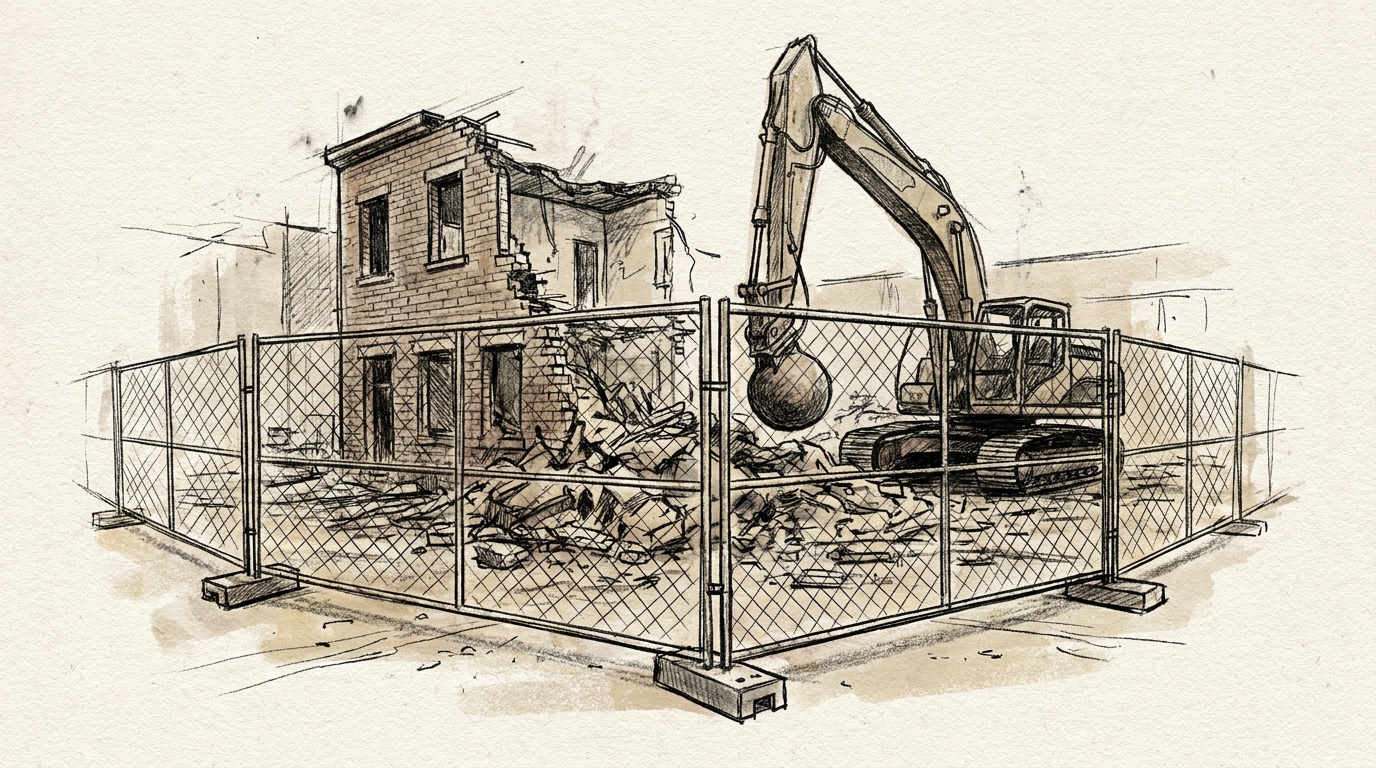
A demolition site without a secured perimeter is a liability claim waiting to happen. Temporary fence rental for demolition site work in San Jose, Santa Clara, Sunnyvale, Mountain View, and Milpitas has to do three jobs at once: keep the public out, keep debris and dust contained, and give your crew clear load-in and load-out access for excavators and roll-off trucks.
- Temporary fence rental for demolition site jobs starts with 6-foot chain-link panels, the standard 2026 perimeter pick.
- K-rail topped with chain-link separates equipment from the public on active teardown sites. Consider.
- Privacy screened fencing slows vandalism on vacant demolition lots between phases. Consider.
- A combined fencing, container, and restroom order from one yard cuts coordination time on Bay Area jobsites. Buy.
- Skip residential-grade panel fencing on demo sites. It does not hold under wind load or debris impact. Skip.
Why this matters
Cal/OSHA and most South Bay building departments require a secured perimeter around active demolition before the first piece of equipment moves. Cities in Santa Clara County have tightened enforcement on vacant and mid-demo lots after complaints about unsecured sites drawing foot traffic and dumping.
The fencing decision is not cosmetic. Panel height, base weight, and gate width determine whether your crew loses time working around a fence line that was sized for a landscaping job instead of a teardown. Get it wrong and you are re-renting mid-project, which costs schedule days more than it costs anything else.
Valley Services has run temporary fencing alongside roll-off containers and restrooms out of the same San Jose yard since 1986, third generation, same family. One call covers the perimeter, the debris containers, and the crew facilities for a demolition job, which matters when your permit clock is running.
Who this is for
This guide is for general contractors and demolition subcontractors running teardown jobs on occupied or vacant Bay Area parcels, and for property owners managing a demo phase before new construction starts. If your site has active machinery, exposed foundations, or debris piles within reach of a sidewalk, the fencing choice below applies directly to you.
What to look for in temporary fencing for demolition sites
Panel height and gauge
Standard chain-link panels run 6 feet tall, which meets most Bay Area municipal requirements for demolition perimeter security in 2026. Thinner gauge panels flex under wind or accidental equipment contact and need replacing mid-job, which stalls your schedule while a new panel gets delivered.
Perimeter coverage and gate placement
A demolition perimeter needs to fully enclose the debris footprint, not just the building outline. Gate width matters more here than on a standard construction site: excavators and roll-off trucks both need clearance, so a single narrow walk-gate forces trucks to wait while crew manually shifts panels.
K-rail vs chain-link for equipment separation
Chain-link alone stops foot traffic. It does not stop a swinging excavator arm or a loaded dump truck from breaching the line if something goes wrong. K-rail adds a physical barrier between active equipment zones and public right-of-way, which matters on sites tight to a sidewalk or street.
Privacy screening for dust and sightline control
Demolition throws dust, and an open chain-link fence puts the debris pile in full view of neighbors and passing traffic. Green privacy screening cuts sightlines and knocks down visible dust drift, which reduces the neighbor complaint calls that slow down permit renewals on multi-phase jobs.
Lead time and permit coordination with the city
Most South Bay building departments want the perimeter documented before they release a demolition permit, and some inspectors check the fence line before signing off on the first day of work. Order fencing with enough lead time that it is standing and photographed before your permit inspection, not scrambled together the morning of.
One vendor for fencing, containers, and restrooms
A demolition site running fencing from one company, containers from another, and restrooms from a third means three delivery windows, three billing contacts, and three companies to call when the schedule shifts. One yard covering all three cuts that down to one phone call.
Top picks for demolition site fencing
6-foot chain-link panel perimeter, the standard pick. Standard 6-foot panels with weighted feet cover most demolition perimeters where the site sits back from public right-of-way. Spec matters here: panels under 6 feet don't meet most municipal minimums for an active demo site in 2026. Verdict: Buy for straightforward teardowns without heavy street frontage. See how the same panels get specified for construction site perimeters.
K-rail with chain-link topper, the heavy-equipment pick. K-rail sections run in standard 10 and 12-foot lengths and give you a physical barrier an excavator can't push through, with chain-link on top to close the sightline and height requirement. Verdict: Consider this setup whenever equipment operates within a few feet of a sidewalk or occupied structure.
Privacy screened fencing, the vacant-lot pick. Green privacy screen mounted on chain-link panels cuts visibility into a demolition footprint sitting vacant between phases, which matters on lots that draw complaints or unauthorized entry. Verdict: Consider for any site expected to sit partially demolished for more than a couple weeks. The same screening logic applies to securing vacant properties between owners or between demo and rebuild.
Combined perimeter, container, and restroom package, the one-call pick. Ordering fencing alongside roll-off containers and restrooms from the same yard means one delivery schedule instead of three. Valley Services runs its own C&D transfer station in San Jose, which controls the container side of that schedule directly instead of brokering it out. Verdict: Buy for any demo job running more than a week, where coordinating three vendors eats more time than it saves. Debris disposal logistics for the same job are covered in how to dispose of construction debris in San Jose.
What to avoid
- Residential picket or vinyl panel fencing. It looks tidy but it isn't rated for demolition debris impact or the wind exposure of an open lot, and it fails an inspector's first walk-through.
- Single narrow walk-gates on the truck access side. A gate sized for foot traffic forces every roll-off truck and excavator to wait on manual panel removal, which adds up over a multi-week teardown.
- Unballasted panels on wind-exposed lots. Panels without weighted feet or sandbags blow over in the gusts common across South Bay lots in spring and fall, and a downed panel is an open perimeter until someone resets it.
Verdict comparison table
| Setup | Height / Spec | Best For | Verdict |
|---|---|---|---|
| 6-ft chain-link panel | 6 ft, weighted base | Standard demo perimeter | Buy |
| K-rail + chain-link topper | 10-12 ft K-rail sections | Equipment near public right-of-way | Consider |
| Privacy screened chain-link | 6 ft with green screen | Vacant lots between phases | Consider |
| Fencing + container + restroom package | Combined delivery | Multi-week demo jobs | Buy |
| Residential picket/vinyl | Not rated for demo impact | Never on active demo sites | Skip |
Talk through your demolition site perimeter
One call covers fencing, containers, and restrooms for your San Jose job.
FAQ
What's the standard height for temporary fencing on a demolition site?
Most Bay Area demolition perimeters use 6-foot chain-link panels in 2026, which meets typical municipal minimums for active demo sites. Taller sections or K-rail get added where the site sits close to public sidewalks.
Is chain-link fencing enough for demolition or do I need K-rail?
Chain-link alone works for most demolition perimeters set back from public right-of-way. K-rail gets added when heavy equipment operates within a few feet of a sidewalk, occupied building, or active roadway.
How much lead time do I need to get temporary fencing installed before demolition starts?
Order fencing early enough that it's standing before your permit inspection, since many South Bay building departments check the perimeter before releasing a demolition permit. Coordinating fencing with your container and restroom delivery in the same call keeps that timeline tighter.
How long can I rent temporary fencing for a demolition project?
Fencing rental runs for the length of your demolition and site prep phase, from initial teardown through debris removal. Multi-phase jobs often keep fencing standing through the gap between demo and new construction.
Does temporary fencing require a permit in San Jose?
The demolition permit itself, not the fencing, is what South Bay cities require, but inspectors commonly check that a secured perimeter is in place before signing off on demo work. Confirm the requirement with your local building department before work starts.
What's the difference between fencing for construction and fencing for demolition sites?
Demolition fencing carries more debris impact risk and often needs K-rail or privacy screening that a standard construction perimeter doesn't require. Construction site fencing typically focuses more on material security and less on active debris containment.
Do I need privacy screening on a demolition fence?
Privacy screening isn't required by code in most South Bay jurisdictions, but it cuts down on neighbor complaints and unauthorized entry on vacant lots sitting mid-demolition. It's a practical add, not a mandatory one.
One last thing
The fencing line is usually the last thing a demolition crew thinks about and the first thing an inspector checks. Get the perimeter right before the first swing of the excavator and it stops being a problem you revisit for the rest of the job.
Valley Services runs its own C&D transfer station in San Jose and has coordinated fencing, containers, and restrooms for Bay Area jobs including Super Bowl LX and the San Jose Marathon. Call (408) 297-5404 or reach out through valleyservices.biz to talk through the perimeter for your demolition site.