Load-in day at an outdoor festival is not the time to discover your restroom trailer order was wrong. Attendance projections change, headliners get added to the lineup, and a health department reviewer asks for your restroom count before the permit clears. This guide breaks down which restroom trailer configuration fits which festival size, so the order you place in 2026 matches the crowd that actually shows up.
- A 4-station restroom trailer is the right call for festivals running 300 to 1,000 attendees over a single day.
- Multi-trailer deployments with 12 or more stations handle multi-day festivals above 3,000 attendees. Book, don't gamble on a single unit.
- Standalone ADA units are a compliance backstop for every festival size, not an optional add-on. Consider one regardless of trailer tier.
- Standard portable restroom banks work for backstage and crew zones but skip them for guest-facing areas at a ticketed festival.
- Valley Services runs its own San Jose transfer station and yard, so restroom trailers, fencing, and roll-off containers for the same festival site come from one call.
Why this matters
Festival producers get restroom counts wrong in two directions. Order too few and lines back up into the beer garden by hour two. Order too many and you paid for stations that sat empty while the budget line for fencing or dumpsters got cut instead.
The fix is matching trailer configuration to attendance, event duration, and site layout, not guessing at a round number. A full site services rental team that also handles fencing and roll-off containers for the same festival footprint can size all three against the same site plan, which is where most single-line vendors fall short.
How this list was built
This ranking is built around four factors that actually change a festival's restroom math: attendee count, event duration across single-day versus multi-day formats, ADA compliance obligations, and site access for delivery and pump-out trucks during the event window.
Each configuration below reflects how Bay Area festivals from Santa Clara to Milpitas typically staff and size their restroom plan for 2026 events, not a generic national average. Local site access, county permit review, and crowd flow around stages all factor into which tier fits.
Restroom trailer configurations ranked for festivals
1. The 2-station ADA trailer: the small-festival workhorse
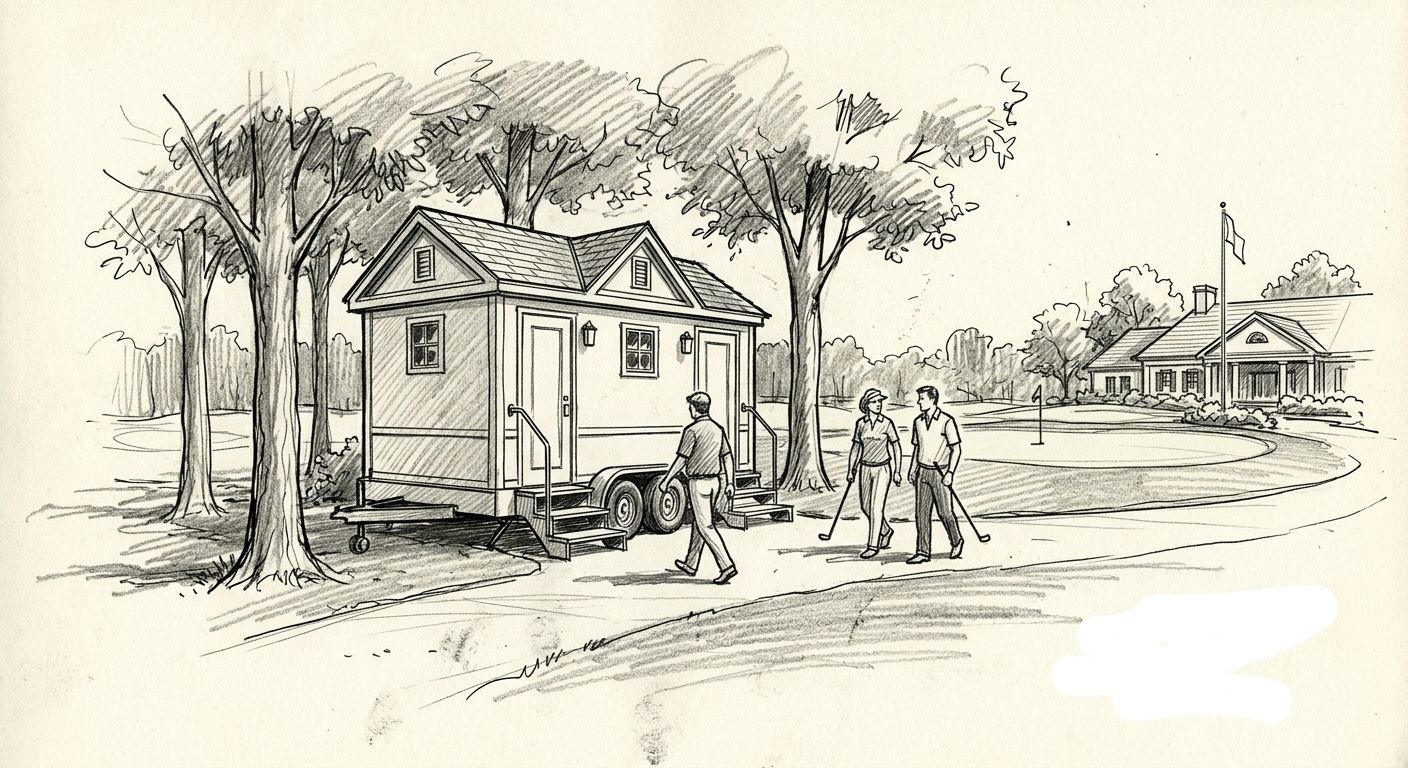
For a single-day festival under 300 attendees, a compact 2-station trailer with one ADA-compliant stall covers the crowd without wasting yard space near your stage or vendor row.
It handles a farmers market-scale festival, a neighborhood block party, or a single-stage music event running four to six hours. Verdict: Book for anything under 300 attendees on a single day.
2. The 4-station trailer: the mid-size default
Once a festival crosses 300 attendees and runs a full day, the industry benchmark of one restroom per 50 attendees for a four-hour event pushes you into 4-station territory fast, and longer days add more units on top of that base ratio.
A 4-station trailer is the default for most South Bay street festivals and single-day music events between 300 and 1,000 attendees. It's the configuration Valley Services quotes most often for festival producers in Santa Clara, Sunnyvale, and Mountain View. Verdict: Book for the 300 to 1,000 attendee range.
3. The 8-station trailer: the VIP-flow answer
Festivals with a general admission crowd and a separate VIP or backstage zone need station counts split across two flow paths, not one line for everybody. An 8-station trailer, or two 4-station units placed at opposite ends of the venue, keeps VIP guests from queuing next to the general admission crowd.
This tier fits festivals between 1,000 and 3,000 attendees where crowd flow around a main stage matters as much as raw headcount. Verdict: Book when you're managing more than one crowd zone.
4. Multi-trailer deployment: the multi-day heavy-lifter
Multi-day festivals above 3,000 attendees need 12 or more stations spread across multiple trailers, plus a pump-out and restock schedule that survives overnight closures without units running dry by day two.
This is where load-in access becomes the deciding factor. A site with a single narrow gate for delivery trucks can bottleneck a multi-trailer deployment before the gates even open. Plan trailer placement against your load-in map, not just your headcount. Verdict: Book, but confirm truck access before you lock the layout.
5. Standalone ADA unit add-on: the compliance backstop
Even a well-sized trailer tier can miss the mark on ADA path-of-travel requirements if the trailer sits on a platform with stairs, or if the nearest ADA stall is a five-minute walk from the accessible seating area. A standalone ADA unit placed closer to accessible parking or seating covers that gap.
This isn't optional at any festival size where the county or city permit reviewer checks accessible path distances. Verdict: Consider as a standing addition to every trailer order, regardless of tier.
6. Standard portable restroom bank: skip it for guest-facing areas
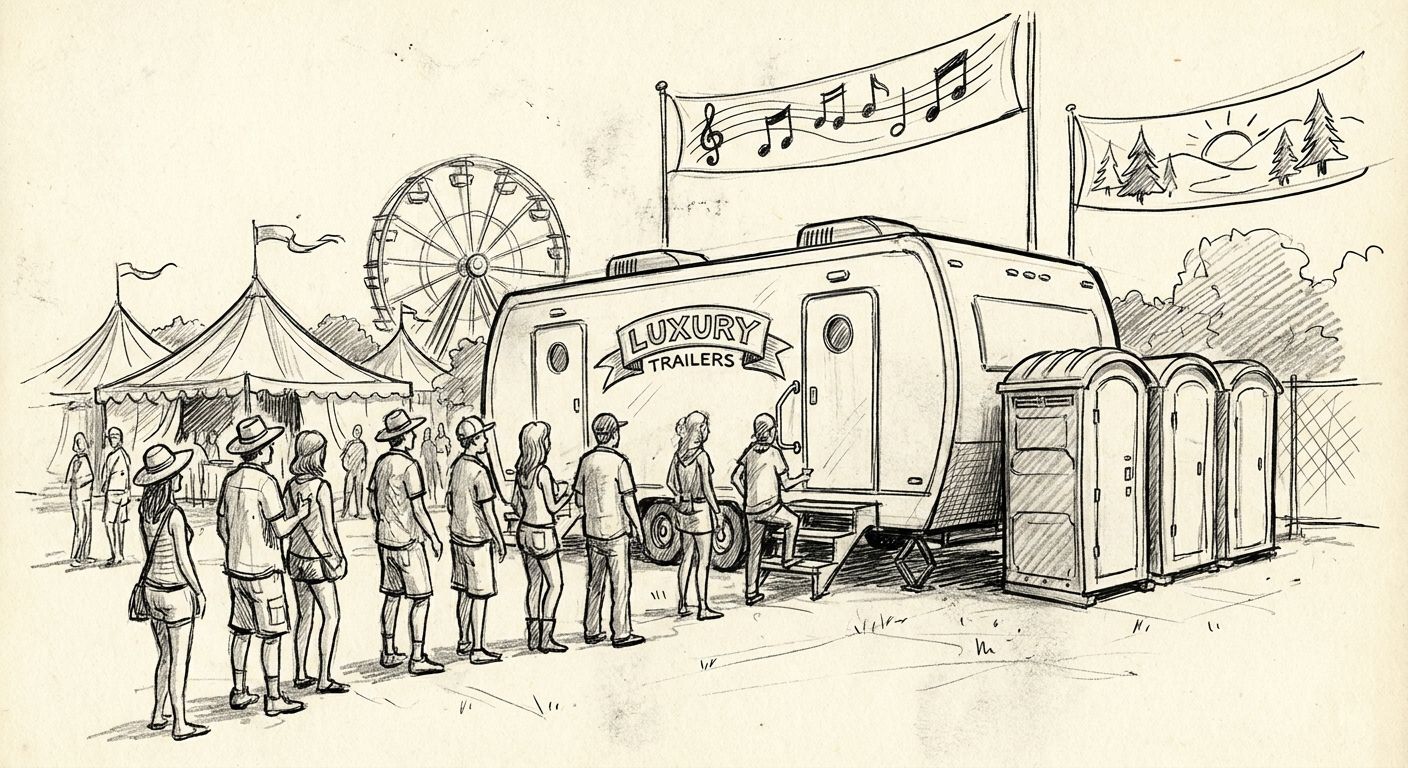
A bank of standard portable units without a trailer's climate control, sinks, and interior lighting works fine for backstage crew zones or vendor load-in areas where guests never see it. Placed front-of-house at a ticketed festival, it reads as a downgrade against the trailer experience attendees expect in 2026.
Verdict: Consider for crew and backstage zones, Skip for any guest-facing entrance or VIP area.
Comparison table
| Configuration | Stations | Best for | Verdict |
|---|---|---|---|
| 2-station ADA trailer | 2 | Under 300 attendees, single day | Book |
| 4-station trailer | 4 | 300 to 1,000 attendees | Book |
| 8-station trailer | 8 | 1,000 to 3,000 attendees, VIP flow | Book |
| Multi-trailer deployment | 12+ | Multi-day, 3,000+ attendees | Book |
| Standalone ADA unit | 1 | Compliance backstop, any size | Consider |
| Standard restroom bank | Varies | Backstage and crew zones only | Consider/Skip |
Get your festival restroom count right
Call to size trailers against your attendance and site plan.
Where to book restroom trailer rental for a festival
- Confirm ADA path-of-travel before you confirm trailer count. Permit reviewers in Santa Clara County check accessible stall proximity separately from total station count.
- Book by site plan, not by memory of last year's event. A stage move of 50 feet can change which trailer tier fits which crowd zone.
- Ask whether one vendor covers restrooms, fencing, and dumpsters for the same footprint. Coordinating separate vendors for each service line adds load-in coordination risk that a single vendor with its own yard avoids.
Valley Services has run site services out of San Jose since 1986, third generation, same yard. Trailers, fencing, and containers for a festival site come off the same schedule instead of three separate vendor calls.
FAQ
What's the best restroom trailer rental for festivals?
A 4-station trailer covers most single-day festivals with 300 to 1,000 attendees. Larger multi-day events above 3,000 attendees need a multi-trailer deployment with 12 or more stations.
How many restrooms do I need for a festival?
The common industry benchmark is one restroom per 50 attendees for a four-hour event, with additional units for longer days. A 1,000-person single-day festival typically needs at least 20 stations split across trailers and ADA units.
Is a restroom trailer better than standard portable toilets for a festival?
For guest-facing areas, yes. Trailers offer sinks, interior lighting, and climate control that standard units don't, which matters at a ticketed event where attendees expect a certain experience in 2026. Standard units are fine for backstage or crew zones.
Do festivals legally need ADA-compliant restrooms?
Yes. Event permits in the Bay Area typically require proof of accessible restroom counts and path-of-travel distances before approval. Add a standalone ADA unit near accessible seating even if your main trailer already has one ADA stall.
How far in advance should I book a restroom trailer for a festival?
Book as soon as your attendance estimate and site plan are set. Festival season in the Bay Area runs from spring through fall, and trailer availability tightens as more events lock in dates for 2026.
Can one vendor handle restroom trailers, fencing, and dumpsters for the same festival?
Yes, when the vendor operates its own equipment and disposal endpoint. Valley Services runs restroom trailers, temporary fencing, and roll-off containers out of the same San Jose yard, which keeps delivery and pickup on one schedule instead of three.
What happens if I underestimate restroom count for a festival?
Lines back up fast, usually within the first two hours of a single-day event, and pushing more units in mid-event depends on site access and truck routing. Sizing against the attendee ratio before the event avoids the scramble.
One last thing
The detail most festival producers miss isn't station count, it's truck access. A trailer sized perfectly for 1,000 attendees is useless if the only site entrance can't clear a delivery truck without rerouting vendor load-in first. Map your gate widths and turning radius before you finalize the trailer order, not after.
Call Valley Services at (408) 297-5404 or start at valleyservices.biz to walk through restroom counts, ADA placement, and load-in access for your 2026 festival site.