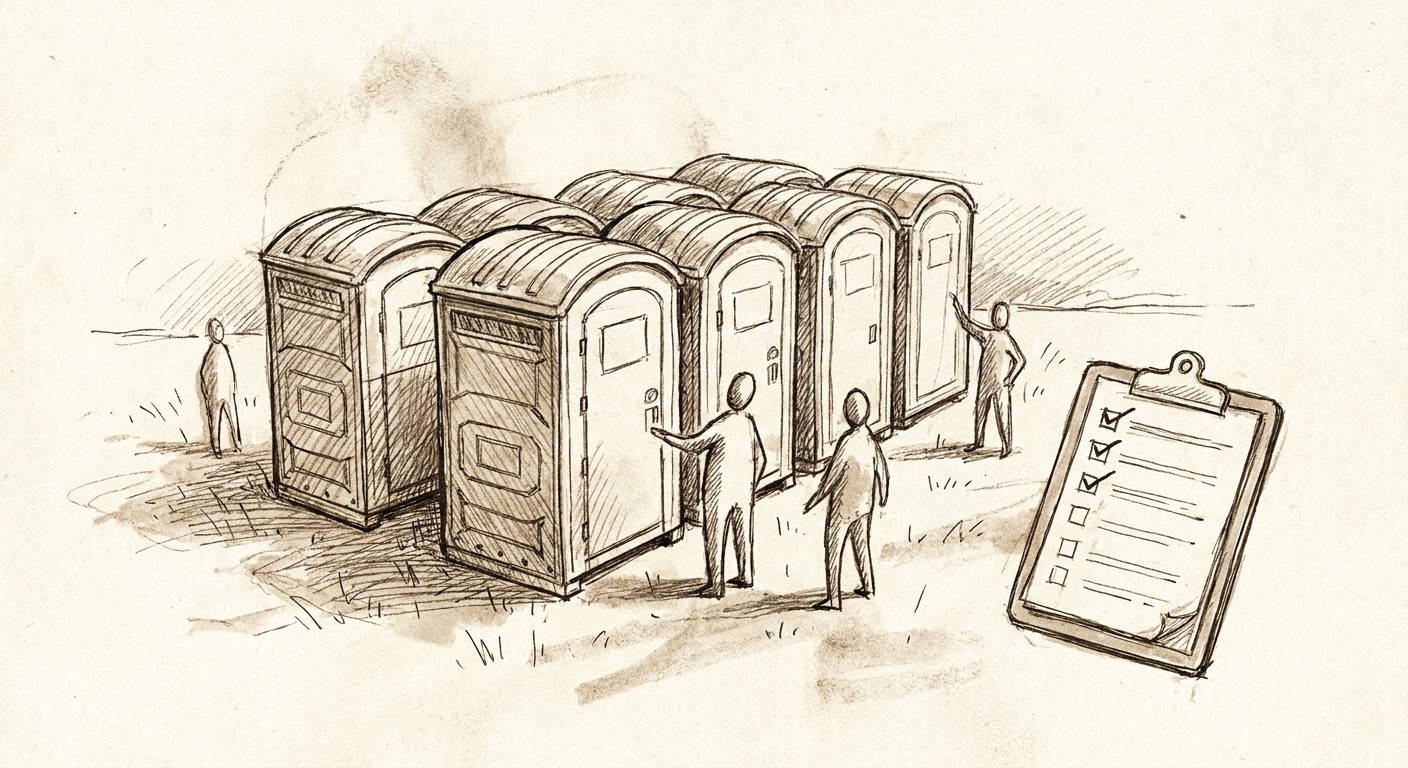
Every event producer runs the same math before load-in: how many portable restrooms actually cover the guest count without a line stretching past the beer garden. Get the ratio wrong in either direction and you either pay for units nobody used or field angry texts at hour three.
- Baseline ratio is 1 portable restroom per 50 guests for a 4-hour event with no alcohol service.
- Alcohol service drops the ratio to 1 unit per 40 guests because usage and dwell time both climb.
- A 500-guest, 6-hour event needs roughly 15 standard units plus at least 1 ADA-accessible unit.
- Book restrooms 2 to 3 weeks out for standard units, 4 to 6 weeks for luxury trailers, during the May through September event season.
Why this matters
Undercounting restrooms is the single most common complaint event staff report after a festival, wedding, or company picnic. It also creates a real logistics problem: units run out of paper and hand sanitizer faster than expected, lines back up into walkways, and your site plan starts absorbing complaints that have nothing to do with the actual event.
Overcounting isn't free either. Extra units take up footprint you may need for vendor booths or ADA pathways, and each one needs placement, leveling, and a pump-out slot on service day. The formula below gets you to the right number the first time, whether you're running a backyard wedding for 80 guests or a two-day festival pulling 5,000 people a day. For larger productions, a dedicated large event restroom rental plan handles the servicing schedule that a handful of units doesn't need.
What you'll need
- Final or projected guest count, including peak simultaneous attendance, not just total tickets sold
- Confirmed event duration in hours, start to end
- Whether alcohol is being served, and for how many hours of the event
- A site map showing available footprint near restrooms, away from food service and generators
- Knowledge of ADA accessibility requirements for your venue or municipal permit
- Power access if you're placing a luxury restroom trailer instead of standard units
The steps
1. Lock your guest count and peak attendance
Total tickets sold and peak simultaneous attendance are two different numbers, and the second one drives your restroom count. A 1,000-person festival with staggered arrivals over 8 hours might peak at 600 people on-site at once. Use peak attendance, not ticket totals, when you calculate coverage. Guessing high here is cheap insurance; guessing low is the mistake that shows up in guest complaints.
2. Set your baseline ratio
The industry standard for a 4-hour event with no alcohol is 1 portable restroom per 50 guests. This is the number most municipal permit offices and event insurers reference when they ask for a restroom plan. A 200-guest afternoon event lands at 4 units minimum. This ratio assumes standard units, not luxury trailers, and assumes guests aren't drinking heavily.
3. Adjust for event duration
Events running longer than 4 hours need more units, not just more service visits. Add roughly 25% more units for every additional 2 hours beyond the 4-hour baseline. A 6-hour event scales the baseline up by about 50%: 200 guests over 6 hours moves from 4 units to 6. An 8-hour festival day can nearly double the 4-hour baseline for the same guest count.
4. Adjust for alcohol service
Alcohol changes the math more than any other single factor. Drop the ratio to 1 unit per 40 guests for any event where beer, wine, or spirits are served for more than an hour. Alcohol increases both frequency of use and time spent per visit, and it's the number one reason events under-provision. A wedding reception serving alcohol for 5 hours should plan on this tighter ratio, not the dry-event baseline.
5. Add ADA-accessible units
Every event needs at least 1 ADA-accessible unit, regardless of guest count. Once your total unit count passes 20, plan on ADA units equal to roughly 5% of the total, whichever is greater. Skipping this isn't just a compliance risk, it's a real accessibility gap for guests, staff, and vendors who need it. Place ADA units on a level, hard surface with a clear path from the main walkway.
6. Add handwashing stations
Plan on 1 handwashing station for every 4 restroom units, or 1 station per 100 guests, whichever gives you more coverage. Food service areas and any event with a health permit will need standalone handwashing separate from the restroom bank. This is a common oversight on the permit paperwork, not just the guest experience.
7. Confirm placement and access
Restrooms need level, stable ground away from tents, food prep, and generator noise, but close enough to the main crowd flow that guests aren't walking 5 minutes each way. Delivery trucks need a clear path in and out, typically 10 to 12 feet of unobstructed width. Confirm this before delivery day, not the morning of.
8. Book with the right lead time
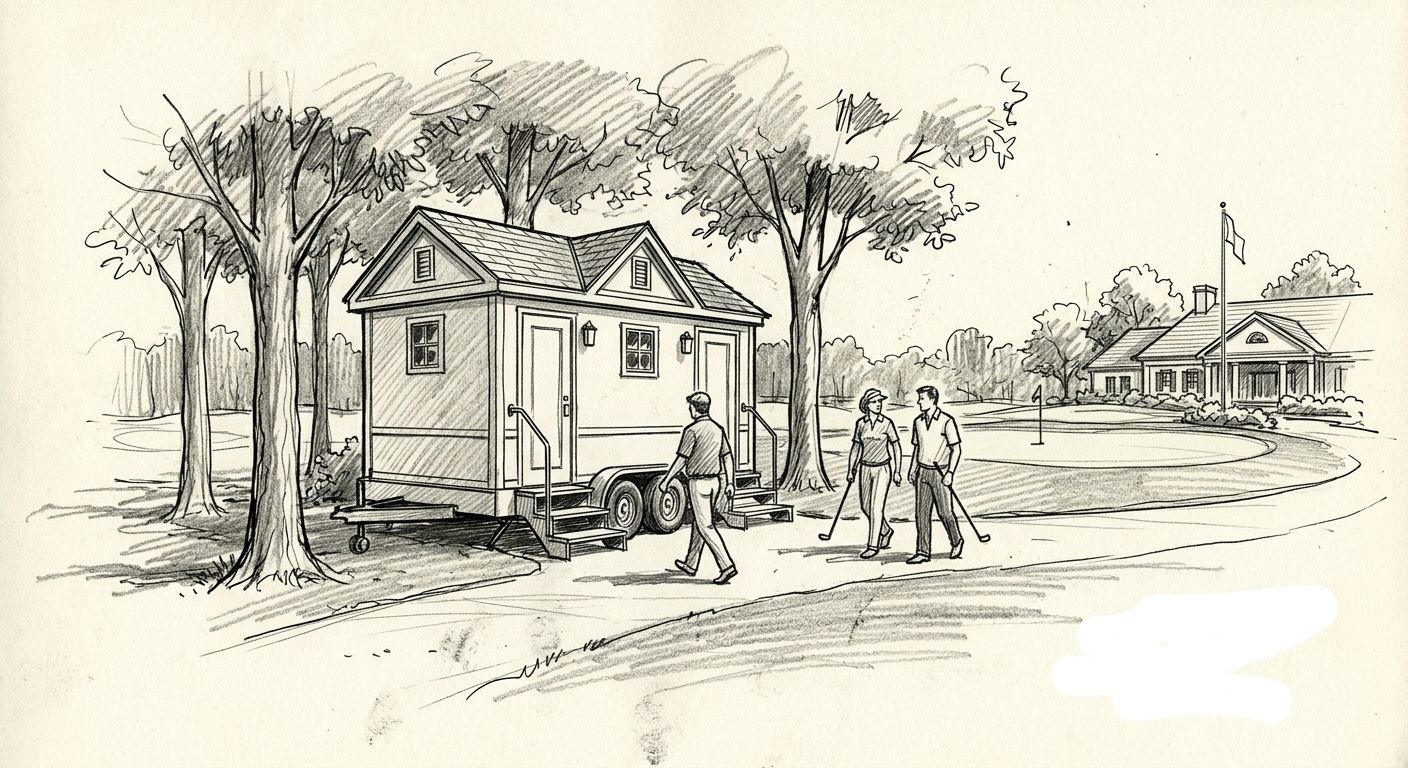
Standard portable restrooms should be booked 2 to 3 weeks ahead for most events. Luxury restroom trailers, which need power hookup and more site prep, need 4 to 6 weeks of lead time, especially for events between May and September when Bay Area weddings, festivals, and municipal events all compete for the same inventory. Outdoor weddings in particular fill event-season calendars fast; a portable restroom rental for outdoor weddings plan should be locked before the venue deposit clears.
Get your event restroom count confirmed
Call with your guest count and hours, get a unit count and delivery slot back the same day.
Troubleshooting
Lines forming at one bank of restrooms while another sits empty. Split units into two or more zones instead of clustering them all in one spot. Guests default to the nearest visible option, so uneven placement creates artificial bottlenecks even when the total count is correct.
Units running low on supplies mid-event. This usually means the service interval was set for a shorter event than what's actually happening. Multi-day festivals and events over 8 hours need a mid-event service visit built into the schedule, not just a pre-event drop and post-event pickup.
No ADA unit on-site during a permit inspection. This is a permit-denial risk, not just a guest complaint. Confirm the ADA unit is on the site map submitted with your event permit, not just physically present.
Event runs longer than planned and units can't cover the extra hours. Build in a 10 to 15% buffer above your calculated count for events with flexible end times, like weddings with open bars or concerts with encores. It's cheaper to have one extra unit than to run short at hour seven.
Generator or power access wasn't confirmed for a luxury trailer. Luxury restroom trailers typically need a dedicated circuit or a quiet generator, and this has to be arranged before delivery day, not discovered on-site. Confirm power requirements when you book, not when the trailer arrives.
Restrooms placed too close to food service or a stage. Health permits often require separation distance between restrooms and food prep areas. Check local requirements before finalizing your site map, since moving units after delivery costs setup time you don't get back.
Tools and resources
- Guest count and peak attendance figure from your ticketing platform or RSVP list
- Event site map with restroom, food, and vendor zones marked
- A holding tank rental reference if your event runs multiple days without daily service access
- Local permit office requirements for ADA units and handwashing stations
- A festival and concert restroom rental plan if you're running a multi-day event with staged arrivals
| Event type | Duration | Guests | Baseline ratio | Estimated units |
|---|---|---|---|---|
| Backyard wedding, no alcohol | 4 hrs | 100 | 1:50 | 2 |
| Wedding reception, alcohol served | 5 hrs | 150 | 1:40 | 4 |
| Company picnic | 6 hrs | 300 | 1:50 (adjusted) | 9 |
| Festival day, alcohol served | 8 hrs | 1,000 | 1:40 (adjusted) | 30+ |
What to do next
Run your own numbers against the formula above, then confirm placement against your actual site map before you call for a quote. If your event runs multiple days or pulls a crowd over 1,000, the large event restroom rental guide covers servicing intervals and multi-zone placement in more depth than a single-day formula can.
FAQ
How many portable restrooms do I need for 200 guests?
A 200-guest event needs about 4 units for a 4-hour event with no alcohol, using the standard 1-per-50 ratio. If alcohol is served, plan on 5 units using the tighter 1-per-40 ratio.
How many portable restrooms for a wedding of 150 people?
A 150-guest wedding reception serving alcohol for 5 hours needs about 4 to 5 units, plus 1 ADA-accessible unit. Dry ceremonies under 4 hours can use the standard 1-per-50 baseline instead.
Do I need an ADA-accessible restroom for a small event?
Yes. Every event needs at least 1 ADA-accessible unit regardless of total guest count. This applies to backyard events and municipal permits alike in 2026.
How far in advance should I book event restrooms?
Book standard portable restrooms 2 to 3 weeks ahead. Luxury restroom trailers need 4 to 6 weeks, especially during the May through September event season when Bay Area demand peaks.
Does alcohol service change how many restrooms I need?
Yes, significantly. Alcohol service drops the ratio from 1-per-50 to 1-per-40 guests because both usage frequency and time per visit increase once drinking starts.
How many handwashing stations do I need at an event?
Plan on 1 handwashing station per 4 restroom units, or 1 per 100 guests, whichever number is higher. Food service areas typically need standalone handwashing separate from the restroom bank.
What's the difference between standard portable restrooms and luxury trailers for events?
Standard units cover basic guest volume and don't need power. Luxury restroom trailers need a dedicated circuit or generator and longer lead time, but suit weddings and higher-end events where presentation matters.
How many restrooms does a multi-day festival need?
Multi-day festivals need the same per-day ratio as a single-day event, but require a mid-event service visit built into the schedule so units don't run out of supplies overnight.
One last thing
Most event producers plan restroom count around total ticket sales, not peak simultaneous attendance, and that's the single biggest reason events run short by hour six. A 1,000-ticket event with staggered arrival times might only ever have 600 people on-site at once. Plan around the peak number, not the total, and you'll almost always land on the safe side of the formula.
Valley Services delivers and services portable restrooms and luxury restroom trailers across San Jose, Santa Clara, Sunnyvale, Mountain View, and Milpitas, and has run event site logistics out of the same San Jose yard since 1986. Call (408) 297-5404 or visit valleyservices.biz to talk through your guest count and get a unit count back the same day.