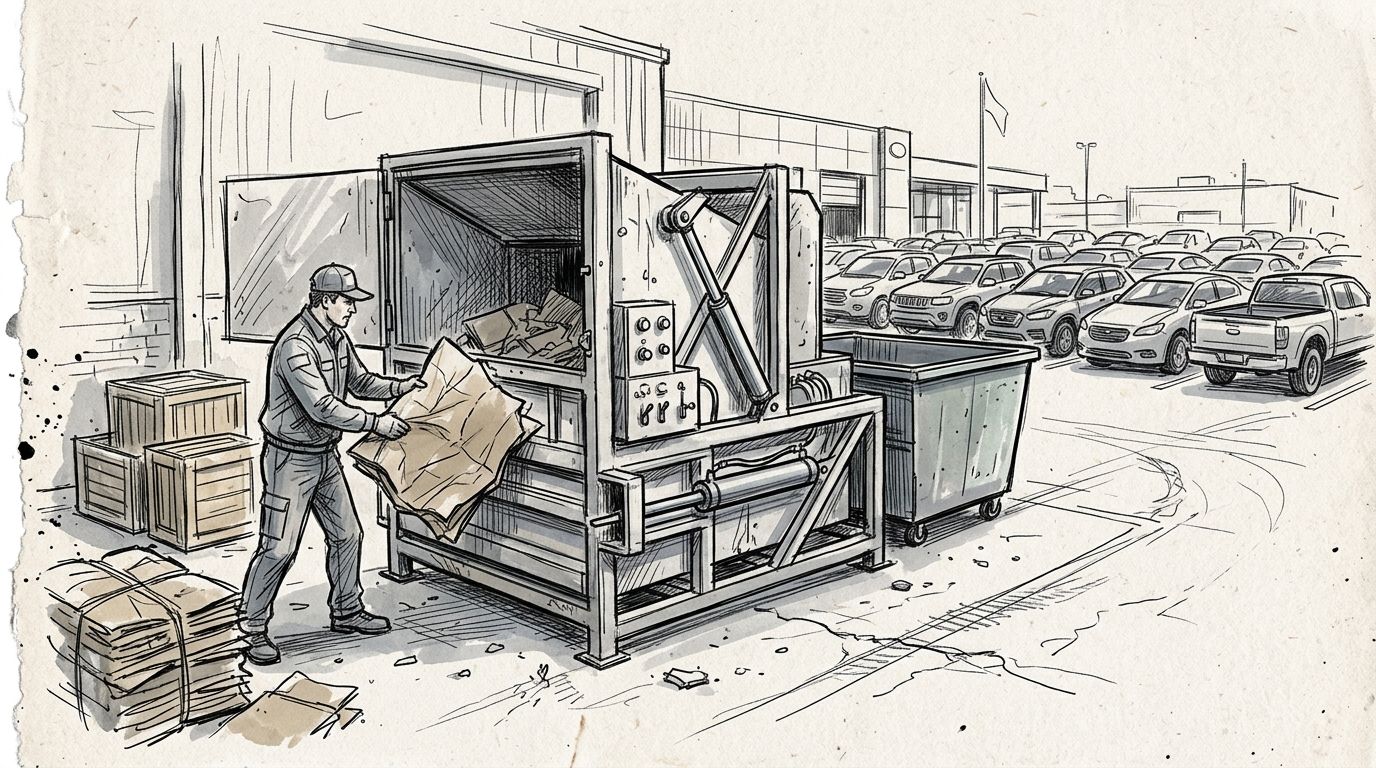
Compactor rental for auto dealerships handles the steady flow of cardboard, plastic wrap, and packaging that a parts and service department generates every week, with the goal of keeping the lot clear and service bays moving without a container getting hauled off every other day. A dealership doesn't produce waste like a construction site does. It's steady volume, not a demo pile, and it needs equipment sized for packaging and shrink wrap rather than lumber and drywall.
- Compactor rental for auto dealerships fits high-volume cardboard and plastic wrap from parts and service departments, not one-time debris.
- Valley Services delivers and services compactors across the Bay Area from its own San Jose transfer station, not a brokered site.
- Tires, oil filters, and other hazardous materials never go into a compactor; those get routed separately.
- A stationary compactor beats swapping roll-off containers once a dealership fills more than one or two per week.
Why compactor rental matters for auto dealerships
A new or used car dealership moves through more cardboard than most retail operations its size. Every part comes wrapped, every accessory arrives boxed, and detail departments burn through plastic sheeting and shrink wrap on a daily basis. Stack that against a single 8 or 10 yard roll-off container and you're calling for a swap two or three times a week.
A compactor changes that math. It crushes packaging down to a fraction of its loose volume, which means fewer pulls and less of the lot tied up with a container sitting near the service drive. Valley Services runs its own C&D transfer station in San Jose, which means the schedule for your pulls isn't dependent on a broker's relationship with a third-party site. That matters most during a model year changeover or a showroom refresh, when volume spikes and you can't afford a compactor sitting full for an extra day.
How to set up compactor rental for your dealership lot
Step 1: Audit what your parts and service departments actually throw away
Walk the back lot and the parts counter before you call anyone. Most dealerships underestimate how much of their waste stream is cardboard and plastic, not general trash.
- Parts department packaging: boxes, foam inserts, shrink wrap
- Service department consumables: filter boxes, packaging from fluids and additives
- Detail bay waste: plastic sheeting, seat covers, floor mat wrap
- Showroom and sales floor: promotional material, banner stands, event debris
- Body shop or reconditioning area waste if it's on site
Step 2: Size the compactor for peak volume, not average volume
A compactor sized for a slow Tuesday backs up fast during a sales event or a new model delivery week. Size for your busiest week, not your average one.
- Count how many roll-off swaps you're doing now in a typical month
- Note the weeks that spike: model year changeover, holiday sales events, service specials
- Ask what happens to volume during a showroom remodel or lot re-stripe
- Factor in whether the body shop or detail bay feeds the same unit
- Confirm access dimensions for the compactor pad and the servicing truck
Step 3: Route hazardous materials around the compactor, not through it
Tires, oil filters, batteries, and used fluids never belong in a compactor. Compacting hazardous material creates a safety and compliance problem that outlasts the container swap.
- Tires get their own disposal path, not the compactor
- Oil filters and batteries go through a separate hazardous stream
- Aerosol cans and solvent containers get flagged and pulled before the compactor cycle
- Train service writers and parts staff on what never goes in the hopper
- Post a one-page list at the compactor loading door
Step 4: Compare self-haul against a full-service compactor rental
Some dealerships still run their own truck to haul loose cardboard to a transfer station. It works at low volume and stops working the moment your parts department scales up.
A full-service rental swaps that labor for a scheduled pull. Valley Services also handles the roll-off side for dealership lot cleanouts when a compactor isn't the right fit for a one-time project like a lot re-stripe or a sales event teardown, which is worth knowing before you commit to one piece of equipment for every job on the property.
Step 5: Schedule pulls around your sales and service calendar
A compactor that gets pulled on a fixed weekly schedule regardless of volume either sits half empty or overflows during your busiest weeks. Match the pickup cadence to your actual sales calendar.
- Flag model year changeover dates in advance
- Build in an extra pull around major holiday sales events
- Confirm pickup windows that don't block customer parking during peak hours
- Set a standing schedule for slow months, then adjust it for spikes
Step 6: Coordinate placement with lot traffic and ADA access
A compactor pad in the wrong spot blocks delivery trucks, customer sightlines to inventory, or an accessible path to the showroom. Walk the site plan before the unit arrives.
- Confirm the pad doesn't sit in a delivery truck's turning radius
- Keep sightlines to inventory rows clear from the street
- Verify accessible parking and paths aren't blocked
- Check local permit rules if the unit sits on public right-of-way
Compactor rental options for auto dealerships compared
| Option | Best for | Key limitation |
|---|---|---|
| Self-haul, no rental | Very low volume, single-location used car lots | Labor cost and truck time add up fast at any real volume |
| Rotating roll-off containers | Dealerships doing occasional lot cleanouts or events | Multiple swaps per week once packaging volume climbs |
| Stationary compactor rental | Franchise dealerships with steady parts and service volume | Requires a fixed pad and access for the servicing truck |
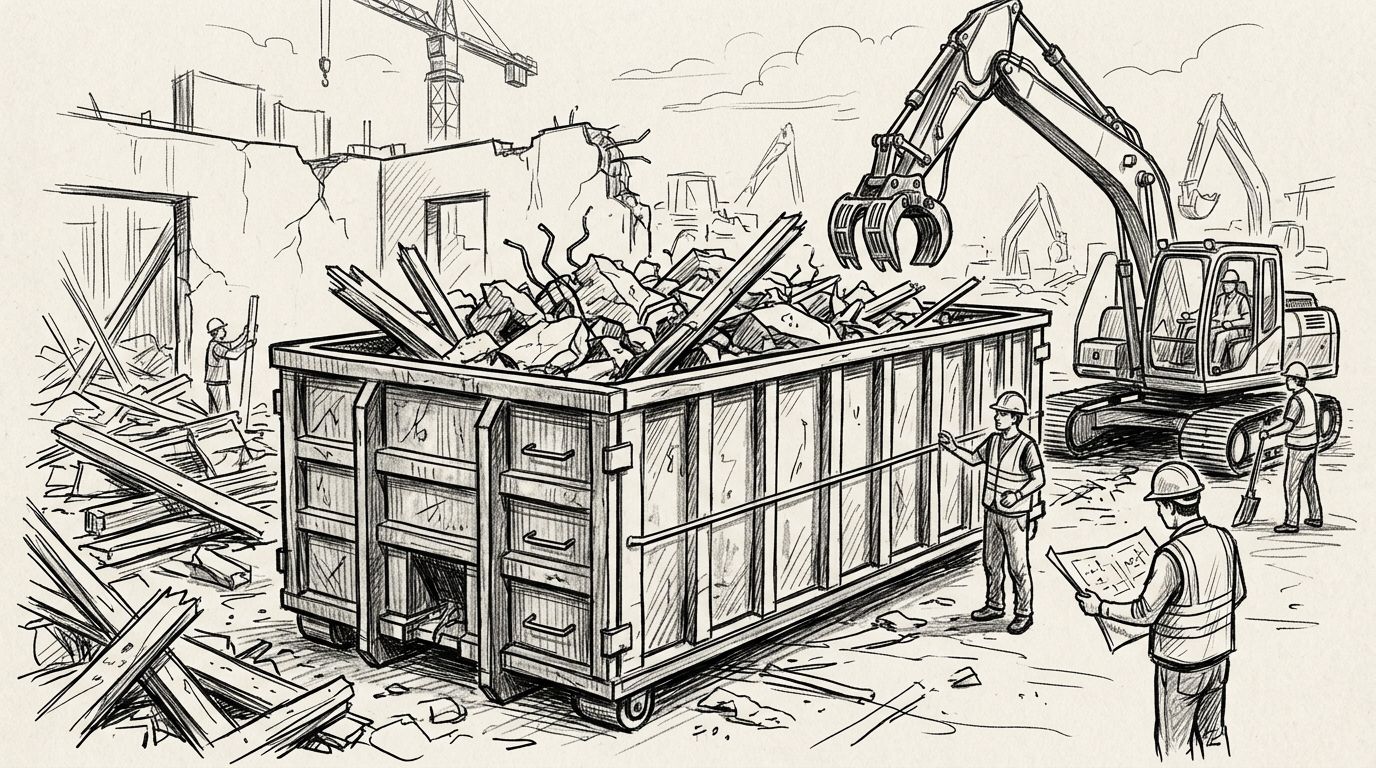
| C&D drop-off for renovation debris | Showroom remodels, service bay buildouts | Separate stream from day-to-day packaging waste |
For a broader look at how compactor tonnage gets sized across commercial properties, see how compactor rental gets ranked by tonnage for sites with similar volume to a franchise dealership.
Verdict: a stationary compactor is the right call once a dealership is swapping more than one roll-off container a week for cardboard and packaging alone. Below that volume, rotating roll-off service handles it without the fixed pad requirement.
Common mistakes dealerships make with compactor rental
- Sizing for average volume instead of peak weeks. A unit that handles a normal Tuesday overflows during a model year changeover.
- Letting tires and oil filters end up in the compactor. This is a compliance issue, not a convenience shortcut.
- Placing the unit where it blocks delivery trucks or customer sightlines. Reposition before the pad gets poured, not after.
- Running one rental company for the compactor and another for lot cleanout debris. Coordinating both through one provider simplifies scheduling. Dealerships handling body shop or reconditioning waste on site often run into the same sizing questions covered in container rental for auto body shops.
- Ignoring the service calendar when setting pull frequency. A fixed weekly schedule doesn't match a sales floor that spikes around specific dates.
Talk through your dealership's waste volume
Call to size a compactor or roll-off setup for your lot.
FAQ
What size compactor does a car dealership need?
Sizing depends on parts and service volume, not lot size. A dealership doing more than one roll-off container swap a week for cardboard alone is usually a candidate for a stationary compactor rather than rotating containers.
Can dealerships put tires or oil filters in a compactor?
No. Tires, oil filters, batteries, and other hazardous materials need a separate disposal path and never go through a compactor hopper.
How often should a dealership's compactor get pulled?
Pull frequency should match the sales and service calendar, not a fixed weekly schedule. Model year changeovers and major sales events typically require an extra pull.
Is a stationary compactor better than a roll-off container for a dealership?
A stationary compactor works better once volume climbs past one or two roll-off swaps a week. Below that threshold, rotating roll-off containers handle the job without the fixed pad requirement.
Do dealerships need a permit for a compactor on their lot?
Placement on private property usually doesn't require a permit, but a unit sitting on public right-of-way or a shared access easement can. Check local rules before the pad goes in.
What's the difference between a compactor and a roll-off container for a dealership?
A compactor crushes packaging on site to cut down on pulls, which fits steady high-volume waste like parts and service cardboard. A roll-off container works better for one-time projects like a showroom remodel or lot cleanout.
Who services compactor rentals in the San Jose and South Bay area?
Valley Services delivers and services compactors and roll-off containers across San Jose, Santa Clara, Sunnyvale, Mountain View, and Milpitas, running pulls through its own C&D transfer station in San Jose.
One last thing
Most dealerships size their compactor for the showroom's average week and then get caught flat during a model year changeover, when parts and packaging volume can spike hard for two or three weeks straight. Build the extra pull into the schedule before the changeover date, not after the compactor is already full.
Call (408) 297-5404 or reach out through valleyservices.biz to talk through compactor sizing for your dealership lot.