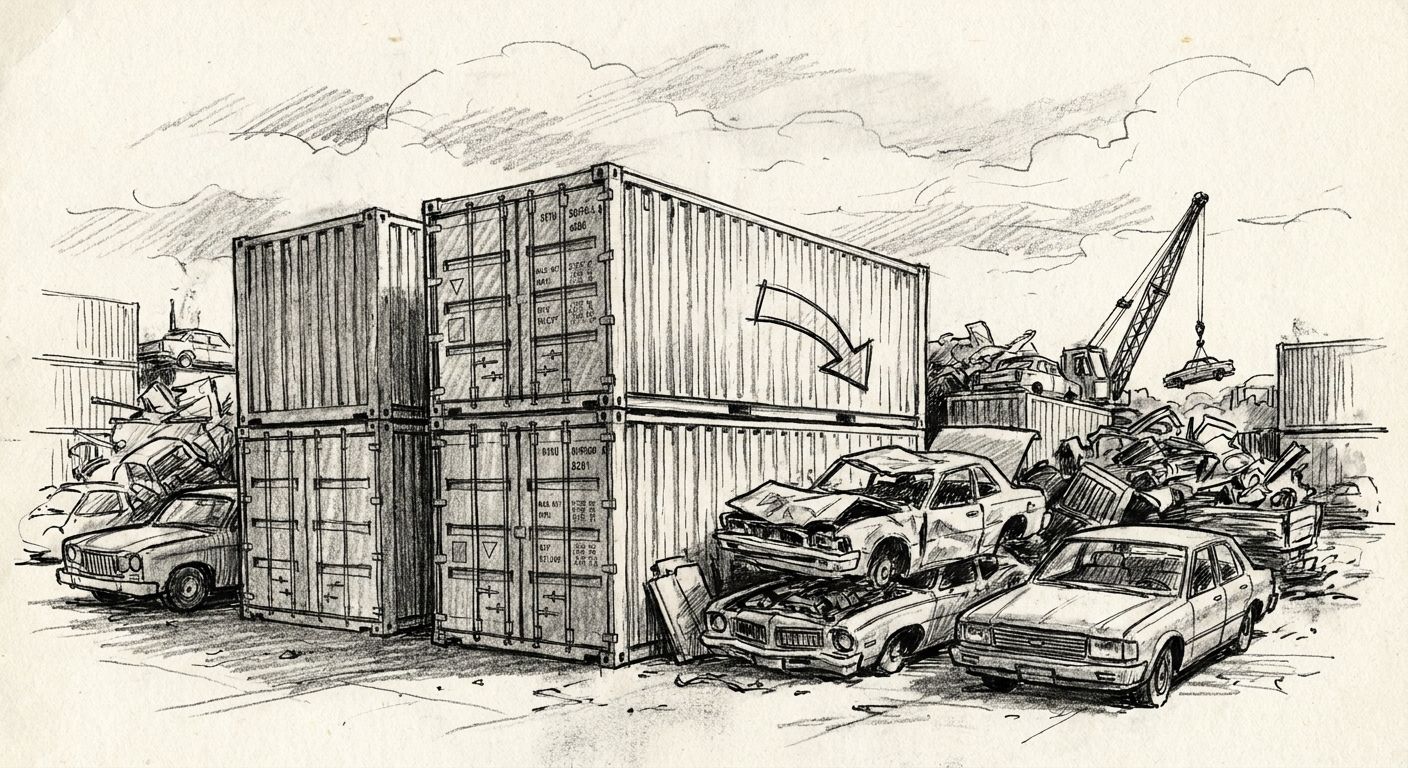
Auto salvage yards move scrap steel, glass, seat foam, and fluid-drained hulks off the lot every week, and the container that works fine for a body shop often falls short on a full dismantling operation. This guide breaks down which container rental for salvage yards actually holds up under daily teardown volume in the Bay Area, and where a mismatched size or a shared load costs yard space and turnaround time in 2026.
- The 30-yard roll-off is the best container rental for salvage yards handling daily teardown debris. Buy.
- 40-yard containers suit high-volume yards processing several hulks a week. Consider.
- A dedicated scrap metal container keeps mixed C&D loads clean and speeds pickup. Buy.
- Locked perimeter fencing around stored vehicles and parts inventory is standard by 2026, not optional. Buy.
- Valley Services runs its own San Jose transfer station, which keeps swap schedules predictable for high-throughput yards.
Why container choice matters for salvage yard operations
A salvage yard does not run one waste stream. It runs several at once: shattered glass, seat foam, plastic trim, oily rags, and steel body panels moving off the lot on the same afternoon. Auto body shops face a similar mix at a smaller scale, which is why a container rental for auto body shops setup shares some overlap with a dismantling yard's needs, just at lower volume and lower weight per pull.
Get the size wrong and it costs twice: once in overage weight charges when a small container fills with steel faster than the cubic footage suggests, and again in wasted swap trips when a yard clearing ten vehicles a week only has one container on site. Get the fencing wrong and catalytic converters, engines, and stored vehicles sit exposed on a lot with no locked perimeter overnight.
This list ranks configurations by throughput and load type, not by rental brand, because what fits a five-bay operation is not what fits a forty-space yard clearing hulks daily in 2026.
How this list is built
The ranking below reflects how Bay Area salvage and dismantling yards typically configure container, fencing, and site service based on load type, throughput, and lot size. It is not a brand comparison. Each entry gets a direct verdict: Buy, Consider, or Skip, for this specific use case.
The ranked list
1. The 30-yard roll-off: the daily teardown workhorse
This is the size most Bay Area yards default to for a full day of dismantling. It clears roughly 30 cubic yards per pull, which handles a mix of body panels, glass, foam, and trim without stacking against a workstation by end of shift.
Yards running one to three bays generate enough mixed debris in 2026 to fill this size on a rotating schedule without paying for capacity they don't use. Buy.
2. The 40-yard roll-off: for high-volume dismantling
This is the largest size in the 8 to 40 yard range Valley Services runs out of its San Jose yard, and it earns its place on yards processing several hulks a week rather than one or two.
Steel is dense. A 40-yard container hits its weight allowance well before it looks full, so this size fits high-throughput operations more than it fits raw cubic capacity. Yards under five bays usually don't generate enough daily volume to justify it. Buy for high-throughput yards.
3. A dedicated scrap metal container: keep the loads clean
Mixing scrap steel with glass, foam, and plastic trim in one container slows down every pull. A separate scrap metal container service keeps steel loads uncontaminated and cuts the odds of a mixed load getting flagged at drop-off.
Yards that already sort engines, transmissions, and body steel on the floor see the biggest benefit here, since the sorting work is already done before the container ever fills. Buy.
4. Dumpster rental configured like a dealership lot cleanout
Yards that also process trade-ins, clear inventory rows, or run a retail counter alongside the dismantling side need a rotating swap schedule instead of one static container. This configuration, closer to a dumpster rental for auto dealership lot cleanouts, fits yards with mixed retail and salvage operations on the same lot.
It matters less for a pure teardown yard with no retail footprint. Consider.
5. Temporary fencing: lock the perimeter
A salvage yard stores inventory that walks off the lot fast: catalytic converters, batteries, alternators, and whole vehicles waiting for parts pull. Silver chain link with a locked gate, laid out like the setup covered in temporary fencing for vacant property security, is standard for any yard running unattended hours in 2026.
A yard with no perimeter control is exposed every night it sits unlocked. Buy.
6. Restroom service for multi-shift crews
A yard running a single shift with a handful of workers gets by on one unit. A yard running two shifts or weekend hours needs more than one, sized to headcount rather than to the lot's footprint.
This matters less on throughput and more on crew size and hours. Consider.
Comparison table
| Configuration | Best for | Size / setup | Verdict |
|---|---|---|---|
| 30-yard roll-off | Daily teardown debris | 30 cubic yards | Buy |
| 40-yard roll-off | High-volume dismantling | 40 cubic yards | Buy (high-throughput) |
| Dedicated scrap metal container | Clean steel loads | 20 to 30 yard | Buy |
| Dealership-style rotating swap | Mixed retail and salvage lots | Scheduled swaps | Consider |
| Temporary fencing | Perimeter and inventory security | Silver chain link, locked gate | Buy |
| Restroom service | Multi-shift crews | Sized to headcount | Consider |
Setting up container service for a salvage yard
- One call covers the lot. Containers, fencing, and restrooms scheduled through one provider means one delivery window instead of three separate trucks showing up on three different days.
- Confirm what's excluded before the container lands. Batteries, tires, and fluid-filled parts generally do not belong in a mixed roll-off. Sort those out on the floor first.
- Check placement rules if the container can't sit fully on private lot space. Street or shared-access placement usually triggers a local permit requirement, so confirm before the delivery truck shows up.
A provider that operates its own C&D transfer station controls the disposal endpoint directly instead of brokering to a third-party site. Valley Services has run the same San Jose yard since 1986, third generation, which keeps swap and pickup scheduling predictable for yards running high container turnover.
Talk through container setup for your yard
Call or reach out online to plan sizing, fencing, and schedule.
FAQ
What size container rental works best for salvage yards?
Most Bay Area salvage yards run a 30-yard roll-off for daily teardown debris and add a 40-yard unit during high-volume dismantling weeks in 2026. Steel fills a container faster than volume suggests, so match the size to load density, not just cubic footage.
Do salvage yards need a separate container for scrap metal?
Yes, keeping scrap steel separate from mixed C&D debris speeds pickup and avoids contamination from glass, foam, and plastic trim. A dedicated scrap metal container also reduces the odds of a mixed load getting flagged at drop-off.
Can batteries and tires go in a roll-off container?
No, most container services exclude batteries, tires, and fluid-filled parts because of contamination and weight limits. Sort those out before the container arrives and confirm handling with your provider.
Is temporary fencing necessary for a salvage yard?
Yes, a locked perimeter around stored vehicles and parts inventory is standard for any yard running unattended hours. Silver chain link with a locked gate covers most Bay Area salvage lot setups in 2026.
How often does a busy dismantling yard need a container swap?
A high-throughput yard processing several hulks a week typically needs a swap every few days rather than one container sitting for a month. Scheduling swaps ahead of the fill point avoids overage weight charges.
Does a salvage yard need a permit for a roll-off container?
Permits generally apply when a container sits on a public street or shared access point rather than fully on private lot space. San Jose has its own placement rules, so confirm before the container lands if the yard's own lot can't hold it.
What is the advantage of a company that owns its own transfer station?
A company that owns its own C&D transfer station controls the disposal schedule directly instead of brokering to a third-party site. Valley Services operates its own transfer station in San Jose, which keeps swap and pickup times predictable for high-volume yards.
One last thing
Most salvage yards underestimate how fast a container fills by weight, not by space. A single engine cradle and a couple of steel bumpers can push a 20-yard container past its weight allowance before it looks half full by cubic footage. Size for weight first in 2026, then check the space it takes on the lot.
Related guides
For sizing questions specific to a yard's layout, call (408) 297-5404 or reach out through valleyservices.biz.