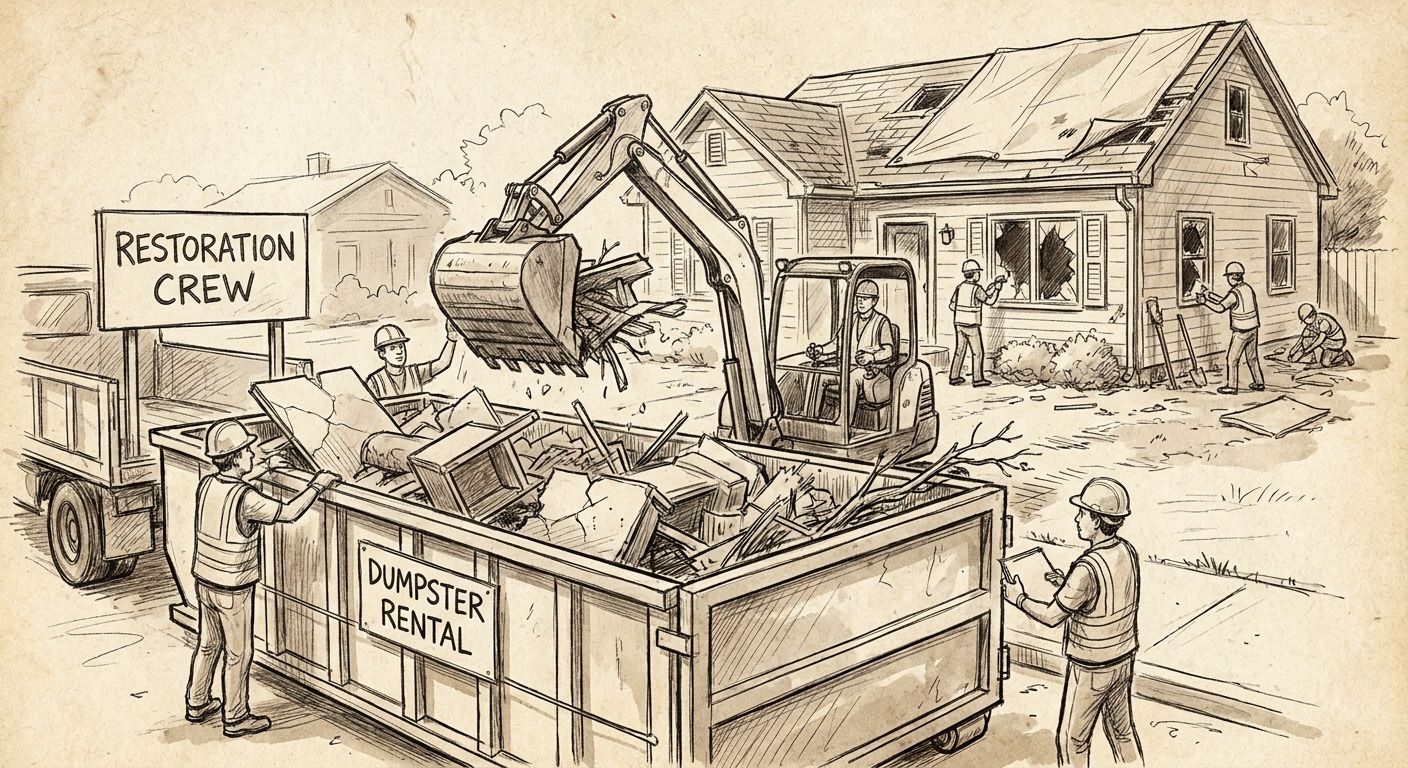
Insurance restoration crews don't get to pick their start date. A burst pipe, a kitchen fire, or a wind event sets the clock, and the adjuster's timeline runs from there. Getting the right roll-off container on site fast, sized for wet or charred debris instead of dry remodel trash, is the difference between hitting the mitigation schedule and eating a change order.
- Valley Services delivers roll-off containers same day for San Jose water and fire restoration jobs in 2026. Buy for urgent starts.
- 20-yard containers handle waterlogged drywall and carpet padding without tipping into overage fees.
- 30-yard and 40-yard sizes fit fire, smoke, and multi-structure storm claims. Don't guess on size.
- Valley Services owns its San Jose transfer station, so restoration schedules aren't stuck behind another hauler's landfill queue.
Why This Matters
Water mitigation runs on a short clock. Wait too long and drywall, insulation, and carpet padding start supporting mold growth, which is exactly what adjusters flag against a restoration contractor's file. Fire and smoke jobs move on a different schedule but carry the same pressure: the carrier wants demo and disposal documented fast, and a stalled container delivery pushes every trade behind it back a day.
Valley Services has run roll-off containers, portable restrooms, and temporary fencing out of the same San Jose yard since 1986. Third generation, same family. For a restoration crew, the operational detail that matters most is this: Valley owns its own C&D transfer station in San Jose. The container isn't waiting in a third-party landfill line before it gets emptied and turned around for the next pickup.
Who This Is For
This guide is built for restoration project managers, water and fire mitigation crews, and general contractors running insurance-driven rebuilds across San Jose, Santa Clara, Sunnyvale, Mountain View, and Milpitas. If you're coordinating debris removal against an adjuster's deadline, staging a container at a vacant fire loss, or running two or three structures on one claim in 2026, the sizing and scheduling choices below are built around your job, not a generic remodel timeline.
What To Look For In A Dumpster Rental For Insurance Restoration
Same-Day Or Next-Day Delivery
Mitigation starts the moment water is confirmed, not three days later when a container finally shows up. A hauler that can't commit to fast turnaround on urgent projects puts your drying schedule at risk before the crew pulls a single piece of drywall.
The Right Size For Wet Or Charred Debris
Wet drywall, soaked carpet padding, and waterlogged insulation weigh more per cubic yard than dry construction debris. Sizing a container the way you would for a standard remodel means a mid-job swap or an overage charge at pickup, and either one costs you a day the adjuster's timeline doesn't have.
Driveway And Access At Damaged Properties
Fire losses and flood damage often mean cracked driveways, collapsed walkways, or debris already blocking normal placement spots. Confirm placement options before delivery day so the container isn't sitting in the street or blocking the only access point the drying equipment needs.
Site Security For Vacant Losses
A gutted structure sitting vacant during a claim is a target for copper theft and unauthorized entry. Temporary fencing around the property protects the site and the contractor's liability while the claim works through the carrier.
Direct Access To A Transfer Station
A rental company that owns its own drop-off point controls the schedule end to end. One that brokers disposal to a third-party landfill is subject to that site's hours, queue, and closures, none of which show up on your contract until they cause a delay.
Top Picks By Loss Type
The Rush Call: 20-Yard For Water Losses
A burst pipe or single-story flood produces a predictable volume of wet drywall, flooring, and cabinetry, and a 20-yard low-profile roll-off container handles it without excess unused space. This is the size to request when the mitigation crew needs to start extraction and demo the same day the loss is discovered. Verdict: Buy.
The Fire And Smoke Gut Job: 30-Yard
Charred framing, melted insulation, and smoke-damaged drywall from a multi-room fire loss fill a container fast, and a 30-yard unit gives the demo crew room to work without stopping for a swap mid-week. It's the workhorse size for the kind of fire restoration job that runs five to ten business days. Verdict: Buy.
The Wide-Loss Storm Job: 40-Yard
Wind and storm claims that hit roofing, siding, and fencing across more than one structure generate bulky, low-density debris that fills volume faster than it fills weight. A 40-yard container is built for that kind of job, but confirm placement footprint first since it takes real driveway or yard space. Verdict: Consider.
The Single-Room Mitigation: 10-Yard
A single bathroom or small kitchen water loss doesn't need a full-size container, and a 10-yard mini keeps the footprint small on a property where access is already tight. It's the right call for a contained loss, and the wrong call the moment the claim expands to a second room. Verdict: Consider.
What To Avoid
- Guessing on size to save a trip. Wet debris weighs more than dry construction waste, and undersizing means a swap mid-job or an overage fee at pickup.
- Booking a broker instead of an operator. A broker doesn't control the landfill queue once the container leaves your site, and neither do you.
- Skipping fencing on a vacant fire loss. An open, gutted structure without a fence line invites theft and liability exposure before the adjuster ever closes the file.
Verdict Comparison
| Pick | Size | Best For | Verdict |
|---|---|---|---|
| The Rush Call | 20 yard | Burst pipe, single-story water loss | Buy |
| Fire And Smoke Gut Job | 30 yard | Multi-room fire and smoke damage | Buy |
| Wide-Loss Storm Job | 40 yard | Roofing, siding, multi-structure storm claims | Consider |
| Single-Room Mitigation | 10 yard | One bathroom or kitchen water loss | Consider |
Need a container on today's claim?
Call for same-day container options across San Jose and the South Bay.
FAQ
What size dumpster is best for water damage restoration?
A 20-yard roll-off container handles most single-story water losses in 2026, covering wet drywall, flooring, and cabinetry. Larger multi-room losses move up to a 30-yard container to avoid a mid-job swap.
Can I get same-day dumpster delivery for an insurance restoration job?
Same-day delivery is available in San Jose and the surrounding South Bay when the request comes in early in the day. Confirm the delivery window when booking since fire and water losses often need the container on site before demo starts.
Does wet debris cost more to dispose of than dry construction waste?
Wet debris like waterlogged drywall and carpet padding weighs more per cubic yard than dry remodel waste, which is why undersizing a container on a water loss leads to overage charges. Sizing up front avoids the issue.
Do I need temporary fencing at a vacant fire-damaged property?
Yes, if the structure sits vacant during the claim process. Fencing limits theft and unauthorized entry while the property is gutted and waiting on adjuster sign-off.
Who controls the schedule on a restoration dumpster rental?
A hauler that owns its own transfer station controls pickup and turnaround directly. A broker that hauls to a third-party landfill is subject to that site's hours and queue, which can delay a swap on a tight restoration timeline.
What's the difference between a 30-yard and 40-yard container for fire damage?
A 30-yard container fits most single-structure fire and smoke jobs running five to ten days. A 40-yard container is built for wider losses across more than one structure, common on storm and wind claims.
Can a roll-off container sit on a damaged driveway?
Placement depends on the condition of the surface and access around it. Confirm the placement spot before delivery day, especially on properties where the driveway or walkway is already compromised from the loss.
One Last Thing
The detail restoration crews miss most: Valley Services runs its own C&D transfer station in San Jose, which means the container isn't sitting in line behind someone else's trucks at a third-party site. On a claim where the adjuster is counting days, that's the difference between a same-day swap and a two-day wait.
For container sizing, delivery scheduling, or fencing on a current claim, call Valley Services at (408) 297-5404 or start at valleyservices.biz.