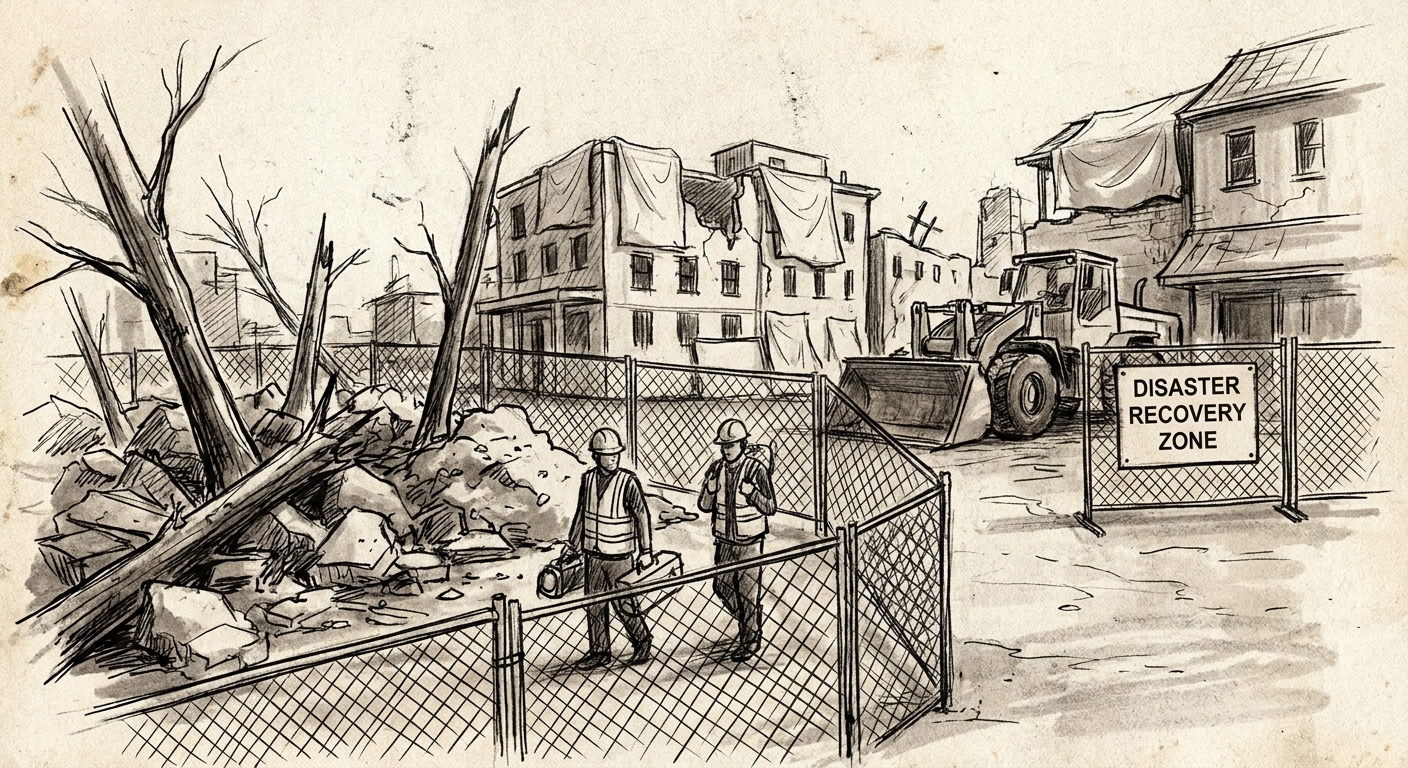
Storm damage, flood recovery, and wildfire cleanup all create the same problem before the real work starts: a damaged, debris-covered site with no perimeter. Temporary fencing for disaster recovery sites in San Jose, Santa Clara, Sunnyvale, Mountain View, and Milpitas has to go up fast, hold against wind and foot traffic, and keep the public out of a hazard zone until cleanup is done.
- Chain link panels with K-rail ballast are the standard for temporary fencing for disaster recovery in 2026, deployable in a single mobilization.
- K-rail alone works for vehicle and debris-pile control but skips visual screening: Buy for staging, Consider for full perimeter.
- Privacy screen chain link is the right call for exposed or unsafe structures: Buy when the site is visible from the street.
- Valley Services runs fencing, restrooms, and roll-off containers from one San Jose yard, which matters when a recovery site needs all three at once.
Why this matters
A storm-damaged site without a perimeter is a liability problem before it is a cleanup problem. Exposed foundations, downed trees, standing water, and debris piles draw foot traffic, especially in residential neighborhoods where curiosity outruns caution. Insurance adjusters and municipal inspectors also expect a secured site before they sign off on the next phase of work.
Valley Services runs its own transfer station in San Jose, which means the same call that lines up fencing can also line up the roll-off container for storm debris and restrooms for the crew working the site for weeks at a stretch. One call, one schedule, instead of three vendors on three different timelines.
Who this is for
This guide is for property managers and facilities teams dealing with a storm-damaged building, general contractors on insurance-funded restoration jobs, municipal and county recovery crews staging debris removal, and homeowners whose property took wind, flood, or fire damage and now needs to be secured while claims and permits move through the system. If your site has exposed structure, standing debris, or an open foundation, fencing is not optional, it is the first line item on the recovery punch list.
What to look for in temporary fencing for disaster recovery
Same-day or next-day mobilization
A storm site does not wait for a normal rental queue. Fencing needs to land within a day or two of the damage assessment, before the public finds the gap in the perimeter. Ask any vendor how fast they can mobilize panels to a San Jose or South Bay address before you ask about anything else.
Wind resistance and ballast
Storm season means the fence goes up in the same conditions that caused the damage. Freestanding chain link panels need concrete feet or sandbag ballast rated for wind, not just gravity to hold them in place. A fence that blows over in the next system is worse than no fence, because it signals the site is unmanaged.
K-rail versus chain link
K-rail concrete barriers control vehicle access and stage debris piles. Chain link controls foot traffic and sightlines. Disaster sites often need both: K-rail along the roadway edge where equipment stages, chain link around the structure itself.
Privacy screening on exposed structures
A fire-damaged or flood-gutted building with an open facade draws attention. Privacy screen fabric on chain link panels blocks the view and keeps looky-loos and looters from scouting the interior. On a site visible from the street, this is not cosmetic, it is a security decision.
Permit and code compliance
San Jose and surrounding jurisdictions have setback and egress requirements for temporary fencing, especially when a site sits close to a public sidewalk or occupied neighboring structure. Fencing that blocks a fire lane or emergency access point creates a second problem on top of the storm damage.
Combined site services
Insurance-funded and FEMA-adjacent recovery jobs run for weeks, not days. A crew working debris removal and reconstruction on the same site needs restrooms and a roll-off container alongside the fence line. Coordinating all three from one vendor keeps the schedule from splitting across three different delivery windows.
Get fencing on site fast
Call to schedule fencing, restrooms, and roll-off containers for one recovery site.
Top picks for disaster recovery sites
Standard 6-foot chain link panels. The workhorse pick. Panels run in 6-foot heights with concrete or ballast feet, and they cover a residential lot or commercial parcel perimeter in one mobilization. This is the baseline for vacant property security fencing after a storm leaves a structure exposed. Buy for any site where the public has street-level access to the damage.
K-rail concrete barriers. The wildcard. Standard segments run about 10 feet long and hold their position without stakes or ballast, which matters on asphalt or concrete where you cannot drive a post. K-rail is the right call for staging heavy equipment or blocking vehicle access to a debris pile. Consider it as a supplement to chain link, not a full-perimeter replacement, since it does not block sightlines.
Privacy screen chain link. The exposure pick. Green privacy fabric mounted on standard panels blocks visual access to a gutted or fire-damaged structure. On sites visible from a street or neighboring property, this cuts down on foot traffic drawn by curiosity. Fits naturally with demolition site fencing where the structure itself is the hazard. Buy when the site fronts a public road.
Combined fencing and site services package. The multi-week pick. When a recovery job runs past a few weeks, bundling fencing with restrooms and a roll-off container under one vendor keeps delivery and pickup dates aligned instead of stacking three separate schedules. Consider this any time the recovery timeline runs past two weeks.
What to avoid
- Decorative or residential-grade fencing. Lightweight panels sold for yard privacy are not rated for the wind loads or foot traffic a disaster site sees, and they fail fast.
- Fencing without ballast in storm season. A panel resting on its own weight without sandbags or concrete feet is a liability the moment the next weather system rolls through.
- Perimeters that block emergency access. Fencing a site tight to the property line without leaving a fire lane or inspection path creates a code violation on top of the storm damage.
Verdict comparison
| Fencing type | Deployment speed | Wind and vehicle resistance | Best for | Verdict |
|---|---|---|---|---|
| Chain link, standard panels | Fast, single mobilization | Moderate with ballast | Full-perimeter foot traffic control | Buy |
| K-rail concrete barrier | Fast, no ballast needed | High, vehicle-rated | Roadway edges, equipment staging | Consider |
| Privacy screen chain link | Fast, add-on to panels | Moderate with ballast | Exposed or unsafe structures | Buy |
| Combined services package | Depends on scope | N/A | Multi-week recovery jobs | Consider |
FAQ
How fast can temporary fencing be installed after storm damage in San Jose?
Chain link and K-rail fencing can typically mobilize within a day or two of a request in the San Jose and South Bay service area. Sites with public street exposure should treat fencing as the first call after a damage assessment, not an afterthought.
Is K-rail or chain link better for disaster recovery sites?
Chain link controls foot traffic and blocks sightlines, while K-rail controls vehicle access and holds position without ballast on hard surfaces. Most disaster recovery sites in 2026 use both: K-rail along roadway edges and chain link around the damaged structure.
Do insurance-funded or FEMA-related cleanups require permitted fencing?
Local jurisdictions including San Jose enforce setback and egress rules on temporary fencing, especially near sidewalks or occupied neighboring structures. Confirm placement with the local building department before the fence goes up, not after.
Can fencing, restrooms, and a roll-off container be rented together for one disaster site?
Yes, and coordinating all three from one vendor keeps delivery and pickup on the same schedule instead of three separate windows. This matters most on recovery jobs running past two weeks.
How tall does fencing need to be for an emergency or storm-damaged site?
Six-foot chain link panels are the standard height for disaster recovery perimeters in the Bay Area. Taller privacy screening on the same panels is common when the structure is visible from a public road.
What is the difference between vacant property security fencing and disaster recovery fencing?
Vacant property fencing is usually a longer-term, lower-urgency install, while disaster recovery fencing needs same-day or next-day mobilization and often pairs with debris removal on the same site. The panel hardware is the same, the timeline and ballast needs are not.
Does temporary fencing need concrete or sandbag ballast during storm season?
Freestanding chain link panels need ballast rated for wind during active storm season, since a fence that blows over signals an unmanaged site. K-rail does not need ballast because its weight holds it in place.
Who handles temporary fencing for disaster recovery in the San Jose and South Bay area?
Valley Services has operated out of its San Jose yard since 1986 and coordinates fencing, restrooms, and roll-off containers for the same recovery site. Call (408) 297-5404 to schedule.
One last thing
Most disaster recovery jobs treat fencing, debris removal, and crew restrooms as three separate rentals on three separate schedules. Valley Services owns its own transfer station in San Jose, which means the same operation staging your fence line can also handle the debris going out and the restrooms for the crew staying on site through 2026's storm and cleanup season, all from one yard, one phone call.
Related guides
- How to secure a construction site with temporary fencing
- Portable toilet rental for disaster relief operations
For fencing, restrooms, and roll-off containers on a storm or disaster recovery site, call Valley Services at (408) 297-5404 or reach out at valleyservices.biz.