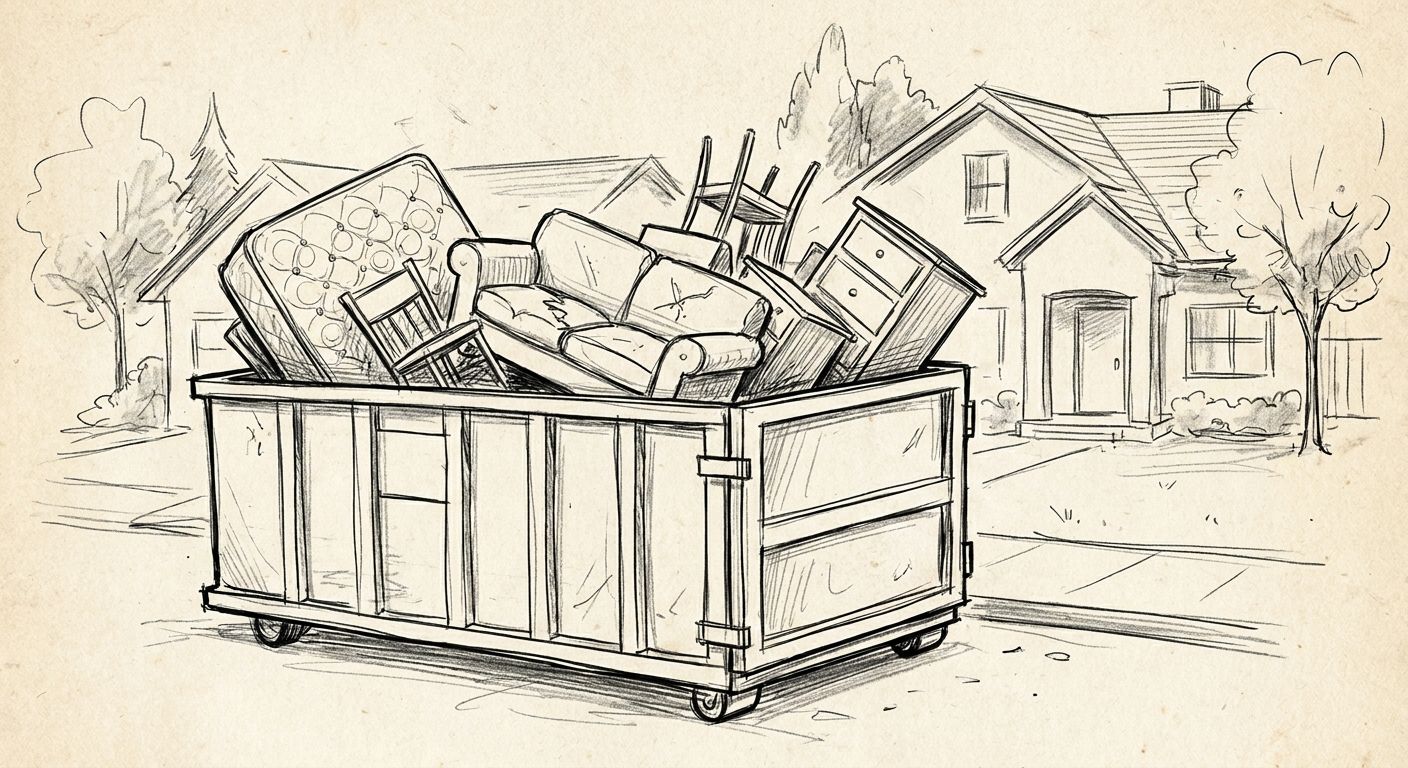
A mattress won't compress. Neither will a dresser, a sectional couch, or a bed frame with metal rails. That's the problem homeowners, property managers, and estate cleanout crews run into when they book the wrong size roll-off container for bulky furniture: the dumpster looks empty by weight but fills up by volume in one load.
- A 20-yard roll-off is the safe default for whole-house furniture and mattress disposal in 2026, not the smaller 10-yard.
- Mattresses and box springs eat volume fast even though they weigh little, so size by cubic yards, not by pounds.
- Property managers running unit turnovers should ask about recurring pickup, not a one-time rental, to control schedule and site access.
- Estate cleanouts with mixed furniture, appliances, and household goods need a 30-yard container and a same-week pickup window.
- Valley Services controls its own C&D transfer station in San Jose, which means load-in and pickup timing isn't dependent on a third-party disposal site.
Why this matters
Bulky item disposal is the single most common reason a rental gets resized mid-job. A mattress alone runs roughly 40 to 60 cubic feet once you account for the box spring and the frame around it. Stack a couch, two dressers, and a dining set on top of that and a 10-yard container that looked generous on paper is full before the crew finishes one bedroom.
Most dumpster rental for furniture disposal decisions in the Bay Area go wrong at the sizing stage, not the pickup stage. Get the size right up front and the rest of the job runs on schedule. Valley Services has run roll-off container rentals out of the same San Jose yard since 1986, and mattress and furniture loads are one of the most predictable categories to size correctly if you know what to look for.
Who this is for
This guide is for homeowners clearing a house before a sale or move, property managers turning over apartment units between tenants, estate executors clearing a full household at once, and landlords or junk-out crews handling hoarding-level cleanouts. If your job is demo debris, concrete, or roofing material, sizing rules are different and weight becomes the limiting factor instead of volume. This guide covers bulky furniture and mattresses specifically.
What to look for in a dumpster rental for furniture disposal
Sizing by volume, not weight
Furniture and mattresses are bulky and light, which flips the usual sizing math. A container that would easily hold construction debris by weight fills up on cubic footage instead. Count rooms, not pounds, when picking a size: each fully furnished bedroom runs roughly 3 to 4 cubic yards once you include the mattress, frame, and dresser.
Weight limits still matter on mixed loads
A pure furniture load rarely hits a container's weight limit, but mixed loads with appliances, electronics, or old flooring underneath the furniture can. Ask what's included with the rental before you load a refrigerator or a washer on top of a bedroom set, since that combination is where weight overages actually happen.
Site access and placement
A 20-yard or 30-yard roll-off needs a clear, level path from the street or driveway to the drop point, and enough overhead clearance for the delivery truck's cable system. Narrow driveways, low tree branches, and HOA-restricted street parking all affect which size actually fits your property, independent of how much furniture you're clearing.
Rental duration and turnaround
A single-family cleanout usually needs the container for 3 to 7 days. Property managers running back-to-back unit turnovers need a different arrangement: predictable, repeat delivery and pickup on a schedule tied to lease-turn dates, not a one-off rental window.
Load-in method
Mattresses and box springs are awkward to lift over a container's side walls. Look for a roll-off with a low side height or a walk-in door if your crew is loading heavy furniture pieces by hand instead of with a forklift or skid steer.
Top picks by job type
The single-room pick: 10-yard container
The 10-yard roll-off holds one bedroom's worth of furniture: a mattress, a box spring, a frame, and a dresser or nightstand, with room left for smaller items. It fits a standard driveway without blocking a garage door. If you're clearing one room, this size keeps the job contained without paying for space you won't fill. Check the 10-yard dumpster rental for garage cleanouts guide for driveway placement specifics. Buy for single-room or apartment-unit furniture pulls.
The whole-house pick: 20-yard container
A full three-to-four bedroom house with mattresses, couches, dining sets, and dressers from every room needs more volume than a 10-yard can hold. The 20-yard roll-off is the default recommendation for a whole-home furniture and mattress clearout in 2026, and it's sized to avoid a mid-job swap. Full details on sizing a whole-house job are in the best dumpster size for a whole-home cleanout guide. Buy for full-house furniture disposal ahead of a move or sale.
The estate pick: 30-yard container
Estate cleanouts combine furniture with appliances, boxed household goods, and sometimes yard debris, all cleared out at once instead of room by room. A 30-yard roll-off gives enough volume to clear an entire household in one pass, which matters when a family or executor has a limited window to empty a property. The roll-off dumpster rental for estate cleanouts guide covers timing and access for these jobs. Buy for full-household estate or downsizing cleanouts.
The recurring pick: property management turnover service
A single apartment turnover rarely needs a full-size roll-off, but a property manager clearing 8 to 10 units a month needs a predictable schedule more than a bigger box. Recurring service, timed to lease-turn dates, keeps units on schedule without a container sitting on the lot longer than needed. See dumpster rental for property management turnover cleanouts for scheduling details. Buy for multi-unit or repeat turnover work.
Size your furniture cleanout right
Call to match container size to room count before delivery day.
What to avoid
- Undersizing to save on delivery trips. A 10-yard container for a three-bedroom house looks like the cheaper option until it fills on the first bedroom and a second delivery gets scheduled anyway.
- Loading a mattress whole against a low side wall. Box springs especially need to go in flat, not leaned, or they eat volume that could hold two more furniture pieces.
- Assuming any hauler controls their own disposal timeline. Many roll-off companies broker debris to a third-party site, which means your pickup date depends on someone else's schedule. Valley Services runs its own C&D transfer station in San Jose, so container turnaround isn't waiting on an outside yard.
Verdict comparison
| Container | Best for | Approx. capacity | Verdict |
|---|---|---|---|
| 10-yard | Single room or unit | 1 bedroom set | Buy for small jobs |
| 20-yard | Whole house, 3-4 bedrooms | Full household furniture | Buy for standard cleanouts |
| 30-yard | Estate or full downsize | Whole house plus appliances | Buy for large one-pass jobs |
| Recurring service | Multi-unit property management | Varies by unit count | Buy for repeat turnovers |
FAQ
What size dumpster do I need for a mattress and furniture disposal?
A 10-yard container handles a single room or apartment unit, while a 20-yard container covers a full three-to-four bedroom house. Estate cleanouts with appliances and mixed household goods typically need a 30-yard container.
Can I put a mattress in a roll-off dumpster?
Yes, mattresses and box springs are accepted in standard roll-off containers. Load them flat rather than leaned against the wall to save space for other furniture.
How many mattresses fit in a 10-yard dumpster?
A 10-yard container generally holds 3 to 4 mattress and box spring sets on their own, less if other furniture is loaded alongside them. Volume, not weight, is the limiting factor.
Do I need to break down furniture before loading a dumpster?
Breaking down dressers, bed frames, and shelving units saves significant volume and is worth the extra time on smaller container sizes. It's less necessary on a 20-yard or 30-yard container where space isn't as tight.
Is there a weight limit for furniture disposal dumpsters?
Furniture-only loads rarely hit weight limits since furniture is bulky but light. Weight becomes a factor when appliances, electronics, or flooring are mixed into the same load.
How long can I keep a dumpster rental for a furniture cleanout?
Most single-family furniture cleanouts run 3 to 7 days, enough time to clear a house room by room. Estate cleanouts and property management turnovers may need a shorter or recurring schedule depending on the timeline.
Can property managers rent a dumpster for multiple unit turnovers?
Yes, property managers handling several units per month typically set up a recurring delivery and pickup schedule rather than booking a single rental. This keeps container turnaround aligned with lease-turn dates.
What's the difference between a 10-yard and 20-yard dumpster for furniture?
A 10-yard container fits one room's worth of furniture, roughly a bedroom set. A 20-yard container doubles that capacity and is the standard size for a full house clearout in 2026.
One last thing
Most furniture cleanout overages don't come from too much furniture. They come from a second load of trash, yard debris, or garage items getting tossed in after the furniture is already loaded. Size for the furniture, then leave a margin for whatever else surfaces once the cleanout actually starts.
Call Valley Services at (408) 297-5404 or reach out through valleyservices.biz to talk through container size before delivery day.