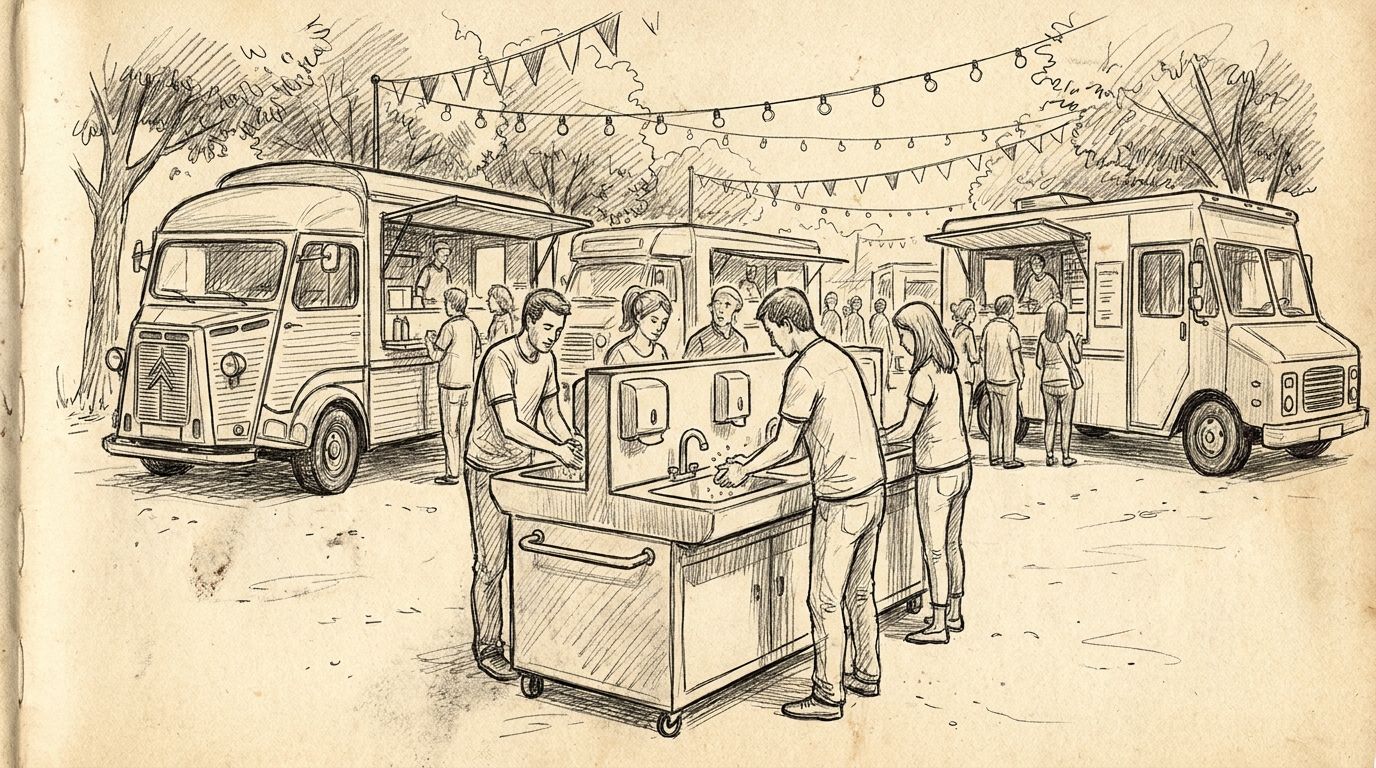
A food truck rally without a hand wash station is a health inspector's first write-up and a line cook's first excuse to skip washing up between raw poultry and cash handling. Getting the setup right before the trucks roll in keeps your event running instead of getting shut down mid-service.
- Hand wash station rental for food trucks is required by most Bay Area health departments when a truck lacks an onboard sink or runs a shared prep tent.
- A single foot-pump unit works for one truck at a farmers market: Buy.
- Multi-station packages fit rallies with three or more trucks sharing a service line: Buy.
- Bucket-and-jug setups fail inspection more often than any other shortcut: Skip.
Why this matters
Santa Clara County and most Bay Area health departments require an operational hand wash setup wherever food is prepped or served, especially when a truck's built-in sink can't keep pace with volume. Inspectors check this before they check anything else on a mobile food unit.
A rejected station at load-in means a truck sits idle while the event clock runs. For a one-day rally that's a lost service window. For a multi-day festival, it's a lost weekend for a vendor who paid to be there.
Valley Services rents hand wash stations across San Jose, Santa Clara, Sunnyvale, Mountain View, and Milpitas, alongside restroom rental and site fencing, so one call covers the sanitation side of the event instead of three vendors and three delivery windows.
Who needs a hand wash station rental for food truck events
This guide is for food truck operators booking single events, event producers coordinating a lineup of five or more trucks, and municipal or private venue managers who require proof of sanitation compliance before issuing a vendor permit. If you're running one truck with a working onboard sink and a short single-day booking, you may only need a backup unit. If you're managing a rally, festival, or farmers market with a shared prep tent, you need a plan for every truck on the line, not just the one that asks.
What to look for in a hand wash station for food truck events
Hands-free or foot-pump operation
Most health departments will not sign off on a unit that requires touching a handle to turn on water, since that defeats the point of hand washing. A foot-pump or hands-free dispensing setup is the baseline, not an upgrade.
Freshwater tank size matched to service hours
A station that runs dry two hours into a six-hour rally does more harm than no station at all, because staff either stop washing or start rationing water on raw meat prep. Match tank capacity to your event's actual service window, not the shortest one on the lot.
Placement near prep, not near the fence line
Inspectors and health department field staff look for a station within reach of the actual food prep and service point. A hand wash unit parked behind the truck, out of sight and out of habit, gets flagged even if it's plumbed correctly.
Greywater containment
Every unit needs a way to hold used water until pickup. Dumping greywater on pavement or into a storm drain is a violation in every jurisdiction Valley Services serves, and it's the fastest way to get a vendor pulled from an event.
Enough stations for the truck count
One station for eight trucks sharing a prep tent creates a line that slows service and defeats the purpose. Scale station count to the number of trucks actually prepping food, not the number parked on site.
Delivery timed to load-in and pickup timed to load-out
A station that arrives after trucks start setting up creates a bottleneck at the exact moment vendors need clear access. Confirm delivery ahead of load-in and pickup after load-out, the same way you'd schedule portable toilet rental for food truck events.
Which setup fits your event
The solo truck fix. One foot-pump hand wash station parked next to a single truck at a farmers market or small block party. Covers a truck without a reliable onboard sink or one running longer hours than its tank supports. Buy.
The rally setup. Multiple stations spaced along a shared prep tent or truck row, sized to the number of vendors actually cooking on site. This is the setup most food truck rallies in San Jose and Santa Clara underbudget for, then scramble to fix on event morning. Buy.
The festival package. Hand wash stations bundled with a restroom trailer or bank of restrooms for multi-day events where staff and attendees both need sanitation access. Pairing the two under one delivery reduces the number of trucks rolling through your load-in. Check hand wash station rental for construction sites for the same equipment used in a jobsite context, since the units are identical. Buy.
The single backup unit for a truck with a working sink. Useful insurance for a truck whose onboard sink is functional but under-sized for a long service day. Consider.
The bucket and jug setup. A cooler of water, a bar of soap, and a bucket underneath. This fails inspection in nearly every Bay Area jurisdiction because it isn't hands-free and has no real containment. Skip.
What to avoid
- Relying on the truck's onboard sink with no backup. Onboard sinks run out of water or break mid-service more often than operators expect, and a broken sink with no backup station is an automatic shutdown risk.
- Placing the unit where inspectors can't see it. A station tucked behind a generator or parked outside the service tent doesn't count as accessible, even if staff use it.
- Skipping the refill and pump-out plan. A tank that runs dry or a greywater tank that overflows mid-event turns a compliance win into a mid-day violation.
Book hand wash stations for your event
Serving San Jose, Santa Clara, Sunnyvale, Mountain View, and Milpitas.
Verdict comparison
| Setup | Best for | Station count | Verdict |
|---|---|---|---|
| Solo truck fix | One truck, short event | 1 | Buy |
| Rally setup | 3+ trucks, shared tent | Matched to truck count | Buy |
| Festival package | Multi-day, staff + attendees | 2 or more, paired with restrooms | Buy |
| Backup unit only | Truck with working sink | 1 | Consider |
| Bucket and jug | Nothing, ever | 0 real capacity | Skip |
FAQ
Do food trucks need a separate hand wash station?
Most Bay Area health departments require a separate, hands-free hand wash station if the truck's onboard sink can't handle event volume or is undersized for the service window. Check with the local health department before the event, since requirements vary by county.
How many hand wash stations does a food truck rally need?
Scale station count to the number of trucks actively prepping food on site, not the number parked in the lot. A rally with eight trucks sharing a prep tent needs more than one station to avoid a line that slows service.
Can a food truck use a bucket instead of a hand wash station?
No. A bucket and jug setup fails inspection in nearly every Bay Area jurisdiction because it isn't hands-free and has no greywater containment. Health inspectors flag this before checking anything else.
Is hand wash station rental the same as portable restroom rental?
No. A hand wash station is a standalone sink unit for food prep and service sanitation, separate from restroom facilities for staff and attendee use. Larger events typically need both.
How far in advance should I book a hand wash station for a food truck event?
Book as soon as your event date and vendor count are confirmed, especially for weekend events during peak festival season in San Jose and the South Bay. Delivery needs to land before load-in, not during it.
What happens to greywater from a hand wash station?
Greywater collects in a containment tank on the unit and gets pumped out at pickup. Dumping it on pavement or into a storm drain is a violation everywhere Valley Services operates.
Does a hand wash station need to be near the food truck?
Yes. Health department inspectors expect the station within reach of the actual prep and service point, not tucked behind the truck or outside the service tent.
One last thing
The detail most first-time event producers miss isn't the station itself, it's the pickup timing. A greywater tank that fills mid-event and isn't scheduled for a mid-day pump-out will overflow before your last truck closes down for the night, and that's a violation you create yourself, not one an inspector catches on arrival.
Valley Services has run site sanitation logistics out of the same San Jose yard since 1986, three generations in, which means the truck showing up for your delivery window is scheduled by people who've done this for decades, not dispatched from a call center. Call (408) 297-5404 or reach out through valleyservices.biz to talk through station count for your next event.