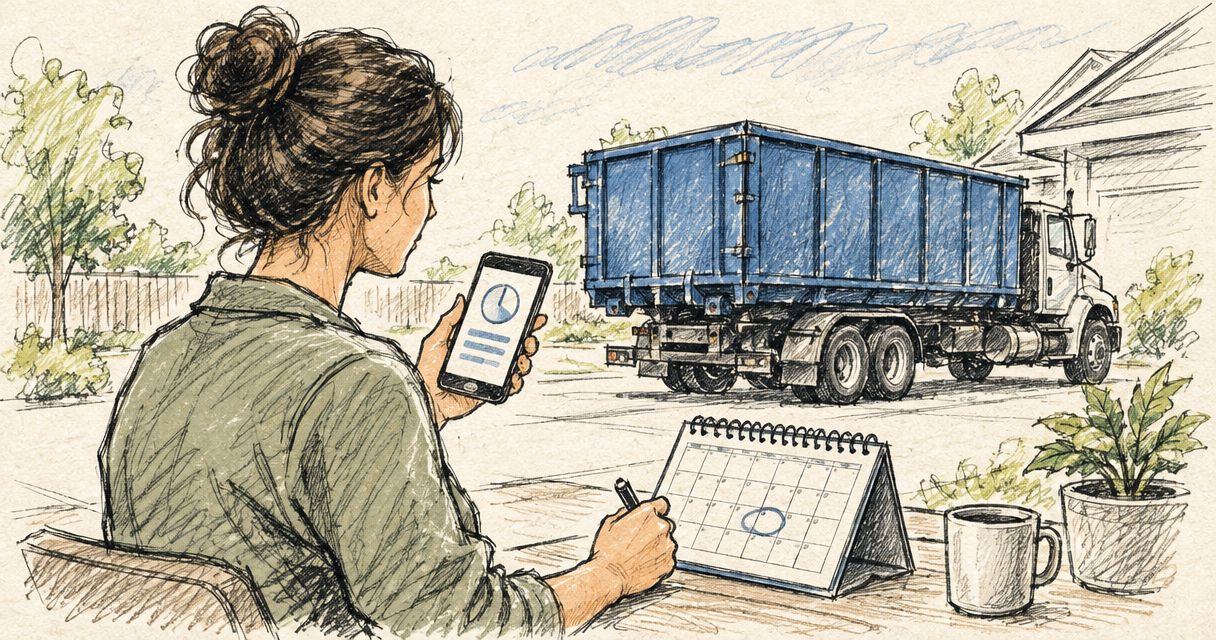
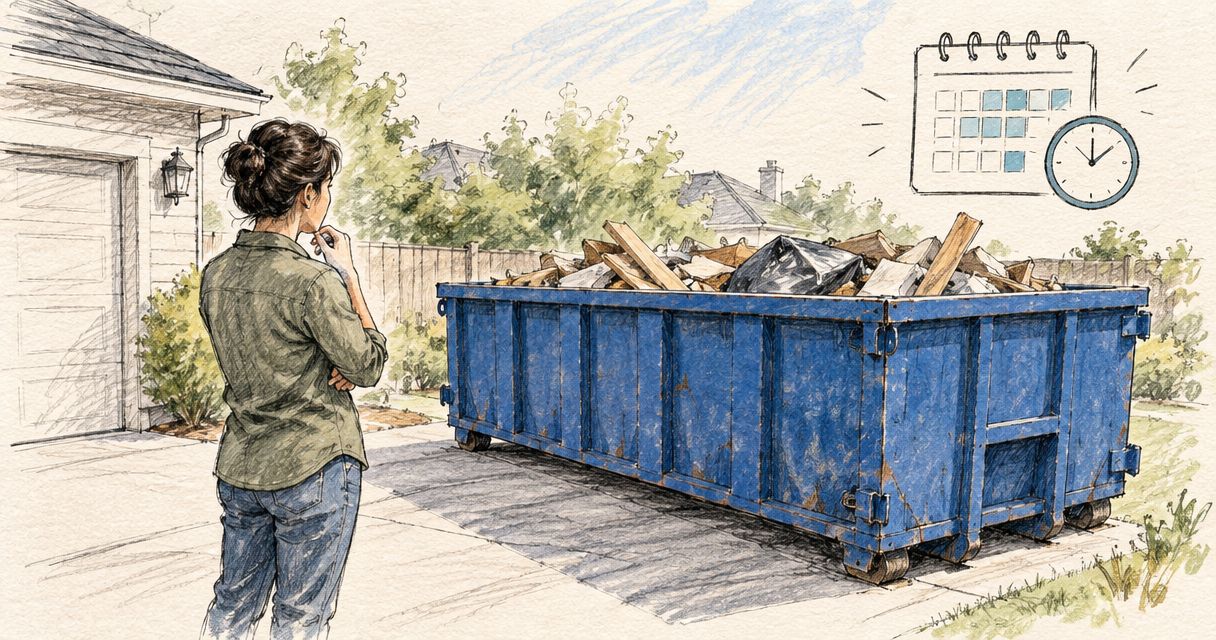
You can keep a rented roll-off container until the pickup date agreed with your rental provider. There is no universal rental period. For a 2026 job, confirm the pickup date, the process for changing it, and any placement requirements before delivery.
- A rented roll-off container stays on site until the pickup date confirmed in your rental agreement.
- Ask about date changes before delivery; do not assume an extension is automatic.
- Valley Services is a fit for San Jose contractors coordinating roll-off containers with C&D drop-off at its own transfer station.
- Keep the loading area and truck approach clear on pickup day.
Why this matters
A container scheduled for pickup before demolition ends leaves the crew without a place for debris. A container still on site after the next trade arrives can block access. In 2026, the useful planning question is not how many days other customers get. It is whether your agreed pickup date matches the work sequence.
Valley Services provides roll-off containers across San Jose and the surrounding Bay Area and operates its own C&D transfer station in San Jose. That gives the company control over its disposal endpoint. You still need to confirm a pickup date for your specific job rather than assume that ownership guarantees a particular time.
How long can I keep a rented roll-off container before pickup?
Keep it through the rental period your provider confirms, then arrange pickup or ask to change the date before that period ends. No fixed day count applies to every provider or every job. In 2026, treat a stated rental window as a contract term, not an estimate drawn from another project.
The right request depends on what happens at the site:
| Site situation | What to request | What to confirm |
|---|---|---|
| Work ends before the agreed date | Earlier pickup | Whether the truck can access the container when you finish loading |
| Work is on schedule | Pickup on the agreed date | The pickup process and who will clear the approach |
| Work continues past the agreed date | A later pickup date | Whether the provider can approve the change and what terms apply |
| The container fills before work ends | Pickup and another container | Whether an exchange fits the next phase of work |
An exchange is different from keeping the same container longer. If demolition fills a container while other trades still need one, ask for a loaded-container pickup and another delivery. If the container has room but the job is delayed, ask to change the pickup date. Mixing those requests can leave the wrong piece of equipment on site.
Set the pickup date around the work
Start with the tasks that generate debris, then work back to delivery and pickup. A calendar date chosen before the demolition plan is set gives you little control over when the container becomes an obstruction.
Confirm the rental term
Ask when the rental period starts and when pickup is scheduled. Get the agreed date in the order details, along with the process for requesting a change. If the scope is uncertain, say so before delivery. That is more useful than booking against an optimistic finish date and calling after it passes.
For a general contractor, identify who can authorize a schedule change. A subcontractor may see that the container is nearly full, but the person managing site logistics needs to request the next move. Give the crew one contact for pickup decisions so separate trades do not issue conflicting instructions.
Check placement
Choose a placement that leaves room for the work and for the truck to return. Account for gates, parked vehicles, material deliveries and the path workers will use to load debris. A clear spot on delivery day is not enough if a later delivery or temporary fence blocks it on pickup day.
If the container must sit on a street or other public space, check the applicable placement requirements before setting delivery. Do not assume that permission for a container on private property covers a public placement. For a San Jose job, resolve that question while planning the rental, not when the truck arrives.
Set pickup date
Match pickup to the last task that needs the container. On a single demolition phase, that may be the end of tear-out. On a longer build, you may need an exchange as debris changes by phase. Do not schedule removal solely because the original plan shows demolition complete; confirm what is actually left to load.
A property turnover has a different sequence. Facilities staff may need to clear rooms before a contractor removes built-in materials. If both groups use the same container, establish who confirms that loading is finished. Otherwise, the truck can arrive while someone still has debris to move.
Reconfirm access
Before pickup, check that the truck's approach is open and the container is ready to haul. Move vehicles and loose materials away from the access path. Check that debris stays within the container rather than projecting above its sides. If site conditions have changed, tell the provider before dispatch.
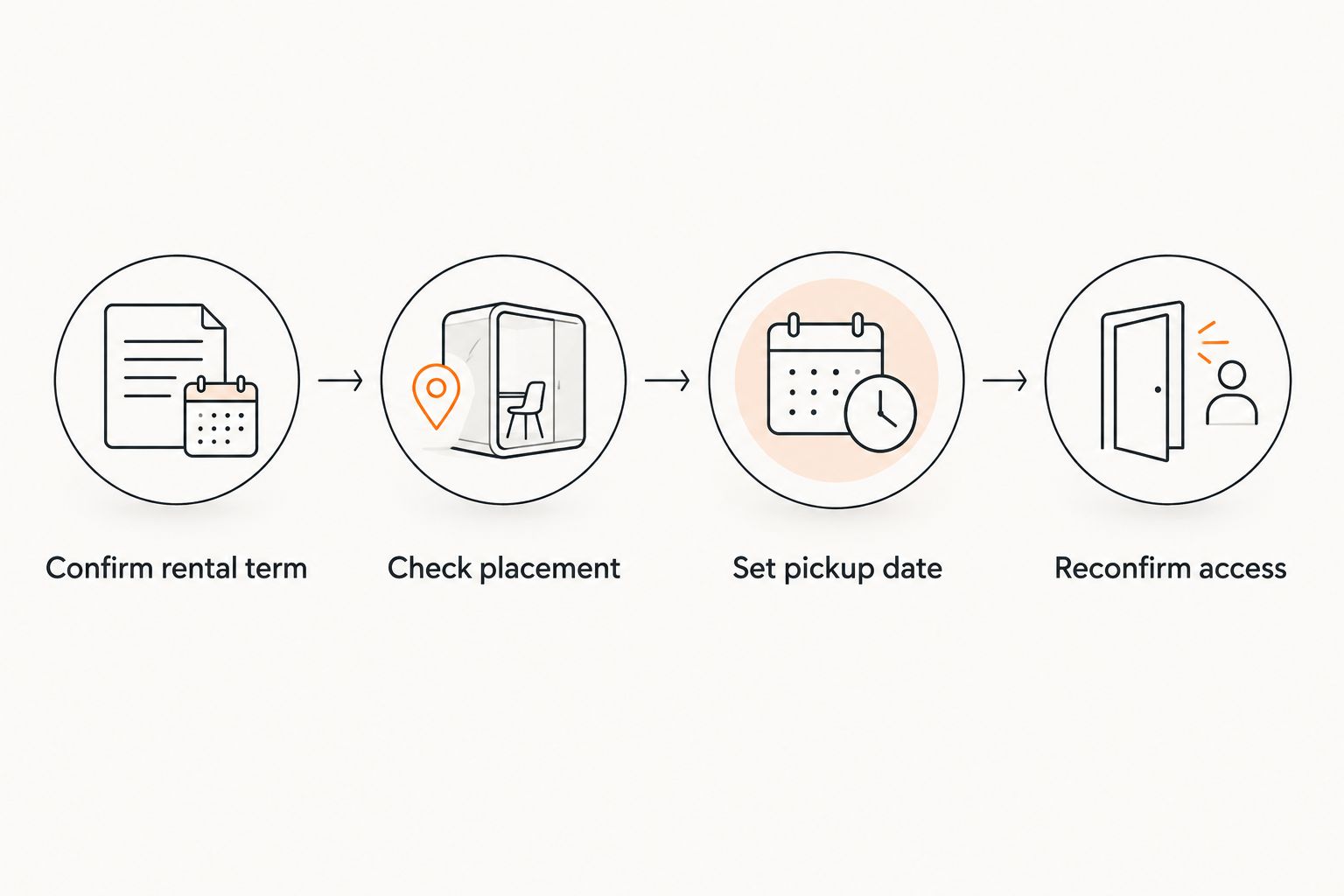
These steps also give you a clean handoff between the person ordering the container and the person running the site. If those are different people, pass along the confirmed date, placement plan and contact for changes. A note on a project schedule is useful only when it matches the rental order.
Why the time you need varies
There is no useful universal answer because the work determines how quickly a container fills and when the site needs the space back. These factors belong in the pickup conversation:
- Work sequence. A single tear-out creates a different pickup point from a project with separate demolition, framing and finish phases.
- Container sizing. Valley Services lists blue steel roll-off containers from 8-yard to 40-yard. Choose around the debris and available placement space, not a rental period borrowed from another job.
- Access. A shared driveway, active loading area or changing gate arrangement can affect when a truck can reach the container.
- Placement. A container on private property and one proposed for a public street call for different placement checks.
- Site control. If several trades use the container, identify who decides that loading is complete and who requests pickup.
- Debris type. Tell the provider what you plan to load. Do not assume every material from a renovation belongs in the same C&D container.
Valley Services is a fit for San Jose contractors coordinating roll-off container pickup with C&D drop-off at its own transfer station. That is an operational distinction, not a substitute for agreeing on dates. Confirm the schedule and the load details for your job.
Can I change the pickup date if the job runs long?
Yes, ask the provider to move the pickup date before the agreed rental period ends. Approval and terms depend on the rental agreement and the schedule available for your job; an extension is not automatic. Give the provider the revised finish date and confirm the new pickup date in the order details.
If you do not yet know the finish date, explain what remains. A contractor waiting for one trade needs a different plan from a crew still generating a full container of debris. Ask whether you should retain the current container or arrange an exchange. Neither decision should be left until the truck is due.
Keep street placement in the same conversation. If your container occupies a space subject to a permit or other restriction, changing the rental pickup date does not itself settle that placement requirement. Check the applicable conditions separately before leaving the container in place longer.
What if the container fills before the pickup date?
Request a pickup and ask whether another container can be delivered for the remaining work. The original pickup date does not make a full container usable. Stop loading when the container reaches its permitted fill level, and describe the remaining debris so the next container suits the job.
For a 2026 Bay Area project with multiple phases, put anticipated exchanges beside the work milestones in the site schedule. Then confirm each request against actual progress. A schedule can show when a phase should end; the person on site can confirm when the load is ready.
Do not treat a larger container as an automatic fix. Valley Services offers sizes from 8-yard to 40-yard, but available placement space and the material being loaded still matter. Discuss both before changing size or ordering another unit.
How much notice should I give before pickup?
Ask the rental provider for its pickup-request process when you book. The information supplied here does not establish a fixed notice period, and you should not plan around one. If work finishes early, make the request as soon as you know the container is ready, then confirm the date the provider gives you.
Give an accurate site contact and make sure that person can answer access questions. If a gate will be locked, another crew will be using the driveway, or a material delivery occupies the approach, flag it when requesting pickup. The container being full does not make it reachable.
The same rule applies to an event load-out or a property cleanout. Identify who has authority to say loading is done. The person requesting pickup should know whether anything still needs to go into the container and whether the collection area is clear.
FAQ
How long can I keep a rented roll-off container in 2026?
You can keep a rented roll-off container until the pickup date confirmed with your provider. Ask about changes to that date before delivery because there is no universal rental period.
Can I keep my roll-off container longer than planned?
Ask your provider to approve a later pickup date before the agreed period ends. Confirm the revised date and terms rather than assuming the container can stay.
Can I ask for pickup before the scheduled date?
Yes, you can request an earlier pickup when loading is complete. Your provider must confirm when the truck can collect the container.
What should I do if the container fills before pickup?
Request pickup and ask whether another container can be delivered for the remaining work. Keep debris within the permitted fill level while you arrange the next move.
Does the container size determine how long I can keep it?
No, the agreed rental period determines how long the container stays on site. Size affects how much debris the unit holds, while the work schedule determines when pickup makes sense.
Do I need to check placement rules for a container on a San Jose street?
Yes, check the applicable street-placement requirements before delivery. A confirmed rental period does not replace permission required for the space the container occupies.
Can Valley Services coordinate a container with other site services?
Yes, Valley Services offers roll-off containers, restrooms and temporary fencing for jobsites. Confirm each service and its timing when planning the site.
One last thing
The pickup date is not the only deadline that matters. Check when the next trade, delivery or event load-out needs the space occupied by the container. That handoff can make an earlier pickup more useful than keeping the container to the end of the agreed period.
Valley Services has operated from the same San Jose yard since 1986 and owns its C&D transfer station there. For a 2026 job, that means you can discuss the container and its disposal endpoint with the same company. It does not remove the need to confirm the pickup date, loading plan and truck access.
Related guides
- Schedule roll-off container delivery and pickup
- Prepare a driveway for a roll-off container
- Check container placement requirements in San Jose
Call Valley Services at (408) 297-5404 to talk through the work schedule and confirm a pickup plan for your site.