Concrete driveways crack under roll-off containers more often than people expect, and the truck delivering the container needs room the average homeowner never measures until the truck is already backing in. Get the driveway ready before the container shows up and load-in takes five minutes instead of an hour.
- Clear a straight 60-foot approach and 14 feet of overhead clearance before the delivery truck arrives.
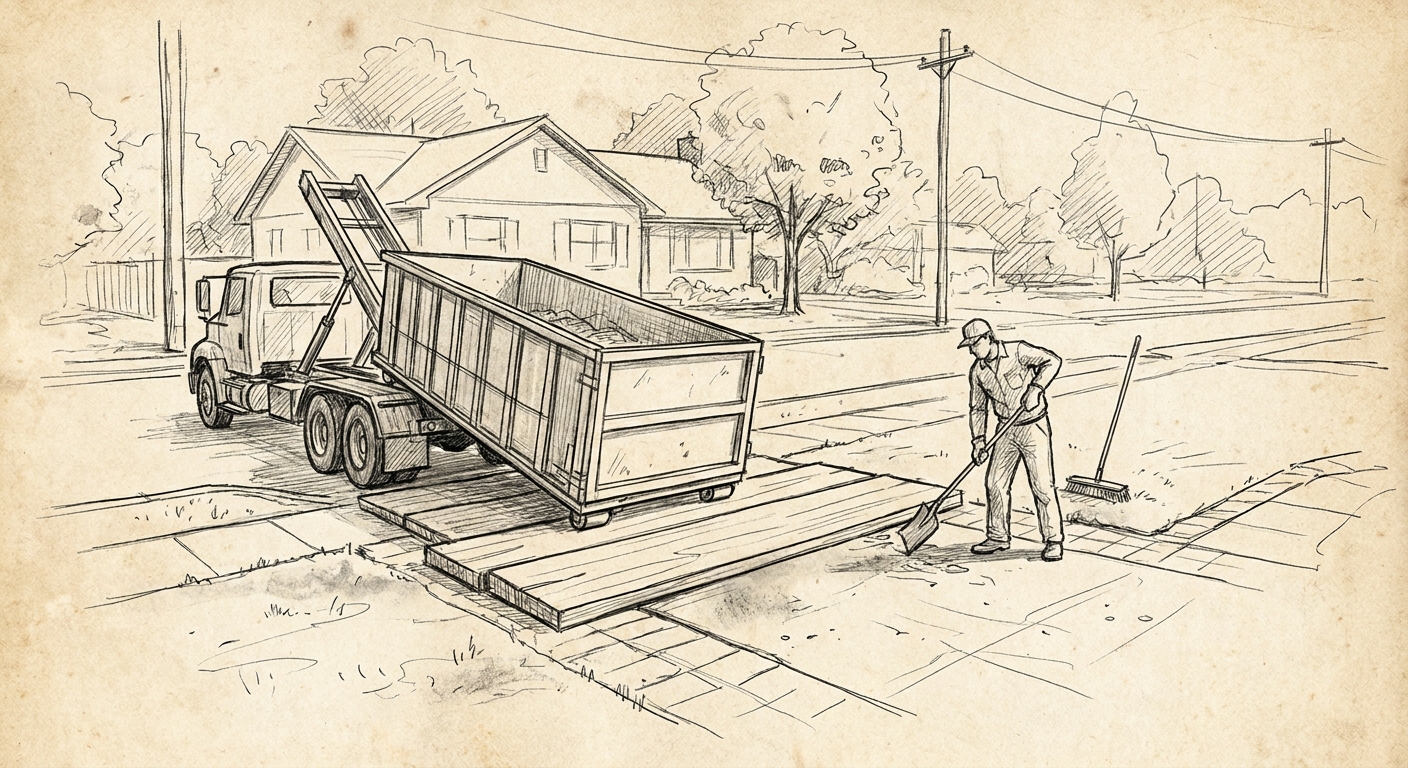
- Lay 3/4-inch plywood under the container's rail contact points on asphalt or pavers to prevent gouging.
- A loaded 20-yard roll-off can weigh 8,000 to 10,000 pounds resting on two narrow steel rails, not distributed evenly.
- Mark sprinkler heads, water meters, and septic lids before the driver arrives, not after.
- Valley Services delivers blue steel roll-off containers across San Jose and the South Bay and will call ahead on placement questions.
Why this matters
A roll-off container doesn't roll gently onto a driveway. The delivery truck tilts the container off a hydraulic rail system and drags it into position, and that rail contact point carries the full weight of the container plus whatever debris ends up inside it. On a driveway that's already stressed, thin, or cracked, that's enough to punch through.
Damage claims on driveways are the single most common dispute in roll-off rental, and most of them trace back to skipped prep, not defective equipment. Fifteen minutes of setup on your end prevents most of it.
What you'll need
- Two sheets of 3/4-inch plywood, at least 4x8 feet, to place under the container's contact rails
- A tape measure to confirm driveway width and overhead clearance
- Chalk or marking flags for sprinkler heads, meter boxes, and septic access points
- A broom or blower to clear loose gravel and debris from the placement zone
- A phone number for the rental company in case the truck needs a placement adjustment: (408) 297-5404
- If your municipality requires a permit for a container on a street or right-of-way, that paperwork in hand before delivery day
Most residential jobs use a roll-off container from a home renovation project sized between 10 and 20 yards, and those containers all use the same rail-drop delivery method regardless of size.
The steps
1. Measure the approach path
The delivery truck needs a straight shot into the driveway, not a tight turn. Roll-off trucks run 60 to 70 feet long when you count the container, and they can't jackknife into a driveway the way a smaller vehicle can.
Walk the path from the street to the placement spot and check for parked cars, low tree branches, or narrow gates that weren't a problem for your own car but will stop a flatbed dead. Expect the driver to need at least 10 to 12 feet of clear width along the entire approach.
Common mistake: measuring the driveway itself but forgetting the street approach, where a neighbor's parked trailer or a trash bin on collection day can block the turn entirely.
2. Check overhead clearance
Roll-off trucks tilt the container upward during placement and pickup, which means overhead clearance matters more than most people think. Power lines, low tree limbs, and carport roofs are the three things that cause the most delivery delays.
Aim for 14 to 16 feet of clear overhead space above the entire placement zone, not just the spot where the container will sit. If a line runs directly over your driveway, call ahead and flag it before the truck is dispatched.
3. Protect the surface with plywood
On asphalt, pavers, or any concrete older than a decade, lay 3/4-inch plywood sheets where the container's steel rails will make contact. The rails carry concentrated weight along a narrow line, not spread across the container's full footprint, and that's what causes gouging and cracking.
Two sheets, positioned end to end along the container's length, cover most standard placements. Skip this step on a driveway less than two years old with no visible cracking, but use it on anything older.
Common mistake: placing plywood under the whole container footprint instead of specifically under the rail lines, which wastes material and still leaves the actual contact points unprotected if the truck shifts position slightly during drop.
4. Mark utilities and access points
Sprinkler heads, water meter boxes, gas shutoffs, and septic cleanout caps sit flush with the ground and disappear from view the moment a container's shadow falls across them. Chalk-mark or flag every one of these before delivery day, not the morning of.
A loaded container that gets dropped on top of a sprinkler valve or meter box turns a two-hour job into a plumbing repair. This step takes ten minutes and prevents the most expensive mistake on this list.
5. Clear the placement zone completely
Sweep loose gravel, remove parked vehicles, and pull any potted plants, hoses, or trash bins out of the 20 by 10 foot zone where the container will land. Gravel and debris under the rails create the same concentrated-point damage as skipping plywood, just from the opposite direction.
Expected outcome: a clean, flat, obstruction-free rectangle roughly the size of a standard parking space, ready for a straight drop.
6. Confirm the loading side
Decide which side of the driveway needs to stay clear for continued access during the rental. If you're running a kitchen remodel or any multi-week project, you'll be walking debris to that container daily, so leave a walking path on the side closest to your work zone.
Tell the driver which orientation you want before drop, because repositioning a loaded container after placement isn't a quick fix.
7. Walk the site with the driver on arrival
When the truck arrives, meet the driver before they back in. Point out the marked utilities, confirm the orientation, and flag anything that changed since you scouted the site, like a car a neighbor parked overnight.
This two-minute conversation catches problems before they become damage claims, and any experienced driver will appreciate a homeowner or foreman who's already done the prep work.
Schedule your roll-off delivery
Talk through driveway placement and container sizing before drop-off day.
Troubleshooting
The driveway has existing cracks. Photograph them before delivery and note their location relative to where the container will sit. Plywood protects against new damage but won't hide pre-existing cracks in a dispute, and documentation protects you either way.
Overhead lines cross the only clear approach. Call the rental company before the truck is dispatched. In some cases a smaller container size or a different placement angle solves it without rerouting the whole delivery.
The driveway slopes steeply toward the street. A steep grade can cause a container to shift slightly after drop. Ask about wheel chocks or a flatter alternate placement, such as a section of yard or a widened section of driveway near the garage.
HOA rules restrict street placement. Check your HOA paperwork or municipal code before booking. Some cities in the South Bay require a placement permit if the container sits on a public street rather than private property, and permits take longer to process than most homeowners expect.
The container needs to move mid-project. Roll-off containers aren't designed for repositioning without a truck. If you need the container relocated on your own property, call the rental company to schedule a reposition rather than attempting to move it yourself.
Debris is loaded unevenly and the container tips slightly. Load heavy debris like concrete or roofing material low and centered, and distribute weight across the full floor rather than piling it against one wall. This matters for both stability and for keeping the container within legal towing weight when it's picked up.
Tools and resources
- Plywood sheets (3/4-inch, at least two 4x8 sections)
- Tape measure and marking chalk or flags
- A guide on construction dumpster rental for general contractors if you're managing multiple deliveries across a jobsite
- Local rules on how to dispose of construction debris in San Jose if you're unsure what's allowed in the container versus what needs separate handling
- A phone number on hand for placement questions: (408) 297-5404
What to do next
Once the driveway is prepped, the next decision is sizing. A container that's too small for the debris load means a second haul and a second setback in your driveway. Check the best dumpster size for a garage cleanout guide if your project involves a mixed load of household items and construction debris, since sizing logic differs from a straight demo job.
FAQ
Will a roll-off dumpster crack my driveway?
A roll-off container can crack an older or already-stressed driveway if the rails make direct contact with the surface. Plywood placed under the contact points in 2026 prevents most of this, and driveways under two years old rarely need it.
How much clearance does a delivery truck need?
Delivery trucks need roughly 60 feet of straight approach and 14 to 16 feet of overhead clearance. Anything less, including low branches or power lines, should get flagged to the rental company before the truck is dispatched.
Can I put a roll-off container on the street instead of the driveway?
Street placement is often allowed but usually requires a municipal permit in South Bay cities. Check with your city before delivery day, since placement without a required permit can result in a citation.
How heavy is a loaded roll-off container?
A loaded 20-yard container commonly weighs 8,000 to 10,000 pounds depending on the debris type, with concrete and roofing material weighing far more per yard than household trash. Weight matters both for driveway stress and for staying within legal towing limits.
Do I need plywood under a roll-off dumpster on concrete?
Plywood is recommended on any concrete driveway more than a couple years old, since the container's steel rails concentrate weight along narrow contact lines rather than spreading it evenly. New concrete in good condition generally doesn't need it.
What should I mark before the dumpster arrives?
Mark sprinkler heads, water meter boxes, gas shutoffs, and any septic access points with chalk or flags before delivery day. These sit flush with the ground and are easy to miss once the container's shadow covers them.
Can the driver reposition the dumpster after it's placed?
Repositioning a loaded container requires the truck to return, so it's not a quick fix. Confirm orientation and placement with the driver before the drop happens rather than after.
How far in advance should I prep the driveway?
Handle plywood placement, marking utilities, and clearing the zone the day before delivery. Measuring the approach and overhead clearance can happen even earlier, ideally when you first book the container.
One last thing
The detail most homeowners skip in 2026 is checking the loading side before delivery, not after. Once a 20-yard container lands facing the wrong direction for daily debris walking, you're stuck with an awkward carry path for the entire rental period, and that's a bigger daily annoyance than most of the driveway damage risks combined.
Call (408) 297-5404 or visit valleyservices.biz to talk through placement, sizing, and delivery timing before your container arrives.