A blue steel roll-off container sitting in the wrong spot on a San Jose street can turn into a citation, a tow, or a stalled job. Here's how permitting actually works for dumpster placement in San Jose in 2026, step by step.
- Containers placed entirely on private property, like a driveway, typically need no dumpster placement permit san jose.
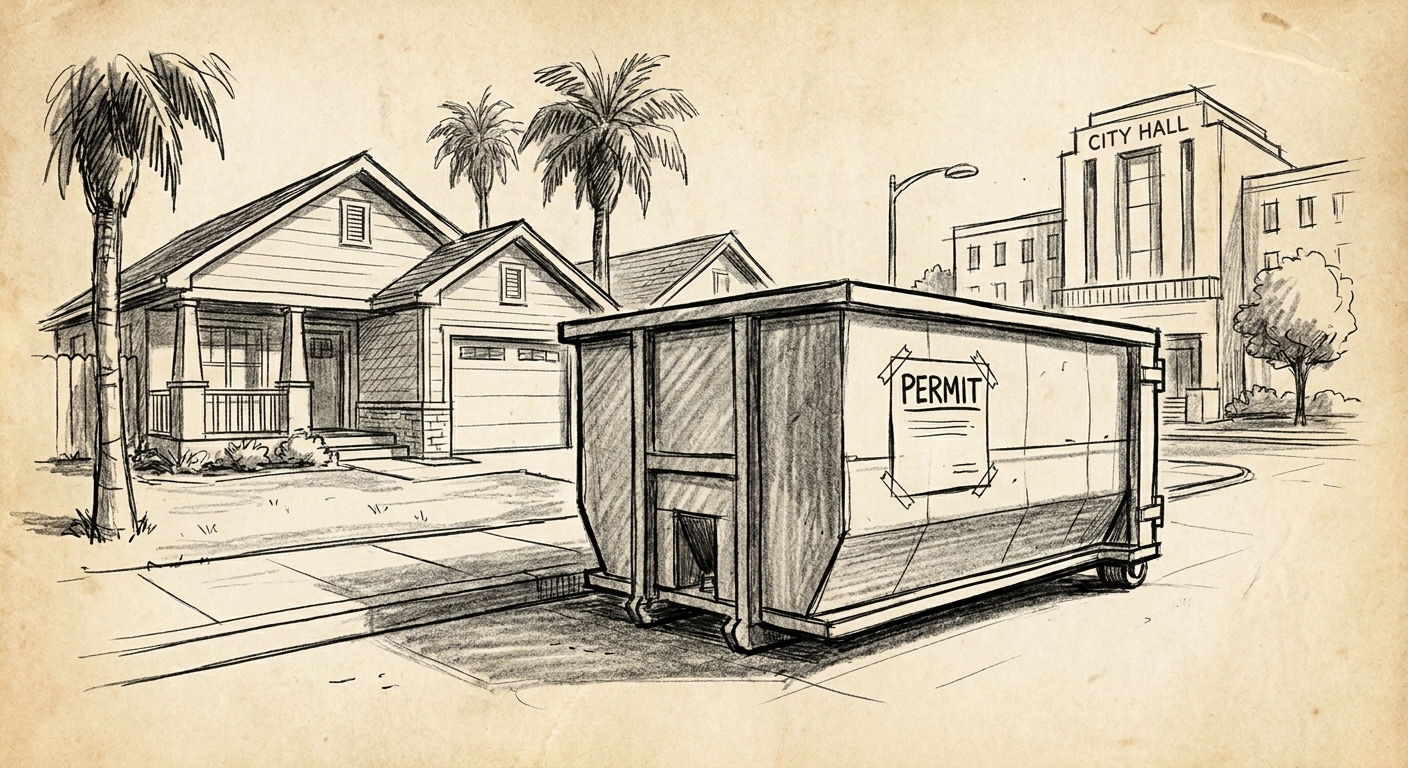
- Placement on a public street or sidewalk requires an encroachment permit through San Jose's Department of Transportation.
- Most encroachment permits run in blocks of 30 days and require traffic control if a lane or sidewalk is blocked.
- Valley Services schedules delivery and pickup around your permit window so the container isn't sitting on the clock unpermitted.
Why this matters
A permit violation on a jobsite doesn't just cost a fine. It can stop work, trigger a stop-work order from an inspector, or force you to relocate a full container mid-project. Property managers and event producers face the same risk with sidewalk closures and ADA access requirements.
Contractors who plan the permit before the container shows up avoid all of it. The permit question is really a placement question: where is the container going to sit, and who controls that ground.
What you'll need
- A site plan or sketch showing exactly where the container will sit, including distance from the curb
- Container dimensions for the size you're renting (an 8-yard container is roughly 12 feet long, a 40-yard runs closer to 22 feet)
- Your contractor license number if you're pulling the permit for a commercial job
- Proof of insurance, if the city's encroachment application requires it
- A delivery and pickup window from your rental company
- Traffic control equipment (cones, signage) if the container touches any part of the street or sidewalk
If you're renting from Valley Services, confirm your container size and delivery date before you file anything with the city. Permits are usually tied to specific dates, and a delivery delay can push you outside your approved window.
The steps
1. Determine whether the container sits on public or private property
This is the decision that drives everything else. A container parked fully on a driveway, private lot, or fenced construction site generally does not require a City of San Jose encroachment permit. A container that touches the curb, sits in a parking lane, or blocks any part of a sidewalk does.
Measure the actual footprint. A 20-yard container needs about 22 feet of length and 8 feet of width for the truck to load and unload safely, plus clearance for the tilt frame. If your driveway is narrower than that, part of the container will likely sit in the public right-of-way whether you planned it or not.
Common mistake: assuming a container is off the street because it's not blocking traffic. Sidewalk closures still require a permit even with zero vehicle impact.
2. Check San Jose's encroachment permit requirements before you order
San Jose requires an encroachment permit for any object, including a roll-off container, placed on a public street, sidewalk, or right-of-way. This is handled through the city's Department of Transportation, separate from any building permit for the job itself.
Do this before you schedule delivery, not after. Processing time varies by season and application volume, so a same-week delivery request with a street placement can stall a job start by days.
3. File the encroachment permit application
Submit your site plan, dates, and container dimensions to the city. Commercial jobs typically need the contractor's license number on file. Residential homeowners doing a driveway-only placement can usually skip this step entirely, but confirm with the city if any part of the container overhangs the sidewalk or curb.
Most encroachment permits are issued in 30-day blocks, renewable if the job runs longer. Build your rental timeline around that window instead of guessing at it.
4. Set up traffic control if any part of the container is in the right-of-way
If the permit is approved for street placement, the city will specify traffic control requirements: cones, signage, sometimes a flagger for high-traffic streets like those near downtown San Jose or Santa Clara. This isn't optional and inspectors do check.
A container blocking one full lane on a two-lane street changes the traffic control requirement significantly compared to a container tucked against the curb on a quiet residential block. Know which category your street falls into before delivery day.
5. Coordinate delivery and pickup around the permit dates
The permit window and your rental window need to match. If your encroachment permit covers 30 days starting March 1, 2026, and your rental extends past that, you need to renew the permit before it lapses, not after.
This is where a lot of jobs slip. A container sitting on a permitted street spot one day past expiration is a violation even if the rental agreement is still active. Schedule delivery and pickup with enough lead time to match the permit, not the other way around.
6. Post the permit on-site if the city requires it
Some encroachment permits require the physical permit or a placard to be visible at the site. Inspectors doing a drive-by check will look for it before they check anything else. Keep a copy in the site trailer or with whoever is running the job daily.
Common mistake: the permit sits in an office file while the container sits on the street with nothing posted. That reads as unpermitted to anyone doing a visual check, even if the paperwork is on file.
7. Track your permit expiration against your actual job timeline
Jobs run long. Permits don't extend themselves. Set a calendar reminder at the 20-day mark of a 30-day permit so you have time to renew before the container becomes a liability sitting on public property with no active permit.
8. Close out the permit when the container is picked up
Once the roll-off is off the street, confirm with the city that the encroachment permit is closed if that's required in your jurisdiction. This matters most for repeat contractors working multiple San Jose addresses, since an open permit at a closed site can complicate the next application.
Talk through your container placement
Call before delivery day to line up sizing and scheduling around your permit window.
Troubleshooting
The permit came back denied for the requested spot. Usually means the street width or sidewalk clearance doesn't meet the city's minimum. Move the container onto the driveway or a private lot if any exists on the property, or apply for a different curb segment.
Delivery got pushed back and now the permit window doesn't line up. Contact the city about a date amendment before the container arrives. Don't let the truck deliver on a date outside the approved window.
The container is bigger than what fits in the approved footprint. Resize before delivery, not after. A 30-yard container needs more length than most standard permits account for on narrow residential streets. Check best dumpster size for a roof replacement or a similar sizing guide before you lock in the permit application.
A neighbor or property manager complains about sidewalk access. ADA clearance on the sidewalk usually needs to stay at a minimum width even with an approved permit. Reposition the container closer to the curb line if the current placement narrows the walkway too much.
The permit lapsed mid-job. Stop delivery activity on the street side immediately and file a renewal same day. Inspectors in San Jose do check active job sites, and a lapsed permit is treated the same as no permit at all.
Tools and resources
- San Jose Department of Transportation encroachment permit application, available through the city's permit center
- A measured site sketch showing curb distance, container footprint, and any sidewalk overlap
- How to prepare a driveway for a roll-off dumpster if you're keeping the container entirely on private property
- How to dispose of construction debris in San Jose for what happens to the load once the container leaves the site
- Your rental company's delivery and pickup scheduling contact, confirmed in writing against your permit dates
What to do next
Once the permit question is settled, the next decision is sizing. An oversized container on a street permit wastes space you're paying an encroachment fee for. An undersized one means a second haul mid-job. Work through how to estimate dumpster rental costs for a remodel to line up size and budget before you file the permit paperwork, since the container dimensions go directly on the application.
FAQ
Do I need a permit for a dumpster in my own driveway in San Jose?
No, a container placed entirely on private property like a driveway generally does not require a City of San Jose encroachment permit in 2026. You only need a permit when part of the container sits on the street, curb, or sidewalk.
How long does a San Jose encroachment permit last?
Most encroachment permits for a roll-off container are issued in 30-day blocks and can be renewed if the job runs longer. Track the expiration date against your rental period so the container isn't sitting on the street past the approved window.
Who issues the dumpster placement permit in San Jose?
San Jose's Department of Transportation issues encroachment permits for anything placed in the public right-of-way, including roll-off containers. This is separate from any building permit tied to the construction job itself.
What happens if a dumpster is placed on the street without a permit?
An unpermitted container on a San Jose street can be cited or ordered removed by the city. Repeat violations on a jobsite can also slow down other permit approvals tied to the same address.
Does an event dumpster on a closed street need a different permit?
Yes, event placements usually fall under a street closure or special event permit rather than a standard encroachment permit, and they often require traffic control and signage regardless of container size.
Can I put a roll-off container in a parking space in San Jose?
Only with an approved encroachment permit specifying that parking space and the dates it covers. Parking spaces count as public right-of-way, the same as the street itself.
How far in advance should I apply for a dumpster placement permit?
Apply before you schedule delivery, ideally at least a week ahead in 2026, since processing time varies by season and application volume at the city.
Does the permit need to be visible on-site?
Some San Jose encroachment permits require the permit or a placard to be posted where an inspector can see it during a site visit. Confirm the posting requirement when the permit is approved.
One last thing
Most permit delays trace back to one mistake: measuring the container's rental listing size instead of its actual footprint on the ground, including the tilt clearance the delivery truck needs. A 20-yard container's listed size doesn't account for the extra 3 to 4 feet of clearance the truck needs to lift and set it. Measure the real footprint before you file, not after the city sends back a correction request.
Valley Services has run containers, restrooms, and fencing out of the same San Jose yard since 1986, and coordinates delivery timing around permit windows every week for contractors across the South Bay. Call (408) 297-5404 or reach out through valleyservices.biz to talk through your placement before you file.