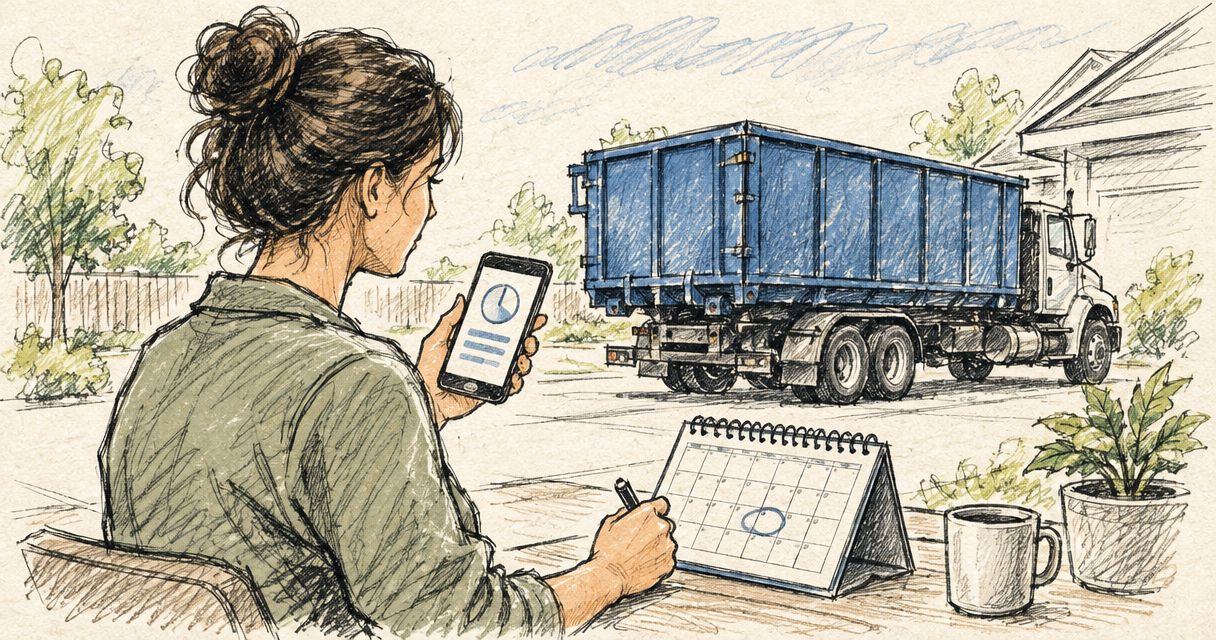
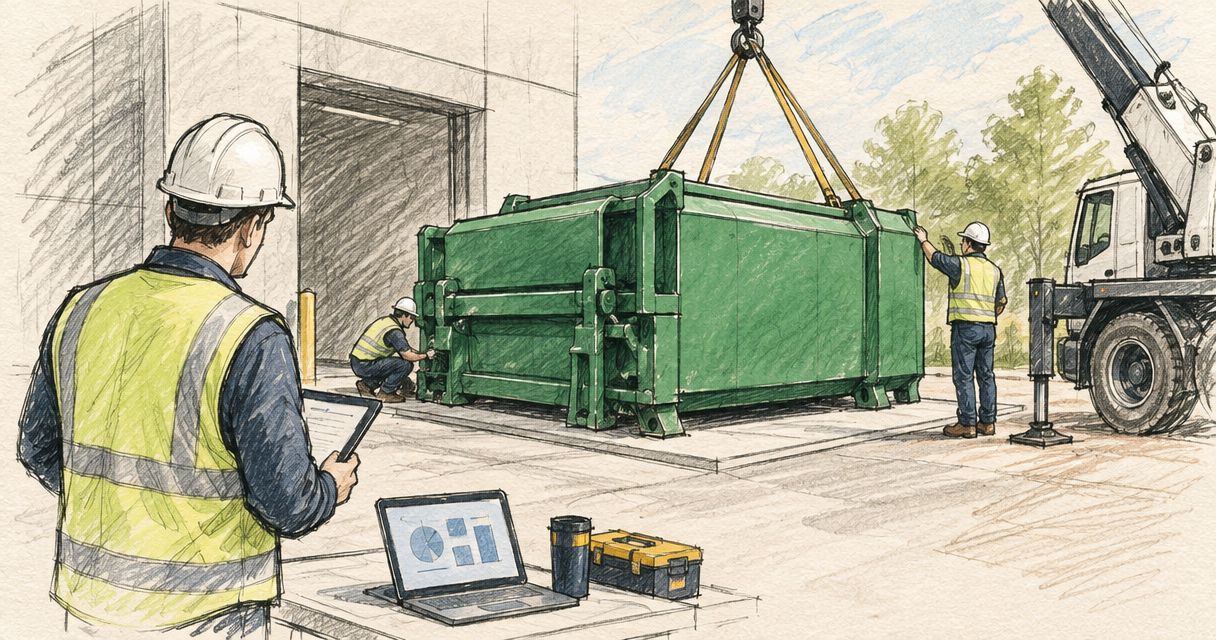
A San Jose jobsite can have a clear equipment pad and still be unable to accept a trash compactor rental if the truck cannot reach it or the power connection is unfinished. There is no reliable installation duration without the equipment requirements and a site check. Plan installation around confirmed access, placement, power, and service arrangements, not an assumed delivery window.
- In 2026, how long does it take to install a compactor rental? There is no fixed duration without site and equipment details.
- Confirm truck access, placement, power requirements, and service access before setting an installation date.
- Valley Services offers roll-off containers for Bay Area jobsites; compactor rental availability is not confirmed in the supplied service details.
How long does it take to install a compactor rental?
The installation time is the time needed to complete site checks, delivery, placement, any required connection, and an operational handoff. No stated equipment model, site conditions, or installer schedule supports a single number for those steps. In 2026, treat a proposed installation date as unconfirmed until the supplier and the person responsible for the site have agreed on the work involved.
If you are still deciding what equipment the site needs, settle that first. A compactor sizing guide for a retail or grocery store addresses a different decision from installation: selecting equipment for the waste stream. The installation plan then has to fit the selected unit and the actual site.
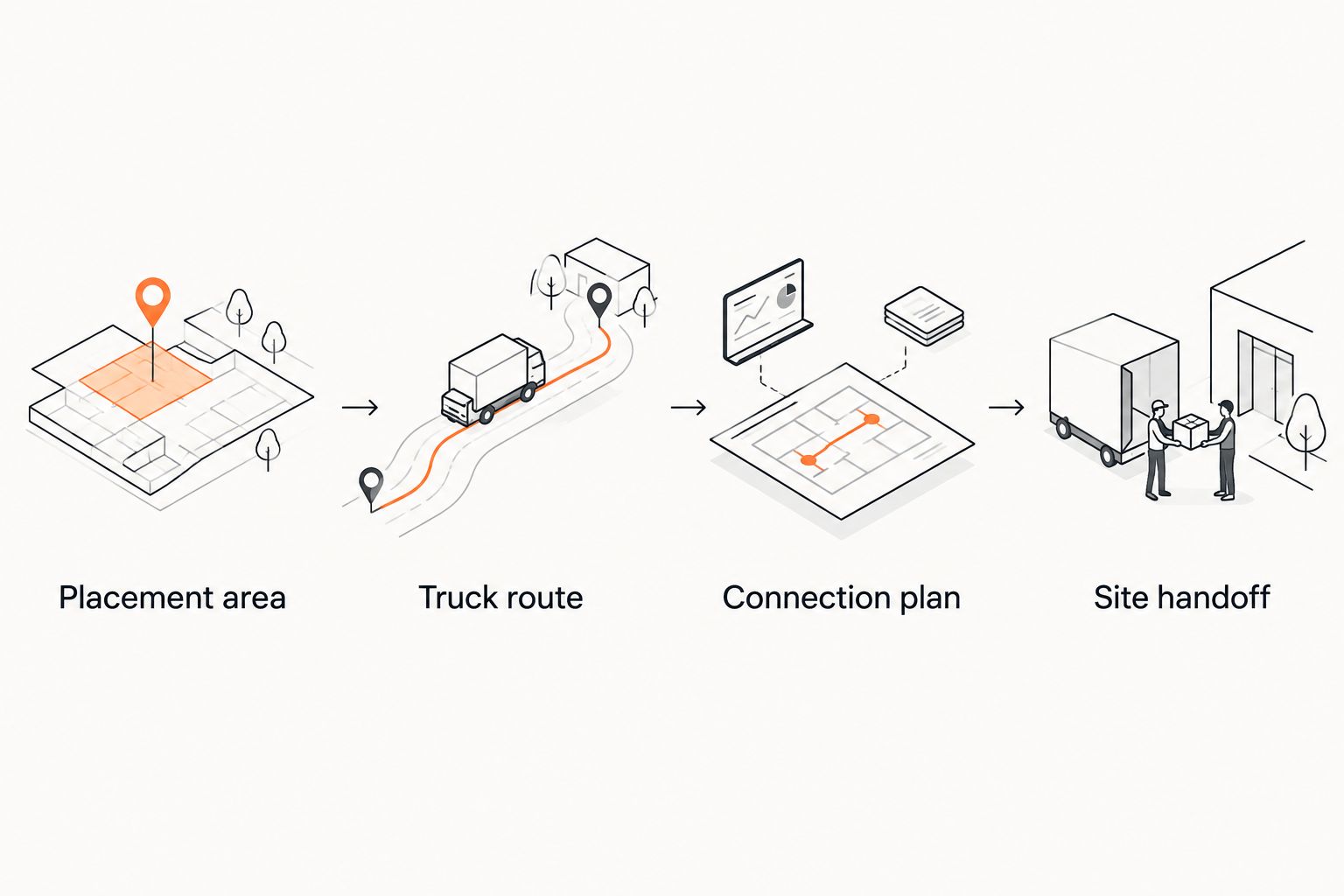
Use this sequence when requesting a schedule:
- Identify the waste and loading point. Describe what will enter the unit, where staff will load it, and how the area operates during the workday. The supplier needs that information before confirming an equipment configuration.
- Confirm the placement area. Mark the intended position and ask the supplier to verify that it accommodates the specified unit and its required working space. A location that looks open on a plan can conflict with a gate, parked vehicles, or another site operation.
- Walk the truck route. Check the entrance, turns, overhead obstructions, and path to the placement area. Include the return route for future service, not just the initial delivery.
- Resolve the connection plan. Ask whether the specified compactor needs electrical work and who is responsible for it. Do not assume that delivery includes a completed connection.
- Set the handoff. Confirm who will accept delivery, authorize placement, and verify that the installed unit is ready for use. Keep loading out of the schedule until that handoff is complete.
A supplier can give a meaningful installation window after these items are resolved. Without them, a quoted duration describes an assumption, not your jobsite.
Why this matters on a Bay Area site
A missed installation date affects more than waste handling. On a construction site, the placement area can overlap with a material laydown zone, a gate, or a planned load-out. At an occupied property, a delivery truck can conflict with tenant access or another scheduled contractor. The fix is to put the equipment delivery on the site plan before other work claims the same space.
For 2026 projects in San Jose, Santa Clara, Sunnyvale, Mountain View, Milpitas, and the surrounding Bay Area, use the actual address and entry point when discussing installation. A city name does not tell the supplier whether a truck can make the turn into a service yard. Send a site contact who can answer access questions and authorize the agreed placement.
The distinction also matters when you compare equipment. Valley Services is a fit for Bay Area jobsites that need roll-off containers, restrooms, fencing, and a C&D transfer station; its supplied service details do not confirm compactor installation. Do not put a compactor on a Valley Services order without checking availability directly.
What must be ready before the installation date?
Start with the placement area. The equipment supplier needs to check the specified unit against the available space and the way people will use it. Leave the area accessible on delivery day. If another trade is occupying it, settle that conflict before the truck arrives.
Next, check access as a route rather than a single gate measurement. Trace the path from the property entrance to the proposed placement point. Account for turns, overhead obstructions, parked equipment, and any gate that someone must open. The supplier must confirm whether its delivery vehicle can use that route; a drawing alone does not establish truck access.
Then identify any connection work. A powered compactor needs a confirmed electrical plan. Ask the supplier what the selected equipment requires, who performs the work, and what must be complete before installation. If the unit or arrangement does not need a site connection, record that answer too. It removes an open question from the schedule.
Finally, assign responsibility for the handoff. Someone on site should confirm the agreed position, receive the equipment, and establish who approves its use. This is especially important at occupied retail, warehouse, and multifamily properties, where loading activity continues around the installation area.
Why does compactor installation time vary?
The delay is often a missing decision rather than the act of setting equipment down. These factors change the work required before a supplier can confirm the schedule:
- Equipment selection. The supplier needs the chosen unit's actual placement and connection requirements. A general description such as trash compactor does not define the installation work.
- Truck access. Gates, turns, overhead obstructions, and conflicting site traffic affect whether the delivery vehicle can reach the placement area.
- Placement approval. The property manager, general contractor, or site contact must agree on the final position before delivery.
- Connection responsibility. Where electrical work is required, the supplier and site team must agree on its scope and sequence.
- Service access. The location must work for collection and ongoing use, not just for the delivery truck's first visit.
- Site scheduling. Other trades, deliveries, and load-in or load-out activity can occupy the same route or work area.
In 2026, close these items before treating an installation window as part of a committed project schedule. If one remains open, tell the supplier which one. That produces a useful next action instead of another provisional date.
Compactor rental or roll-off container: which fits the job?
A compactor installation is not the same task as placing a roll-off container. The choice depends on how waste is generated, how it is loaded, and whether the site is prepared for the equipment. Do not use a roll-off delivery estimate as a substitute for a compactor installation estimate.
| Option | Best for | Installation or placement question | Limitation |
|---|---|---|---|
| Trash compactor rental | A site seeking equipment that compacts its waste before collection | Does the specified unit fit, and are access and any connections ready? | Installation cannot be scheduled accurately from a general equipment description. |
| Roll-off container rental | Renovation debris, cleanouts, and C&D work that needs a container on site | Can the delivery truck reach the agreed placement area? | A container does not compact material; loading and pickup still need planning. |
For a renovation with changing debris loads, a roll-off container is a distinct option to discuss. For a property considering a compactor as part of its ongoing waste setup, confirm the unit requirements before deciding whether the site is ready. Neither option removes the need to plan truck access and collection.
Valley Services rents blue steel roll-off containers in sizes from 8 to 40 yards and operates its own C&D transfer station in San Jose. Those are stated capabilities, not evidence that Valley Services rents or installs compactors. If your project needs a compactor specifically, ask about that service before building a schedule around it.
What should you ask the supplier before booking?
Ask questions that produce an installation plan, not just a delivery date. Give the supplier the site address, the proposed location, the waste being handled, and the name of the person who controls access. Then ask for a written division of responsibilities.
- Which unit is being proposed? Request its placement and connection requirements rather than assuming all compactors install the same way.
- Who checks the site? Establish how the supplier will confirm truck access, placement, and ongoing service access.
- What must be finished before delivery? Ask specifically about the placement area, any electrical work, and any property approval the supplier needs.
- Who receives the unit? Name the person who can meet the truck and resolve a placement question on site.
- What completes installation? Establish whether the handoff includes a connection and operational check for the specified arrangement.
- How will collection work afterward? Confirm that the same access route remains available when the site is occupied or construction advances.
Write those answers into the site schedule. A task labelled compactor installation is not useful if it hides unfinished electrical work or an unresolved truck route.
Talk through your site plan
Confirm the site services your Bay Area project needs.
Can installation happen on the delivery day?
Installation can finish on the delivery day only if the specified unit and site are ready for every required step. Delivery is one part of the job. Placement, any connection, and handoff still need responsible parties and a clear scope.
Do not promise a 2026 crew that it can load material as soon as the truck leaves. Ask the supplier what marks the unit as ready for use. That answer is more useful than a delivery arrival window.
Does a compactor need electrical work before delivery?
The answer depends on the specified equipment and installation arrangement. If the proposed unit requires site power, confirm the electrical requirements and who will complete the work before setting the installation date. Do not infer those requirements from another property or another model.
Is placing a roll-off container faster than installing a compactor?
The supplied information does not establish a time comparison. A roll-off container and a compactor have different setup questions, and either delivery still needs a workable truck route and agreed placement. Request a schedule for the actual equipment and site instead of assuming one is faster.
FAQ
How long does it take to install a compactor rental in 2026?
There is no fixed installation duration without the specified unit and site details. Confirm placement, truck access, any connection work, and handoff before accepting a schedule.
What should I prepare before a trash compactor rental arrives?
Prepare an agreed placement area and a truck route the supplier has confirmed. Resolve any required connection work and name a site contact who can receive the unit.
Can a compactor be used immediately after delivery?
Delivery alone does not establish that a compactor is ready for use. Confirm that placement, any required connection, and the supplier's handoff are complete first.
Does every compactor rental need an electrical connection?
Connection requirements depend on the equipment specified for the site. Ask the supplier for the unit's requirements and assign responsibility for any work before scheduling installation.
Does Valley Services install trash compactors?
The supplied Valley Services service details do not confirm trash compactor rental or installation. Call (408) 297-5404 to check availability rather than assuming the service is offered.
What is the alternative for construction debris on a Bay Area jobsite?
A roll-off container is an option for construction debris and cleanout work. Valley Services lists blue steel roll-off containers from 8 to 40 yards and operates a C&D transfer station in San Jose.
One last thing
The handoff matters as much as the truck arrival. A unit placed on site is not necessarily a unit ready for loading. For a 2026 job, put the ready-for-use confirmation on the schedule separately from delivery, and keep the truck route open for future service.
For roll-off containers, restrooms, fencing, or C&D drop-off, reach out to Valley Services to talk through your job, or call (408) 297-5404 for a quote. The San Jose transfer station is at 1611 S 7th St, San Jose, CA 95112.