A grocery or retail store typically needs a 30 to 40 cubic yard self-contained compactor if it moves high volumes of cardboard and wet waste, or a 2 to 4 cubic yard unit if it's a small-format market under roughly 15,000 square feet. The number that actually decides it isn't shelf count or square footage, it's how much wet waste (produce trim, dairy, meat, prepared foods) goes into the compactor alongside cardboard, because wet loads compact heavier and fill a container faster than dry cardboard alone. Get the size wrong in 2026 and you're either paying for pickups on a container that's half empty, or watching cardboard stack up next to a dock door because the unit filled early.
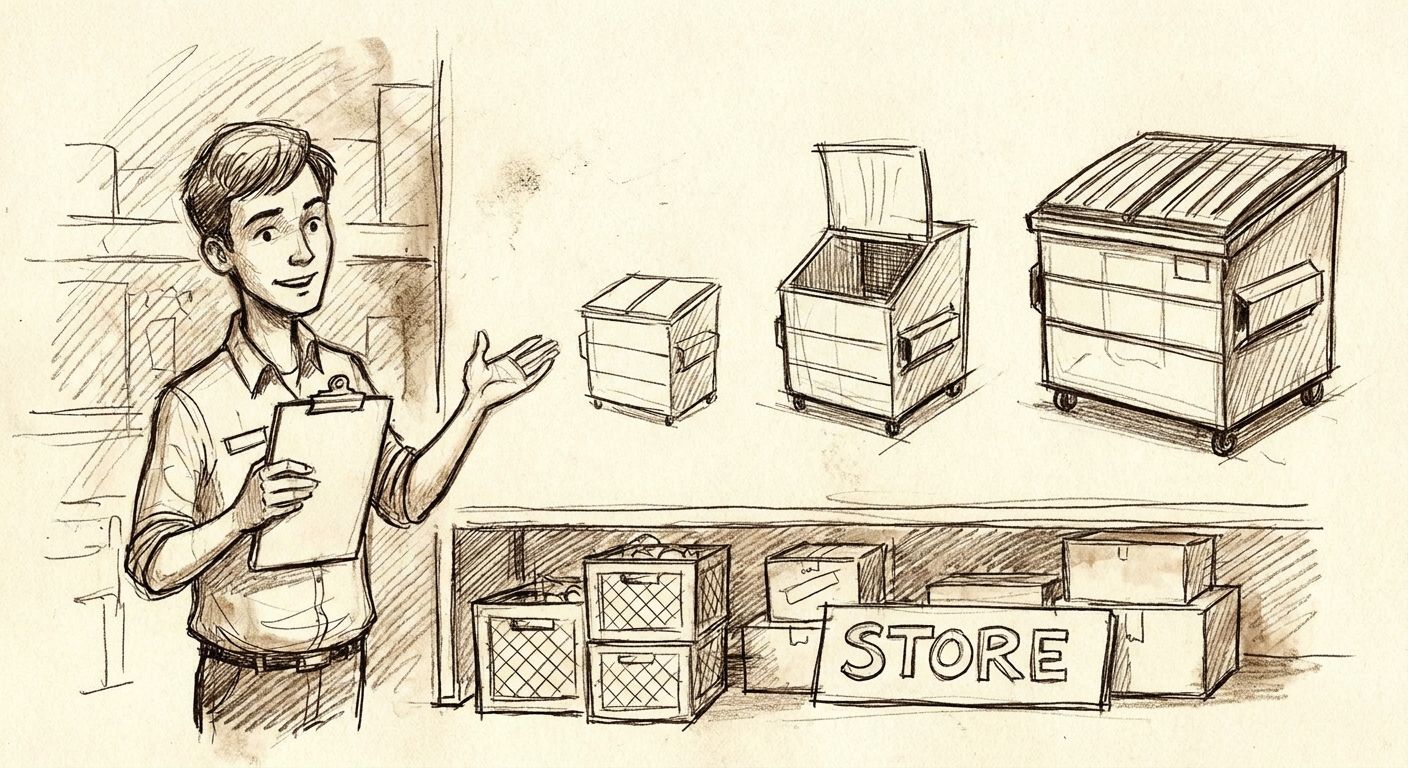
- Small-format grocery and convenience stores run 2 to 4 cubic yard self-contained compactors.
- High-volume supermarkets need 30 to 40 cubic yard compactors on a fixed pickup schedule.
- Wet waste percentage, not square footage, is the real driver behind how to choose compactor size for a grocery store.
- Valley Services sizes compactor rentals for retail and grocery accounts across San Jose and the South Bay.
- Oversized compactors get pulled half full; undersized ones overflow onto the loading dock.
Why compactor size matters for grocery and retail stores
Get compactor sizing wrong and the fallout shows up fast: cardboard stacked against a fire lane, a full unit that misses its scheduled hauler window, or a hauler pulling a container that's only a third full. Grocery and retail sites don't have room to stage extra containers next to a receiving door, so the compactor has to match the actual waste stream, not a generic size chart.
Valley Services works with Bay Area retail and grocery accounts on compactor rental for retail and grocery stores, sizing units against weekly cardboard and wet waste volume instead of square footage alone. The same logic applies whether it's a single corner market or a full-format supermarket: match the equipment to what the store actually throws away, not to what the building looks like from the outside.
How to choose compactor size for a grocery store or retail location
Start with two weeks of actual volume, not a guess. Here's the process that holds up across store formats in 2026:
- Track cardboard output for two full weeks, including delivery-heavy days.
- Estimate the wet waste share: produce trim, dairy, meat, deli, and prepared foods.
- Check the dock pad and clearance for the compactor's footprint before locking a model.
- Size to the peak week, not the average week, especially around holidays.
- Confirm the pickup frequency your hauler can actually commit to before finalizing the unit.
| Store type | Typical compactor size | Typical pickup frequency |
|---|---|---|
| Convenience store or small market (under ~15,000 sq ft) | 2 to 4 cubic yards | Weekly |
| Mid-size supermarket (15,000 to 40,000 sq ft) | 6 to 10 cubic yards | 1 to 2 times per week |
| High-volume supermarket or big box grocery | 30 to 40 cubic yards | 2 to 3 times per week |
Small-format grocery and convenience stores: 2 to 4 cubic yard compactor
A 2 to 4 cubic yard self-contained unit handles a store under roughly 15,000 square feet with a light wet waste stream. Verdict: right-sized for corner markets, drugstores with a small grocery section, and convenience stores. Going bigger here just means paying for pickups on a container that never fills.
Mid-size supermarkets: 6 to 10 cubic yard compactor
A full-service supermarket with a produce section, deli, and bakery generates more wet waste per square foot than a dry-goods store of the same size. Verdict: the 6 to 10 cubic yard range fits most mid-size grocery footprints in 2026, but confirm actual wet waste share before locking the size, since a heavy deli or seafood counter can push a store toward the larger end of that range.
High-volume supermarkets and big box grocery: 30 to 40 cubic yard compactor
High-volume stores with multiple checkout lanes, a full bakery, and heavy weekend traffic need a 30 to 40 cubic yard unit serviced two to three times a week. Verdict: undersizing here is the most common and most expensive mistake because overflow at this volume means blocked dock doors, not just a full container.
Why compactor size varies from store to store
Square footage is a starting point, not the answer. These are the factors that actually move a store from one size tier to the next:
- Wet waste percentage from produce, meat, dairy, and prepared foods
- Cardboard volume and whether it's baled separately from trash
- Pickup frequency your hauler can commit to on a fixed route
- Dock space and pad clearance for the compactor's footprint
- Seasonal swings, especially holiday volume and produce-heavy months
- Shared vs. dedicated service in a multi-tenant retail center
A store with a heavy deli and seafood counter can outgrow the same square footage tier as a dry-goods grocer twice its size. If overflow shows up on the same day every week, that's a sizing problem, not a scheduling one. If a compactor rental for restaurants and retail businesses on a shared retail pad, the mismatch between one anchor tenant's volume and another's compounds fast: check commercial dumpster rental for restaurants and retail businesses if a supplemental container makes more sense than resizing the compactor itself.
Talk through your store's compactor sizing
Call to review dock space, volume, and pickup schedule for your site.
What size compactor does a supermarket need?
A full-service supermarket typically needs a 30 to 40 cubic yard self-contained compactor serviced two to three times a week in 2026. Stores with heavy produce, deli, or bakery sections should size toward the higher end of that range regardless of total square footage.
Can a small grocery store use a 2 yard compactor?
A 2 cubic yard compactor works for a small grocery or convenience store under roughly 15,000 square feet with a light wet waste stream. Stores with a deli case or produce section, even at that size, often need to move up to a 4 cubic yard unit to avoid overflow between weekly pickups.
How often does a grocery store compactor get picked up?
Most grocery compactors get picked up one to three times a week depending on size and wet waste volume, with high-volume supermarkets on the more frequent end. Holiday weeks and produce-heavy seasons often push a store to add an extra pickup rather than resize the unit permanently.
FAQ
How to choose compactor size for a grocery store?
Match the compactor to weekly wet waste and cardboard volume, not square footage: small markets run 2 to 4 cubic yards, mid-size supermarkets run 6 to 10, and high-volume stores run 30 to 40 cubic yards. Track two weeks of actual output before locking a size.
What's the best compactor size for a busy supermarket?
A 30 to 40 cubic yard self-contained compactor is best for a busy supermarket with a full deli, bakery, and produce section. Anything smaller at that volume risks overflow blocking the loading dock.
Is a self-contained compactor better than a roll-off dumpster for a grocery store?
A self-contained compactor handles wet waste (produce, meat, dairy) without the leakage and odor issues an open roll-off container gets from the same material. Dry-goods retailers with mostly cardboard often do fine with a container instead of a compactor.
How much does compactor size affect pickup frequency?
A smaller compactor needs more frequent pickups to avoid overflow, while a correctly sized unit for peak volume can run on a fixed weekly or twice-weekly schedule. Sizing to average volume instead of peak volume is the most common reason pickup frequency creeps up mid-contract.
Do grocery stores need a bigger compactor for the holidays?
Many grocery stores see enough of a volume spike around major holidays to need an extra pickup rather than a permanently larger compactor. Sizing to peak week volume from the start avoids scrambling for holiday-only service.
Can one compactor serve a multi-tenant retail center?
A shared compactor can work in a multi-tenant center only if all tenants' combined wet waste and cardboard volume is tracked together, not estimated per tenant. Mismatched volume between an anchor grocery tenant and smaller retail tenants is the most common reason shared compactors overflow.
What size compactor does a convenience store need?
A convenience store under 15,000 square feet typically needs a 2 to 4 cubic yard self-contained compactor. Stores with a hot food or deli counter should size toward the 4 cubic yard end even at that footprint.
One last thing
Most grocery and retail sites don't undersize their compactor, they oversize it at buildout and never revisit it. If your compactor is consistently pulled less than full, that's not a hauler problem, it's a sizing problem, and it's worth a second look before the contract renews in 2026. A quick volume check against the tiers above catches it faster than waiting for the next invoice to look off.
Valley Services has run site services out of the same San Jose yard since 1986, third generation, same family. Call (408) 297-5404 or reach out through valleyservices.biz to walk through compactor sizing, dock clearance, and pickup schedule for your store.