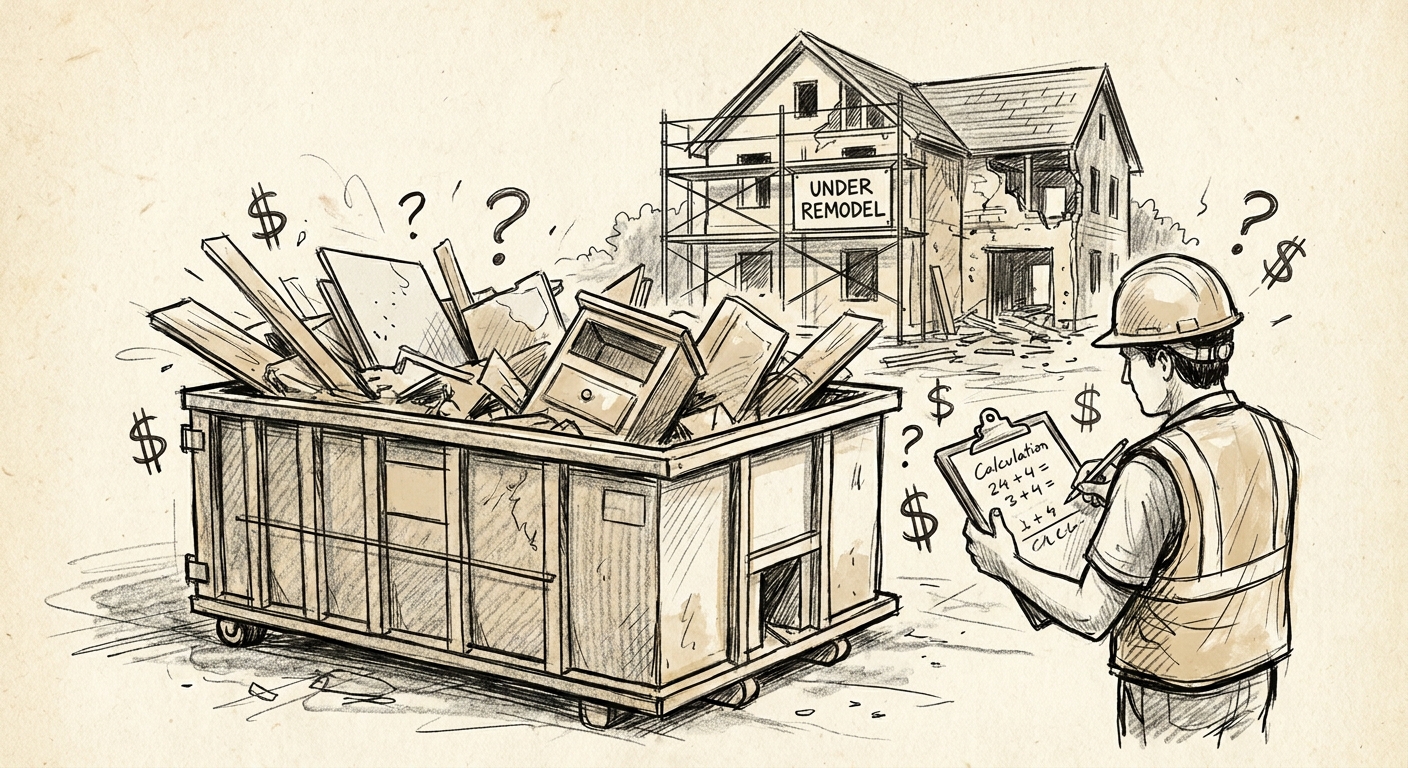
Estimating dumpster rental cost for a remodel isn't guesswork if you know three numbers before you call: container size, weight allowance, and rental period. Get those three right and the quote you receive matches the debris you actually generate.
- Dumpster rental cost for remodel jobs is driven by container size, weight allowance, and rental period, not the remodel type alone.
- A 20-yard roll-off container handles most kitchen and bath remodels; whole-home gut jobs usually need 30 or 40 yards.
- Weight limits, not size, cause the biggest overage surprises: tile, concrete, and drywall fill tonnage fast even in a half-empty container.
- Ask for container size, weight allowance, and rental days together in one quote, never size alone.
- Valley Services has run its own San Jose yard since 1986, third generation, which means one call covers containers, restrooms, and fencing for the same remodel site.
Why this matters
Most remodel cost surprises don't come from the container itself. They come from what gets thrown in it. A homeowner pulling out a kitchen guesses "medium dumpster" and ends up with a container full of cabinets, tile, and a busted dishwasher that weighs far more than drywall and lumber alone.
Contractors run into the same problem on a bigger scale. A bathroom-to-kitchen remodel in San Jose in 2026 generates a different debris mix than a roof tear-off or a garage cleanout, and the container that's right for one is wrong for the other. Estimating cost for a remodel means estimating debris volume and weight first, then matching that to a roll-off container size and a rental window that fits your schedule.
What you'll need
- A room-by-room list of what's coming out (cabinets, flooring, drywall, fixtures, appliances)
- A rough debris volume estimate in cubic yards
- A breakdown of heavy material (tile, concrete, stone) versus light material (drywall, wood, insulation)
- Site access measurements: driveway width, gate clearance, overhead wires or tree limbs
- Your remodel timeline, so the rental period matches your actual work schedule
- Permit information if the container sits on a public street rather than your driveway
- The phone number for your rental company, (408) 297-5404 if you're working with Valley Services
The steps
1. Break the remodel into a debris list
Walk the space and list every material coming out before you call anyone. A kitchen remodel typically pulls cabinets, countertops, flooring, drywall, and one or two appliances. A bathroom remodel pulls tile, a tub or shower unit, vanity, and subfloor. Write it down room by room. This list is what turns a vague "I need a dumpster" into an accurate size request.
Common mistake: Estimating only the visible mess and forgetting subfloor, backer board, or old insulation behind walls. Those add volume fast.
2. Match debris volume to container size
Roll-off containers run from 8 to 40 yards. Small bathroom remodels and single-room refreshes usually fit an 8 or 10-yard container. Full kitchen remodels commonly need a 15 or 20-yard unit. Whole-home remodels or additions often require 30 or 40 yards. The kitchen remodel dumpster size guide walks through sizing by cabinet count and square footage if your project falls in that range.
Common mistake: Sizing down to save on the container itself, then paying for a second haul when it fills early. One extra pickup usually costs more than renting one size larger from the start.
3. Separate heavy debris from light debris
Weight, not volume, is what drives overage charges. Tile, concrete, stone, and roofing material are dense. A container that looks half full of tile can already be at its weight limit. Drywall, wood framing, and cabinetry are lighter and fill a container by volume before weight becomes an issue.
If your remodel includes tile removal, flooring tear-out, or old concrete steps, flag that separately when you call. It changes which container size actually makes sense.
4. Ask for the weight allowance before you book
Every roll-off rental includes a weight allowance tied to the container size. Going over that allowance adds a per-ton overage charge. Ask what's included and what triggers extra cost before the container is delivered, not after it's picked up.
Common mistake: Assuming a bigger container means a bigger weight allowance in the same proportion. It doesn't always scale that way. Confirm the actual number for your specific rental.
5. Set the rental period to match your work schedule
A rental period that's too short means paying for a schedule extension mid-project. A rental period that's too long means a container sitting on your driveway or street longer than it needs to, in the way of deliveries and trades.
Map your remodel timeline before you book. Demo week needs the container on site early. Finish work rarely generates enough debris to justify keeping it the full job length.
6. Check permit requirements for placement
If the container sits in your driveway, most Bay Area jurisdictions don't require a permit. If it sits on the street, San Jose and most surrounding cities require an encroachment permit. Confirm this before delivery day, not after a container shows up with nowhere legal to sit. The construction debris disposal guide for San Jose covers what's allowed at drop-off versus what needs a permit first.
7. Get one quote that covers size, weight, and days together
The accurate way to estimate dumpster rental cost for a remodel is to request container size, weight allowance, and rental period as one package, not three separate line items you have to piece together. That's the only way to compare quotes and know what you're actually getting.
Talk through your remodel timeline
Call to size the container, weight allowance, and rental period together.
Troubleshooting
The container filled up before demo was finished. You undersized for the debris volume. Order the next size up for the remainder of the job, and note the actual fill rate for your next remodel.
The invoice showed an overage charge you didn't expect. Heavy material like tile or concrete pushed the load past the weight allowance. Ask upfront whether your debris mix includes dense material and size for weight, not just volume.
The container can't be delivered where you planned. Overhead wires, narrow gates, or a steep driveway can block delivery truck access. Measure clearance before delivery day and tell the rental company your access constraints when you call.
The city cited the container for street placement. No encroachment permit was pulled. Confirm placement rules before the container arrives, especially in San Jose, Santa Clara, and Sunnyvale, where street placement rules differ by block.
The rental period ran out mid-demo. The remodel took longer than the container was booked for. Build a few extra days into your estimate up front rather than extending after the fact.
Mixed debris slowed down disposal. Construction and demolition debris that includes hazardous material, like old paint or certain insulation, can't go in a standard roll-off. Ask what's excluded before you load the container.
Tools and resources
- Roll-off dumpster rental for home renovations for sizing across full-home projects
- Best dumpster size for a kitchen remodel for cabinet-count and square-footage sizing
- A tape measure for driveway width and overhead clearance
- Your remodel permit paperwork, if the city requires one for the work itself
- The phone number, (408) 297-5404, for a same-day sizing conversation
What to do next
Once you've listed your debris and matched a container size, confirm placement rules for your address. The construction debris disposal guide for San Jose covers what the transfer station accepts directly and what needs sorting first, which affects how many containers a bigger remodel actually needs.
FAQ
What size dumpster do I need for a remodel?
Most single-room remodels fit an 8 to 15-yard roll-off container. Full kitchen remodels typically need 15 to 20 yards, and whole-home remodels often need 30 or 40 yards. Debris weight, not just room size, changes this.
How is dumpster rental cost for a remodel calculated?
Cost is based on container size, the weight allowance included, and the rental period in days. Overage fees apply when debris weight exceeds the allowance, so weight matters as much as size.
Can I put tile and concrete in a regular roll-off container?
Yes, but dense material like tile and concrete fills the weight allowance fast. Flag heavy debris when you book so the container size and weight allowance match what you're actually removing.
Do I need a permit for a dumpster during a remodel?
A permit is usually required if the container sits on a public street. Driveway placement typically doesn't require one. San Jose and nearby cities enforce this differently by block, so confirm before delivery.
How long can I keep a rental dumpster on site?
Rental periods vary by job length and are set when you book. Match the period to your actual demo and haul-out schedule rather than the full remodel timeline to avoid paying for idle days.
What happens if I go over the weight limit?
Going over the weight allowance adds a per-ton overage charge on top of the base rental. Confirm the weight allowance for your container size before delivery to avoid this.
Is a smaller dumpster always cheaper for a remodel?
Not necessarily. A container that's too small often means a second haul, which adds cost beyond a single larger rental. Size for your actual debris list, not the lowest size available.
Can construction debris go straight to a transfer station instead of a dumpster?
Some contractors haul debris directly to a C&D transfer station rather than renting a container, especially for small loads. A roll-off container still makes sense for ongoing demo over multiple days.
One last thing
Most companies that rent roll-off containers in the Bay Area don't own where the debris ends up. They haul to a third-party site and work around that site's schedule. Valley Services runs its own C&D transfer station in San Jose, third generation, same yard since 1986. That means the schedule for your remodel container isn't dependent on someone else's disposal site, and one call covers the container, restrooms, and temporary fencing if your remodel needs all three.
Call (408) 297-5404 or reach out through valleyservices.biz to talk through container size, weight allowance, and rental period for your specific remodel before you book.