Corporate outdoor events in San Jose and the South Bay live or die on restroom logistics. Queue times at the restroom trailer during a keynote or an all-hands mixer show up in the post-event survey faster than anything else on the site plan.
- Plan 1 restroom per 50 guests when alcohol is served, 1 per 100 when it isn't, for events up to 4 hours.
- Add units for every 2 hours past the first 4 hours of the event.
- Restroom trailers replace 6 or more standalone units at events over 300 guests and add climate control.
- Book restroom trailers 4 to 6 weeks ahead for 2026 peak-season dates in the Bay Area.
- Budget at least one ADA-accessible unit regardless of headcount.
Why this matters
A corporate outdoor event is not a jobsite. Guests in business casual do not tolerate a line the way a crew tolerates a wait during a lunch break. Undercounting units is the most common planning error event producers make, and it is the easiest one to fix before the day of the event.
How you plan portable restrooms for a corporate outdoor event depends on three inputs: guest count, event duration, and whether alcohol is served. Get those three numbers right and the unit count follows a straightforward formula.
How to plan portable restrooms for a corporate outdoor event
Start with a headcount, then apply the standard planning ratio: one restroom per 50 guests for events serving alcohol, one per 100 guests for events that don't, both figured for a 4-hour window. Add capacity for every additional 2 hours beyond that first 4-hour block.
| Guest count | No alcohol (4 hrs) | Alcohol served (4 hrs) |
|---|---|---|
| 50 | 1 unit | 2 units |
| 100 | 2 units | 3 to 4 units |
| 200 | 3 to 4 units | 6 units |
| 300 | 5 to 6 units | 8 to 9 units |
| 500+ | 8 to 10 units or a trailer | Multiple trailers |
You can calculate how many portable restrooms you need against your own guest list once you know duration and bar service. The ratio scales linearly past 500 guests. Keep the same per-100 or per-50 math and add hand wash stations at the same rate.
50 guests: 2 units
A 50-guest corporate mixer with a hosted bar needs 2 standard units minimum. Skip the single-unit setup when alcohol is involved, because one line at a networking event kills conversation flow in the first hour.
150 guests: 4 to 5 units
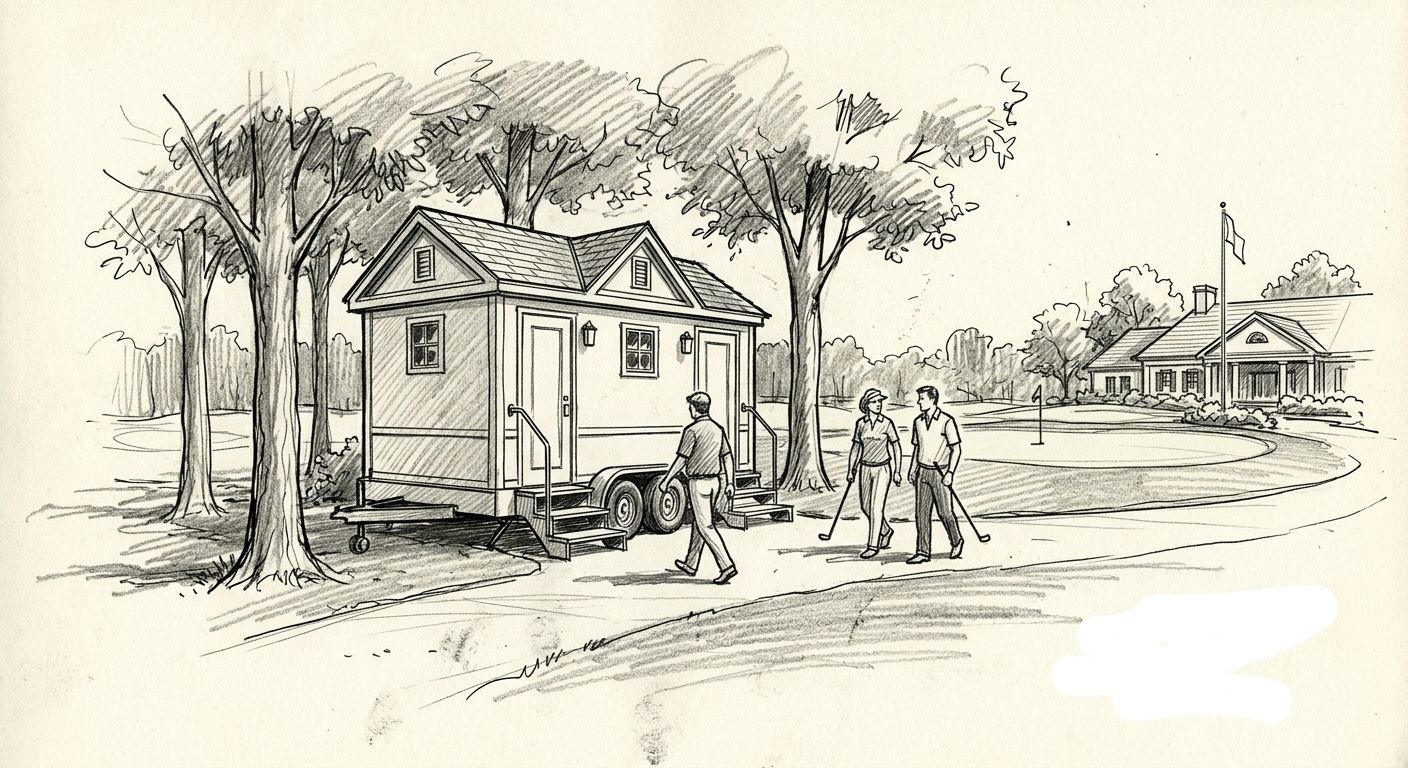
At 150 guests over a 4-hour reception, plan 4 units dry or 5 with alcohol. This is the range where producers start weighing a small restroom trailer against standalone units, usually for the interior finish and climate control rather than raw capacity.
300 guests: 8 to 9 units or one trailer
A 300-guest outdoor event with a full bar crosses into trailer territory. One multi-stall restroom trailer for corporate events with 4 to 6 stalls often replaces 8 or 9 standalone units and takes less footprint on the site plan.
500+ guests: multiple trailers
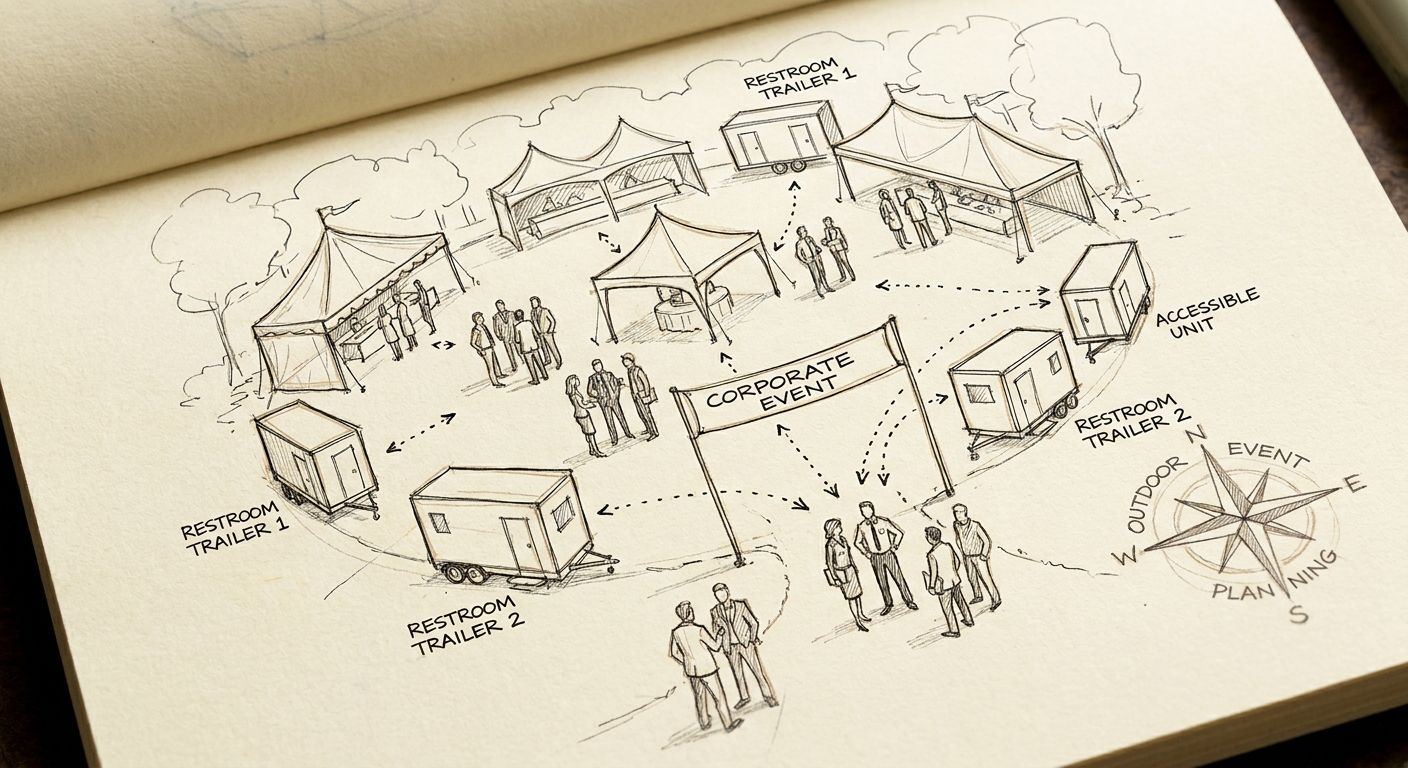
Beyond 500 guests, a single trailer runs out of stall capacity. Plan two trailers, or one large trailer plus standalone overflow units, and place them at opposite ends of the footprint so lines don't merge into one bottleneck near the stage or bar.
Why restroom counts vary
The guest-count ratio is a starting point, not the finish line. These factors move the number up or down from the baseline table:
- Alcohol service: doubles the recommended ratio versus a dry event of the same size.
- Gender split: a guest list skewed toward one gender needs proportionally more units on that side.
- Event duration: every 2 hours past the first 4 adds roughly 10% more capacity need.
- Hand wash stations: budget one per 100 guests, more when food trucks or catering stations are on site.
- ADA requirements: at least 5% of units, minimum one, must be ADA-accessible regardless of headcount.
- Site access: a hillside venue or a lawn with no vehicle path adds setup time and limits which trailer sizes fit.
“Undercounting units is the most common planning error event producers make, and it is the easiest one to fix before the day of the event.”
One call covers restrooms, temporary fencing, and roll-off containers for load-in and load-out debris on the same event footprint. That matters when the site producer is already coordinating five vendors. Valley Services has run site services out of the same San Jose yard since 1986, including work at Super Bowl LX and the San Jose Marathon.
Plan your event restrooms now
Talk through guest count, duration, and site access before you lock the layout.
Related questions
How many hand wash stations does a corporate event need?
Plan 1 hand wash station per 100 guests as a baseline, and add more when food trucks or buffet catering are part of the event. Stations near food service see heavier use than stations near restroom units, so do not count on restroom-attached sinks to cover that demand.
Are ADA restrooms required for corporate outdoor events?
At least 5% of your restroom units should be ADA-accessible, minimum one, regardless of headcount. Permits for public and semi-public outdoor events in San Jose commonly require this documented on the site plan, so confirm ADA counts before submission in 2026, not after.
How far ahead should you book restrooms for a corporate outdoor event?
Book restroom trailers 4 to 6 weeks ahead for standard 2026 dates, and earlier for peak spring and fall event season in the Bay Area. Same-week bookings are sometimes possible for standalone units, rarely for trailers, which come from a smaller fleet.
FAQ
How many portable restrooms do I need for 200 guests?
200 guests need 3 to 4 units without alcohol or 6 units with a hosted bar, figured for a 4-hour event. Add roughly 10% more capacity for every 2 hours beyond that window.
Is a restroom trailer better than standalone units for a corporate event?
A trailer makes sense once guest count crosses roughly 150 to 300, since one trailer with 4 to 6 stalls replaces 8 or 9 standalone units on a smaller footprint. Below that range standalone units are simpler to place and service.
Do outdoor corporate events need ADA-accessible restrooms?
Yes. Plan at least 5% of total units as ADA-accessible, with a minimum of one no matter the guest count. Many San Jose event permits require this on the submitted site plan.
How much lead time does a restroom trailer rental need?
Book restroom trailers 4 to 6 weeks ahead for 2026 events, longer during peak spring and fall season in the Bay Area. Standalone units can sometimes be arranged on shorter notice.
Where should restrooms be placed at a corporate event?
Place units out of the direct sightline of the stage but close enough to the bar and food areas that lines do not cross main walking paths. Above 300 guests, split units across two locations.
How many portable restrooms per 100 guests is standard?
The standard ratio is 1 unit per 100 guests without alcohol and 1 per 50 with alcohol service, both for a 4-hour event. Longer events scale the ratio up.
What size event needs more than one restroom trailer?
Events above 500 guests generally need two trailers or one trailer plus standalone overflow units. Stall capacity, not floor space, is the limiting factor.
One last thing
The ratio math gets you a defensible number. Site access decides whether that number is deliverable. A lawn venue with no paved path to the placement point can rule out a full-size trailer even when the guest count says you need one, so walk the site before you lock the layout in 2026, not after the guest list closes.
For a corporate outdoor event in San Jose, Santa Clara, Sunnyvale, Mountain View, or Milpitas, call (408) 297-5404 or reach out through valleyservices.biz to talk through guest count, duration, and access.