A Bay Area general contractor pulls a permit, orders three standard units for a twelve-person crew, and gets a stop-work notice because none of them meet ADA access requirements. That mistake costs more in downtime than the unit would have cost to add in the first place. This guide ranks the ADA rental configurations that actually satisfy inspectors on San Jose, Santa Clara, and South Bay job sites in 2026, and tells you which ones to skip.
- A standard ADA ground-level unit with a 36-inch door and 60-inch turning radius is the baseline for best ada portable toilet rental compliance in 2026: Buy.
- Swapping in a non-ADA unit because it's already on the yard fails inspection and stalls the crew: Skip.
- Sites with no level pad need a platform-mounted ADA unit, not a standard base: Consider.
- Remote sites without a sewer tie-in should pair the ADA unit with a holding tank, not skip the accessible requirement: Buy.
Why this matters
ADA access on a job site isn't optional once you cross a certain crew size or work under a public contract. Inspectors check door width, turning radius, and grab bar height before they check anything else near the restroom area.
Most general contractors in Santa Clara and San Jose learn this the hard way: they order restrooms by headcount and forget the accessibility line item entirely. One non-compliant delivery means a second truck run, a rescheduled inspection, and a crew standing around waiting.
How this list was ranked
Each configuration below is ranked against three things: whether it meets a 36-inch door and 60-inch turning radius, whether it holds up to daily multi-trade use, and whether it fits sites with limited grading or no sewer hookup. Configurations that satisfy access requirements and survive a full workweek without service issues rank higher than units that look compliant on paper but fail in the field.
This isn't a brand comparison. It's a ranking of unit types and setups, since the accessibility spec matters more than whose name is on the door.
The ranked list
1. Standard ADA ground-level unit
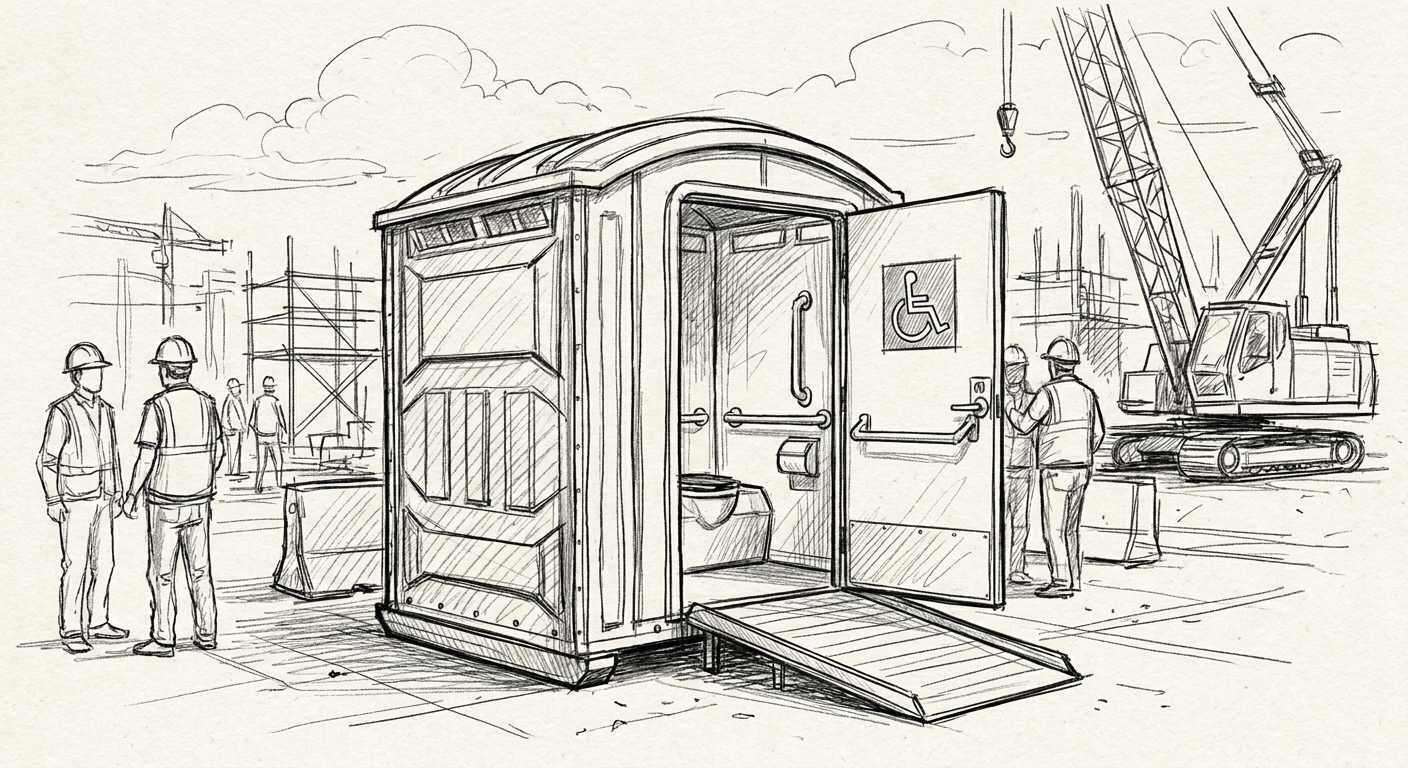
The baseline requirement. A 36-inch door and 60-inch interior turning radius with a ground-level entry and no step. Every Bay Area site with a permitted crew over the small-job threshold needs at least one of these on site regardless of overall unit count.
This is the unit inspectors check first. Verdict: Buy.
Valley Services stocks these as part of its standard ADA-compliant portable restroom rental lineup for construction sites.
2. ADA unit with interior hand wash station
The one crews actually use correctly. A built-in hand wash basin inside the ADA unit keeps trade workers from tracking debris between the restroom and a separate wash station across the yard.
On multi-trade sites with concrete, drywall, or paint crews rotating through, this cuts down on complaints during inspections. Verdict: Buy.
3. ADA restroom trailer
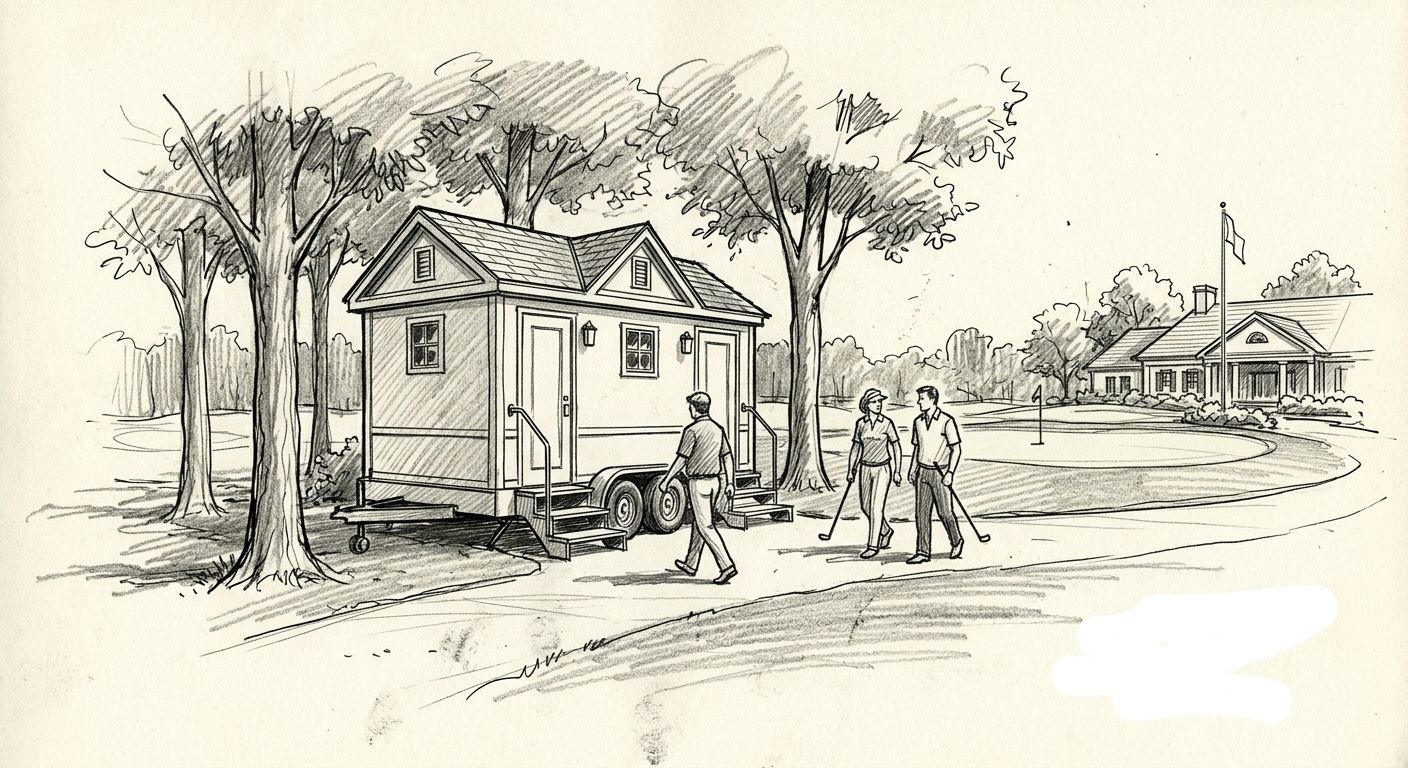
The upgrade for long-duration jobs and events. A trailer unit gives climate control, a flushing fixture, and a wider interior than a standard box unit, at the cost of needing a level pad and closer access for delivery.
For a six-month tenant improvement job or a multi-day public event, the trailer holds up better than a standard unit cycled through daily servicing. For a two-week demo job, it's overbuilt. Verdict: Consider.
4. ADA unit paired with a holding tank
For sites with no sewer tie-in. Remote lots, agricultural sites, and early-phase new construction sites in the South Bay often have no hookup at all. Pairing an ADA-compliant unit with a properly sized holding tank keeps the accessibility requirement in place without needing a sewer connection.
Skipping the ADA spec because the site is remote is the mistake. The tank handles the plumbing gap, not the compliance gap. Verdict: Buy.
See the holding tank rental for job site restrooms guide for tank sizing against crew size and service interval.
5. Multi-unit ratio built around one ADA unit
The plan that satisfies Cal/OSHA and ADA at the same time. Cal/OSHA sets minimum restroom counts against crew size. ADA sets accessibility requirements independent of that count. A site with fourteen workers still needs at least one accessible unit even if the Cal/OSHA math only calls for two standard units.
Building the order around one ADA unit first, then adding standard units to hit the crew ratio, avoids a second delivery mid-project. Verdict: Buy.
6. Platform-mounted ADA unit for uneven or hillside sites
The fix for sites with no level pad. Hillside lots and sites still in rough grading can't support a standard ground-level ADA unit without a ramp or a built platform. A platform-mounted configuration keeps the 60-inch turning radius intact while accounting for slope.
This costs an extra delivery step to set the platform, but it's the only configuration that passes inspection on a graded slope. Verdict: Consider.
7. Non-ADA standard unit substituted in
The shortcut that fails inspection. Swapping a standard unit for an ADA unit because it's what's already staged on the yard is the single most common compliance failure on Bay Area sites. The door is too narrow, the interior too small to turn a wheelchair, and there's usually a step at the threshold.
There's no version of this that passes a walkthrough. Verdict: Skip.
“One ADA unit covers the accessibility requirement, not the headcount, and the two math problems have to be solved separately.”
Comparison table
| Configuration | Door width | Turning radius | Best for | Verdict |
|---|---|---|---|---|
| Standard ADA ground unit | 36 in | 60 in | Any permitted crew | Buy |
| ADA + hand wash station | 36 in | 60 in | Multi-trade sites | Buy |
| ADA restroom trailer | 32-36 in | 60 in | Long-duration jobs, events | Consider |
| ADA + holding tank | 36 in | 60 in | No sewer hookup | Buy |
| Multi-unit ratio (1 ADA + standard) | 36 in on ADA unit | 60 in on ADA unit | Larger crews | Buy |
| Platform-mounted ADA unit | 36 in | 60 in | Sloped or ungraded sites | Consider |
| Standard unit substituted | 24-28 in | none | Nothing compliant | Skip |
Get ADA restrooms on site
Call (408) 297-5404 or reach out online to plan your unit count.
Where to rent from
- Confirm door width and turning radius in writing before delivery, not after the unit arrives. A spec sheet mismatch on inspection day stalls the whole crew.
- Plan for at least one ADA unit per site regardless of crew size, then layer in standard units to hit the Cal/OSHA ratio separately.
- Match delivery and service schedule to your project phase. A site with limited access for trucks needs the delivery route confirmed before the unit ships, not the morning of.
Valley Services runs its own yard on S 7th St in San Jose and coordinates restroom, container, and fencing delivery on one schedule instead of routing through a third party. That matters most on multi-phase jobs where the restroom count changes as crew size shifts.
FAQ
What makes a portable restroom ADA-compliant?
An ADA-compliant unit has a minimum 36-inch door width, a 60-inch interior turning radius, grab bars, and a ground-level or ramped entry with no step. These specs are checked directly by jobsite inspectors in 2026, separate from general Cal/OSHA restroom count rules.
How many ADA restrooms does a construction site need?
Most Bay Area sites need at least one ADA-compliant unit regardless of total crew size, with additional standard units added to meet Cal/OSHA's headcount ratio. The ADA requirement and the headcount requirement are calculated separately, not combined into one number.
Is a restroom trailer required for ADA compliance?
No. A standard ADA ground-level unit satisfies the access requirement on most job sites. A restroom trailer is a comfort upgrade for long-duration jobs or events, not a compliance requirement.
Can an ADA unit be used on a hillside or ungraded site?
A standard ground-level ADA unit needs a level pad. Sites with slope or rough grading need a platform-mounted configuration to keep the required turning radius intact.
What happens if a job site uses a non-ADA unit by mistake?
The site fails inspection and work stops until a compliant unit is delivered and set. This is the most common restroom-related delay on Bay Area sites in 2026.
Does an ADA restroom need a sewer hookup?
No. An ADA unit can be paired with a holding tank on sites without sewer access, as long as the accessibility spec on the unit itself is unchanged.
How often should an ADA restroom be serviced on a busy job site?
Service frequency depends on crew size and daily use, but most active construction sites in San Jose and the South Bay run weekly service at minimum, with high-crew sites needing more frequent visits.
One last thing
The accessibility spec doesn't scale down for small jobs. A four-person crew working under a permitted contract in San Jose still needs the same 36-inch door and 60-inch turning radius as a fifty-person site. Skipping it because the crew is small is the same mistake as skipping it because the site is remote.
Call Valley Services at (408) 297-5404 or reach out through valleyservices.biz to work out unit count and delivery timing before the crew shows up on day one.