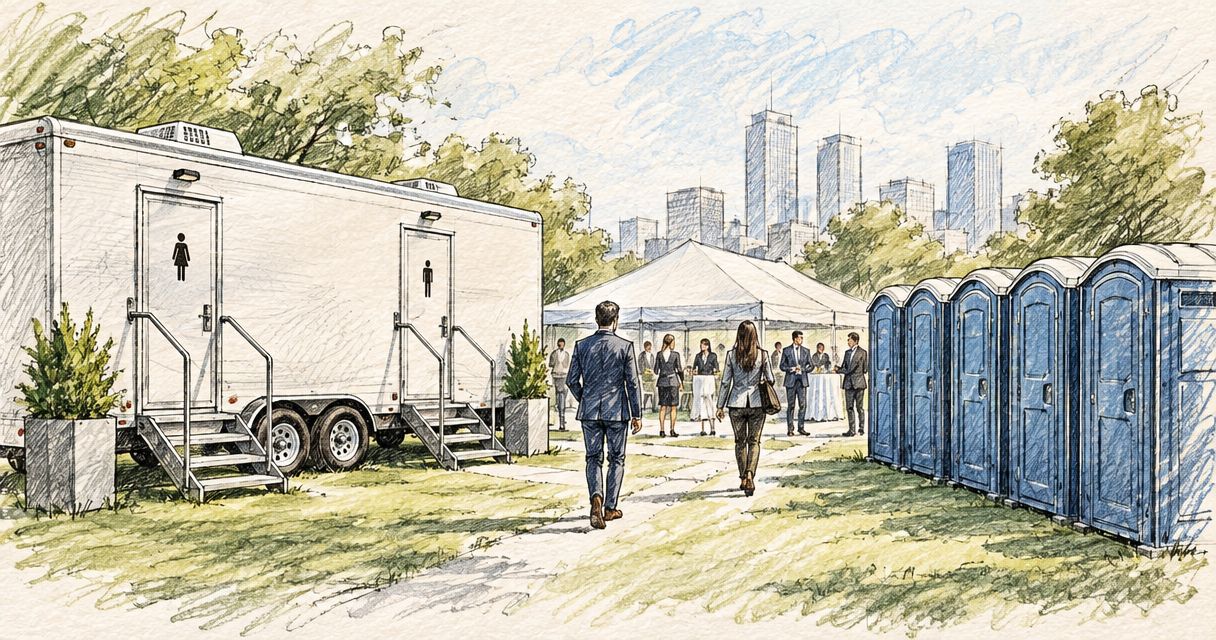
A restroom trailer fits a corporate reception when the guest experience calls for its specified interior features and the venue can support its delivery, placement, and utility requirements. Portable restrooms fit an outdoor company gathering when distributed access matters more than a single restroom location, so choose around the event layout rather than the word corporate.
- Choose a restroom trailer for a corporate event only after confirming access, utilities, and the actual interior features.
- Choose portable restrooms when separate activity areas need nearby restroom access.
- Valley Services offers Bay Area restroom rentals and temporary fencing through one provider.
- Neither restroom format replaces an accessibility plan, service schedule, or clear guest route.
Why this matters for a corporate event
A reception, employee picnic, and outdoor product launch put different demands on the same venue. A formal invitation does not tell you where guests will gather, when they will use the restrooms, or whether a delivery vehicle can reach the placement area.
For a 2026 event plan, settle those details before selecting equipment. Start with the actual event footprint and the restroom trailer rental considerations for corporate events, then match the restroom format to the site.
Choose the layout that works during the busiest break, not just during an empty-site walkthrough. A restroom area that looks clear before setup can become blocked by catering vehicles, registration lines, or a temporary fence.
Is a restroom trailer better than portable restrooms for a corporate event?
A restroom trailer is the stronger fit when you want a defined guest restroom area and have confirmed the features and site requirements of the specific unit. Portable restrooms are the stronger fit when guests occupy separate zones and need nearby access throughout the event.
Neither option wins every corporate event. Use this comparison to identify the operational trade-offs before you commit.
| Decision | Restroom trailer | Portable restrooms |
|---|---|---|
| Suitable event layout | A defined restroom area serving a reception or gathering | Separate restroom locations serving dispersed activity areas |
| Main advantage | Lets you select a trailer around documented interior features | Lets you plan individual restroom locations around the event footprint |
| Main constraint | Requires confirmation of vehicle access, placement space, and unit-specific connections | Requires coordination of each placement area and its guest route |
| Guest experience | Depends on the actual trailer specification and operating plan | Depends on unit selection, cleanliness, placement, and servicing |
| Accessibility | Confirm the specific entrance, interior, and route | Confirm the specific accessible units and routes |
| Service planning | Confirm access to the trailer and any supporting equipment | Confirm service access to every restroom location |
| Decision rule | Choose when the venue supports the selected configuration | Choose when distributed access supports the event better |
Do not treat a trailer as proof of adequate capacity. Do not treat a row of portable restrooms as proof of a complete plan. In either case, attendance, event duration, break timing, and servicing need to be reviewed together.
When a restroom trailer fits a corporate reception
A trailer fits a reception when the restroom area is part of the guest experience and the site can support the selected equipment. Make the choice from the specification, not from a general description such as luxury.
Ask which features the proposed trailer actually includes. If interior lighting, handwashing facilities, mirrors, or temperature control matter to your event, have the supplier identify them explicitly. Do not assume that every trailer has the same equipment or operates under the same conditions.
The operational constraint is the surrounding footprint. Placement must account for the trailer, its entrance arrangement, delivery access, and any supporting equipment. The guest route also needs to remain usable after tents, tables, and barriers are installed.
Choose a trailer after the site review, not before it. A suitable interior cannot fix an entrance that conflicts with the event circulation plan.
When portable restrooms fit an outdoor company gathering
Portable restrooms fit an employee picnic, field activity, or outdoor gathering when restroom access needs to follow several activity areas. Individual placement locations let you plan around where people actually spend time.
That flexibility comes with coordination work. Each location needs a usable guest route, a confirmed service approach, and a placement that does not interfere with event operations. A unit near an activity area is not useful if guests must cross a delivery lane to reach it.
Confirm the handwashing arrangement separately rather than assuming it is included. Review accessible restroom requirements with the venue and supplier as part of the equipment selection.
Choose portable restrooms when nearby access is the priority. Keep the same standard for cleanliness, servicing, and route planning that you would apply to a trailer.
Why the right restroom choice varies
The restroom trailer versus portable restroom decision for a corporate event depends on the site and operating plan. Review these factors before approving the order:
- Event footprint. A concentrated reception and a gathering spread across several activity areas need different placement plans.
- Guest expectations. Identify the features your event requires, then verify them against the proposed equipment.
- Delivery access. Review the actual approach, gate openings, turns, overhead restrictions, and placement area with the supplier.
- Utilities. Confirm the selected equipment's power, water, and waste arrangements. Do not substitute assumptions for specifications.
- Accessibility. Review the entrance and the complete guest route, not just the equipment description.
- Event schedule. Include setup crews, scheduled breaks, catering operations, servicing, and load-out in the plan.
These factors belong in the same site review. Selecting equipment first and resolving access later reverses the decision process.
How to choose restrooms for a Bay Area corporate event
For a 2026 corporate event in San Jose, Silicon Valley, or the South Bay, send the supplier an operating brief before requesting a specific restroom configuration. A venue name alone does not describe the work.
Confirm attendance
Provide the expected guest attendance and identify staff, vendors, and production crews who will also need restroom access. Separate the guest program from the setup and breakdown schedule.
Explain whether attendance is continuous or whether guests arrive for a defined session. The supplier needs the event pattern, not just the invitation total.
Map access
Mark the proposed restroom area on the venue layout. Include the vehicle approach, pedestrian routes, catering area, registration, emergency access, and temporary barriers.
Send current site photos where they help explain an entrance or placement constraint. Confirm measurements with the supplier instead of judging clearance from a photograph alone.
Verify requirements
Ask for the requirements of the equipment being proposed. Confirm placement conditions, connections, handwashing arrangements, and accessibility details before approving the configuration.
Assign responsibility for each supporting requirement. A connection shown on the venue plan is not the same as a connection confirmed for event use.
Schedule service
Set delivery, readiness, servicing, and pickup against the event timeline. Include the periods when production staff occupy the site before guests arrive and after they leave.
Keep the service route available during the event. Do not place a vendor vehicle, storage area, or barrier where it prevents access to the restroom equipment.
Check readiness
Walk the guest route after the main event setup is complete. Check that entrances remain usable, directions are clear, and the restroom area does not conflict with queues or equipment.
Identify who handles a restroom issue during the event. That person needs the supplier contact and the authority to clear an obstructed route.
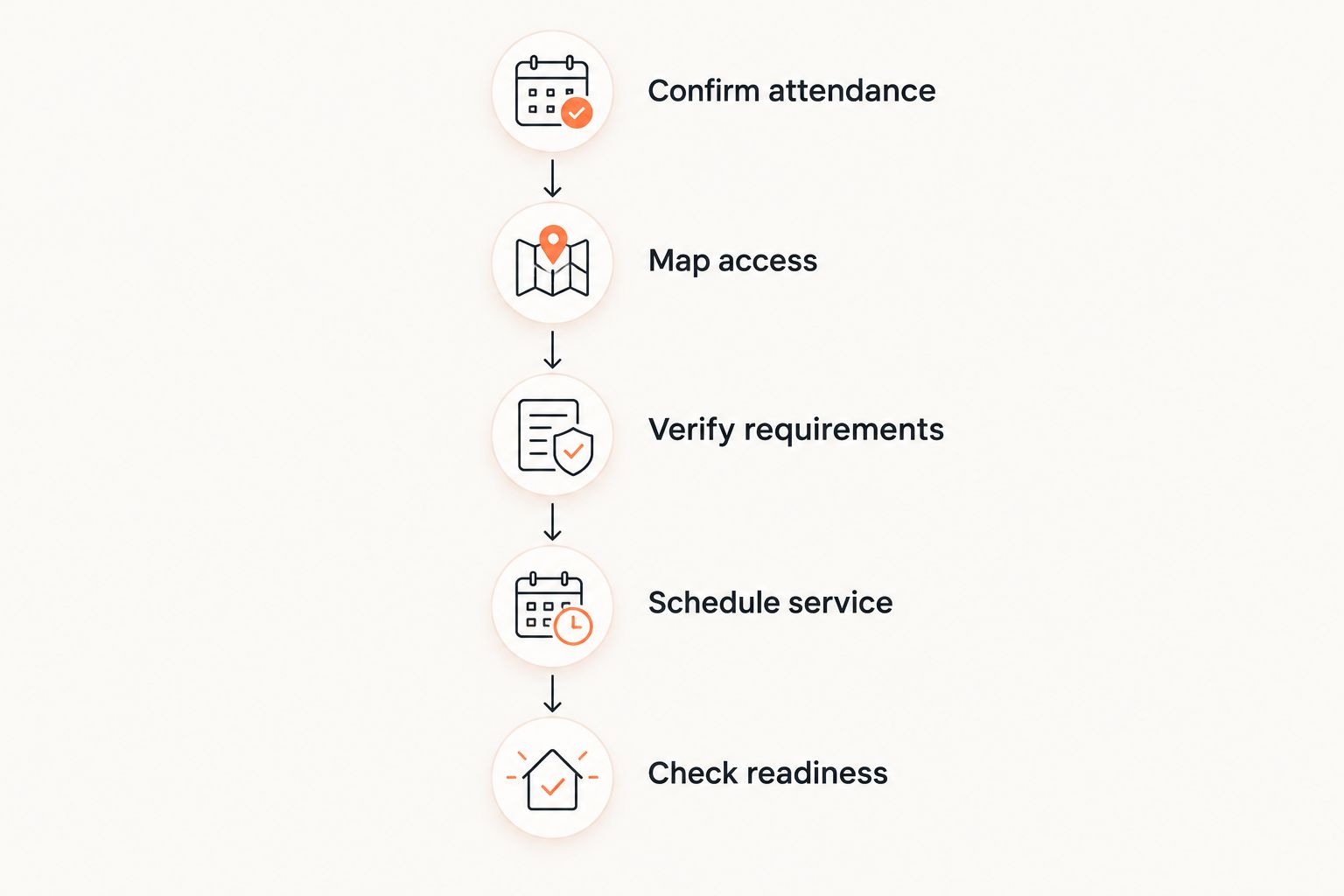
Record these decisions in the event production plan. The venue manager, rental supplier, and production lead should work from the same placement drawing and schedule.
What should you confirm about accessibility?
Confirm the accessibility of the selected restroom equipment and the route guests will use to reach it. A trailer description or an accessible-unit request does not settle the entire site arrangement.
Review the surface, entrance approach, obstructions, and any transition between the event area and restroom area. Have the venue and supplier confirm the applicable requirements for your event rather than relying on an equipment photograph.
For a 2026 venue walkthrough, review accessibility after the tent and furniture layout is established. A route that works on an empty plan still needs to work with chairs, cables, catering equipment, and barriers in place.
Avoid separating an accessible restroom from the event without reviewing the guest route. Placement should support access, not merely leave room for equipment.
How should delivery and pickup fit the event timeline?
Restroom delivery needs to occur while the placement area is reachable. Restroom readiness needs to occur before people begin using the site. Those are separate milestones.
For your 2026 production schedule, distinguish equipment arrival from operational readiness. Record who receives the delivery, who confirms the placement, and who checks the required supporting arrangements.
Pickup also needs a clear route. A trailer placed before a tent is erected can become difficult to retrieve if the final layout blocks the vehicle approach. Review load-out while reviewing load-in.
Do not schedule restroom removal solely around the public event finish. Account for the crews still working during breakdown, and confirm when they no longer need the equipment.
Can a corporate event use both restroom formats?
A corporate event can use a trailer and portable restrooms when different areas have different access needs. A central guest restroom area and separate support locations are a planning choice, not an automatic requirement.
The advantage is flexibility across the site. The constraint is added coordination: separate locations need clear directions, accessibility review, service access, and assigned responsibility.
Explain the purpose of each location before placing the order. If the event does not have a genuine need for separate restroom zones, a mixed arrangement adds decisions without solving a defined problem.
What should you send the rental supplier?
Send a brief that describes the event as it will operate. Include the location, event date, attendance pattern, guest hours, crew hours, proposed restroom locations, access constraints, and known utility arrangements.
Identify who can approve placement changes. A delivery driver should not have to resolve a conflict between the venue manager and production team while other vendors wait at the entrance.
Valley Services provides portable restrooms, luxury restroom trailers, and temporary fencing across San Jose and the surrounding Bay Area. Valley Services fits Bay Area corporate events that need restroom rentals and temporary fencing coordinated through one provider.
That coordination does not replace a site-specific review. Confirm the actual equipment configuration and venue requirements before finalizing the order.
FAQ
Should I choose a restroom trailer for a formal corporate reception?
Choose a restroom trailer when its documented features suit the reception and the venue supports its placement and operating requirements. Confirm the specific equipment rather than assuming every trailer has the same interior or connections.
Are portable restrooms suitable for a company picnic?
Portable restrooms suit a company picnic when distributed locations provide practical access to separate activity areas. Plan handwashing, accessible equipment, guest routes, and servicing with the same care as the main event layout.
Does every restroom trailer need the same utility connections?
Do not assume every restroom trailer needs the same connections. Ask the supplier for the requirements of the specific equipment and assign responsibility for each supporting arrangement.
How many restrooms do I need for a corporate event?
Have the supplier size the restroom plan using attendance, event duration, break timing, and the people working before and after the guest program. A guest total alone does not describe how the equipment will be used.
Can I assume a luxury restroom trailer is accessible?
Do not assume a luxury restroom trailer is accessible. Confirm the selected equipment's entrance and interior arrangement, then review the full guest route with the venue and supplier.
When should restroom pickup happen after a corporate event?
Schedule restroom pickup after the people remaining for breakdown no longer need the equipment and the removal route is clear. Confirm that timing with the production lead rather than using the public event finish as the only milestone.
One last thing
Before signing off on your 2026 event layout, walk from the busiest guest area to the proposed restrooms. Then review the same location from the delivery vehicle's approach.
Both routes must work. A convenient guest entrance does not resolve a blocked service approach, and an easy delivery location does not resolve an unsuitable guest route.
Related guides
- How to connect restroom trailer bookings to event timelines
- How to plan portable restrooms for a corporate outdoor event
- How to plan temporary fencing for outdoor events
To talk through restroom placement and the event schedule, reach out to Valley Services or call (408) 297-5404.