Concrete and dirt are the two materials most likely to get a roll-off container overloaded before it looks full. A 15-yard box packed with broken slab can hit its weight limit at half capacity, and that mistake costs a second haul. Here's how to pick the right container size for concrete and dirt disposal in 2026 without guessing.
- The 15-yard low-profile roll-off is the best dumpster rental for concrete disposal on tight Bay Area lots in 2026: Buy.
- Concrete and compacted dirt run roughly 2,000 to 2,400 lbs per cubic yard, so weight decides the size, not the yard number on the box.
- Skip 30-yard and 40-yard containers for straight concrete or dirt loads: they hit weight caps before they fill up.
- A 10-yard low-profile works for small slab removals and driveway tear-outs under a single-car footprint.
- Valley Services runs its own San Jose transfer station, so heavy-load swaps happen without waiting on a third-party broker.
Why weight decides your container, not volume
Most debris fills a container before it maxes out the weight limit. Concrete and dirt do the opposite. A cubic yard of broken concrete weighs close to 2,000 to 2,400 lbs, and compacted dirt isn't far behind. That means a 20-yard container built for bulky mixed demo debris can hit its weight cap while still half empty of concrete.
This is the single most common mistake on Bay Area jobsites in Valley Services's service area: ordering a bigger container because the pile looks big, when the actual constraint is tonnage. Order for weight first, footprint second.
How this list is ranked
This list ranks container options by three factors that matter for heavy debris specifically: how much weight the size realistically handles before hitting a cap, how well it fits a typical driveway or curb cut in San Jose, Santa Clara, Sunnyvale, Mountain View, or Milpitas, and how often each size gets overloaded on real jobs. Straight concrete or dirt loads behave differently than mixed C&D, so the sizing logic here is specific to heavy debris, not general construction cleanup.
The ranked list: best container sizes for concrete and dirt
1. 10-yard low-profile roll-off: the tight-driveway pick
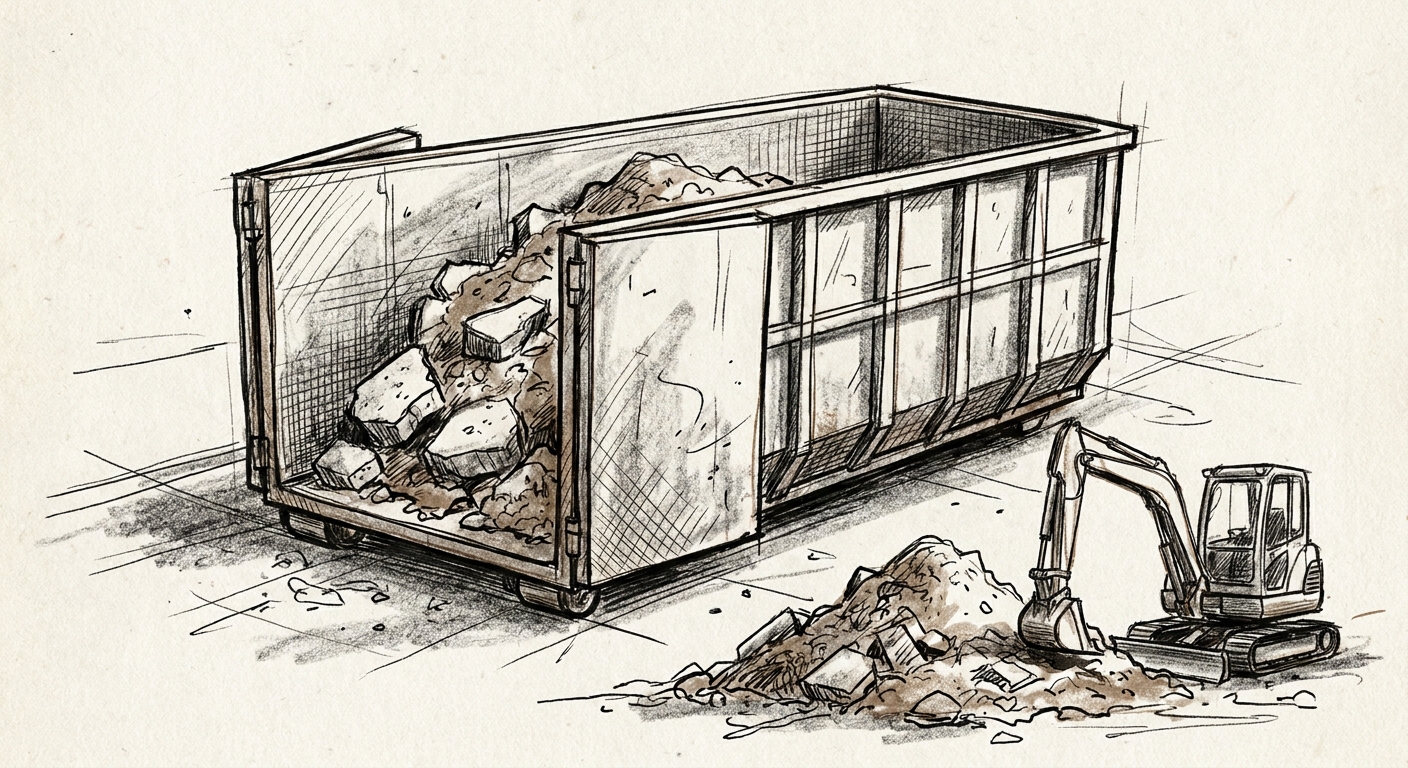
This is the smallest practical option for a real concrete or dirt job, and the low-profile build keeps the load height down so it doesn't tip past its weight cap early. It fits a single-car driveway and works for a patio tear-out, a small slab removal, or a few cubic yards of excavated dirt.
One spec that matters: low-profile containers sit lower to the ground, which makes wheelbarrow loading faster on a small crew. Verdict: Buy for driveway sections, walkways, and small slab jobs under roughly 8 to 10 cubic yards of material.
2. 15-yard low-profile: the workhorse for straight concrete or dirt
This size is the sweet spot for most residential concrete removal and single-room excavation. It holds enough volume to matter but stays inside a weight range that's realistic for a full load of pure concrete or dirt, unlike a same-sized standard container packed with lighter mixed debris.
Contractors clearing driveways, small foundations, or backyard grading jobs land here most often. Local disposal rules in San Jose also affect how loads get accepted at the endpoint, so check construction debris disposal rules in San Jose before you schedule a pour-out. Verdict: Buy.
3. 20-yard standard container: the flex pick for mixed loads
A 20-yard container makes sense when concrete or dirt is only part of the load, mixed with framing, drywall, or general demo debris. On its own for pure concrete, this size often hits its weight cap well before the visible fill line, which means paying for capacity you never actually used.
This size works for kitchen or bath demo where a slab section comes out alongside cabinetry and tile. Verdict: Consider only when concrete or dirt is a minority of the load, not the whole job.
4. 30-yard container: looks right, usually isn't
Thirty-yard containers get ordered by habit because they're the default size for general construction cleanup. For straight concrete or dirt, the box will look nowhere near full when the weight limit shuts the load down, and the tall walls make hand-loading heavy material harder on a crew.
This size belongs on framing debris, roofing tear-offs, and bulky low-density waste, not slab and soil. Verdict: Skip for pure concrete or dirt disposal.
5. 40-yard container: the wrong tool for heavy debris
The largest standard roll-off is built for volume, not weight. Loaded with concrete or dirt, it caps out fastest relative to its size of any option on this list, and the added height makes manual loading a safety issue on a job that's already physically demanding.
This size is right for large-volume, low-weight jobs like whole-structure demo where lumber and roofing dominate the load. Verdict: Skip for concrete or dirt-only disposal.
Comparison table
| Size | Best for | Weight risk on concrete/dirt | Verdict |
|---|---|---|---|
| 10-yard low-profile | Driveway sections, small patios | Low | Buy |
| 15-yard low-profile | Standard concrete or dirt jobs | Moderate, manageable | Buy |
| 20-yard standard | Mixed demo with some concrete | High if concrete-heavy | Consider |
| 30-yard standard | Bulky low-weight debris only | Very high for pure concrete | Skip |
| 40-yard standard | Large-volume, low-weight demo | Highest, caps out fast | Skip |
Where to rent: three sourcing rules
Tell the yard what's actually going in the box. Concrete, dirt, and mixed C&D get priced and capped differently. A yard that doesn't ask what material you're hauling is guessing at your size, and you'll pay for it in overage.
Ask whether the low-profile option is available in the size you need. Not every rental yard stocks low-profile containers in every size, and the lower load height matters for hand-loading concrete chunks safely.
Confirm the yard controls its own disposal endpoint. Valley Services operates its own C&D transfer station at 1611 S 7th St in San Jose, which means a heavy-load swap or an early pickup doesn't depend on a third party's schedule. Third-generation, family-run, on the same site since 1986. Companies that broker to someone else's yard add a layer of scheduling risk that shows up exactly when a concrete load caps out mid-job.
FAQ
What's the best dumpster rental for concrete disposal?
A 15-yard low-profile roll-off is the best dumpster rental for concrete disposal on most Bay Area residential jobs in 2026. It holds enough volume for a typical slab or driveway tear-out while staying inside a realistic weight range for pure concrete.
Can I put dirt and concrete in the same container?
Yes, dirt and concrete can go in the same roll-off container, but combining them speeds up hitting the weight cap since both materials run 2,000 lbs or more per cubic yard. Size down one step from what you'd use for either material alone.
Is a 20-yard dumpster too big for concrete removal?
A 20-yard dumpster isn't too big by volume, but it's often the wrong size by weight for a straight concrete load. The box will look far from full when the weight limit forces a pickup, so it makes more sense for mixed debris than pure concrete.
How much does a concrete or dirt container weigh when full?
A cubic yard of concrete or compacted dirt weighs roughly 2,000 to 2,400 lbs, so a 15-yard container full of either material can weigh well over 15 tons. That's why weight caps, not fill lines, are the real limit on heavy debris containers.
Do I need a permit for a roll-off container on a Bay Area street?
Street placement in San Jose, Santa Clara, Sunnyvale, Mountain View, and Milpitas often requires a permit depending on where the container sits. Driveway placement usually doesn't, but check with your city before scheduling delivery if the container will sit on the street.
What size dumpster do I need for a driveway tear-out?
A 10-yard low-profile container handles most single-car driveway tear-outs. For a two-car driveway or larger slab section, step up to a 15-yard low-profile to stay ahead of the weight limit.
Can I mix concrete with regular construction debris?
You can mix concrete with general construction debris, but tell the rental yard so they size the container by weight, not just volume. Keeping concrete separate when possible also speeds up drop-off at the transfer station.
Why does container size matter more for concrete than for wood debris?
Concrete and dirt weigh three to four times more per cubic yard than framing lumber or drywall, so a container that works fine for wood debris will hit its weight cap on concrete well before it's visually full. Size heavy debris jobs by weight first.
One last thing
Broken concrete without rebar, wire, or attached debris processes faster at a transfer station than mixed loads with contamination. Keeping a concrete pull clean of drywall scraps, packaging, and trash isn't just tidy, it moves the load through the endpoint quicker, which matters when a crew is waiting on the next container to land. Valley Services controls that endpoint directly at its San Jose transfer station, which is the reason a straight concrete or dirt swap doesn't sit on someone else's schedule.
Call (408) 297-5404 or visit valleyservices.biz to size your next concrete or dirt load correctly before it lands on the truck.