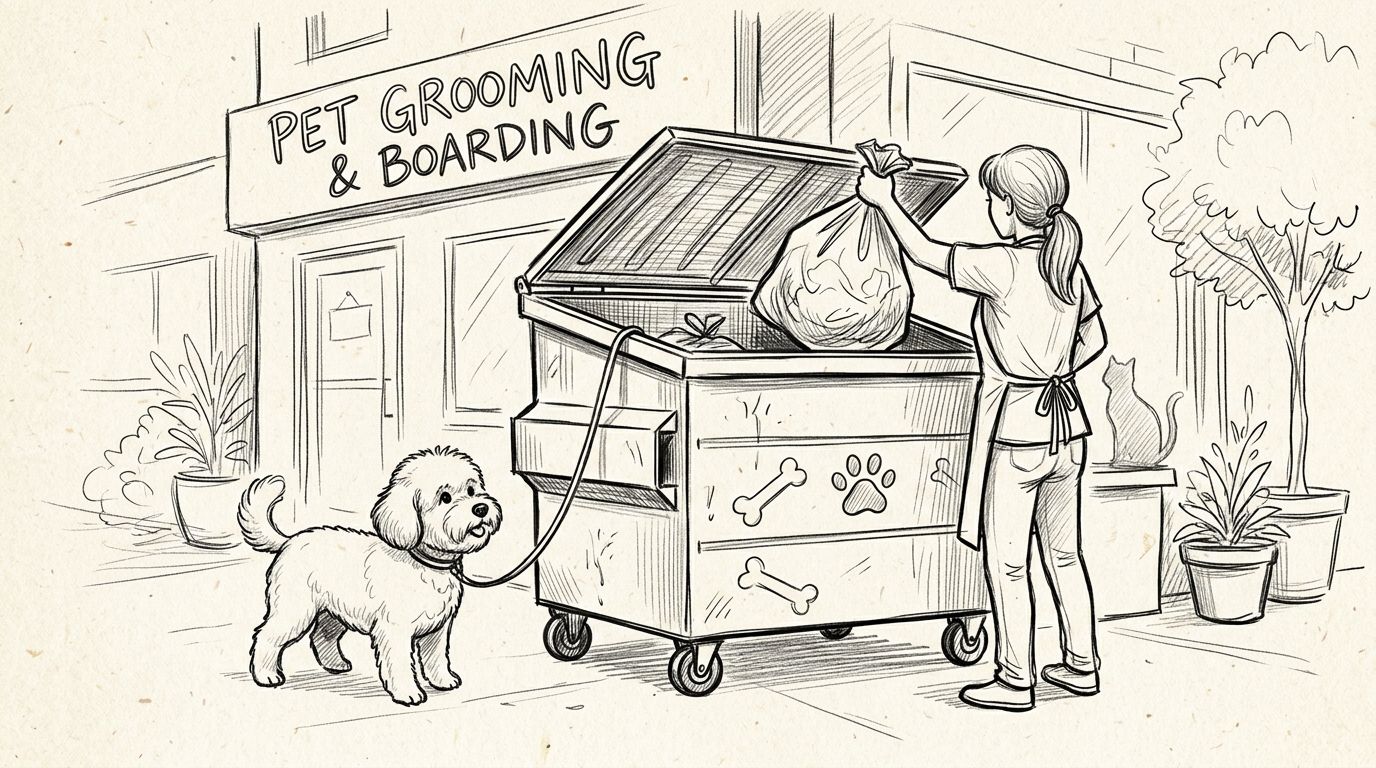
Pet grooming salons and boarding kennels produce a waste stream that a standard construction hauler isn't built for: soiled bedding, packaging from bathing and flea-treatment products, and remodel debris when a bather station gets rebuilt. This guide ranks the dumpster rental options that fit grooming and boarding operations across San Jose, Santa Clara, Sunnyvale, Mountain View, and Milpitas in 2026.
- Best overall dumpster rental for pet grooming facility operations: a 20-yard blue steel roll-off container sized for daily bedding and packaging waste.
- Best for single-groomer salons: a 10-yard container for periodic cleanout and light remodel debris.
- Best for facility remodels: a 30-yard container that handles framing and flooring pulled during a kennel expansion.
- Best for ground-up construction: a 40-yard container sized for full demolition loads.
- Best for established boarding kennels: scheduled recurring swap-out service instead of a single rental.
Why this matters
A grooming salon or boarding kennel doesn't run on a construction schedule. Waste builds daily: soiled bedding, dog and cat hair clumped with cleaning product residue, and cardboard from shampoo cases. Let a container sit past capacity and you get odor complaints from neighboring tenants or a property manager call about a blocked loading dock.
Facilities running a renovation in 2026, like a new bather station or expanded kennel wing, layer construction debris on top of daily waste. That mix needs a container sized for both jobs, not two separate accounts.
Valley Services runs its own C&D transfer station in San Jose. That means the container gets picked up on the schedule the facility needs, not the schedule a broker's downstream landfill allows. One call also covers temporary fencing if a kennel expansion needs a secured perimeter during construction.
What makes the best dumpster rental for a pet grooming or boarding facility
- Footprint that fits the lot. Strip-mall groomers and freestanding kennels rarely have room to spare for a container blocking three parking spaces.
- Pickup cadence matched to occupancy. A kennel running near capacity produces more bedding waste than a slow week, so the swap schedule should flex with it.
- Same-day delivery for urgent loads. A flooded run or a bedding recall shouldn't wait a week for a container.
- One vendor for containers, fencing, and restrooms. A kennel expansion project often needs all three at once.
- Clear loading rules. Bedding and packaging need to stay under the fill line so the container closes flush for hauling.
- Direct control of the disposal endpoint. A hauler that owns its own transfer station controls the pickup schedule instead of routing through a third party.
Dumpster rental options for pet grooming and boarding facilities at a glance
| Option | Best for | Standout feature | Key limitation |
|---|---|---|---|
| 20-yard roll-off container | Boarding kennels with daily bedding and packaging waste | Holds several days of volume without overflowing before pickup | Still needs clear driveway access for delivery |
| 10-yard roll-off container | Single-groomer salons and light cleanouts | Smallest footprint, fits narrow strip-mall lots | Fills fast if a remodel runs alongside daily grooming waste |
| 30-yard roll-off container | Facility remodels and build-outs | Handles framing, flooring, and fixtures pulled during expansion | Needs more clearance than a retail parking lot usually allows |
| 40-yard roll-off container | Ground-up kennel construction or full demolition | Highest volume for large-scale teardown | Overkill for routine grooming waste |
| Scheduled recurring swap-out | Established boarding operations with ongoing waste | Pickup cadence matches occupancy, no single-fill limit | Requires committing to a term instead of a one-time rental |
1. 20-yard roll-off container: best dumpster rental for pet grooming facility daily waste
A 20-yard blue steel container is the size most boarding kennels and multi-chair grooming salons land on. It holds roughly the volume of six pickup truck beds, enough for several days of soiled bedding, packaging, and general trash without needing a mid-week swap.
20-yard container pros:
- Handles daily bedding and packaging volume for a mid-size kennel or salon
- Fits most commercial parking lots without blocking multiple spaces
- Works for light remodel debris alongside routine waste
20-yard container cons:
- Still requires a clear, level pad for delivery and pickup
- Undersized for a kennel expansion that includes framing or flooring removal
Best for: boarding kennels and grooming salons producing daily waste with occasional light cleanout.
Verdict: Buy. This is the default size for most grooming and boarding operations in 2026.
2. 10-yard roll-off container: best dumpster rental for single-groomer salons and light cleanouts
A single-chair or two-chair grooming salon without a boarding component rarely fills a container fast. The 10-yard size handles a periodic cleanout, an old cabinet swap, or packaging buildup without taking up more lot space than the salon can spare.
10-yard container pros:
- Smallest footprint, fits narrow strip-mall lots
- Easiest size to schedule for a one-time cleanout
- Lower risk of hitting a weight limit on routine grooming waste
10-yard container cons:
- Fills fast if paired with any construction debris
- Not enough volume for daily boarding kennel waste
Best for: single-groomer or two-chair salons without overnight boarding.
Verdict: Buy for a small salon. Skip it for a boarding operation with daily bedding volume.
3. 30-yard roll-off container: best dumpster rental for pet facility remodels and build-outs
When a facility rebuilds a bather station or adds a kennel wing, the waste stream changes from bedding and packaging to framing, flooring, and fixtures. The 30-yard container carries that heavier construction load without forcing multiple swaps mid-project.
30-yard container pros:
- Handles framing, flooring, and fixtures pulled during expansion
- Fewer swaps needed across a multi-week remodel
- Covers mixed loads of construction debris and daily facility waste
30-yard container cons:
- Needs more clearance than a typical retail parking lot allows
- Not necessary once the remodel wraps and only daily waste remains
Best for: grooming or boarding facilities mid-renovation.
Verdict: Buy during an active remodel. Hold at a smaller size once the project wraps.
4. 40-yard roll-off container: best dumpster rental for ground-up kennel construction
A ground-up kennel build or a full facility demolition generates a volume of debris that a 20 or 30-yard container can't absorb without constant swaps. The 40-yard size is built for that scale of teardown.
40-yard container pros:
- Highest volume available, fewest swaps for a full demolition
- Suited to new construction debris: concrete, framing, roofing
- Reduces truck trips to the site during a long build
40-yard container cons:
- Longest footprint, needs a dedicated pad away from client parking
- Overkill for routine grooming or boarding waste
Best for: ground-up kennel construction or full facility demolition.
Verdict: Buy for new construction. Skip it for day-to-day facility operations.
5. Scheduled recurring swap-out service: best dumpster rental for established boarding kennels
An established boarding kennel with steady daily occupancy doesn't need to call for a new rental every time a container fills. Recurring swap-out service sets a pickup cadence in advance and adjusts the schedule as occupancy shifts.
Recurring swap-out pros:
- Cadence matches occupancy instead of a fixed single-fill limit
- Predictable for staffing labor around pickup days
- Keeps bedding and packaging waste from building up between visits
Recurring swap-out cons:
- Requires a term commitment rather than a one-off rental
- Needs coordination if occupancy swings seasonally
Best for: boarding kennels already running steady daily waste output.
Verdict: Buy for an established facility. Skip it for a short-term or one-time cleanout.
How we ranked these options
Each option was measured against the six criteria above: lot footprint, pickup cadence, delivery speed, single-vendor coverage, loading clarity, and endpoint control. The 20-yard container scored highest because it matches daily kennel and salon waste volume without oversizing the lot footprint. Sizes above and below it earn their spot only when the job calls for it: a remodel, a small salon, or a full teardown.
Which dumpster rental should you choose for your pet grooming or boarding facility?
Pick the 20-yard roll-off container if you're running a boarding kennel or multi-chair grooming salon with daily bedding and packaging waste and no active remodel. Step down to a 10-yard container if you're a single-groomer salon with light, periodic cleanout. Step up to a 30-yard or 40-yard container only while construction debris is part of the load. Once your facility is established with steady daily volume, move to scheduled recurring swap-out service instead of renting one container at a time. As of 2026, most Bay Area grooming and boarding operations that call Valley Services start with the 20-yard size and adjust after the first billing cycle shows actual volume.
“If your groomers and bather stations fill more than one 20-yard container before the scheduled pickup, the facility has outgrown that size.”
Talk through your facility's waste plan
Call to size a container or set a recurring pickup schedule.
FAQ
What size dumpster rental is best for a pet grooming facility?
Most single-groomer salons need a 10-yard container, while multi-chair salons and boarding kennels with daily waste typically need a 20-yard container. Facility size and whether a remodel is underway change that recommendation.
Can pet bedding and grooming waste go in a regular roll-off container?
Yes, soiled bedding, hair, and packaging waste are accepted in a standard construction-and-demolition roll-off container. Hazardous materials like chemical treatment containers need separate disposal, so check with the facility before loading.
How often should a boarding kennel schedule a dumpster pickup in 2026?
Kennels running near full occupancy generally need pickup every 3 to 5 days to avoid odor buildup in Bay Area heat, while lower-occupancy facilities can stretch to weekly. Scheduled recurring swap-out service locks in a cadence instead of calling for each pickup.
Do I need a permit to place a dumpster at my grooming facility in San Jose?
Placement on private property, like a strip-mall parking lot, usually doesn't require a city permit, but placement on a public street does. Confirm with your municipality before delivery day.
What's the difference between a 10-yard and 20-yard dumpster rental?
A 10-yard container holds roughly three pickup truck beds of waste and fits narrow lots, while a 20-yard holds about six truck beds and suits daily kennel or salon volume. The extra capacity matters more than the footprint difference for most boarding operations.
Can Valley Services provide fencing or restrooms along with a dumpster for a kennel renovation?
Yes, Valley Services rents roll-off containers, temporary fencing, and portable restrooms, which covers a kennel expansion or remodel under one call. That avoids coordinating separate vendors for each service during the same project.
Is a scheduled recurring dumpster service better than a one-time rental for a boarding kennel?
A recurring swap-out service is better for an established kennel with steady daily waste, since it locks in a pickup cadence that matches occupancy. A one-time rental fits better for a short cleanout or a single remodel phase.
One last thing
Soiled bedding packed tight into a closed roll-off heats up fast in a Bay Area summer, and odor complaints usually show up before the container is even half full. Facilities that swap on a 3-to-5-day cycle instead of waiting for a full container avoid most of those calls. It's a scheduling fix, not a bigger container, that solves the smell in 2026.