House flippers move on a different clock than a normal remodel crew. Every week a property sits mid-gut is a week of holding costs, and the wrong container size for a container rental for house flippers turns into a second delivery, a missed subcontractor day, or an overage fee at swap-out. This guide ranks roll-off container sizes by flip scope for 2026, from cosmetic refreshes to full-gut jobs, so you book the right one on the first call.
- The 20-yard roll-off container fits most single-family flip guts in San Jose: Buy.
- A 10-yard container works for cosmetic flips under 1,200 square feet: Consider.
- A 40-yard container only makes sense for structural demolition, not a standard flip: Skip.
- Valley Services runs its own San Jose transfer station, which controls swap scheduling instead of a third-party dock.
- Permit street placement before drop-off in San Jose or the container becomes a citation risk.
Why container choice makes or breaks a flip schedule
A flip budget dies in small increments: an extra swap fee here, a stalled crew waiting on debris removal there. The container decision touches both. Undersize it and you're paying for a second delivery mid-demo. Oversize it and you're paying to park unused capacity on a driveway that could otherwise host a dumpster-free staging area for materials.
Most flip crews in Silicon Valley run tight sequencing: demo week one, framing and rough-in week two, finishes week three. A container that shows up late or leaves too soon breaks that sequence. That's the operating reality this ranking is built around, not square footage in the abstract.
How this ranking was built
This ranking is based on aggregated 2026 scheduling and fill-rate patterns across single-family flip jobs in San Jose, Santa Clara, Sunnyvale, Mountain View, and Milpitas: the five cities where flip volume concentrates in the South Bay. Container size is matched against typical debris composition for each flip scope: drywall and flooring for cosmetic jobs, framing lumber and fixtures for full guts, concrete and structural material for teardown-level work. Verdicts reflect what fits the job, not what's easiest to sell.
The ranked list: container sizes for house flippers
1. The 20-yard roll-off container: the flip workhorse
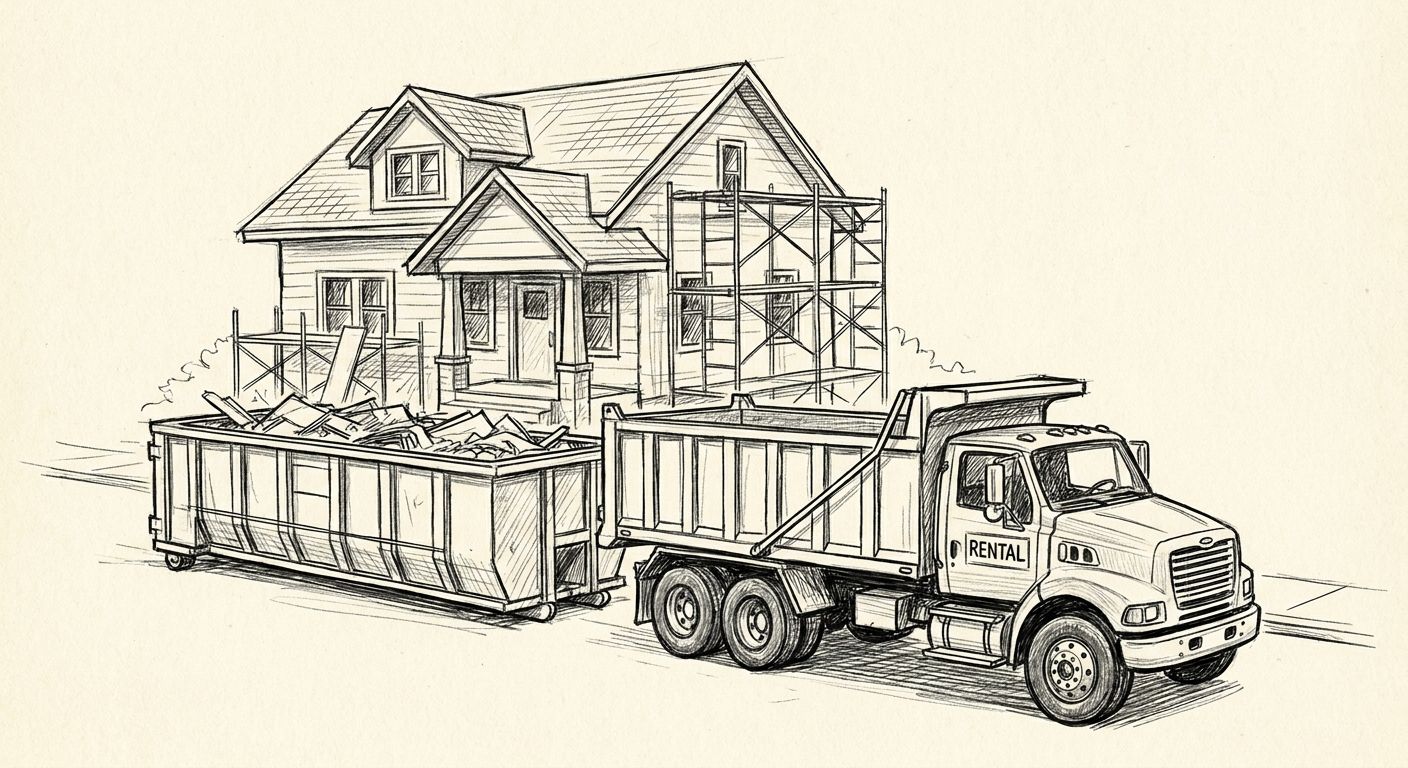
This is the default size for a single-family gut flip running 1,500 to 2,500 square feet. It handles a full kitchen tear-out, bathroom demo, flooring, and drywall from two or three rooms without filling before the crew finishes the week. It also fits behind most driveway aprons up to 22 feet without blocking a garage door.
For flips that fall squarely into cosmetic-plus-structural territory, roll-off container rental for home renovations covers the sizing logic in more detail. Verdict: Buy.
2. The 30-yard roll-off container: for full guts
When the flip goes down to studs across multiple rooms, or the property needs a full interior cleanout before demo even starts, the 20-yard fills too fast. A 30-yard container absorbs the extra volume from whole-house strip-outs: cabinetry, old flooring, plaster, and the contents cleared before framing begins.
This size overlaps with best container size for a whole-home cleanout, which flippers taking on estate-condition properties should read before ordering. Verdict: Buy for full-gut flips.
3. The 10-yard roll-off container: for cosmetic flips
A flip limited to paint, fixtures, and a flooring swap under 1,200 square feet doesn't generate enough volume to justify a 20-yard. A 10-yard container clears that scope without paying for unused capacity sitting on the street for two weeks.
The tradeoff: if scope creeps, and it usually does on a flip, a 10-yard fills fast and forces an early swap. Verdict: Consider, only for confirmed light scope.
4. The 40-yard roll-off container: for structural demolition
Reserve this size for flips involving tear-down to framing, room additions, or heavy structural removal where lumber and drywall volume outpaces anything else on this list. For a standard cosmetic-to-moderate flip, a 40-yard sits mostly empty and takes up space a crew needs for material staging.
Verdict: Skip for standard flips, buy only for structural-level demolition.
5. The phased-swap approach: two containers beat one oversized unit
Flippers running phased demo, kitchen one week, bathrooms the next, often do better scheduling two 20-yard swaps than parking one 40-yard container for a month. It keeps site access open for deliveries and inspections between phases, and it matches container capacity to actual weekly debris volume instead of guessing at total project volume up front.
Verdict: Buy for multi-phase flip timelines.
6. The single-hauler advantage: one yard, one schedule
Valley Services owns and operates its own C&D transfer station in San Jose instead of brokering disposal to a third-party site. That means container swap scheduling doesn't depend on another company's dock hours or intake queue. For a flip running on a tight resale timeline, that scheduling control matters more than any single container spec.
Verdict: Buy when the flip timeline is tight and swap delays aren't an option.
“If the container fills before the flip does, you rented too small.”
Comparison table: container size vs. flip scope
| Size | Cubic yards | Best for | 2026 verdict |
|---|---|---|---|
| 10-yard | 10 | Cosmetic flips under 1,200 sq ft | Consider |
| 20-yard | 20 | Standard single-family gut flips | Buy |
| 30-yard | 30 | Full-gut, multi-room flips | Buy |
| 40-yard | 40 | Structural demolition or additions | Skip for standard flips |
Where to line up container rental for a flip
Confirm placement before drop-off. If the container sits on the street rather than a driveway or private pad, San Jose requires a permit for placement. How to permit a container placement in San Jose covers what that process looks like before the truck shows up.
Load flat, not heaped. Concrete, tile, and drywall debris that piles above the rim triggers overage charges at weigh-in, and heaped loads aren't legal to transport on Bay Area roads. How to load a container safely and avoid overage fees walks through load sequencing that keeps weight and volume under the line.
Pick a hauler that owns its endpoint. A company that brokers disposal to someone else's transfer station is scheduling around that third party's intake hours. A hauler running its own San Jose station controls its own calendar, which is the difference between a same-day swap and a two-day wait mid-demo.
Line up your next flip's container
Call or check availability across San Jose, Santa Clara, Sunnyvale, Mountain View, and Milpitas.
FAQ
What size roll-off container is best for a house flip?
A 20-yard roll-off container fits most single-family gut flips in the 1,500 to 2,500 square foot range in 2026. Smaller cosmetic flips under 1,200 square feet often only need a 10-yard, while structural demolition calls for a 30-yard or 40-yard.
How long can I keep a roll-off container on a flip site?
Rental duration is set at booking and varies by scope, so confirm the window when you schedule delivery. Phased flips often book shorter windows per container and swap between demo stages rather than holding one unit for the full project.
Do I need a permit for a roll-off container in San Jose?
Yes, if the container sits on a public street rather than a driveway or private pad. Confirming placement before delivery avoids a citation mid-project.
What happens if I overfill the container?
Loads that pile above the container rim trigger overage charges at weigh-in and aren't legal to haul on Bay Area roads. Loading flat and distributing heavy debris like concrete and tile evenly keeps a load within limits.
Can I swap containers mid-flip without extra delay?
Swap speed depends on whether the hauler controls its own disposal endpoint. A yard running its own transfer station schedules swaps on its own calendar instead of waiting on a third-party dock.
Is a 10-yard container big enough for a full kitchen gut?
Usually not on its own. A full kitchen tear-out combined with flooring and drywall from adjacent rooms typically needs a 20-yard container to avoid a mid-week swap.
What's the difference between a broker and a yard with its own transfer station?
A broker rents equipment and hauls debris to a third party's disposal site, which means their schedule depends on someone else's intake hours. A yard that owns its own transfer station, like Valley Services in San Jose, controls its own dispatch calendar for deliveries and swaps.
How fast can a container get delivered to a flip site in the Bay Area?
Delivery windows depend on container size, site access, and current schedule load, so confirm timing when you call. Haulers running their own transfer station generally have more flexibility on tight or same-week delivery requests.
One last thing
A vacant flip property between closing and demo start is also a security gap, and container theft or dumping into an unsecured container isn't rare on a job site left unattended overnight. Pairing container rental with temporary fencing during the vacant stretch closes that gap, and running both through one San Jose yard since 1986 means one phone call covers site security and debris removal instead of two separate schedules to track. Call (408) 297-5404 or check current availability at valleyservices.biz before your next flip closes escrow.