Bay Area film and TV productions run holding tanks the same way they run everything else on a call sheet: on a schedule, with zero tolerance for a truck that shows up late or a tank that runs dry before wrap. This guide ranks the holding tank setups that actually hold up on production sets in San Jose, Santa Clara, Sunnyvale, Mountain View, and Milpitas, and tells you which configuration fits your shoot.
- Standard holding tank paired with a restroom trailer is the best holding tank rental for film production with a fixed base camp.
- Compact single-tank setups fit single-day indie shoots with one or two restroom units.
- High-capacity holding tank paired with a potable water tank covers remote locations with no site hookup.
- Winterized holding tank rental prevents freeze-ups on night shoots and cold-weather production windows in 2026.
- Valley Services delivers and services holding tanks from its own San Jose yard, same crew for load-in and load-out.
Why this matters for production schedules
A holding tank failure on a film set is not a facilities problem. It stops the shoot. Crew walks off set, background waits, and the AD is now managing a restroom line instead of a scene.
Valley Services owns and operates its own transfer station in San Jose. That matters for holding tanks because pump-outs, not just deliveries, are the part productions forget to plan for. A rental company that brokers disposal to a third-party site is one phone call further from a fix when a multi-week shoot needs an unscheduled pump-out mid-week.
Cal/OSHA field sanitation rules, Title 8 CCR 3457, require one restroom for every 20 workers on site. Productions that size a holding tank against day-one crew counts often run short once background, extras, and a second unit scale the headcount mid-shoot.
What makes the best holding tank rental for film production
- Tank capacity matched to crew size and shoot length, not just restroom unit count
- Pump-out reliability tied to an owned transfer station, not a third-party broker
- Pairing options with restroom trailers, potable water tanks, and hand-wash stations
- Winterization for night shoots and cold-weather windows
- Delivery and pickup timed to call sheets and strike, not a general delivery window
- Working knowledge of Bay Area site access and permit timing
Holding tank setups at a glance
| Setup | Best for | Standout feature | Key limitation |
|---|---|---|---|
| Standard tank + restroom trailer pairing | Multi-day episodic shoots with a fixed base camp | Single delivery covers restrooms and waste holding together | Needs a stable base camp location for the run of the shoot |
| High-capacity tank + potable water pairing | Remote locations with no site hookup | Covers both waste holding and clean water in one delivery | Larger footprint, needs a flat staging spot |
| Compact single-tank setup | Single-day indie shoots, small crews | Small footprint, fast load-in and load-out | Limited capacity for extended days or large crews |
| Winterized holding tank rental | Night shoots and cold-weather production windows | Insulated lines resist freeze-ups overnight | Adds setup time for insulation and heat trace |
1. Standard holding tank + restroom trailer pairing: best holding tank rental for multi-day episodic shoots
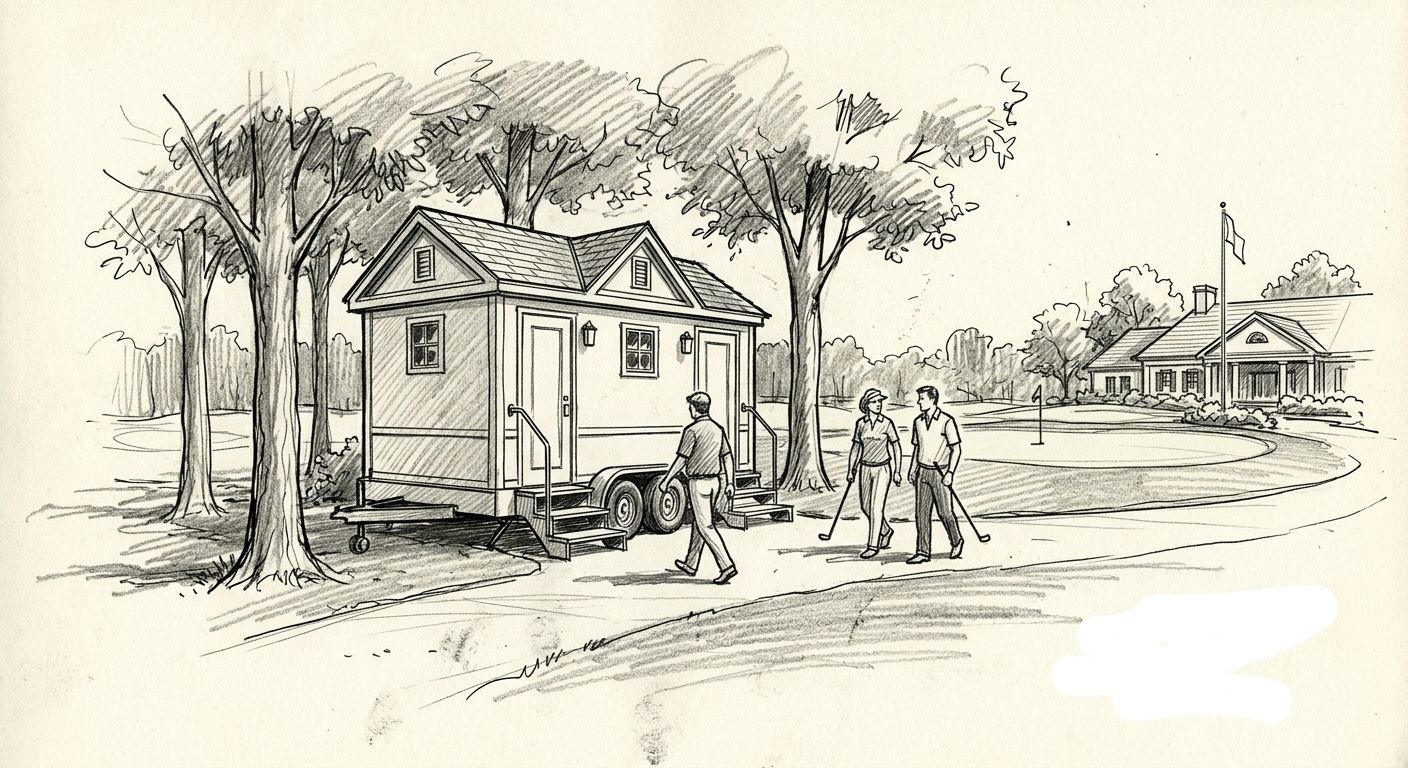
This setup pairs a holding tank sized for the shoot length with a restroom trailer instead of standalone units, so waste capacity and restroom count move together as one order. It's the default for episodic television and multi-week feature shoots that hold a fixed base camp for the run of production. Sizing runs off crew count, shoot days between pump-outs, and whether background or extras are on the call sheet.
Standard tank and trailer pairing pros:
- One coordinated delivery for restrooms and holding capacity
- Scales cleanly for crews running past 20 people per Cal/OSHA guidance
- Fits multi-week shoots without daily service calls
Standard tank and trailer pairing cons:
- Requires a committed base camp footprint for the shoot's duration
- Overkill for a single-day shoot with a small crew
Details on pairing restrooms with holding tanks for film sets are covered in the portable restroom guide for film and production sets.
Best for: multi-day episodic and feature shoots with a fixed base camp. Verdict: Book it for any shoot running more than three consecutive days at one location.
2. High-capacity holding tank + potable water pairing: best holding tank rental for remote locations
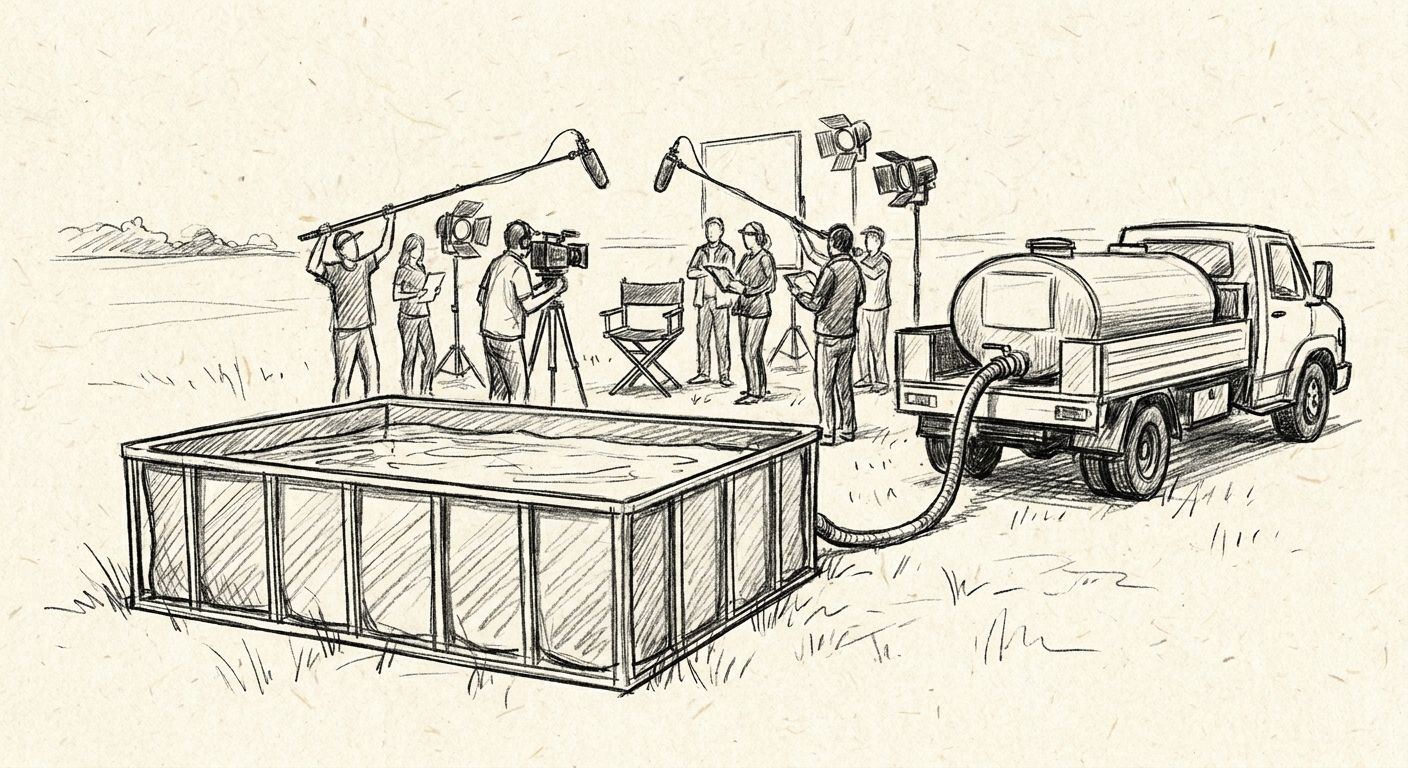
This configuration adds a potable water tank alongside the holding tank, built for locations with no site water or sewer hookup at all: hillside exteriors, agricultural land, or undeveloped lots outside city limits. The holding tank manages waste while the potable tank feeds hand-wash stations and any craft services setup that needs clean water on site.
High-capacity pairing pros:
- Covers waste and clean water in a single order
- Handles locations where no utility hookup exists
- Sized for larger crews and longer remote shoot days
High-capacity pairing cons:
- Needs more staging space than a single tank
- Requires more lead time to schedule two coordinated deliveries
More on matching a potable tank to a production site is in the potable water tank rental guide.
Best for: remote or undeveloped locations with no site water or sewer. Verdict: Book it whenever the location scout confirms there's no hookup on site.
3. Compact single-tank setup: best holding tank rental for single-day indie shoots
A compact holding tank matched to one or two restroom units is the right call for a single day of shooting, a short student or indie production, or a small crew running a tight schedule. It goes in fast, comes out fast, and doesn't tie up a location for a multi-day footprint.
Compact single-tank pros:
- Small footprint, easy to place on tight lots or street parking
- Fast load-in and strike, matched to single-day call sheets
- No excess capacity sitting unused
Compact single-tank cons:
- Limited capacity if the shoot runs long or adds background
- Not built for multi-day production without a resize
A sizing walkthrough for matching tank capacity to crew and shoot length is in the holding tank size guide.
Best for: single-day, small-crew indie and student productions. Verdict: Book it for one-day shoots, resize up before scheduling a multi-day run.
4. Winterized holding tank rental: best for night shoots and cold-weather windows
Night exteriors and winter production windows in the Bay Area still see freeze risk in the early morning hours, especially on hillside or coastal locations. A winterized holding tank rental adds insulation and heat trace to the lines so the system keeps working through overnight calls.
Winterized tank pros:
- Keeps lines functional through cold overnight calls
- Fits night-shoot schedules without a morning service delay
Winterized tank cons:
- Added setup time versus a standard tank
- Only needed for a portion of the production calendar
Best for: night shoots and cold-weather production windows. Verdict: Book it for any overnight call sheet scheduled between November and February.
How this ranking was built
Each setup above was ranked against the same six criteria: capacity matched to crew size, pump-out reliability, pairing flexibility, winterization, delivery timing against call sheets, and Bay Area site experience. The standard tank and trailer pairing ranks first because it satisfies the most criteria for the most common production type, a multi-day shoot at a fixed base camp. The other three setups solve a specific, narrower problem the first setup doesn't cover.
Which holding tank rental should you book?
For most Bay Area productions running more than a few days at one base camp, the standard holding tank and restroom trailer pairing is the right default for 2026 production schedules. Switch to the high-capacity and potable water pairing the moment the location scout confirms no water or sewer hookup. Drop to the compact single-tank setup for a one-day shoot, and add winterization anytime the call sheet runs overnight in cold months.
Talk through your production schedule
Call before lock to confirm tank size, pairing, and pickup timing.
FAQ
What size holding tank do film productions need on a Bay Area set?
Tank size depends on crew count and days between pump-outs, with common rental sizes running 500 to 1,000 gallons. A production running more than three days at one base camp typically needs the larger end of that range.
Is a holding tank rental better than portable restrooms alone for film sets?
A holding tank pairs with restroom units rather than replacing them; it manages the waste capacity behind the restrooms. Multi-day shoots need the pairing so the restrooms don't need daily servicing.
How much lead time does a holding tank rental need for a shoot?
Book as soon as the location and shoot days are locked, ideally before the final call sheet goes out. Remote locations needing a potable water pairing need more lead time than a single-tank setup on a serviced lot.
Can a holding tank rental be paired with a restroom trailer?
Yes, pairing a holding tank with a restroom trailer is the standard setup for multi-day episodic and feature production. The pairing covers both waste holding and restroom capacity in one delivery.
Do film productions need winterized holding tanks in California?
Winterization matters for overnight and cold-weather call sheets, particularly on hillside or coastal locations where early morning temperatures drop near freezing. A standard tank works fine for daytime-only shoots outside winter months.
What permits are required for holding tank rental on a film set in San Jose?
Permit requirements depend on the placement location and whether it sits on public right-of-way or private property. Confirm placement details with the production's location manager before delivery is scheduled.
How is a holding tank different from a septic tank?
A holding tank stores waste for scheduled pump-out and removal, while a septic tank treats waste on site through a drain field. Production sets use holding tanks because they're mobile and don't require permanent site infrastructure.
Does a holding tank rental include the pump-out service?
Pump-out scheduling is arranged as part of the rental and should be confirmed against the shoot's actual days on location, not just the delivery date. Productions running past the initial estimate should call ahead to adjust the pump-out schedule.
One last thing
Cal/OSHA field sanitation rules, Title 8 CCR 3457, set the restroom ratio at one per 20 workers, but nothing in that regulation accounts for a call sheet that adds 40 background actors for one day. Size the holding tank against the largest single-day headcount on the schedule, not the average crew size, or the tank runs short exactly on the day the production can least afford it.
Call (408) 297-5404 or visit valleyservices.biz to talk through tank size, pairing, and pickup timing before the shoot locks.