A holding tank left un-winterized on a Bay Area job site will freeze solid on the first hard frost, and a frozen tank means a restroom that doesn't work until it thaws. Here's the exact prep sequence to run before temperatures drop in 2026.
- Insulate and heat-trace exposed valves before nighttime temps hit 32°F, common in Gilroy, Morgan Hill, and higher-elevation South Bay sites in 2026.
- Drain standing water from supply lines every evening once frost risk starts, usually late November through February.
- RV-antifreeze the trap and low points on holding tank rental units, never automotive antifreeze.
- A frozen holding tank rental on a job site is a Skip until thawed, don't force pumping or you'll crack fittings.
- Schedule pump-outs earlier in freeze windows since a fuller tank freezes faster than a fresh one.
Why this matters
San Jose doesn't see hard freezes often, but Gilroy, Morgan Hill, and the hill areas around Silicon Valley regularly dip below 32°F between December and February. A holding tank rental on a job site sits outside all night, exposed, and the valves and discharge lines are the first parts to freeze because they hold the least water and the most surface area.
A cracked valve or split fitting on a holding tank isn't a minor fix. It means downtime for the restroom unit, a service call outside the normal pump schedule, and a crew standing around with no working facility. Winterizing takes twenty minutes a night. Thawing a cracked tank takes a service visit and a wait.
What you'll need
- Foam pipe insulation sleeves sized for the discharge valve and any exposed piping
- Heat tape or a low-wattage heat cable rated for outdoor use, if the tank sits in a shaded or wind-exposed spot
- RV-grade (propylene glycol) antifreeze, not automotive antifreeze
- A tarp or insulated wrap for the tank body itself
- A thermometer or a weather app set to alert below 35°F
- Contact info for your rental provider's service line, in case a pump-out needs to move up
If you're renting a holding tank for a construction project for the first time this winter, ask about winter placement before delivery. Where the tank sits on site changes how much protection it needs.
The steps
1. Check the forecast every afternoon, not just once a week
Bay Area frost is patchy. One job site in San Jose can stay above freezing while a site fifteen miles south in Gilroy drops to 28°F the same night. Set a daily check, not a weekly one, once you're past mid-November.
Why it matters: a single missed cold night is enough to freeze a discharge valve if it's holding standing water. Expected outcome: you know by 3 p.m. whether tonight needs action. Common mistake: relying on the general Bay Area forecast instead of the specific city or elevation where the tank sits.
2. Insulate the discharge valve and exposed fittings
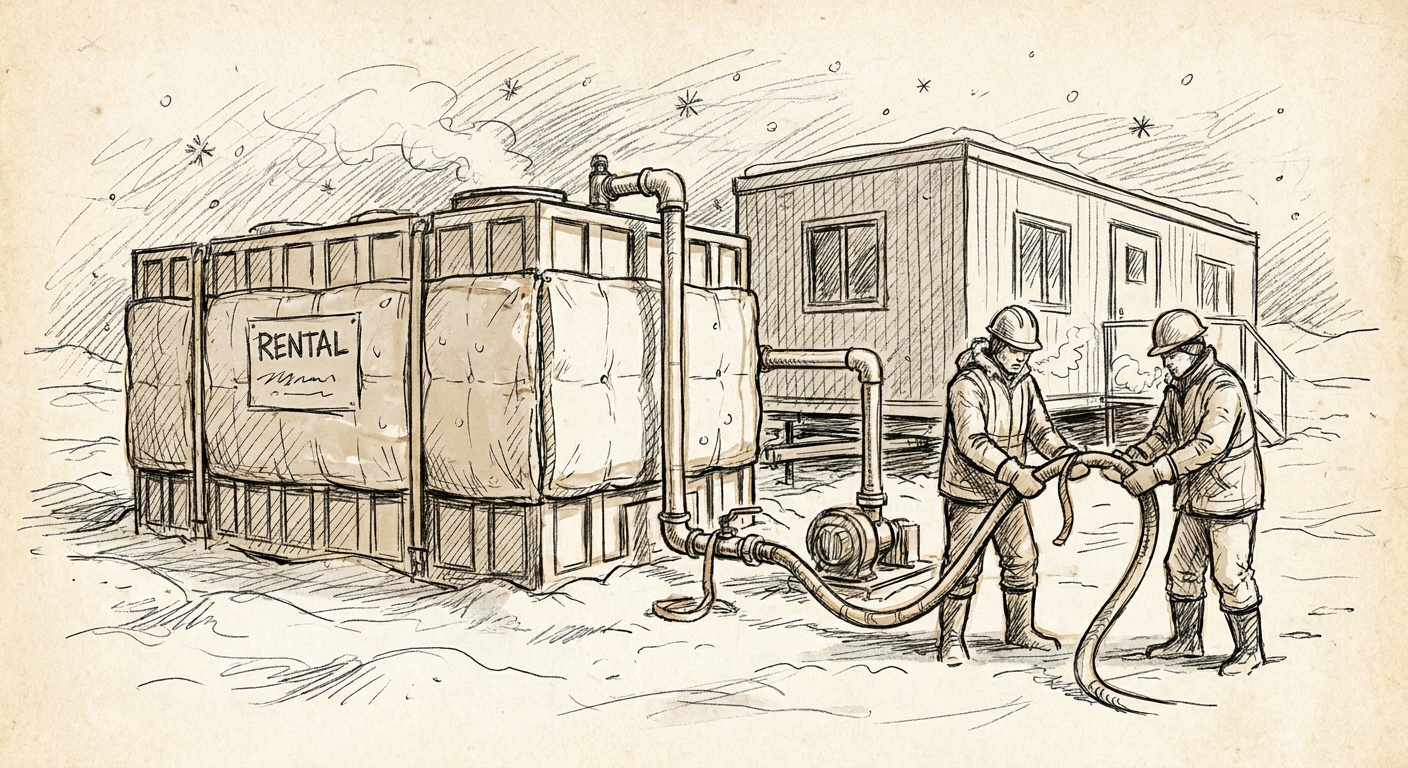
Wrap foam pipe insulation around the discharge valve, the hose bib, and any exposed metal fitting on the holding tank. These parts have thin walls and almost no water volume, so they freeze first, often hours before the main tank body does.
Secure the insulation with zip ties or duct tape so wind doesn't strip it off overnight. Expected outcome: the valve stays above freezing even when ambient air drops into the high 20s. Common mistake: insulating the tank body and skipping the valve, which is backwards. The valve fails first.
3. Add heat tape in exposed or shaded locations
If the tank sits against a north-facing wall, under a carport, or anywhere wind cuts across it directly, wrap a low-wattage heat cable around the valve assembly under the insulation. Plug it into a GFCI outlet, since it's running outdoors near moisture.
This step matters most on sites above 500 feet elevation or anywhere with regular wind exposure, common in the hills around Morgan Hill and parts of the East Bay. Expected outcome: the valve zone stays a few degrees above the freeze line even on the coldest nights of 2026. Common mistake: running heat tape without a GFCI outlet, which trips breakers or, worse, doesn't trip when it should.
4. Add RV antifreeze to low points and traps
Pour RV-grade propylene glycol antifreeze into the tank's low-point drains and any trap in the line. This is the same product used to winterize RVs and campers, safe around holding tanks and simple to source at any hardware store.
Never use automotive antifreeze. It's toxic and it's the wrong chemistry for this application. Expected outcome: standing water in the trap won't freeze solid even at 25°F. Common mistake: using whatever antifreeze is in the shop without checking the label.
5. Drain standing water from supply lines each evening
If the holding tank rental unit has a supply line for a restroom trailer or hand-wash station, open the low-point drain each evening once frost risk starts and let standing water clear. A line with no standing water can't freeze and split.
This is the single highest-value habit during a cold stretch, five minutes a day versus a cracked line and a service call. Expected outcome: lines run clear each morning with no ice blockage. Common mistake: draining once at the start of the cold season and assuming it's done, when it needs to happen every night temps threaten freezing.
6. Wrap the tank body on the coldest nights
On nights forecast below 28°F, throw an insulated tarp or moving blanket over the tank body itself, not just the valve. This slows heat loss from the tank's contents and buys extra margin.
Remove it during the day so the tank doesn't trap moisture or become a mold risk. Expected outcome: internal tank temperature stays several degrees warmer than ambient air overnight. Common mistake: leaving the wrap on permanently, which traps condensation against the tank surface.
7. Move pump-out schedules earlier in freeze windows
A nearly full holding tank freezes faster than a fresh one because there's less air space and the contents sit closer to the tank walls. During a hard freeze stretch, call your rental provider and move the pump-out date up rather than waiting for the normal cycle.
Expected outcome: the tank runs at lower volume through the cold snap, reducing freeze risk on the walls and the outlet. Common mistake: sticking to a fixed monthly schedule through a freeze warning instead of adjusting it.
8. Inspect every morning before crews start work
Check the valve, the discharge line, and the tank body each morning before anyone uses the restroom or draws water. Look for ice buildup, frost rings around fittings, or slow drainage, which are the early signs of a partial freeze.
Expected outcome: you catch a partial freeze before it becomes a full blockage. Common mistake: skipping the morning check because the crew is in a hurry to start, then discovering the freeze mid-shift.
Talk through winter tank placement
Call before delivery to plan a spot that holds up through cold nights.
Troubleshooting
The discharge valve is frozen and won't open. Don't force it. Apply a heat wrap or warm (not boiling) water to the exterior of the valve for ten to fifteen minutes and try again gently. Forcing a frozen valve cracks the housing.
Water is backing up instead of draining. This usually means a partial freeze in the supply line. Stop use immediately, insulate and warm the line, and hold off on further use until it drains freely. Continued use pressurizes a partially blocked line.
Heat tape isn't warming the line. Check the GFCI outlet first, since a tripped breaker is the most common cause. If the outlet is live, the heat cable itself may have failed and needs replacement before the next cold night.
The tank froze overnight despite insulation. This points to wind exposure the insulation didn't account for. Relocate the tank behind a windbreak, a fence panel, or a parked vehicle for the rest of the season.
Antifreeze doesn't seem to be preventing freezing. Check the concentration. RV antifreeze needs enough volume to protect the trap at the expected low temperature, and a thin pour won't hold at 25°F. Add more rather than assuming the product failed.
Tools and resources
- Foam pipe insulation and heat tape, available at any hardware store in the South Bay
- RV-grade propylene glycol antifreeze, not automotive antifreeze
- A GFCI-protected outdoor outlet for heat cable
- Your rental provider's service line for schedule changes during freeze windows
- Background on renting a holding tank for a construction project if you're setting up a new site this winter
What to do next
If your site runs a holding tank alongside a restroom trailer or agricultural operation, the winterizing steps above apply the same way whether it's a holding tank rental for agricultural operations or a unit tied to job site restrooms. RV parks and campgrounds running holding tanks through winter face the same freeze risk on a longer timeline, covered in the guide on holding tank rental for RV parks and campgrounds.
FAQ
What temperature will freeze a holding tank rental?
A holding tank's exposed valve and discharge line can freeze at 32°F if standing water sits in them overnight. The main tank body holds heat longer and usually needs sustained cold below 28°F to freeze through.
Can I use regular antifreeze to winterize a holding tank?
No, use RV-grade propylene glycol antifreeze only. Automotive antifreeze is toxic and the wrong chemistry for holding tank service, and it creates a disposal problem at pump-out.
How often does the Bay Area actually freeze in winter?
San Jose itself sees occasional frost between December and February, while Gilroy, Morgan Hill, and higher-elevation sites see it more regularly. Check the forecast for the specific job site location, not the regional average.
Should I move up my pump-out schedule during a cold snap?
Yes, a nearly full tank freezes faster than a fresh one. Call your rental provider to adjust the pump-out date rather than waiting for the standard cycle during a hard freeze warning.
Is heat tape necessary for every holding tank in winter?
Not every tank needs it. Sites in sheltered, sun-exposed spots often get by with insulation alone, while shaded or wind-exposed locations need heat tape on the valve assembly for real protection.
What's the first sign a holding tank is starting to freeze?
Slow drainage or frost rings around the valve and fittings are the earliest signs. Catching a partial freeze at this stage prevents a full blockage that stops the restroom from working.
Can a frozen holding tank crack permanently?
Yes, forcing a frozen valve or pumping a partially frozen tank can crack fittings or the tank wall itself. Thaw gently with warm wraps and wait rather than forcing any mechanism.
Do agricultural and RV holding tanks winterize differently than job site tanks?
The core steps are the same: insulate, heat-trace exposed points, and manage standing water. Agricultural and RV park tanks often run longer through the season, so the nightly habits matter over more weeks.
One last thing
The valve freezes before the tank does, every time, because it holds the least water and sits fully exposed. Skip insulating the tank body if you have to choose, but never skip the valve.
If a cold snap is heading for your site this winter, call Valley Services at (408) 297-5404 or reach out through valleyservices.biz to talk through tank placement and pump-out timing before temperatures drop.