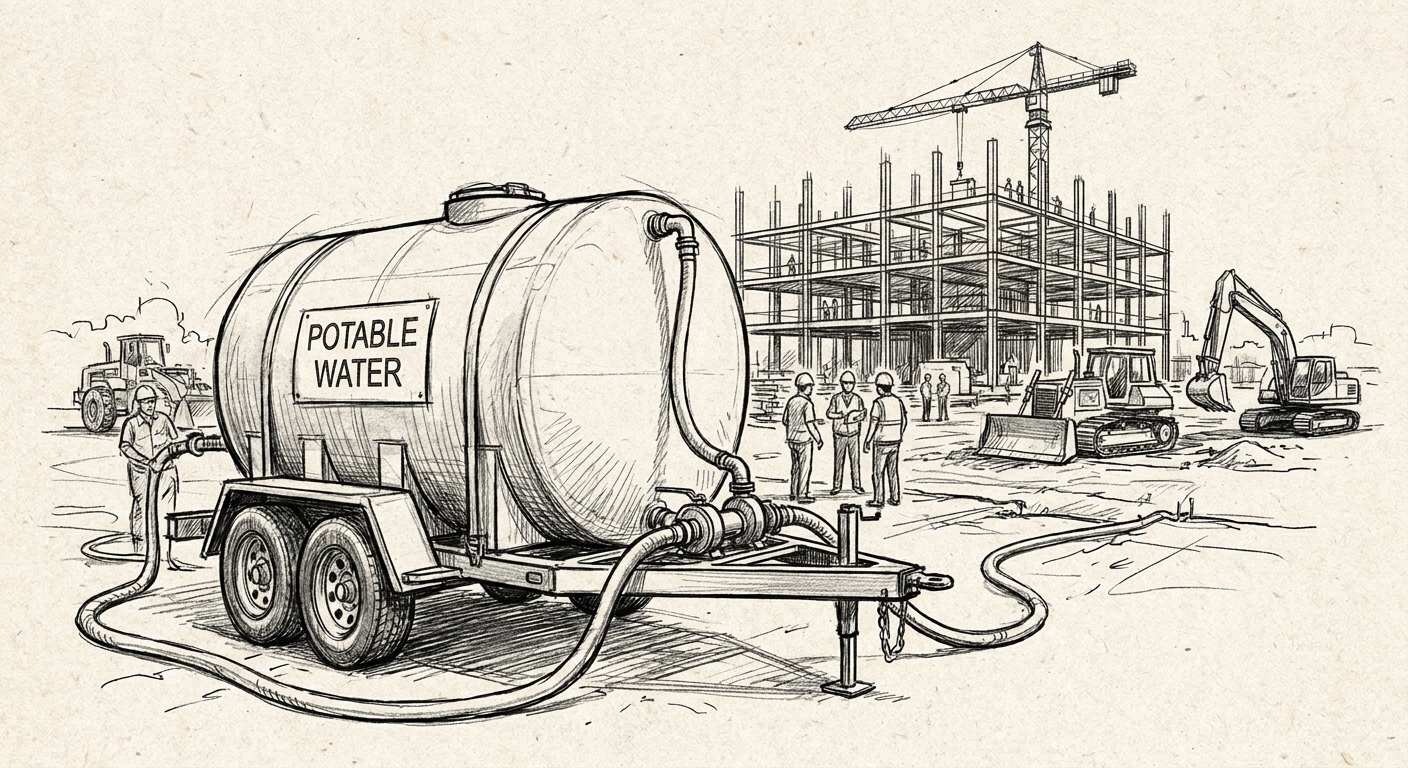
A framing crew of 20 doesn't have a water line yet, and the permanent restroom hookups won't happen until rough plumbing passes inspection. That's the exact window where a potable water tank earns its keep on a Bay Area job site, feeding hand wash stations, dust control, and drinking water until the building has its own supply.
- A 525-gallon potable water tank rental construction site setup covers a 20-person crew for roughly 26 days at OSHA's 1-gallon-per-worker-per-day minimum. Buy for phased jobs.
- NSF-61 certified poly tanks are the only acceptable material for drinking water. Skip anything rated for non-potable use only.
- Pair the tank with a hand wash station, not a standalone spigot, or you're one Cal/OSHA walkthrough from a citation.
- During Bay Area dry months, May through October, plan refills every 10-14 days even on mid-size tanks.
Why this matters
OSHA's sanitation standard, 29 CFR 1926.51, requires potable water on every job site where a permanent supply isn't hooked up yet. It doesn't hand you a gallon count, but the general industry guidance contractors use is 1 gallon per worker per day for drinking, more if hand wash stations draw from the same tank.
Miss that and you're not just out of compliance. You've got a crew standing around a dry spigot at 10am, which costs more in lost hours than the rental itself. Valley Services fields calls on this constantly from general contractors coordinating restrooms, fencing, and containers for the same site, because water is the piece that gets forgotten until it's an emergency.
Who needs a potable water tank on a Bay Area job site
General contractors running new construction in San Jose, Santa Clara, Sunnyvale, Mountain View, or Milpitas before permanent water service is live. Subcontractors on multi-phase jobs where the main line gets shut off for trenching. Event producers and municipal staff running outdoor sites with no fixed plumbing. Property teams doing gut renovations where existing water is disconnected mid-project.
If your site already has a working hose bib, you probably don't need a tank. If it doesn't, or if the supply is intermittent because of utility work, a tank rental closes the gap.
What to look for in a potable water tank rental for a construction site
Gallon capacity matched to crew size
Size the tank to your headcount and job duration, not to whatever's sitting in the yard. A 20-person crew burns 20 gallons a day at the OSHA minimum, more with hand washing folded in. Undersizing means a refill truck rolling in every 4 or 5 days, which adds up in coordination hassle even if nobody's tracking the cost.
NSF-61 certification on the tank material
Potable water tanks have to be rated for drinking water contact, typically NSF-61 certified polyethylene. A tank pulled from a non-potable fleet, used for gray water or irrigation, isn't legal to fill with drinking water even if it looks identical. Ask the vendor directly which fleet the unit comes from.
Refill logistics before the tank runs dry
A tank is only as good as the truck that tops it off. Confirm refill frequency in writing before the job starts, especially May through October when Bay Area sites run drier and demand for refill trucks climbs across the South Bay.
Connection to hand wash stations and restroom service
A potable tank feeding a standalone spigot doesn't meet the full sanitation picture Cal/OSHA inspectors look for. Pairing it with a proper hand wash station rental next to your restrooms covers both the drinking water and hand hygiene requirement in one setup.
Site placement and access for delivery trucks
A tank needs flat, stable ground and clear truck access for delivery and refill, same as a roll-off container. Don't tuck it behind a stack of material or inside an active excavation zone. Walk the delivery route before the truck shows up in 2026, not after it's stuck at the gate.
Freeze protection and heat exposure
Bay Area winters rarely freeze a tank, but summer heat on black asphalt can push stored water warm enough that crews avoid drinking it. Shade the tank or set it on the north side of a structure where you can.
Tank sizes and what they're actually for
The compact pick, a 65-gallon jug-style unit. Covers a crew of 3 to 5 for about 13 days at the 1-gallon minimum. Fine for a small remodel crew with no hand wash station attached. Consider for short jobs under two weeks.
The workhorse, a 250-gallon poly tote. Handles a 10-person crew for roughly 25 days on drinking water alone. This is the size most single-phase residential and light commercial jobs land on. Buy for standard 4 to 8 week jobs.
The multi-phase unit, a 525-gallon skid tank. Covers a 20-person crew for about 26 days, longer if refills are scheduled every two weeks instead of waiting for empty. This is the tank that pairs cleanly with a hand wash station and a restroom trailer on a longer build. Buy for jobs running past two months.
The high-volume option, 1,000-gallon-plus frac-style tanks. Built for large sites with 40-plus crew members or heavy dust control needs, not typical hand-washing loads. Skip this size unless your site genuinely runs that headcount, since oversizing means paying for capacity that sits unused.
What to avoid
- A tank with no certification paperwork. If the vendor can't confirm NSF-61 rating on request, that tank isn't going into a potable water tank rental construction site setup, it's going into irrigation.
- Sizing for average headcount instead of peak headcount. Crews spike during framing or punch-out weeks. Size to your busiest week, not your average one.
- Treating the tank as a substitute for restroom sanitation, not a supplement to it. A holding tank for job site restrooms handles wastewater. A potable tank handles clean water in. They're two different pieces of the same compliance picture, covered in detail in Valley's guide to OSHA sanitation requirements.
Coordinate water, restrooms, and fencing in one call
Talk through your full site services plan for 2026 with one yard.
Verdict comparison across tank sizes
| Tank size | Crew served | Days at 1 gal/worker/day | Verdict |
|---|---|---|---|
| 65 gallons | 3-5 workers | ~13-21 days | Consider for short jobs |
| 250 gallons | 8-10 workers | ~25-31 days | Buy for standard jobs |
| 525 gallons | 18-20 workers | ~26-29 days | Buy for multi-phase jobs |
| 1,000+ gallons | 40+ workers | ~25 days | Skip unless crew size justifies it |
FAQ
What size potable water tank does a construction site need?
Size the tank to 1 gallon of drinking water per worker per day at minimum, per OSHA 29 CFR 1926.51. A 20-person crew needs at least 20 gallons a day, so a 525-gallon tank covers roughly 26 days before a refill.
Is a potable water tank required by OSHA on job sites?
OSHA requires potable water on any site without a permanent hookup, though the standard doesn't set an exact gallon figure. Contractors use the 1-gallon-per-worker-per-day benchmark to stay compliant.
How often does a potable water tank need a refill in the Bay Area?
Plan on refills every 10 to 14 days during the dry season, May through October, even on mid-size tanks. Smaller units running a full crew may need refills weekly.
What's the difference between a potable water tank and a holding tank?
A potable water tank supplies clean drinking and hand wash water to the site. A holding tank collects wastewater from restrooms. They serve opposite ends of the same sanitation setup.
Do potable water tanks need NSF certification?
Yes. Tanks used for drinking water need NSF-61 certification confirming the material is rated for potable contact, not just any poly tank pulled from a general fleet.
How long does a 525-gallon tank last for a 20-person crew?
About 26 days at the OSHA drinking water minimum of 1 gallon per worker per day, assuming no hand wash station draws from the same supply.
What other site services pair with a water tank rental?
Hand wash stations, portable restrooms, and holding tanks cover the rest of the sanitation requirement. Temporary fencing and roll-off containers round out a full jobsite setup.
Can water tanks freeze on Bay Area job sites?
Rarely. South Bay winters stay mild enough that freeze protection isn't the concern most contractors face, summer heat degrading water quality in direct sun is the bigger issue.
One last thing
Most sites that call about a water tank actually need three things at once: water, hand washing, and restroom service, all sited within a few feet of each other so Cal/OSHA sees one clean sanitation setup instead of three disconnected rentals. Plan the layout for all three before the first truck delivers anything in 2026.
Valley Services has run site services out of the same San Jose yard since 1986, third generation, same family. One call covers the pieces that actually carry the Valley name, restrooms, containers, and fencing, and points you toward the water tank vendor that fits the rest of your setup. Call (408) 297-5404 or reach out through valleyservices.biz to talk through the job.