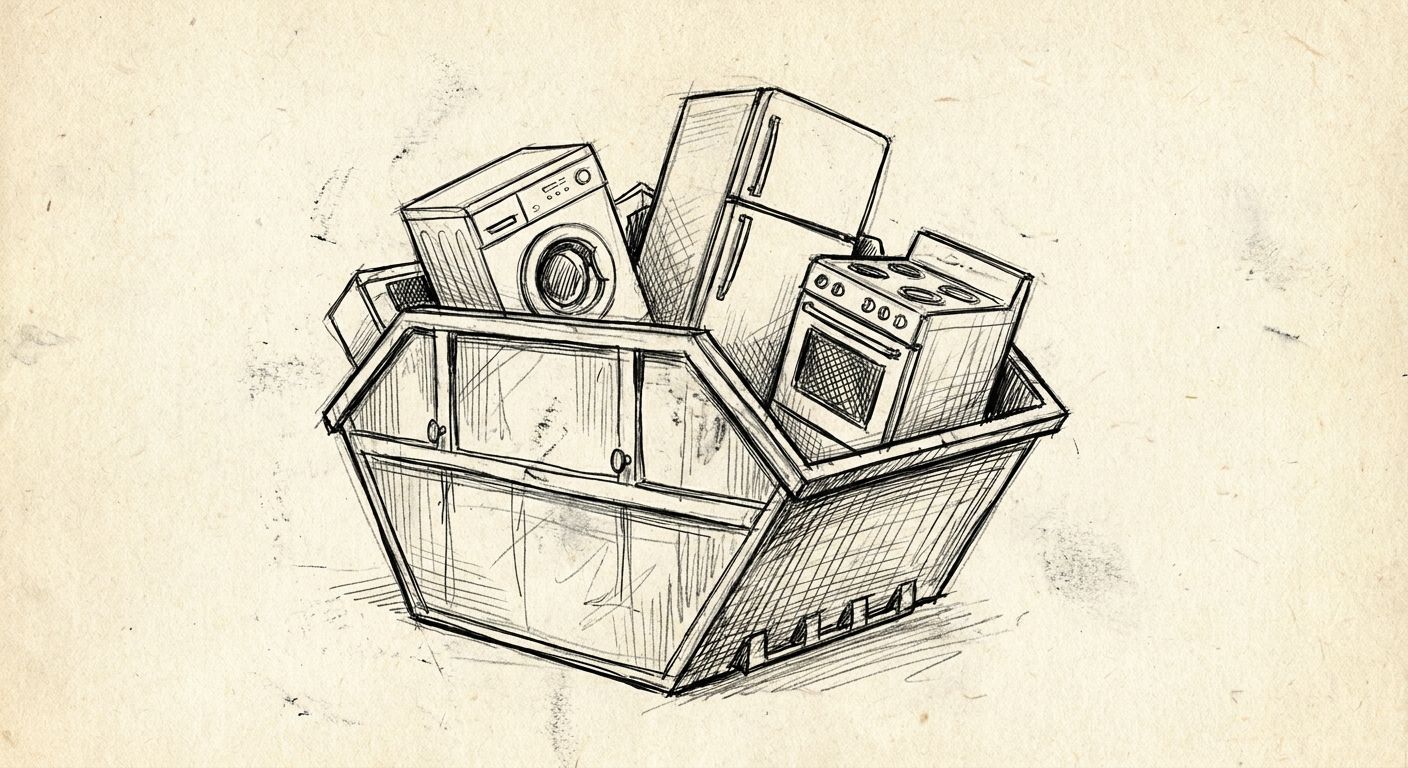
Pulling a refrigerator, range, and washer/dryer set out of a house is a different job than a demo pile of drywall and studs, and the wrong container size for that load means a second delivery you didn't budget for. This guide breaks down which roll-off container size actually fits appliance disposal, what the refrigerant rule means for your load, and where the boundaries are for homeowners, remodelers, and property managers working sites in San Jose and the South Bay.
- Dumpster rental for appliance disposal starts with a 10-yard container for a single fridge or washer/dryer set. Buy.
- 20-yard containers handle full kitchen tear-outs with cabinets and appliances together in one 2026 delivery.
- Refrigerators and freezers need Freon removed before they go into any roll-off container, no exceptions.
- Property managers clearing multiple units should size up, not out, since appliance loads get heavy fast.
Why this matters
Appliances are dense, not bulky. A refrigerator and a stacked washer/dryer set can push a small container toward its weight limit before it's even half full by volume, which is a different math problem than a pile of lumber or drywall. Get the size wrong and you're either paying for a second pickup or leaving appliances curbside because the container filled up early.
There's also a regulatory step most demo-and-donate guides skip: refrigerators, freezers, and window air conditioners hold refrigerant, and that has to come out before the unit goes into a container bound for a transfer station. Skip that step and the load can get flagged or rejected at drop-off, which stalls your schedule, not just your disposal.
Who this guide is for
This is written for homeowners swapping a kitchen or laundry set, general contractors pulling appliances during a remodel demo phase, property managers clearing out units between tenants, and estate cleanout crews handling a house full of aging appliances at once. If your job is a single garage cleanout with one dead refrigerator and a washer, a 10-yard container is a different conversation than a five-unit turnover with ten appliances split across floors.
What to look for in a dumpster rental for appliance disposal
Container size versus your actual appliance count
Size the container to what you're removing, not to a general remodel estimate. A single fridge, one range, and a washer/dryer pair sit comfortably in a smaller container, while a full kitchen gut with cabinets, countertops, and appliances together needs more room. Counting appliances by type before you call in an order saves a mid-job upsize.
Refrigerant removal before loading
Any appliance with a sealed refrigeration system, refrigerators, freezers, and window or portable air conditioners, needs the Freon evacuated before it goes into a container headed for disposal. This isn't a courtesy step, it's a requirement most transfer stations enforce at the gate. Plan for this before delivery day, not after the container is already loaded.
Weight limits when metal appliances mix with demo debris
Appliances are steel and glass, and steel is heavy per cubic foot compared to drywall or wood framing. If your job mixes appliance disposal with general demo, the container can hit its weight allowance well before it looks full. This is the single most common overage trigger on remodel jobs that include appliance swaps.
Placement and access for delivery
A loaded container full of appliances is heavier at pickup than most people expect, which matters for driveway surface and turning radius on tighter San Jose and Santa Clara lots. Confirm clearance for a straight-line drop before delivery day, especially on older properties with narrow driveways or shared access.
Scheduling around a phased appliance pull
Kitchen remodels rarely pull every appliance on day one. If your appliances come out in phases, ask about a container swap partway through the job instead of committing to one drop-off-and-pickup window. This keeps a container from sitting mostly empty for two weeks while you wait on the rest of the demo.
Which container size fits your appliance job
The single-appliance pick: 10-yard container. This size fits one refrigerator, one range, and a stacked washer/dryer set with room left over, which covers most garage cleanouts and single-room appliance swaps. It's easy to place on a standard residential driveway and doesn't overstay its welcome on a short job. Buy for single-unit or single-room appliance removal.
The kitchen remodel workhorse: 20-yard container. A full kitchen tear-out means a refrigerator, range, dishwasher, and cabinetry coming out together, and this size handles that combined load without hitting weight limits on the appliance portion alone. It's the size most kitchen remodel crews land on by the second job. Buy for full kitchen demo with appliances included.
The whole-house pick: size guide for a whole-home cleanout. Estate cleanouts and full-property clear-outs often mean multiple appliances across multiple rooms, plus furniture and general household debris. Sizing for the whole job rather than the appliances alone avoids the second-delivery problem entirely. Buy for estate or whole-property cleanouts with several appliances involved.
The multi-unit pick: property management turnover cleanouts. Turnover season means abandoned appliances across several units, not just one refrigerator per job. Sizing per property instead of per unit, and scheduling a rolling container swap across turnover weeks, keeps disposal from becoming the bottleneck. Buy for facilities teams running turnovers on a fixed calendar.
The wildcard: 30-yard container. This size is oversized for appliance disposal alone but makes sense when appliances come out alongside broader demolition, framing, or a full remodel scope. On its own for just appliances, it's wasted capacity and harder to place. Consider only when appliances are a fraction of a larger demo job, otherwise Skip.
What to avoid
- Renting oversized for a small appliance job. A 30 or 40-yard container for two appliances wastes placement space and makes driveway access harder than it needs to be.
- Loading a refrigerator or freezer with Freon still in the compressor. Transfer stations can reject the load at the gate, which stalls your whole pickup schedule, not just that one unit.
- Assuming a demo-rated container handles appliance weight the same as wood and drywall. Steel appliances add weight fast. Mixed loads with several major appliances hit weight limits sooner than the container looks full.
Verdict comparison
| Container size | Best fit for appliance loads | Access needs | Verdict |
|---|---|---|---|
| 10-yard | One fridge, one range, one washer/dryer set | Standard driveway | Buy for single-room jobs |
| 20-yard | Full kitchen tear-out with cabinets | Standard driveway, some clearance | Buy for kitchen remodels |
| 30-yard | Appliances plus larger demo scope | Wider access, longer container | Consider only with added demo |
| Whole-home sizing | Multiple appliances across rooms | Case by case | Buy for estate cleanouts |
Talk through your appliance load
Call to size the container before delivery day, not after.
FAQ
What size dumpster do I need for appliance disposal?
A 10-yard container fits a single refrigerator, range, and washer/dryer set for most home jobs in 2026. A full kitchen remodel with cabinets and appliances together needs a 20-yard container instead.
Can I put a refrigerator in a dumpster rental?
Yes, but the Freon has to be removed from the compressor first. Most transfer stations, including facilities across the Bay Area, will not accept a refrigerator or freezer with refrigerant still sealed inside.
Do appliances count toward the weight limit on a roll-off container?
Yes, and they count heavily. Steel appliances are dense compared to wood or drywall, so a container mixing several appliances with demo debris can hit its weight allowance well before it looks full.
Is dumpster rental for appliance disposal different from junk removal?
Dumpster rental puts a container on your site so you load it on your own schedule, while junk removal is a labor service that hauls items away in one trip. Appliance disposal through a roll-off container works best when it's tied to a larger cleanout or remodel.
How do I dispose of a washer and dryer during a remodel?
A washer and dryer set fits easily in a 10-yard container alongside one or two other major appliances. If they're coming out as part of a full laundry room remodel, size up to account for cabinetry and flooring debris too.
Can I mix appliances with construction debris in the same container?
Yes, but plan for the combined weight. Appliances add steel weight on top of drywall, framing, or tile debris, which is the most common reason a container hits its limit early on a remodel job in 2026.
How far in advance should I book a dumpster for appliance removal?
Book as soon as your appliance removal date is set, since same-week availability varies by season across the San Jose and South Bay area. Confirm driveway access and refrigerant removal steps before the delivery date, not on the day of.
What happens if a refrigerator isn't properly evacuated before disposal?
The load can be rejected at the transfer station gate, which delays pickup and can mean a second trip. Evacuating refrigerant before the appliance goes into the container avoids this entirely.
One last thing
Valley Services runs its own C&D transfer station in San Jose, which means an appliance-heavy load doesn't get rerouted through a third-party disposal site on someone else's schedule. That matters most on turnover and remodel jobs where the container needs to move fast, not sit on a broker's timeline. Third-generation, same yard, since 1986.
Call (408) 297-5404 or visit valleyservices.biz to size the right container for your appliance load before delivery day.