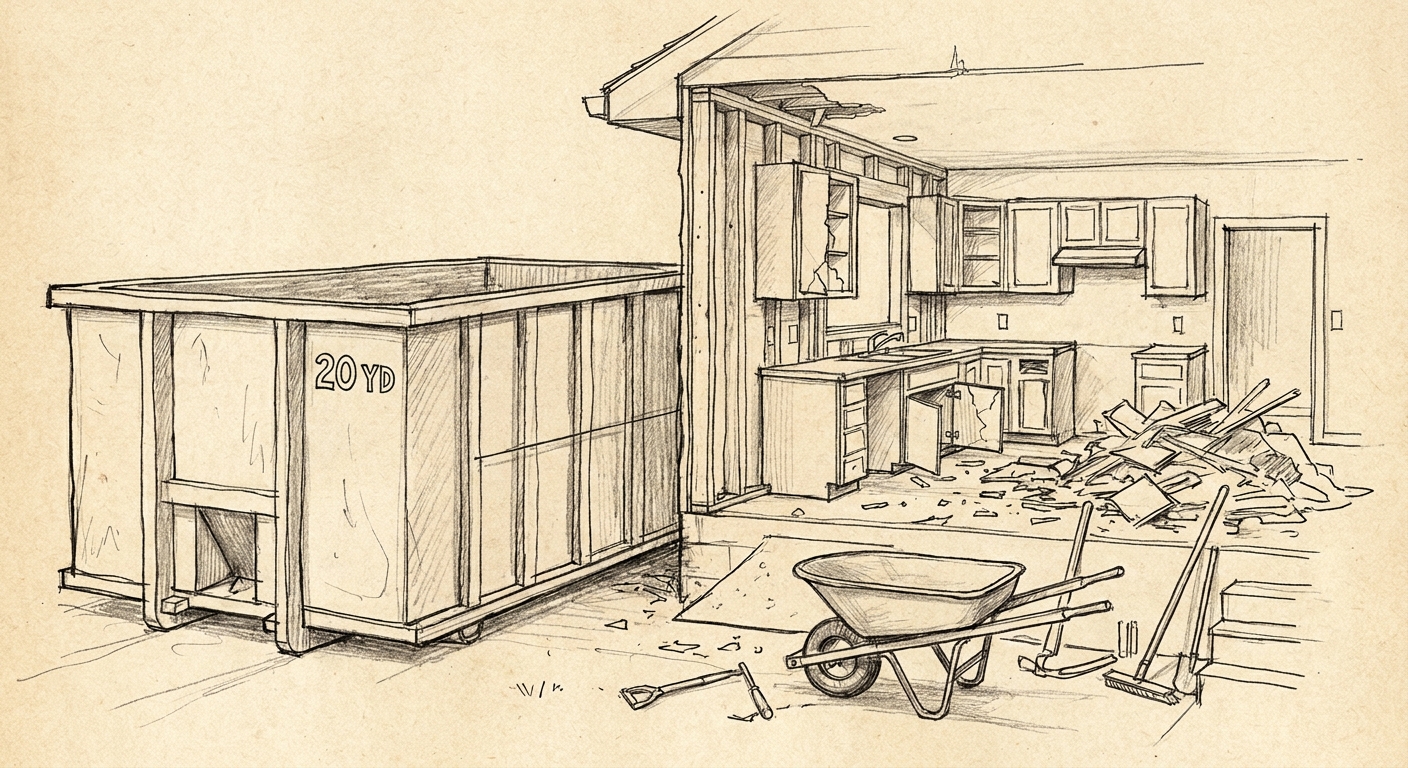
A kitchen remodel produces a specific kind of debris pile: cabinets, countertop slabs, subfloor, drywall, and old appliances, usually within a one to three week teardown window. Matching the container to that pile decides whether your crew stays on schedule or waits on a second pickup mid-project.
- A 20 yard dumpster rental for kitchen remodel jobs is the standard pick for a full gut: cabinets, countertops, subfloor, drywall in one container.
- 15 yard containers work for cosmetic refreshes: cabinet fronts, backsplash, flooring only. Consider, not Buy, for full guts.
- 30 yard containers make sense for multi-room jobs or kitchens over 300 square feet. Buy if the scope includes an adjoining room.
- 10 yard containers undersize almost every kitchen remodel past a simple refresh. Skip unless the job is countertop-only.
- Valley Services runs its own San Jose transfer station, which keeps swap-out timing tied to your demo schedule instead of a broker's dump site.
Why this matters
Kitchen debris is dense and awkward. Cabinet carcasses, granite or quartz slabs, tile, and cast iron sinks weigh far more per cubic yard than framing lumber or roofing shingles. A container sized right for volume can still fill its weight allowance before it fills its box, and an undersized container forces a second trip that stalls your countertop template appointment or your cabinet install crew.
Getting the size right the first time in 2026 means one placement, one pickup, and no gap between demo day and install day.
Who this is for
This guide is for homeowners managing a full or partial kitchen remodel and for general contractors running kitchen scopes as part of a larger renovation in San Jose, Santa Clara, Sunnyvale, Mountain View, or Milpitas. If your scope covers cabinets, countertops, flooring, and drywall in one kitchen, you're in the target range for a roll-off container sized between 15 and 20 yards. If you're gutting a second room alongside the kitchen, size up before you order.
What to look for in a dumpster for kitchen remodels
Driveway and street access
Measure the delivery path before you call. Kitchen remodels in older Bay Area neighborhoods often mean tight driveways, shared access, or no driveway at all, which pushes the container to the street. Street placement in San Jose and neighboring cities typically requires a permit, and that permit application takes longer than most homeowners expect. Confirm access first, size second.
Weight allowance versus debris type
Cabinets, tile, countertop offcuts, and old appliances are heavy for their volume compared to drywall and framing scraps. A container that looks half full by eye can already be near its weight allowance. This is the single most common overage on kitchen jobs, more than roofing or landscaping debris.
Load-in timing tied to demo phase
Order the container to arrive the morning demo starts, not the week before. A container sitting empty on a driveway for days is dead space on a tight jobsite, and in an occupied home it's an obstacle for the family still using the rest of the house.
Mixed materials versus C&D-only loads
Most kitchen remodels mix wood, drywall, tile, metal fixtures, and sometimes old appliances. Confirm the container accepts mixed construction and demolition debris, not a single-material load. Appliances with refrigerant, like an old refrigerator, often need to be pulled separately before the box loads.
One call for the whole jobsite
Kitchen remodels that extend beyond a few days often need a restroom for the crew and sometimes temporary fencing if the container sits at the curb. Coordinating container, restroom, and fencing through one vendor cuts down on scheduling calls during a project that already has enough moving parts.
Disposal endpoint control
Most dumpster rental companies broker their loads to a third party transfer station or landfill, which means your pickup timing depends on someone else's yard. Valley Services owns and operates its own C&D transfer station in San Jose, so container swaps and pickups aren't waiting on an outside site's schedule.
Top picks by kitchen remodel scope
The standard pick: 20 yard container
The safe choice for a full kitchen gut: cabinets, countertops, subfloor, drywall, and old appliances in one container. This size covers most single-kitchen remodels in Bay Area homes without crowding a driveway. If your scope is one kitchen, full gut, standard footprint, this is the size to book. Buy.
The light-scope pick: 15 yard container
Right for cosmetic refreshes: new cabinet fronts, backsplash swap, flooring replacement, no structural teardown. If cabinets and subfloor are staying, 15 yards usually covers it without paying for space you won't fill. For a full gut this size runs tight by the second week of demo. Consider for refresh-scope jobs, Skip for full guts.
The multi-room pick: 30 yard container
Makes sense when the kitchen scope bleeds into an adjoining dining room, mudroom, or pantry teardown, or when the remodel is part of a larger whole-home renovation. Read the home renovation debris guide before committing to this size if you're unsure how far your demo scope extends. Buy if a second room is coming down alongside the kitchen.
The undersized trap: 10 yard container
Looks like enough space for a small kitchen and rarely is once cabinets and countertop come out. Homeowners who order 10 yards on a full gut almost always need a second pickup within days, which stalls the schedule right when the install crew wants a clear floor. Skip for anything past a countertop-only swap.
The contractor-scale pick: 20 to 30 yard rotation
General contractors running kitchen scopes as part of a larger job often set up a rotation: one 20 yard container for the kitchen phase, swapped for a second unit if framing or flooring work continues elsewhere in the house. The contractor dumpster rental page covers scheduling swaps across a multi-phase job. Buy for contractors managing sequential trades.
What to avoid
- Ordering by square footage alone. A 200 square foot kitchen with granite countertops and tile floor generates more weight than a 300 square foot kitchen with laminate and vinyl. Debris type matters more than room size.
- Skipping the permit check on street placement. A container dropped at the curb without a permit in San Jose or Santa Clara can get flagged, and that delay lands on demo day, not before it.
- Assuming appliance disposal is automatic. Refrigerators and some ranges need separate handling. Confirm this before demo day, not after the old fridge is sitting on the curb next to a full container.
Verdict comparison
| Container size | Best for | Access needs | Verdict |
|---|---|---|---|
| 10 yard | Countertop-only swap | Standard driveway | Skip for full guts |
| 15 yard | Cosmetic refresh, no structural teardown | Standard driveway | Consider |
| 20 yard | Full kitchen gut, single room | Standard driveway, street if tight | Buy |
| 30 yard | Kitchen plus adjoining room, contractor-scale | Wider access or street with permit | Buy for multi-room |
FAQ
Is a 20 yard dumpster rental big enough for a kitchen remodel?
A 20 yard container covers most full kitchen gut jobs, including cabinets, countertops, subfloor, and drywall. Kitchens over 300 square feet or jobs that extend into an adjoining room often need 30 yards instead.
What size dumpster do I need for a kitchen remodel?
Most single-kitchen full gut remodels need a 20 yard container. Cosmetic refreshes without structural demo often fit in 15 yards, and multi-room scopes push up to 30 yards.
Can I put a refrigerator in a dumpster during a kitchen remodel?
Old refrigerators and some appliances with refrigerant often need separate handling rather than going straight into the container. Confirm this before demo day so the appliance doesn't end up staged with nowhere to go.
Do I need a permit for a dumpster on the street in San Jose?
Street placement typically requires a permit in San Jose and neighboring South Bay cities. Driveway placement usually does not, which is why access matters as much as size when planning a kitchen remodel container.
How long can I keep a 20 yard dumpster on my kitchen remodel site?
Rental duration depends on your project timeline and is set when you book. Coordinate the pickup date to your install schedule so the container isn't sitting empty or overflowing on either end of the job.
What's the difference between a 15 yard and 20 yard dumpster for a kitchen?
A 15 yard container fits cosmetic refresh work like cabinet fronts and flooring swaps. A 20 yard container fits a full gut with cabinets, countertops, subfloor, and drywall in one load.
Can a kitchen remodel dumpster take tile and countertop debris?
Yes, mixed construction and demolition debris including tile, countertop offcuts, and cabinet material is standard for a kitchen remodel container. Weight allowance, not volume, is usually the limiting factor with these dense materials.
One last thing
The container that trips up most kitchen remodels isn't the wrong size, it's the wrong timing: a 20 yard container that shows up three days before demo starts sits idle on a driveway the family still needs to use, and one that arrives a day late stalls the whole crew on day one. Lock the delivery date to your demo start date, not your order date, and you avoid the most common scheduling gap on 2026 kitchen jobs.
Call Valley Services at (408) 297-5404 or reach out through valleyservices.biz to talk through your kitchen remodel scope before you book a size.