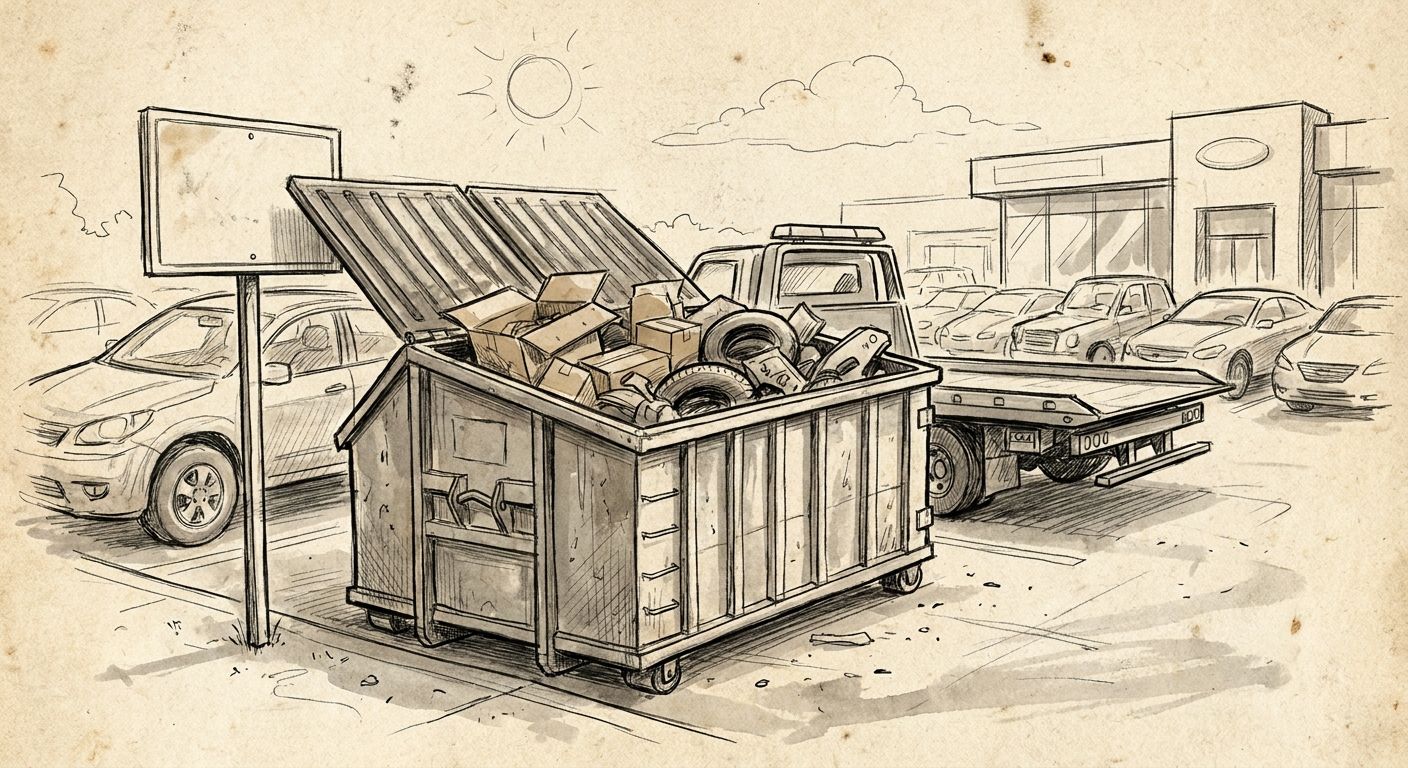
A dealership swapping out a showroom facade or clearing a used-car lot after a sale event generates volume most retail businesses never see: old signage, torn-up carpet, damaged pallets, tires pulled off trade-ins, and scrap metal from service bay teardown. Dumpster rental for auto dealerships has to account for that mix, plus a lot that stays open to customers during the work.
- A 30-yard blue steel roll-off handles most showroom remodel debris in one placement. Buy.
- Tires and fluids never go in a standard roll-off container. Route them separately or risk rejection fees.
- Scrap metal from lift equipment and racking needs its own container to avoid overage weight charges. Consider.
- Temporary fencing keeps customers off active demo zones during business hours. Buy for occupied lots.
- Same-day delivery matters most for franchise rebrand deadlines set by the manufacturer, not the dealer.
Why this matters
A dealership lot is a working retail floor, not a construction site with a locked gate. Cars move, customers walk the perimeter, and sales staff need clear sightlines to inventory. A container or fence placed wrong blocks a test-drive lane or a delivery truck, and that costs the dealership more than the rental line item. Valley Services sets containers and fencing around active lot operations rather than around a generic jobsite plan, because dealership work rarely stops for a cleanout.
The other factor is mixed waste. A single lot cleanout can include drywall from a service bay remodel, tires pulled during an inventory swap, and scrap metal from old lift racks. Treating all of that as one load leads to overweight tickets and rejected material at the transfer station. Separate loads by material and the project moves faster in 2026 than it did with a single mixed container in past years.
Who this is for
This guide is for general managers and facilities staff at franchise and independent dealerships handling a showroom remodel, a service department renovation, a lot resurfacing, or a routine cleanout tied to a brand refresh. It also applies to contractors hired directly by a dealership group to execute the work on a deadline set by the manufacturer.
What to look for in dumpster rental for auto dealerships
Container size matched to lot volume
A small trim swap or signage change rarely fills more than a 20-yard container. A full showroom gut, with flooring, drywall, and fixtures, usually needs 30 yards or a second pull. Undersizing means a second delivery mid-project, which adds a day to a timeline that's often locked to a grand reopening date.
Paved lot placement and access
Dealership lots are paved, striped, and full of inventory. A container needs a spot that doesn't block a customer sightline, a test-drive exit, or a delivery bay, and the truck dropping it needs a straight pull-in path. Walk the lot with the driver's route in mind before delivery day, not after the truck is already there.
Separate handling for tires and fluids
Tires, batteries, and any container holding fluid don't go in a standard roll-off. Dealerships accumulate all three during inventory turns and service work, and mixing them into a debris container gets the load rejected at the transfer station. Plan a separate pickup or drop-off for that material before the main cleanout starts.
Scrap metal separated from general debris
Old lift racks, shelving, and metal signage frames add weight fast. A scrap metal container keeps that tonnage out of the general debris load, which keeps the main container under its weight limit and avoids an overage charge on the invoice.
Fencing for occupied zones
If the lot stays open during the work, a fenced perimeter around the demo zone keeps customers and staff clear of the container and any active tear-out. This matters more on a dealership lot than a typical construction site because foot traffic doesn't stop for the project.
Delivery timing tied to reopening dates
Franchise remodels often run against a manufacturer deadline, not a flexible internal schedule. Confirm delivery and pickup windows against that date early, because a delayed pull can push a reopening back a full week.
Top picks for dealership lot cleanouts
20-yard blue steel roll-off, the workhorse pick. Holds standard demo debris from a signage swap or a small service bay update, roughly the volume of six pickup truck loads. It fits in a single striped parking space without blocking adjacent stalls. Verdict: Buy for routine cleanouts under a week.
30-yard blue steel roll-off, the remodel pick. Built for full showroom gut jobs: flooring, drywall, ceiling tile, and fixtures in one load. Check the container rental options for retail store renovations before booking, since showroom work runs closer to a retail remodel than a standard construction teardown. Verdict: Buy for full remodels spanning two or more weeks.
Scrap metal container, the parts and equipment pick. Keeps lift racks, shelving frames, and metal signage separate from general debris so the main roll-off doesn't hit its weight ceiling. Order it alongside the primary container, not as an afterthought once the first load is already full. Verdict: Consider for any project involving equipment teardown.
Temporary fencing, the lot security pick. Panels around the active work zone keep customers and staff off broken pavement, exposed wiring, or a partially demoed storefront during business hours. It's the difference between a controlled job and a liability walk-through. Verdict: Buy for any cleanout on a lot that stays open.
Same-day delivery, the rush pick. Useful when a deadline moves up, or when a cleanout gets added to a project scope after the main work is already underway. It costs a scheduling favor, not a redesign of the whole job. Verdict: Consider when the timeline is already tight.
Plan a dealership lot cleanout
Talk through container sizing, fencing, and delivery timing for your lot.
What to avoid
- A single mixed container for a full remodel. Tires, scrap metal, and general debris in one load looks efficient on paper but gets rejected or reweighed at the transfer station, which stalls the whole pickup.
- Placement based on the empty lot, not the working lot. A spot that looks open on a Sunday walkthrough can block a delivery lane on a Tuesday when inventory trucks are running.
- Skipping fencing because it's just a few days. A few days is enough time for a customer to walk into an active demo zone, and that's the exposure that actually costs a dealership money.
Verdict comparison
| Option | Best for | Handles | Placement note | Verdict |
|---|---|---|---|---|
| 20-yard roll-off | Small trim or signage swap | General debris | One striped stall | Buy |
| 30-yard roll-off | Full showroom gut | Flooring, drywall, fixtures | Two stalls or lot perimeter | Buy |
| Scrap metal container | Lift racks, shelving, frames | Metal only | Adjacent to main container | Consider |
| Temporary fencing | Occupied lots during work | Site control | Around active zone | Buy |
| Same-day delivery | Deadline moved up | Any container type | Confirm access first | Consider |
FAQ
What size dumpster does a dealership lot cleanout need?
Most dealership cleanouts run on a 20-yard blue steel roll-off for routine work and a 30-yard container for a full showroom remodel in 2026. The right size depends on whether flooring and fixtures come out along with signage.
Can tires go in a dealership dumpster rental?
No, tires do not go in a standard roll-off container. Route tires and fluids through a separate pickup so the main debris load doesn't get rejected at the transfer station.
Do dealerships need a permit for a roll-off container on their own lot?
A container placed entirely on private dealership property usually doesn't need a city permit, but placement on a public street or sidewalk does in most Bay Area cities.
How long can a dumpster stay on a dealership lot?
Rental length is set by the project timeline, not a fixed limit, and most showroom remodels keep a container on site for one to three weeks in 2026.
Is temporary fencing necessary for a dealership remodel?
Yes, if the lot stays open to customers during the work. Fencing around the active demo zone keeps foot traffic away from exposed debris and open container access points.
What is the difference between a scrap metal container and a general debris container?
A scrap metal container is dedicated to metal only, like lift racks and shelving, while a general debris container takes drywall, flooring, and mixed demo material. Separating the two keeps weight under the container limit.
Can a dumpster be delivered same-day for a dealership project?
Same-day delivery is possible for urgent scope additions, but it depends on route availability that day. Confirm timing as soon as the need comes up rather than the morning of.
Who handles dumpster rental for auto dealership lot cleanouts in San Jose?
Valley Services runs roll-off containers, temporary fencing, and its own C&D transfer station out of San Jose, serving dealership lots across Santa Clara, Sunnyvale, Mountain View, and Milpitas.
One last thing
Most dealership cleanouts underestimate the metal load until the main container is already overweight. Order the scrap metal container on day one, not after the tear-out crew finds three pallets of old shelving frames in week two.
Valley Services has run roll-off containers, restrooms, and fencing out of the same San Jose yard since 1986, third generation, same family. Call (408) 297-5404 or visit valleyservices.biz to talk through sizing and timing for your lot.