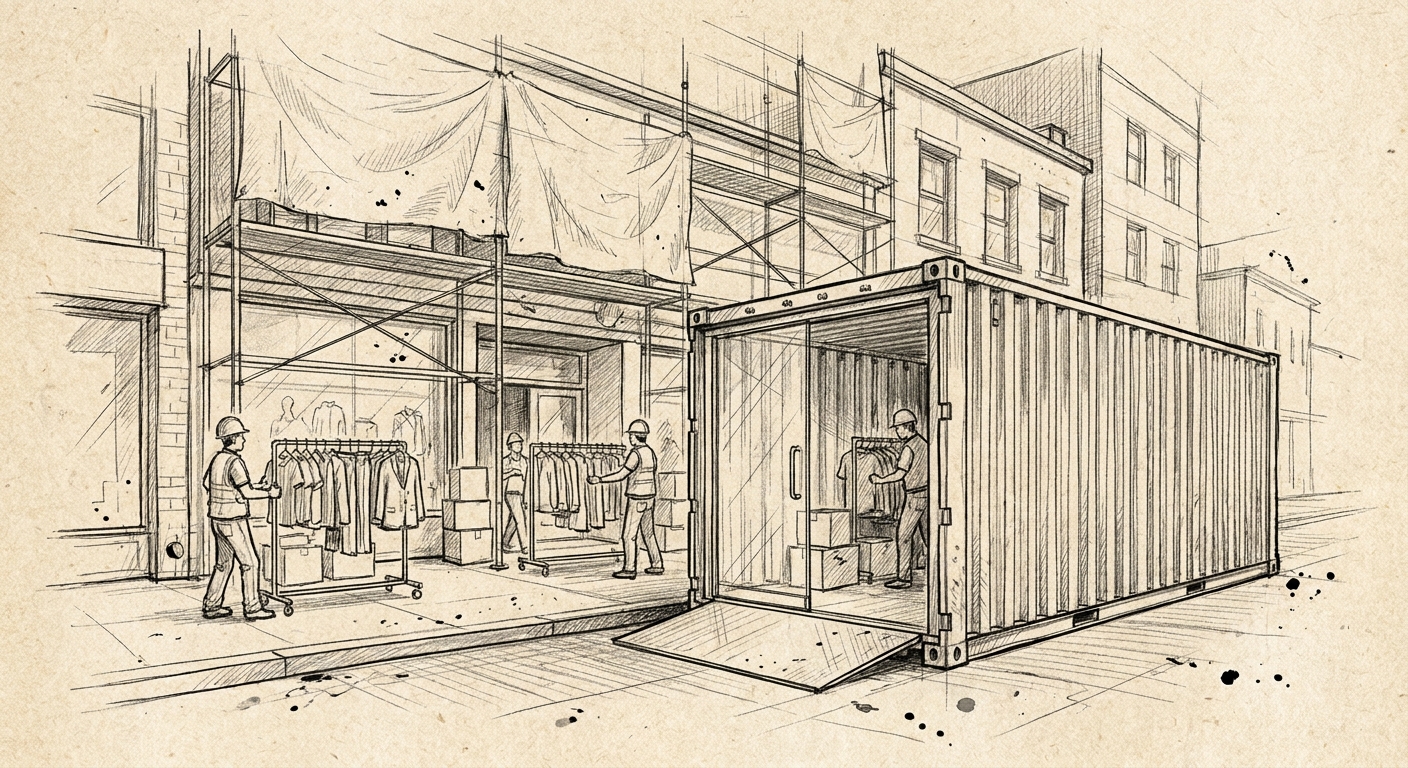
A retail buildout runs on a lease clock, not a construction schedule. Every day a container sits full and unswapped is a day your crew stands around instead of framing walls, and a day closer to a grand-reopening date you already promised the landlord.
- Container rental for retail renovation runs 10 to 40 yard roll-off containers depending on demo scope. Buy the 20 yard for a standard buildout.
- Retail leases carry tight reopening deadlines, so same-day swap capacity matters more than raw container size.
- San Jose requires a permit for any roll-off container placed on a public street or sidewalk in 2026.
- Valley Services runs its own C&D transfer station in San Jose, which controls swap scheduling that brokered haulers cannot guarantee.
Why this matters
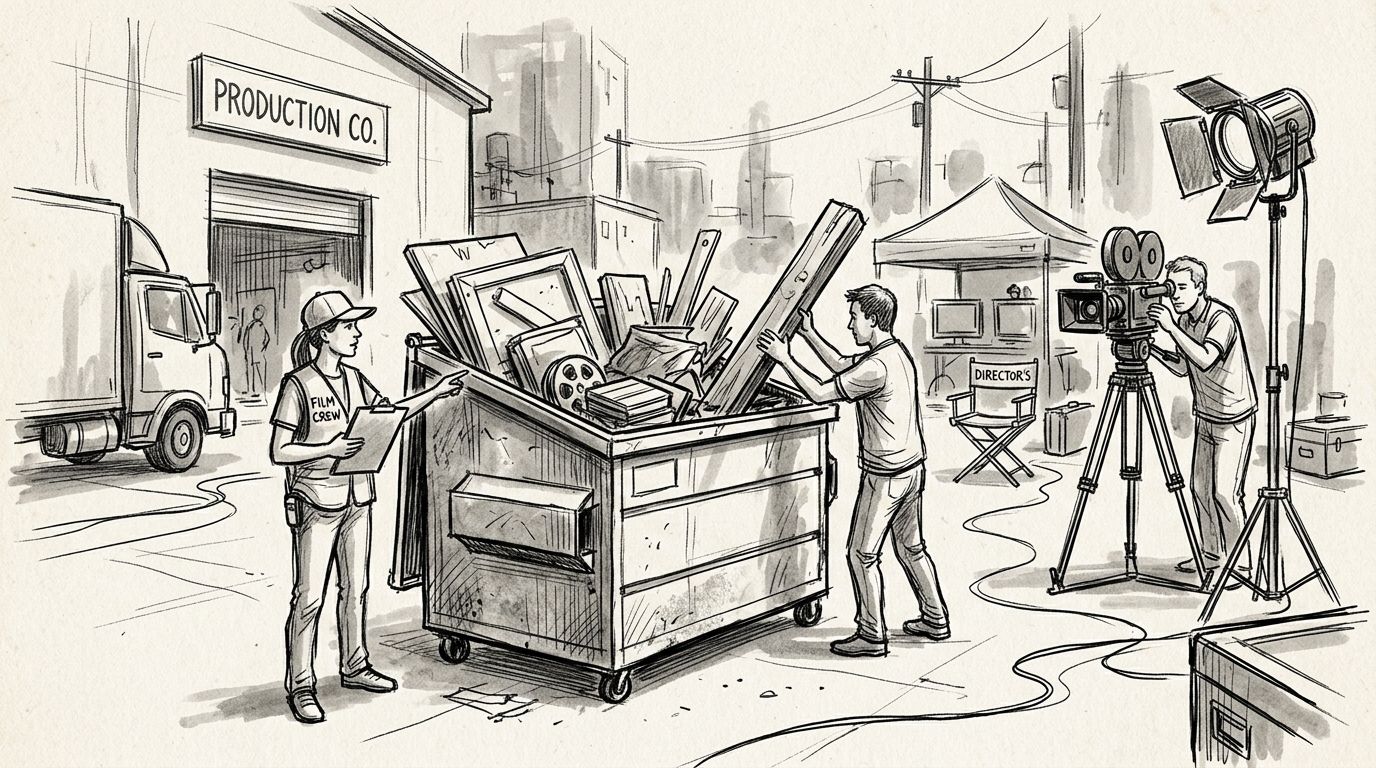
Retail renovations move fast and generate mixed debris: old fixtures, flooring, drywall, ceiling tile, sometimes concrete from a demised wall. A container sized for a kitchen remodel gets overloaded on day two of a store gut. A container sized for a full demolition sits half empty and eats space you need for material staging.
The bigger risk in 2026 retail work isn't size, it's turnaround. Malls and strip centers often limit dumpster placement to specific hours or require the container off the lot before store hours resume. If your hauler brokers disposal to a third-party site, a swap delay on their end becomes a delay on your reopening date. Valley Services owns and operates its own transfer station in San Jose, which means the swap schedule isn't dependent on someone else's dock hours.
Who this is for
This guide is for general contractors and subcontractors running a retail store renovation in San Jose, Santa Clara, Sunnyvale, Mountain View, Milpitas, or the surrounding Bay Area: fixture removal, flooring tear-out, drywall and ceiling work, and full interior demo ahead of a tenant improvement. It also applies to property managers coordinating a tenant turnover between leases, where the debris hauling has to close out before the next tenant's buildout starts. Check Valley Services for container, restroom, and fencing scheduling on the same job.
What to look for in container rental for retail renovation
Container sizing matched to your demo phase
A retail renovation usually runs in phases: strip-out, then rough construction, then finish debris. Fixture and flooring strip-out generates volume fast but low weight. Drywall and framing debris weighs more per cubic yard. Size for the heaviest phase, not the average, or you'll pay overage fees on the demo week.
Loading dock and driveway access
Strip malls and standalone retail buildings often have a single loading dock shared with neighboring tenants. Confirm the container can sit in a spot that doesn't block that dock or the fire lane, and measure the clearance for delivery. A container that can't get placed on the first attempt costs you a rescheduled delivery and a lost work day.
Same-day or next-day swap capacity
A store gut can fill a 20 yard container in under a week. Ask whether the hauler can swap on short notice, not just on a fixed weekly rotation. Retail timelines don't wait for a hauler's default route day.
Permit requirements for street or sidewalk placement
If the site has no lot space and the container has to sit on a public street or sidewalk, San Jose requires a placement permit. Skipping this step risks a citation and a container that gets tagged for removal mid-project. Confirm this before delivery, not after.
C&D debris mix versus prohibited materials
Retail demo debris (drywall, flooring, ceiling tile, fixtures, wood framing) qualifies as standard C&D. Items like refrigerant-bearing display coolers, fluorescent ballasts, or paint cans need separate handling. Flag these to your hauler before the container arrives so the load doesn't get rejected at the transfer station.
Site security between phases
A retail space mid-renovation with an open storefront is a target for scrap theft and unauthorized entry, especially overnight in a strip center. Temporary fencing around a staging area or an open loading dock closes that gap between phases.
Top picks by container size
10 yard: the boutique refresh pick. Fits a small footprint, under roughly 1,500 square feet, for fixture swap-outs and flooring in a single storefront. Handles about 3 pickup truck loads of debris. Buy for a quick single-unit refresh with a tight sidewalk footprint and no structural demo.
20 yard container: the standard buildout pick. This is the size most retail tenant improvements land on, covering fixture removal, drywall, and flooring for a 1,500 to 3,000 square foot space. Holds roughly 6 pickup truck loads. See the 20 yard container sizing breakdown for what fills it fastest. Buy for a typical single-tenant renovation on a normal lease timeline.
30 yard: the anchor-store pick. Sized for multi-phase work in a larger footprint, 3,000 to 6,000 square feet, where you're pulling ceiling grid, HVAC ductwork, and full flooring in the same window. Runs close to 9 pickup truck loads before it's full. Consider if your renovation includes a ceiling or mechanical phase on top of cosmetic work.
40 yard roll-off container: the big-box demo pick. Built for full interior gut jobs in a large format store, warehouse-style retail, or a multi-unit strip center demo. Check the 40 yard container guide before committing, since access and street clearance matter more at this size. Buy for a full gut-and-rebuild on a large footprint, Skip if your loading area can't clear a container this long.
If your renovation is closer in scope to a restaurant buildout, with kitchen equipment removal and hood demo layered on top of standard retail debris, the sizing logic shifts. The restaurant renovation dumpster rental breakdown covers that mixed-weight scenario directly.
What to avoid
- Undersizing for concrete or tile demo. A 10 yard container looks fine on paper for a small space, but ceramic tile and thinset debris are dense. Two pallets of tile can fill what looks like a quarter of the box by volume.
- Blocking the only accessible loading dock or ADA path. Retail centers often have one shared dock. A container placed without checking neighbor tenant access creates a dispute that stalls your delivery schedule, not just your own.
- Skipping the street placement permit to save a step. A container tagged and pulled mid-project by the city costs more downtime than the permit paperwork ever would.
“Size for the heaviest demo phase, not the average, or you pay overage fees on the demo week.”
Verdict comparison
| Size | Best for | Approx. load capacity | Verdict |
|---|---|---|---|
| 10 yard | Single-storefront refresh, fixture swap | ~3 pickup loads | Buy for tight footprints |
| 20 yard | Standard tenant buildout, drywall + flooring | ~6 pickup loads | Buy for most retail renovations |
| 30 yard | Multi-phase renovation with ceiling/HVAC work | ~9 pickup loads | Consider for larger footprints |
| 40 yard | Full interior gut, big-box or multi-unit demo | ~12 pickup loads | Buy for full gut jobs, confirm access first |
Lock in your renovation container schedule
Same call covers containers, fencing, and restrooms for the job site.
If your renovation runs alongside other site services, coordinating containers, temporary fencing, and job site restrooms through one call reduces the number of vendors on your schedule. The site service rental package for general contractors covers what that bundling actually looks like on a jobsite.
FAQ
What size container do I need for a retail store renovation?
Most single-tenant retail renovations under 3,000 square feet need a 20 yard container for drywall, flooring, and fixture debris in 2026. Larger footprints or full gut jobs move up to 30 or 40 yard containers.
Do I need a permit to place a dumpster outside a retail store in San Jose?
Yes, if the container sits on a public street or sidewalk rather than a private lot or driveway. San Jose requires a placement permit before delivery in these cases.
How fast can a container get swapped during a retail renovation?
Swap timing depends on the hauler's schedule and transfer station capacity. Valley Services operates its own San Jose transfer station, which supports faster turnaround than haulers that broker disposal to a third-party site.
Can one roll-off container handle both demo debris and fixture removal?
Yes, standard C&D containers handle mixed retail debris including drywall, flooring, ceiling tile, and fixtures. Items like refrigerant coolers or fluorescent ballasts need separate handling and should be flagged before delivery.
What happens if I overload a container during a store renovation?
Overloading past the fill line or weight limit triggers overage charges and can delay pickup if the load isn't safe to transport. Sizing correctly for your heaviest demo phase avoids both issues.
Is a 20 yard or 30 yard container better for a strip mall buildout?
A 20 yard container covers most single-unit strip mall renovations under 3,000 square feet. Move to a 30 yard if the scope includes ceiling grid removal or mechanical work on top of cosmetic demo.
Do retail renovations need temporary fencing along with a container?
Fencing isn't required by code for most interior renovations, but it's common practice for open storefronts or staging areas overnight in a shared retail center to prevent unauthorized access.
One last thing
The detail that trips up most retail renovation schedules isn't the container size, it's the endpoint. A hauler that brokers disposal to someone else's transfer station is at the mercy of that site's hours and backlog. Valley Services has run its own C&D transfer station in San Jose since 1986, third-generation, same yard, which means the swap you need on day three of a store gut doesn't depend on another company's schedule.
Call (408) 297-5404 or reach out through valleyservices.biz to walk through container sizing and delivery timing for your renovation.