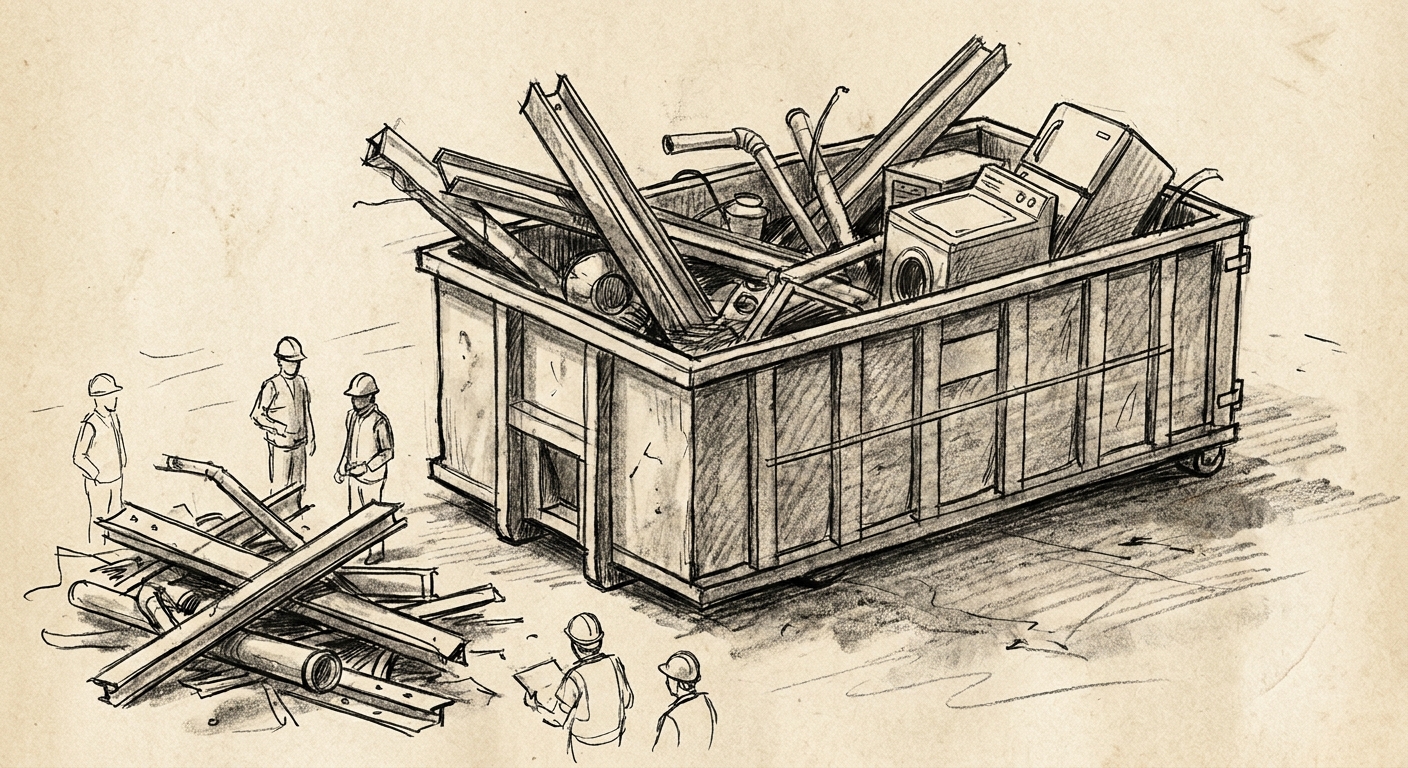
Scrap metal from a demolition or remodel job fills a roll-off container's weight limit long before it fills the box. This guide covers which container size actually works for scrap metal loads on a Bay Area jobsite in 2026, what mistakes cost contractors money, and how load timing changes when steel is involved.
- A 20-yard roll-off container handles most scrap metal teardown loads on Bay Area jobsites in 2026; buy it as the default size.
- Dense steel hits the weight limit before the container looks full, so a 40-yard box rarely makes sense for pure metal loads.
- Keeping scrap metal separate from mixed C&D debris avoids contamination handling at the drop point.
- Valley Services runs its own C&D transfer station in San Jose, which keeps container swaps on schedule during multi-phase teardown.
Why this matters
Steel, copper, aluminum ductwork, and rebar weigh far more per cubic yard than drywall or wood framing. A contractor who sizes a scrap metal dumpster rental the way they would for a kitchen remodel usually ends up paying an overage fee or scheduling a second pull mid-project. Getting the size right the first time keeps the schedule and the budget intact, especially on jobs where the roll-off shares yard space with temporary fencing or restrooms for the crew.
Who this is for
This is for general contractors and subcontractors pulling scrap metal out of demolition, tenant improvement, and remodel jobs across San Jose, Santa Clara, Sunnyvale, Mountain View, and Milpitas. Valley Services delivers blue steel roll-off containers across the South Bay sized for exactly this kind of load, and has run the same yard since 1986. It's also for property managers clearing HVAC units, racking, or old fixtures before a turnover, and for demolition crews stripping a structure down to the studs where structural steel and rebar make up a large share of the load.
What to look for in a scrap metal dumpster rental for contractors
Bay Area contractors sizing a scrap metal dumpster rental in 2026 need to plan around two things: weight and separation. Everything below flows from those two facts.
Container size versus what steel actually weighs
Roll-off containers are rated by volume, but scrap metal fills the weight limit long before it fills the box. An 8-yard or 10-yard container loaded with cut rebar, ductwork, and old fixtures can hit its practical weight ceiling with the box still half empty. Sizing for volume alone on a metal-heavy job usually means paying for space that never gets used.
Keeping metal separate from mixed C&D debris
Scrap metal mixed into a load of drywall, wood, and insulation is harder to sort at the drop point. A dedicated container for clean metal, pulled separately from the mixed C&D container, moves faster through a properly loaded container and keeps the job on schedule instead of tripping an overage fee.
Site access and permit rules in San Jose
Placing a roll-off container on a public street in San Jose requires an encroachment permit through the city. Driveway placement usually doesn't. Confirm which applies before delivery day, especially on tenant improvement jobs in tight commercial corridors with no on-site drop zone. A permit delay is the single most common reason a scrap pull slips a day past schedule.
Turnaround time for multi-phase teardown
Demolition on a bigger job usually happens in phases: interior strip-out, structural teardown, then site clean. Scheduling separate scrap pulls at each phase, instead of one container sitting for weeks, keeps metal from piling up and blocking site access. It also means each container only carries one type of load, which simplifies handling at the drop point.
Placement and driveway clearance
A 20-yard or 30-yard container needs roughly the footprint of a full-size pickup truck, plus clearance for the delivery truck's cable system. Confirm overhead clearance and ground surface before delivery. A driveway that can't take the container's weight will need protective boards under it, and that's worth confirming before the truck shows up, not after.
Which container size fits a scrap metal load
Valley Services stocks 8 through 40 yard blue steel containers, and the right pick for scrap metal depends on weight, not just size.
8 to 10 yard: the tight-site pick
This size fits driveways and tight urban lots where a bigger box won't clear the gate. It handles single-room strip-outs with modest ductwork or fixture removal. On dense scrap loads, expect to hit the practical weight ceiling before the box looks full. Consider for small, metal-light jobs. Skip if the load is mostly structural steel.
20 yard: the safe pick
The 20-yard box is the default size for most remodel and tenant improvement teardown. It handles a mixed load of metal fixtures, ductwork, and framing without running out of weight capacity halfway through the job. Buy for most contractor jobs pulling scrap metal alongside general demo debris.
30 yard: the volume pick
A 30-yard container earns its space on larger commercial strip-outs where racking, HVAC units, and structural steel come out in bulk. It carries more volume, but the weight-before-volume rule still applies on dense metal. Buy for warehouse and commercial cleanouts with a high metal share.
40 yard: the wildcard
The 40-yard box is built for bulky, low-density material: framing lumber, bagged insulation, drywall scrap. Not steel. On a metal-heavy job it usually hits its weight limit long before the yardage matters, which means paying for volume that goes unused. Skip for pure scrap loads. Consider only when metal is a small share of a much larger mixed teardown.
Need a container sized for scrap metal?
Call to talk through weight, timing, and site access before you book.
What to avoid
Front-load bins sized for bagged trash. A front-load bin built for weekly pickup isn't rated for sheet metal, rebar, or ductwork. The compactor mechanism and door seals aren't built for it, and most front-load services won't accept a load like that. A roll-off container is the right tool for a one-time metal pull.
Mixing painted or coated metal into a clean steel load. Old railing, pipe, or fixtures with paint or coating mixed into a load of clean structural steel complicates handling at the drop point. Keep coated and clean metal separated when the volume justifies two loads.
Booking one container for a multi-week teardown. A single box sitting on site for three or four weeks of phased demolition usually gets buried under debris that has nothing to do with metal, and someone has to dig through it before the pull happens. Scheduling a fresh container at each phase, rather than one box that sits the whole job, keeps the scrap load clean and the site clear.
Container size comparison for scrap metal loads
Here's how the sizes stack up for a 2026 scrap metal job in the South Bay.
| Size | Best For | Weight Behavior | Verdict |
|---|---|---|---|
| 8 to 10 yard | Tight sites, small strip-outs | Hits weight limit well before the box looks full | Consider / Skip |
| 20 yard | Most remodel and TI teardown | Balanced weight-to-volume for mixed metal loads | Buy |
| 30 yard | Warehouse and commercial cleanouts | Handles bulk racking and structural steel | Buy |
| 40 yard | Bulky, low-density material only | Weight limit hit early on dense scrap | Skip for metal |
FAQ
What size dumpster do I need for scrap metal?
A 20-yard roll-off container handles most contractor scrap metal loads in 2026. Smaller 8 to 10 yard containers work for tight sites with lighter metal volume, and 30-yard boxes fit high-volume commercial teardown.
Can I mix scrap metal with construction debris in the same container?
You can, but a mixed load fills the weight limit faster and complicates sorting at the drop point. Pulling a dedicated container for clean metal, separate from mixed C&D debris, keeps the schedule tighter.
How much weight can a roll-off container hold for metal?
Weight limits vary by container size and hauler, and steel fills that limit long before the box looks full. Confirm the weight allowance for your specific container with Valley Services before loading a metal-heavy job.
Do I need a permit to place a dumpster for scrap metal removal in San Jose?
Placement on a public street in San Jose requires a city encroachment permit. Driveway or on-site placement usually doesn't need one, but confirm before delivery day.
How fast can I get a dumpster delivered for a demolition job?
Delivery windows depend on container size and current yard schedule. Call (408) 297-5404 to confirm same-day or next-day availability for your job.
What's the difference between a scrap metal dumpster and a regular construction dumpster?
There's no separate container type. The difference is sizing strategy: scrap metal loads need a size chosen for weight, not volume, since steel is far denser than drywall or wood debris.
Can homeowners rent the same containers as contractors?
Yes. Homeowners running a garage cleanout, estate clear, or small demolition project can rent the same blue steel roll-off containers contractors use, sized down for the job.
One last thing
A 10-yard container loaded with cut rebar and old ductwork can weigh more at half-full than a 40-yard box packed with insulation and framing. Size for weight first, yardage second, and the overage fee never shows up. Valley Services has run the same San Jose yard since 1986, third generation, and owns the C&D transfer station the containers feed into, which is why swapping a scrap load mid-phase doesn't blow up the schedule the way it does with a hauler working through someone else's disposal site.
Related guides
For a scrap metal load sized right the first time, call Valley Services at (408) 297-5404 or reach out through valleyservices.biz to talk through the job.