Fire damage restoration jobs move on insurance timelines, not standard construction schedules. The roll-off container and perimeter fencing on a fire job need to show up fast, hold up under wet ash and char, and stay put until the adjuster signs off. Here is how Bay Area restoration contractors size site services for fire jobs in 2026.
- Dumpster rental for fire damage restoration works best with a 30-yard roll-off container for full structure fires. Buy.
- Same-day delivery beats price shopping when adjuster deadlines are running in 2026. Valley Services covers San Jose, Santa Clara, and Sunnyvale.
- Temporary fencing around a gutted structure is not optional on an open fire site. Skip any job without perimeter control.
- A 20-yard container handles partial-loss and contents-only cleanouts. Consider it before defaulting to a bigger box.
Why fire debris changes the container math
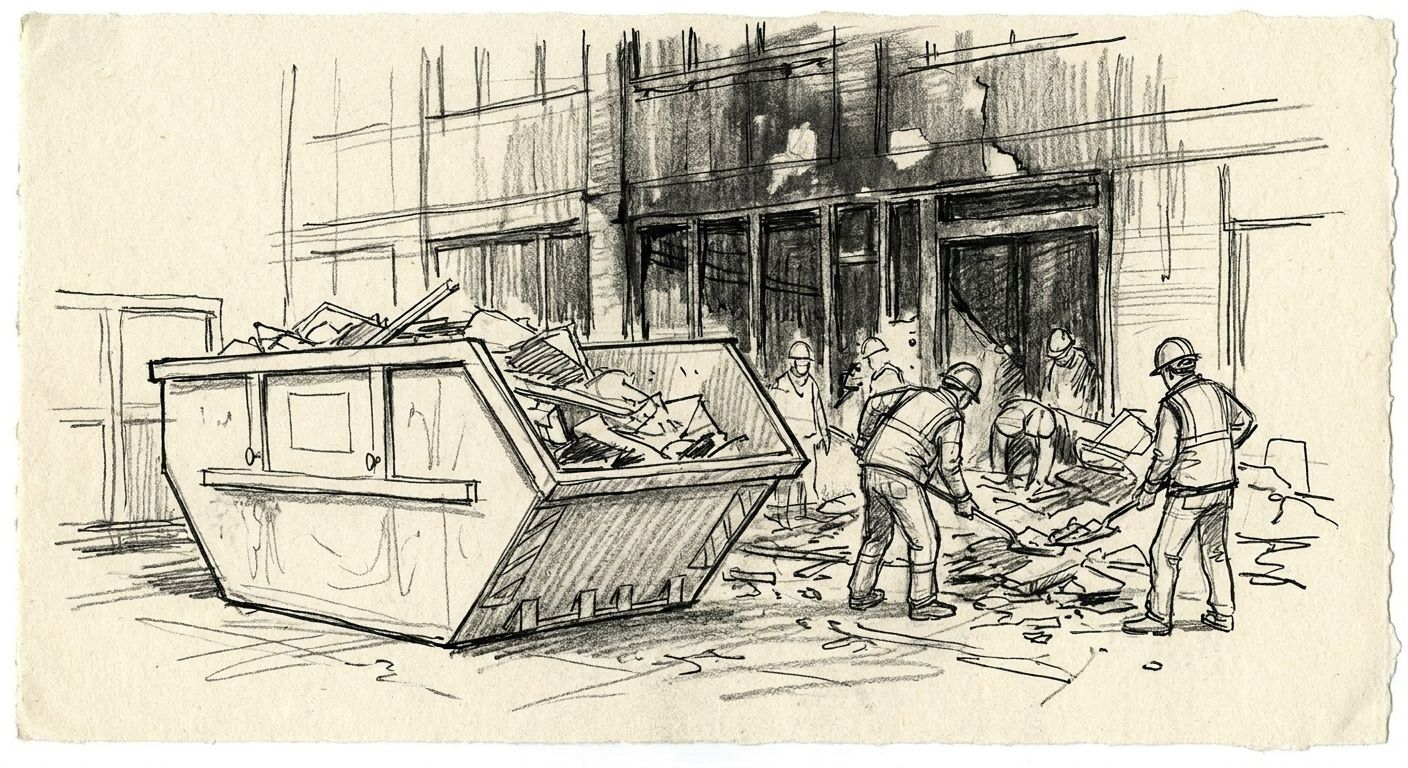
Fire debris is not standard remodel debris. Wet ash, charred framing, and water-soaked insulation from suppression efforts weigh more per cubic yard than the drywall and lumber that come out of a kitchen remodel. A container sized right for a bathroom gut job hits its weight limit halfway through a fire cleanup and forces a mid-job swap.
Insurance adjusters set a clock the day a loss is confirmed. Every day a container sits waiting on a swap adds a day to the claim. For jobs where suppression water is part of the loss, see dumpster rental for storm and disaster cleanup for how mixed debris changes the sizing call.
Valley Services owns and operates its own C&D transfer station in San Jose. That means hauling fire debris off site does not depend on a third-party dock's hours or a broker's schedule. One call covers the roll-off container, the perimeter fencing, and restrooms if the crew is on site for more than a few days in 2026.
Who this guide is for
This covers restoration contractors and fire mitigation crews running adjuster-directed jobs in San Jose, Santa Clara, Sunnyvale, Mountain View, and Milpitas. It also covers public adjusters and property managers coordinating cleanup after a structure fire, whether the loss is a full room-and-attic burn or a single-room kitchen fire with smoke damage through the rest of the house.
What to look for in a roll-off container rental for fire damage restoration
Weight capacity for ash and char, not just size
A 20-yard box and a 30-yard box hold different volumes, but on a fire job the limiting factor is usually weight before it is space. Wet ash and charred framing pack dense. Sizing by cubic yards alone without accounting for moisture and char weight is the fastest way to trigger an overage charge or a second pull mid-job.
Same-day or next-day delivery
Adjuster timelines do not wait for a standard delivery window. A restoration crew that gets the call Monday morning needs the container on site Monday afternoon, not three days later. Vendors that quote a standard multi-day lead time are the wrong fit for fire work.
Covered or lined containers for wet ash runoff
Suppression water mixed with ash creates a slurry that stains driveways and runs off if the container sits uncovered in rain. Ask whether a liner or cover option exists before the container lands on a residential driveway or a commercial parking lot.
Perimeter fencing for site control
A gutted structure with an open perimeter is a liability problem and a safety problem. Unsecured burned structures draw foot traffic, and Cal/OSHA site control expectations do not relax because the damage was fire instead of demolition. Fencing keeps debris contained on site and keeps the public out until the structure is stabilized.
One vendor across containers, fencing, and restrooms
Fire restoration jobs that run past a week need more than a container. Crews need restrooms on site and often need the perimeter fenced for the duration. Coordinating one vendor for all three cuts the number of delivery windows a site supervisor has to manage.
Local transfer station capacity
A vendor that hauls to its own transfer station controls the turnaround. A vendor that brokers disposal to a third-party site adds a layer of scheduling that shows up as delay when the adjuster clock is running.
Container and site service picks for fire damage jobs
30-yard roll-off container, the workhorse pick. A 30-yard container handles a full room-and-attic fire without a mid-job swap in most cases. It is the default size for a total-loss residential structure fire. Buy for any full-structure loss where debris includes framing, roofing, and interior finishes.
Same-day delivery, the urgent pick. When the adjuster clock started this week and the crew needs to mobilize immediately, delivery speed matters more than any other spec. Details on lead times and how to lock in fast delivery are in how to get same-day dumpster delivery for urgent projects. Buy when the timeline is measured in hours, not days.
Temporary fencing for the open site, the site-control pick. Any structure left open overnight or spanning more than a few days needs a secured perimeter. The approach for disaster-adjacent sites is covered in temporary fencing for storm and disaster recovery sites. Buy for every job that will sit open past a single work day.
20-yard roll-off container, the partial-loss pick. A single-room kitchen fire or a contents-only cleanout usually does not need the full 30-yard box. A 20-yard container keeps the footprint smaller on a residential driveway. Consider for contained losses that did not spread past one or two rooms.
Line up containers and fencing for a fire job
Call to size the container and fencing before the adjuster clock runs out.
What to avoid on a fire damage cleanup
- A 10-yard container sized for volume, not weight. It looks right for a single-room fire until wet char fills the weight limit before the box fills up. That triggers an early pull and a second delivery.
- Skipping fencing because it is "just a burned house." An open perimeter on a fire-damaged structure is a site control problem and a liability problem, not a cosmetic one.
- A vendor without its own disposal endpoint. Brokered disposal adds a step between pickup and final drop-off. On a job running against an adjuster deadline in 2026, that extra step shows up as lost days.
Fire job container comparison
| Option | Best For | Spec | Verdict |
|---|---|---|---|
| 30-yard roll-off container | Full structure fire | 30 yard | Buy |
| Same-day delivery | Adjuster-deadline jobs | Same-day / next-day | Buy |
| Temporary fencing | Open or vacant burned structures | Perimeter panels | Buy |
| 20-yard roll-off container | Partial-loss / contents-only | 20 yard | Consider |
| 10-yard roll-off container | Any full structure fire | 10 yard | Skip |
FAQ
What size roll-off container is best for fire damage restoration?
A 30-yard roll-off container handles most full structure fire losses without a mid-job swap. Partial-loss or contents-only jobs usually fit a 20-yard container instead.
How fast can a container be delivered after a fire?
Same-day delivery is available for urgent fire jobs when the order is placed early in the day. Adjuster-driven timelines usually require this speed rather than a standard multi-day lead time.
Do I need a permit for a container on a fire-damaged property?
A permit is typically required when the container sits in the street or public right of way rather than on the property's own driveway or lot. Check with the local jurisdiction before delivery.
Can wet ash and charred debris go in a standard roll-off container?
Yes, but the container should be sized for weight, not just volume, since wet ash and char pack denser than typical remodel debris.
Is temporary fencing required for a burned structure?
Fencing is not always legally mandated, but any structure left open overnight or spanning multiple days needs a secured perimeter for site control and liability reasons.
How much debris does a typical house fire generate?
It depends on the size of the loss. A partial-loss kitchen fire usually needs a 20-yard container, while a full structure fire usually needs a 30-yard container, sometimes with a second pull.
Can one vendor handle containers, fencing, and restrooms for the same fire job?
Yes, coordinating containers, fencing, and restrooms through a single vendor cuts the number of separate delivery windows a site supervisor has to manage.
What Bay Area cities does fire restoration container service cover?
Coverage typically includes San Jose, Santa Clara, Sunnyvale, Mountain View, and Milpitas, with the transfer station itself located in San Jose.
One last thing
Valley Services has run out of the same San Jose yard since 1986, now in its third generation. On a fire job, that means the container, the fencing, and the disposal endpoint all trace back to one operation instead of three separate vendors trying to sync schedules against an adjuster's deadline in 2026.
Call (408) 297-5404 or reach out through valleyservices.biz to line up a roll-off container and fencing before the next fire job lands on the schedule.