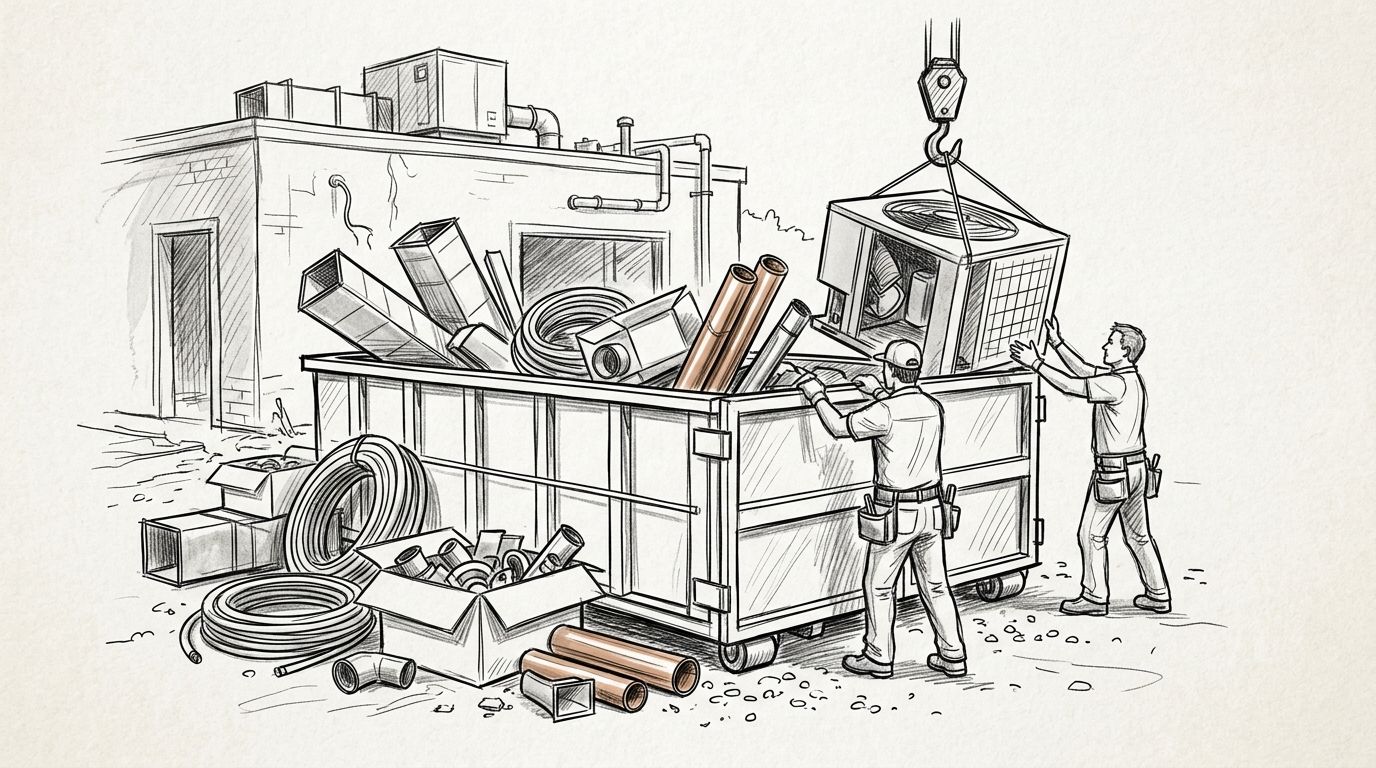
HVAC and plumbing contractors generate a waste stream no general contractor deals with: cut copper and PVC, old furnaces and water heaters, insulation, refrigerant lines, and packaging from new units, often across several small jobs in a single week instead of one long teardown. That mix changes how you size and load a roll-off container compared to a straight demolition or remodel job. Get the container size and pickup schedule wrong and you are paying for a second haul or storing scrap metal on a client's driveway overnight.
- Dumpster rental for HVAC contractors works best with a 15 or 20 yard container for single-unit swaps and a 30 yard for full system replacements.
- Refrigerant-containing equipment needs to be reclaimed before an old unit goes in the container, not after.
- Valley Services runs its own C&D transfer station in San Jose, which keeps scheduling flexible for multi-stop plumbing and HVAC crews in 2026.
- Scrap copper and steel from HVAC teardowns should be separated from mixed debris to avoid overage weight charges.
Why dumpster rental matters for HVAC and plumbing contractors
A plumbing or HVAC crew rarely fills a container the way a framing crew does. You are hauling dense, heavy material (cast iron pipe, copper coil, furnace shells, water heater tanks) in smaller volumes but higher weight per cubic yard than typical construction debris. A container rated for lightweight remodel waste gets tagged for overage fast when it is full of ductwork and steel jacketing.
Most jobs also run on tighter timelines than a full remodel. A water heater swap or a rooftop unit replacement can be a same-day job, which means the dumpster delivery and pickup schedule has to match a narrow install window, not a multi-week demolition timeline. Contractors who work through Valley Services get one point of contact for container sizing and pickup timing instead of juggling a broker who does not control the disposal endpoint. That matters more in 2026 than it did five years ago, since San Jose and Santa Clara County have tightened enforcement on unpermitted roadside placements.
Size the container to the trade, not the square footage
Square footage tells you almost nothing about an HVAC or plumbing waste stream. Sizing by fixture count and unit count gets you closer.
- 10 yard: single fixture swaps, small water heater jobs, minor repipe sections
- 15 yard: one HVAC unit replacement plus ductwork, bathroom repipe with fixtures
- 20 yard: full residential HVAC system swap, multi-bathroom repipe, small commercial unit change-out
- 30 yard: multi-unit HVAC replacement, whole-building repipe, commercial boiler removal
- 40 yard: full mechanical room teardown, large commercial rooftop unit replacement
Separate refrigerant equipment before it goes in the container
Old condensers and package units still holding refrigerant cannot go straight into a roll-off container. This step gets skipped more than any other on HVAC jobs.
- Reclaim or evacuate refrigerant per Cal/OSHA and EPA Section 608 rules before the unit leaves the mechanical room
- Tag units as reclaimed so the transfer station does not reject the load on arrival
- Keep reclaim paperwork with the job file, not just in a technician's truck
- Separate compressors and coils from ductwork so scrap haulers can price them correctly
Load the container to avoid overage and weight fees
HVAC and plumbing debris is dense. Load order matters more here than on a typical remodel container.
- Break down ductwork flat instead of tossing whole sections
- Load heavy items (furnace shells, water heater tanks) first and low, never on top of lighter debris
- Keep scrap copper and brass in a separate bin, not mixed with steel or ductwork
- Never exceed the fill line marked on the container walls
- Review the loading guide for avoiding overage fees before the crew's first drop-off on a new job type
Schedule delivery and pickup around the install window
A container sitting on a driveway for three extra days past job completion is a cost with no benefit to the contractor or the homeowner.
- Confirm delivery the morning of demo, not the day before, on tight residential jobs
- Request same-day swap on multi-day commercial jobs so a full container never blocks equipment staging
- Build pickup into the punch list, not as an afterthought once the crew has moved to the next site
- Coordinate placement with the property manager or GC on multi-trade job sites so the container does not block access for other crews
Comparison table: container options for HVAC and plumbing jobs
| Container size | Best for | Key limitation |
|---|---|---|
| 10 yard | Single fixture or small water heater swap | Fills fast with dense metal debris |
| 15 yard | One HVAC unit change-out with ductwork | Tight for jobs with old insulation removal |
| 20 yard | Full residential system replacement | Needs a clear driveway or curb placement |
| 30 yard | Multi-unit or commercial mechanical job | Longer footprint, check site access before ordering |
| 40 yard | Full mechanical room or rooftop teardown | Requires level, open ground for placement |
Verdict: a 15 or 20 yard container covers most single-property HVAC and plumbing jobs in 2026. Multi-unit commercial work moves up to 30 or 40 yard.
Coordinate placement and permits on tight urban sites
San Jose, Santa Clara, and Sunnyvale each have their own rules on containers placed in the street or on a public right of way.
- Confirm whether the container fits on the private driveway before assuming street placement is allowed
- Pull a placement permit before delivery day if the container will sit on the street, per the San Jose placement permit process
- Flag low overhead wires or trees along the delivery path
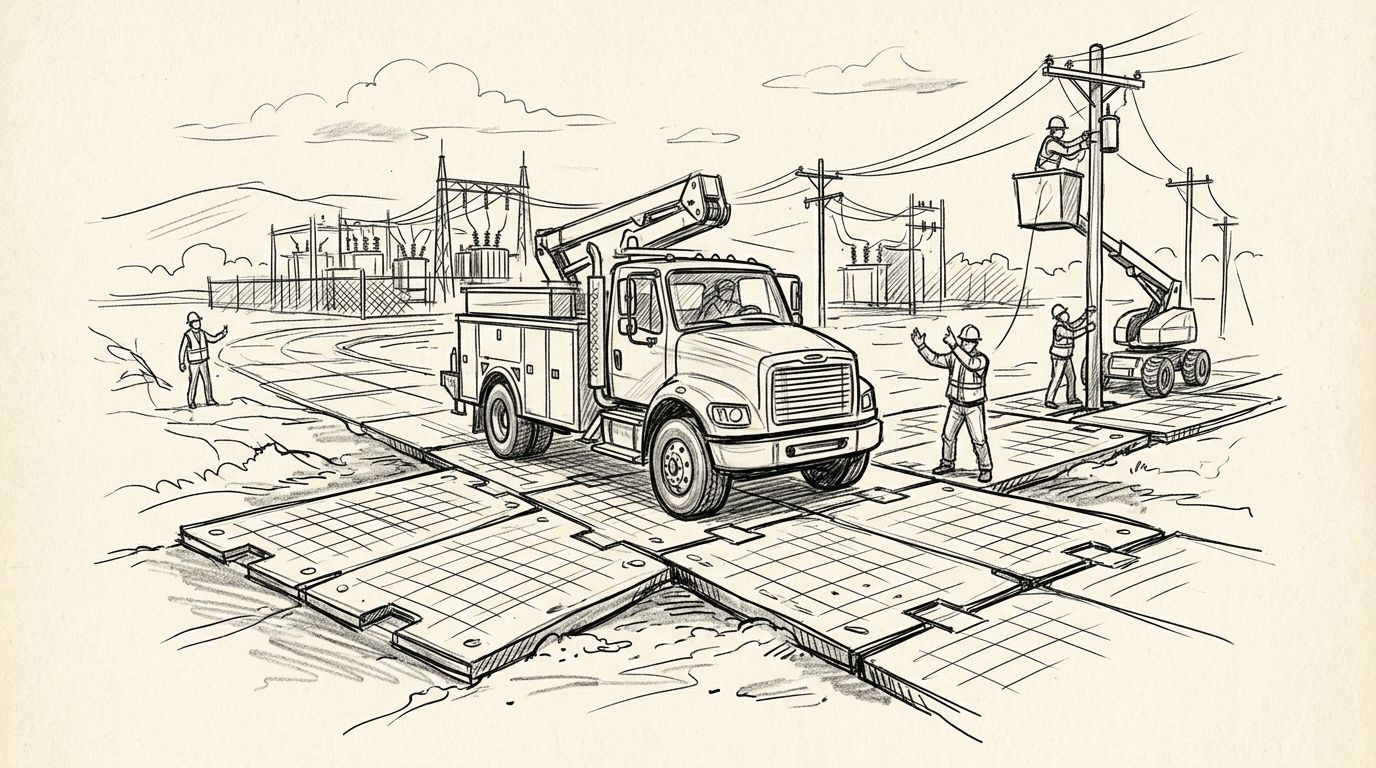
- Confirm ground protection needs if the container sits on landscaping or a paved courtyard
Handle hazardous components correctly
Insulation, old refrigerant lines, and some solder joints on older plumbing systems carry hazard flags a general debris hauler will not sort out for you.
- Confirm asbestos testing on any pre-1980s insulation before demo starts
- Keep lead solder and old galvanized pipe segments separated if local disposal rules require it
- Review the guide to disposing of hazardous construction materials before starting demo on an older building
- Never mix hazardous flagged material into a standard C&D container
Common mistakes HVAC and plumbing contractors make
- Ordering by job price instead of by debris weight. A small-looking job with three old water heaters weighs more than a large but light remodel.
- Leaving refrigerant in old units. This gets a load rejected at the transfer station and delays the whole job.
- Scheduling pickup for the day after job completion. That is an extra day of container rental with no work happening.
- Placing the container without checking overhead clearance. Rooftop unit cranes and container delivery trucks both need vertical clearance, and contractors rarely check both.
- Mixing scrap copper with mixed debris. Separated scrap has value, mixed debris does not.
Get a container sized for your next job
Talk through unit count and timeline before delivery day.
FAQ
What size dumpster do I need for an HVAC unit replacement?
A 15 or 20 yard container handles a single residential HVAC system replacement with ductwork in 2026. Commercial multi-unit jobs need 30 or 40 yard containers.
Can I put an old furnace or water heater directly in a roll-off container?
A water heater can go in directly once drained. A furnace or condenser with refrigerant must have the refrigerant reclaimed first per EPA and Cal/OSHA rules before it goes in the container.
How much weight can an HVAC job put in a dumpster before overage fees apply?
Weight limits depend on container size and hauler terms, and dense debris like copper and cast iron fills the weight limit before the container looks full. Load heavy items first and keep the load level with the fill line.
Is dumpster rental for plumbing contractors different from HVAC contractors?
The sizing logic is similar, but plumbing jobs generate more mixed pipe scrap such as copper, PVC and cast iron, while HVAC jobs generate more sheet metal ductwork and unit shells. Both benefit from sorting scrap metal separately.
Do I need a permit to place a dumpster on a San Jose street for a job?
Yes, if the container sits on a public street or right of way rather than a private driveway. Permit rules vary by city within the Bay Area, so confirm before delivery day.
How fast can I get same-day dumpster delivery for an urgent HVAC job?
Same-day delivery depends on route availability and container size on the day of the call. Confirming placement details ahead of time speeds up same-day scheduling.
What happens to refrigerant when an old HVAC unit is scrapped?
Refrigerant has to be reclaimed by a certified technician before the unit is scrapped or disposed of, per Section 608 of the Clean Air Act. The unit should be tagged as reclaimed before it goes in a container.
One last thing
The detail that trips up most HVAC and plumbing crews in 2026 is not container size, it is the refrigerant reclaim step. A load that shows up at a transfer station with a condenser still charged gets flagged and delayed, which costs more schedule time than ordering one size larger container from the start. Valley Services operates its own C&D transfer station in San Jose rather than brokering disposal to a third party, which means load questions get answered by the people who actually run the drop-off, not a call center reading from a script.
Related guides
- How to load a dumpster safely and avoid overage fees
- How to schedule a dumpster delivery and pickup
- How to dispose of hazardous construction materials safely
- How to permit a dumpster placement in San Jose
For sizing help on your next HVAC or plumbing job in 2026, call (408) 297-5404 or reach out through valleyservices.biz.