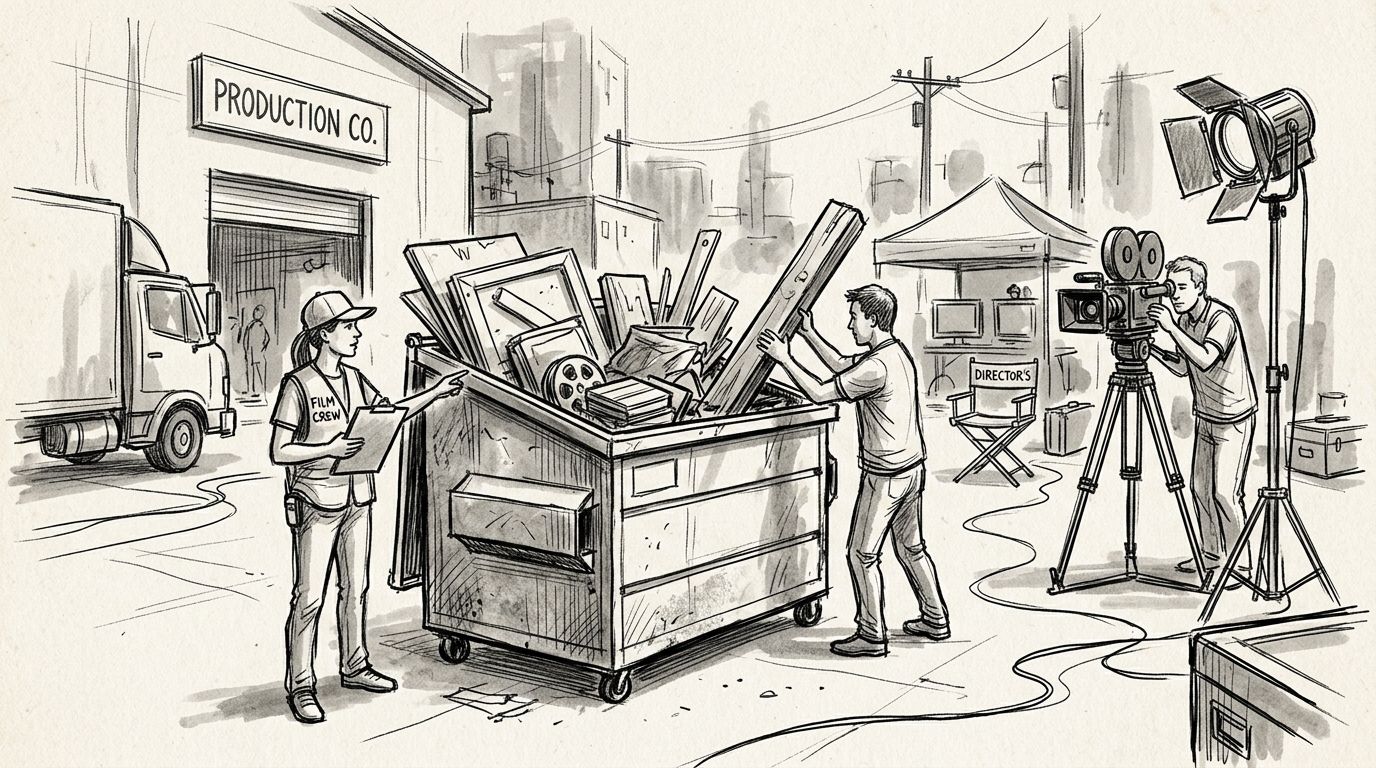
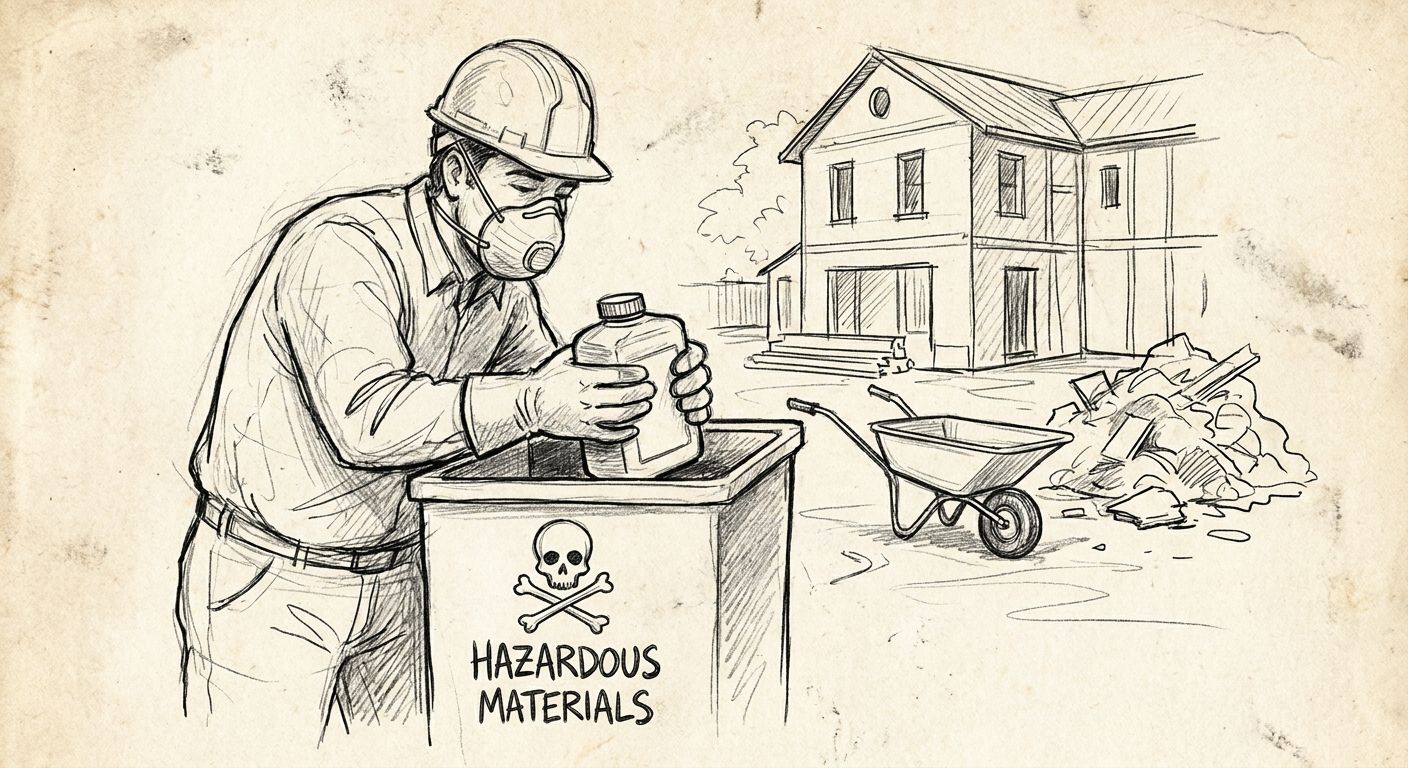
A blue steel roll-off container is built for wood, drywall, concrete, and mixed C&D debris. It is not built for asbestos, lead paint chips, solvents, or old fluorescent ballasts, and putting those materials in one can shut a job down fast.
- Roll-off containers never take asbestos, lead paint debris, solvents, or refrigerants: separate hazardous materials before demo starts.
- Test for asbestos and lead in any structure built before 1980 before you touch drywall, flooring, or trim.
- Santa Clara County's Household Hazardous Waste Program handles paint, batteries, and chemicals; C&D debris goes to a transfer station instead.
- Valley Services accepts non-hazardous C&D at its San Jose transfer station once hazardous material is pulled and documented, 2026 job sites included.
Why this matters on a Bay Area job site
Mixing hazardous material into a construction dumpster is one of the fastest ways to get a load rejected at the gate. Transfer stations screen incoming loads, and a container flagged for asbestos or lead paint debris can mean a stalled schedule, a manifest violation, and a call from the hauler asking what happened.
Contractors working older Bay Area housing stock run into this constantly. San Jose, Santa Clara, Sunnyvale, and Mountain View all have a mix of homes and commercial buildings dating back to the 1950s through the 1970s, which puts a lot of jobs squarely in asbestos and lead paint territory. Knowing how to dispose of construction debris in San Jose correctly starts with knowing what does not belong in that container at all.
This guide walks through the separation, testing, and disposal steps for hazardous construction materials, then how to route the remaining non-hazardous debris through a standard roll-off.
What you'll need
- A visual inspection of the structure, or a written scope if it's a demo job
- Testing for asbestos and lead paint if the building predates 1980 (a certified lab or licensed inspector, not a guess)
- Separate containers or drums for paint cans, solvents, batteries, and fluorescent tubes
- A licensed abatement contractor on call if asbestos or lead paint is confirmed
- A drop-off appointment with Santa Clara County's Household Hazardous Waste Program for chemicals and small hazardous items
- A blue steel roll-off container sized for the non-hazardous C&D volume once separation is complete
- Manifests or receipts from every hazardous drop-off, kept with the job file
The steps
1. Identify what counts as hazardous before demo starts
Common hazardous materials on Bay Area renovation and demolition jobs include asbestos in popcorn ceilings, vinyl floor tile, and pipe insulation; lead-based paint on trim, siding, and old cabinetry; mercury in thermostats and fluorescent tubes; refrigerants in old HVAC units and appliances; and leftover solvents, adhesives, and paint cans.
Any structure built before 1980 is a candidate for asbestos, and any structure built before 1978 is a candidate for lead paint under EPA guidance. Treat both as a default assumption until testing rules them out.
Common mistake: crews start demo on the assumption that a small remodel doesn't warrant testing. A single popcorn ceiling patch or a strip of old floor tile is enough to trigger an asbestos abatement requirement under Bay Area Air Quality Management District rules.
2. Test before you cut, sand, or pry anything loose
Asbestos and lead paint testing has to happen before disturbance, not after. A licensed inspector pulls samples from suspect materials and sends them to a certified lab. Cal/OSHA and BAAQMD both regulate asbestos handling, and disturbing suspect material without testing puts your crew and your neighbors at risk of exposure.
This step also protects your schedule. If the test comes back clean, you proceed with standard demo. If it comes back positive, you know before the roll-off container is on site, not after debris is already mixed.
3. Bring in a certified abatement contractor for confirmed hazards
Once asbestos or lead paint is confirmed, the removal has to go through a licensed abatement contractor, not the general demo crew. Abatement contractors bag, seal, and manifest the material for transport to a permitted hazardous waste facility. This is separate from any roll-off container and separate from your general C&D disposal plan.
Skipping this step and self-hauling suspected asbestos is a Cal/OSHA violation and puts personal liability on whoever signs off on the job.
4. Route chemicals, batteries, and bulbs to a household hazardous waste facility
Paint cans, solvents, adhesives, batteries, and fluorescent tubes go to Santa Clara County's Household Hazardous Waste Program, not into a blue steel container. These items are accepted through scheduled drop-off appointments for residents and, in many cases, small-quantity generators. Keep the drop-off receipt with your job file.
Property managers and homeowners running a cleanout often find these items mixed in with general junk. Sorting them out before the dumpster arrives avoids a rejected load later.
5. Size and schedule your roll-off container for what's left
Once asbestos, lead paint, and household chemicals are pulled out, what remains is standard C&D debris: wood, drywall, flooring, fixtures, and general demo waste. That's what a roll-off container is built for. Scheduling a dumpster delivery and pickup at this stage keeps the container timeline aligned with the abatement timeline, so the two crews aren't working the same space at the same time.
6. Load the container correctly and keep it documented
Load debris flat, keep it below the fill line, and never toss anything hazardous in after the fact just because the container is already on site. Loading a dumpster safely also protects against overage charges tied to overfilled or overweight loads.
If the job requires a permit for street or sidewalk placement, confirm that before delivery. Permitting a dumpster placement in San Jose is a separate process from hazardous material handling, but both need to be squared away before the container shows up.
7. Keep every manifest and receipt in one job file
Abatement manifests, household hazardous waste receipts, and C&D disposal records should all live in the same folder. If a building inspector or property owner asks how the job handled hazardous material, you want that answer in writing, not in memory.
Line up your C&D container
Call to talk through sizing once hazardous material is separated out.
Troubleshooting
A load got flagged for suspected asbestos at the transfer station. Stop work on the affected area immediately and get a licensed inspector to test before any further disturbance. Do not attempt to remove or bag the material yourself.
Test results came back after the container was already delivered. Keep hazardous material out of the roll-off entirely and hold it separately until an abatement contractor can remove it. A positive test does not mean the whole container is contaminated if separation was maintained.
Crew found old paint cans and solvents mid-demo. Set them aside in a sealed bin rather than tossing them in the dumpster. Schedule a household hazardous waste drop-off before the container's next pickup.
You're not sure if a material counts as hazardous. Treat anything from a pre-1980 building as a candidate for testing rather than guessing. A lab test costs less time than a rejected load.
The job has both abatement and general demo happening on the same site. Sequence the work so abatement finishes and the area is cleared before general demo crews bring debris to the roll-off container.
Tools and resources
- A licensed asbestos and lead testing lab for pre-1980 structures
- Santa Clara County's Household Hazardous Waste Program for chemicals, batteries, and bulbs
- A certified abatement contractor for confirmed asbestos or lead paint
- Finding a dump near you for construction debris once hazardous separation is complete
- Valley Services' San Jose transfer station for non-hazardous C&D drop-off
What to do next
Once hazardous material is identified, tested, and routed correctly, the rest of the job is standard container logistics. General contractors managing construction dumpster needs can line up delivery timing so the roll-off arrives right after abatement clears, not before.
Valley Services has operated its own transfer station in San Jose since 1986, third generation, same yard. That means non-hazardous C&D debris has a controlled endpoint once it leaves your site, and scheduling isn't dependent on a third party's dock hours.
FAQ
Can hazardous materials go in a roll-off dumpster?
No. Asbestos, lead paint debris, solvents, batteries, and refrigerants cannot go in a roll-off container. They require licensed abatement or a household hazardous waste facility instead.
How do I know if my building has asbestos or lead paint?
Any structure built before 1980 is a candidate for asbestos, and before 1978 for lead paint. A licensed inspector needs to test before demo starts, not after materials are disturbed.
Where does household hazardous waste go in Santa Clara County?
Paint, batteries, solvents, and fluorescent bulbs go through Santa Clara County's Household Hazardous Waste Program via scheduled drop-off, separate from general C&D debris.
Who removes asbestos on a demolition job?
A licensed abatement contractor handles confirmed asbestos, not the general demo crew. They bag, seal, and manifest the material for transport to a permitted facility.
What happens if hazardous material is found in a C&D load?
The load gets flagged and can be rejected at the transfer station gate. That stalls pickup and can trigger a manifest violation, so separation before loading matters.
Does a roll-off container need a permit in San Jose?
Placement on a street or sidewalk in San Jose typically requires a permit. Confirm this separately from any hazardous material handling before the container is delivered.
Can I put old paint cans in a construction dumpster?
No. Paint cans, even dried ones in some cases, are handled through a household hazardous waste program rather than a roll-off container.
What's the difference between C&D debris and hazardous construction waste?
C&D debris includes wood, drywall, and flooring that go straight to a transfer station. Hazardous construction waste includes asbestos, lead paint, and chemicals that require certified handling first.
One last thing
The testing step is the one crews skip most on small jobs, and it's the one that causes the biggest delays when skipped. A single lab test on a suspect ceiling or floor tile takes far less time than a stopped job site after a positive asbestos hit mid-demo.
Once your hazardous material is separated and documented, call (408) 297-5404 or visit valleyservices.biz to line up a roll-off container sized for what's left.