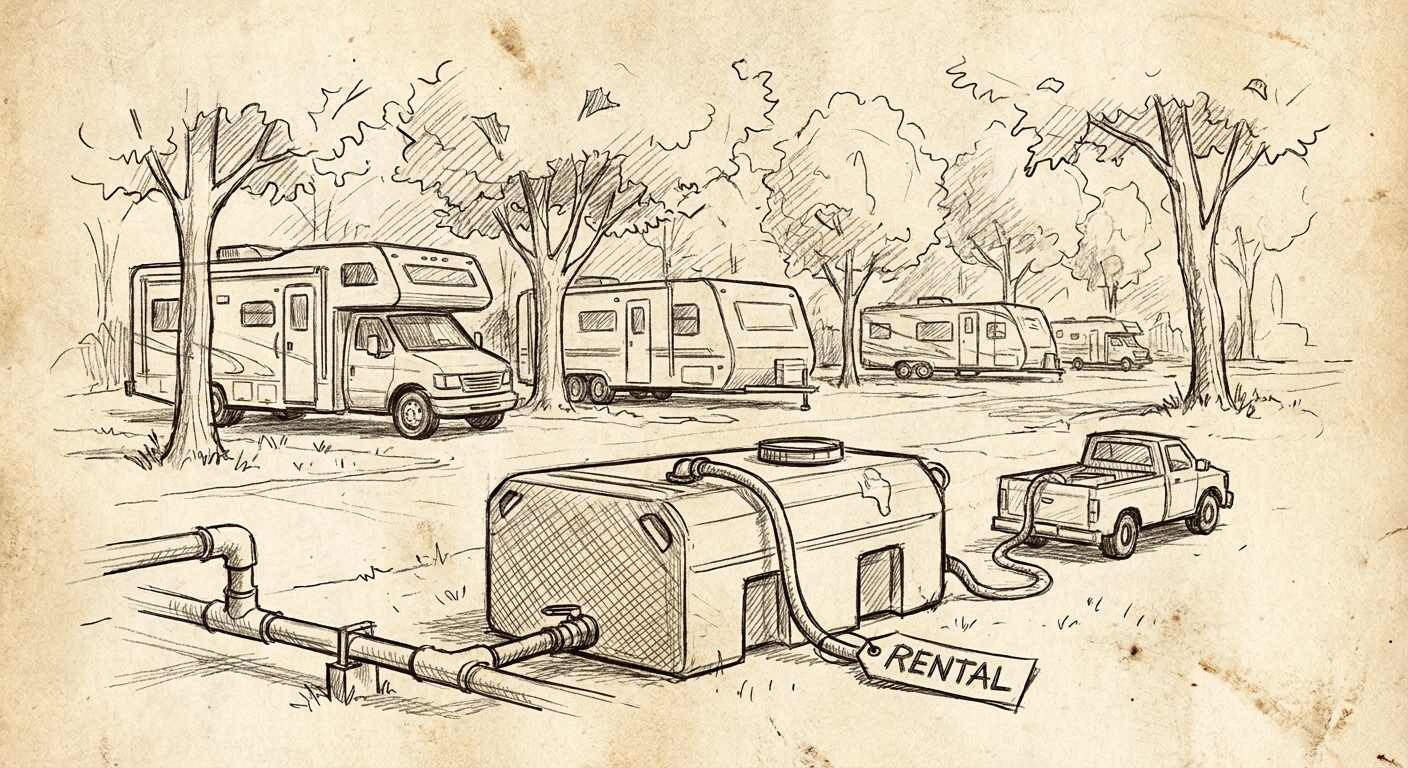
A holding tank rental fills the gap when an RV park's dump station backs up on a holiday weekend or a septic system goes down mid-season. This guide breaks down sizing, pump-out logistics, and what separates a temporary fix from a real seasonal solution for Bay Area RV parks and campgrounds.
- Holding tank rental for RV parks covers overflow when dump stations or septic systems can't keep pace in 2026.
- A 300-gallon tote handles weekend overflow at small campgrounds; a 500-gallon tank suits festival-weekend crowds. Buy accordingly.
- Pump-out frequency during peak season runs every 2 to 3 days for high-occupancy parks, not weekly.
- Pairing a holding tank with a restroom trailer covers full amenity gaps during long-term construction on park facilities.
Why this matters
An RV park with a full dump station on a July weekend isn't a minor inconvenience. It's a line of RVs backing onto the access road and a facilities manager fielding complaints. A holding tank rental buys capacity without a capital project.
The same logic applies when a septic system needs repair or a county inspection forces a shutdown. A temporary tank keeps the park operating while the permanent system gets fixed. Waiting on a broker to schedule a pump-out truck through a third party adds days you don't have during peak season.
Who this is for
This guide is for RV park operators, campground managers, and facilities staff in San Jose, Santa Clara, Sunnyvale, Mountain View, Milpitas, and the surrounding Bay Area who need backup wastewater capacity, either for seasonal overflow, event weekends, or while a permanent system is offline. Valley Services runs holding tank rental alongside portable restroom and restroom trailer service, which matters when the same site needs both problems solved on the same call.
What to look for in holding tank rental for RV parks and campgrounds
Capacity matched to peak occupancy
A park running 40 sites at 80 percent occupancy generates a different wastewater load than one running 15 sites off-season. Undersize the tank and you're scheduling emergency pump-outs mid-weekend. A 300-gallon unit handles a small campground's overflow; a 500-gallon tank is the right call once you're running festival-weekend numbers.
Pump-out access and turnaround
A tank that can't get pumped on schedule is dead weight taking up a parking spot. Ask how pump-out is scheduled and how fast a second visit can happen if occupancy spikes. The process for renting a holding tank works the same whether the site is a construction project or an RV park: capacity, access, and pump-out cadence drive the decision.
Placement and site access for the tank truck
A holding tank sits where a truck can reach it without threading through occupied RV sites. Map the delivery and pump-out route before the unit shows up, not after it's blocking a fire lane.
Odor control and venting
A tank near occupied sites needs proper venting or it becomes the complaint that shows up in every online review. This is a bigger factor at RV parks than on a construction site because guests are living next to the unit, not just working near it.
Contract terms for seasonal vs. year-round use
A park that only floods its dump station on three-day weekends needs a different arrangement than one running a tank year-round to supplement an aging septic field. Confirm whether the rental is a one-time delivery or a standing service before peak season starts.
Top picks
The weekend fix: single 300-gallon tote. One tank, one pump-out cycle, done when the holiday weekend ends. Spec that matters: 300 gallons covers roughly 15 to 20 RV sites for a two-day overflow window. Verdict: Buy for small parks with occasional overflow.
The overflow buffer: 500-gallon tank at the dump station. Sits next to the existing dump station and absorbs excess without rerouting guests. Spec that matters: 500 gallons buys most parks 4 to 5 days before a pump-out is needed at full occupancy. Verdict: Buy for parks running above 70 percent occupancy on summer weekends.
The event spike: multi-tank rotation. Two or three tanks staged and rotated during a festival or tournament weekend when a single unit can't keep pace. Spec that matters: rotation cuts pump-out wait time to under an hour per swap instead of a single truck cycling all weekend. Verdict: Consider if your park hosts events drawing outside traffic, not just registered campers.
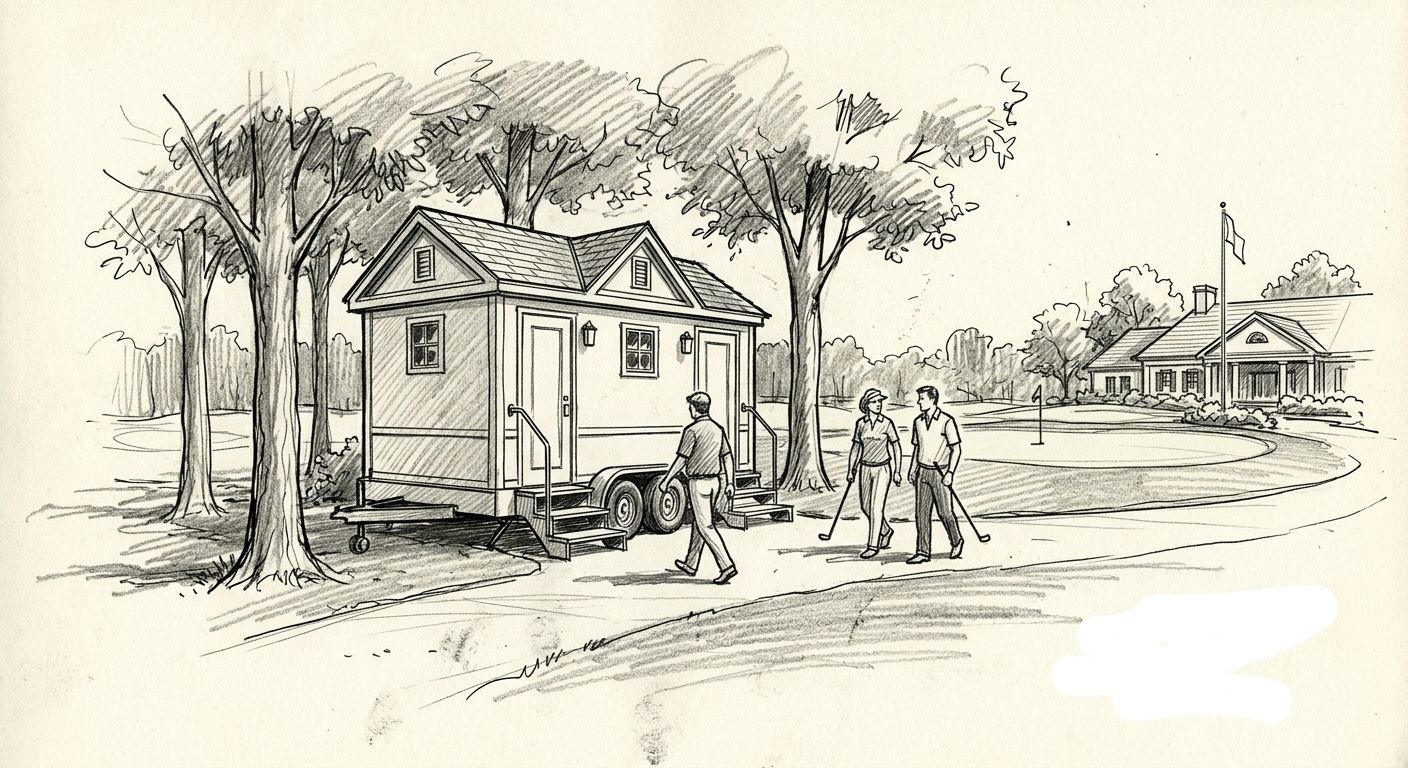
The full amenity package: tank plus restroom trailer. Covers a park mid-renovation on its permanent restroom building by pairing a holding tank with a restroom trailer for RV parks and campgrounds. Spec that matters: one delivery covers both wastewater capacity and guest-facing restrooms in a single scheduling call. Verdict: Buy if your park is mid-construction or between septic phases.
The long hauler: standing seasonal contract. A holding tank on a recurring schedule for parks running near capacity for months, not days. Spec that matters: standing contracts remove the lead-time risk of calling for an emergency tank during a holiday weekend. Verdict: Consider for parks that hit capacity every summer without fail.
Line up your holding tank now
Call ahead of peak season to lock in delivery and pump-out scheduling.
What to avoid
- A tank sized for average occupancy, not peak occupancy. Your July 4th weekend numbers matter more than your March averages. Sizing for the average leaves you short exactly when it counts.
- A single tank with no pump-out plan for a three-day weekend. A 300-gallon unit that fills on day one with no truck scheduled until day four is a bigger problem than not having a tank at all.
- Placement that blocks emergency access or guest parking. A tank staged in the wrong spot creates a second problem while solving the first one.
Verdict comparison
| Configuration | Capacity | Pump-out interval | Best for | Verdict |
|---|---|---|---|---|
| Single tote tank | 300 gal | Every 4-5 days | Small parks, occasional overflow | Buy |
| Overflow buffer tank | 500 gal | Every 4-5 days at capacity | Mid-size parks, summer weekends | Buy |
| Multi-tank rotation | 900-1,500 gal combined | Rotated hourly during peak | Festival weekends, tournaments | Consider |
| Tank plus restroom trailer | 500 gal + trailer | Every 4-5 days | Parks mid-renovation | Buy |
| Seasonal standing contract | Sized to park | Fixed recurring schedule | Parks at capacity all summer | Consider |
FAQ
What is holding tank rental for RV parks?
Holding tank rental for RV parks is a temporary wastewater storage unit, typically 300 to 500 gallons, delivered to supplement or replace dump station and septic capacity during peak occupancy or system repairs. It gets pumped out on a set schedule until the park no longer needs the extra capacity.
How big should a holding tank be for a campground?
A 300-gallon tank covers a small campground running 15 to 20 sites over a weekend, while a 500-gallon tank suits parks running above 70 percent occupancy on summer weekends. Festival-weekend traffic often needs a multi-tank rotation instead of a single unit.
How often does a holding tank need to be pumped out?
A 500-gallon tank at full RV park occupancy typically needs pump-out every 4 to 5 days in 2026 season conditions. High-traffic event weekends can require rotation within hours instead of days.
Can a holding tank replace a septic system at an RV park?
A holding tank is a temporary bridge, not a permanent replacement for a septic system. Parks use tanks during septic repair, inspection shutdowns, or peak-season overflow, then return to the permanent system once capacity or repairs are resolved.
Do RV parks need a permit for a temporary holding tank?
Permit requirements depend on the county and how long the tank stays on site. Check with your local jurisdiction before delivery, especially for a standing seasonal contract rather than a one-time weekend rental.
How much does holding tank rental cost for an RV park?
Cost depends on tank size, rental duration, and pump-out frequency, so terms vary by season and site. Call (408) 297-5404 for current terms based on your park's occupancy and timeline.
Is a holding tank the same as a portable restroom?
No. A holding tank stores wastewater, often paired with an existing dump station or restroom facility, while a portable restroom is the guest-facing fixture itself. Parks mid-renovation frequently need both at once.
Can a holding tank be delivered on short notice for a holiday weekend?
Lead time depends on current scheduling and tank availability, so call ahead rather than assuming same-day delivery during peak season. Booking before a known high-occupancy weekend avoids the scramble.
One last thing
Most holding tank rentals get treated as an emergency call after the dump station already backed up. Parks that book a standing seasonal contract before Memorial Day weekend never make that call at all. Valley Services runs its own yard in San Jose since 1986, which means a tank swap or extra pump-out during a busy weekend doesn't wait on a third-party disposal schedule.
Call (408) 297-5404 or visit valleyservices.biz to line up holding tank rental before your next peak weekend hits.