A jobsite without sewer hookup still needs somewhere for wastewater to go. That's what a holding tank rental solves, and getting the size, placement, and service schedule right the first time keeps your crew working instead of waiting on a pump truck.
- Rent a holding tank for construction based on crew size and water use, not guesswork: undersized tanks mean mid-week pump-outs.
- Pair the tank with a portable restroom or restroom trailer rental for a complete jobsite sanitation setup in 2026.
- Confirm truck access to the tank pad before delivery day. Blocked access is the most common delay Valley Services sees on Bay Area sites.
- Standalone holding tanks and restroom trailer tanks are rented differently. Know which one your project needs before you call.
Why This Matters
Sites without municipal sewer access, or sites where tying into an existing line isn't practical mid-project, need a way to store wastewater until it's pumped and hauled off. That's the holding tank's job. Skip this step and you're stuck with a restroom trailer that can't drain, or a crew hauling water off-site in buckets, which is both slow and a Cal/OSHA sanitation problem.
Getting this right in 2026 matters more on multi-phase jobs, where the tank has to serve a changing crew count over weeks or months. A tank sized for a 6-person framing crew in week one won't cover a 20-person crew during rough-in.
What You'll Need
- A site assessment covering expected crew size, shift length, and water use (drinking, hand-washing, any equipment rinse-out)
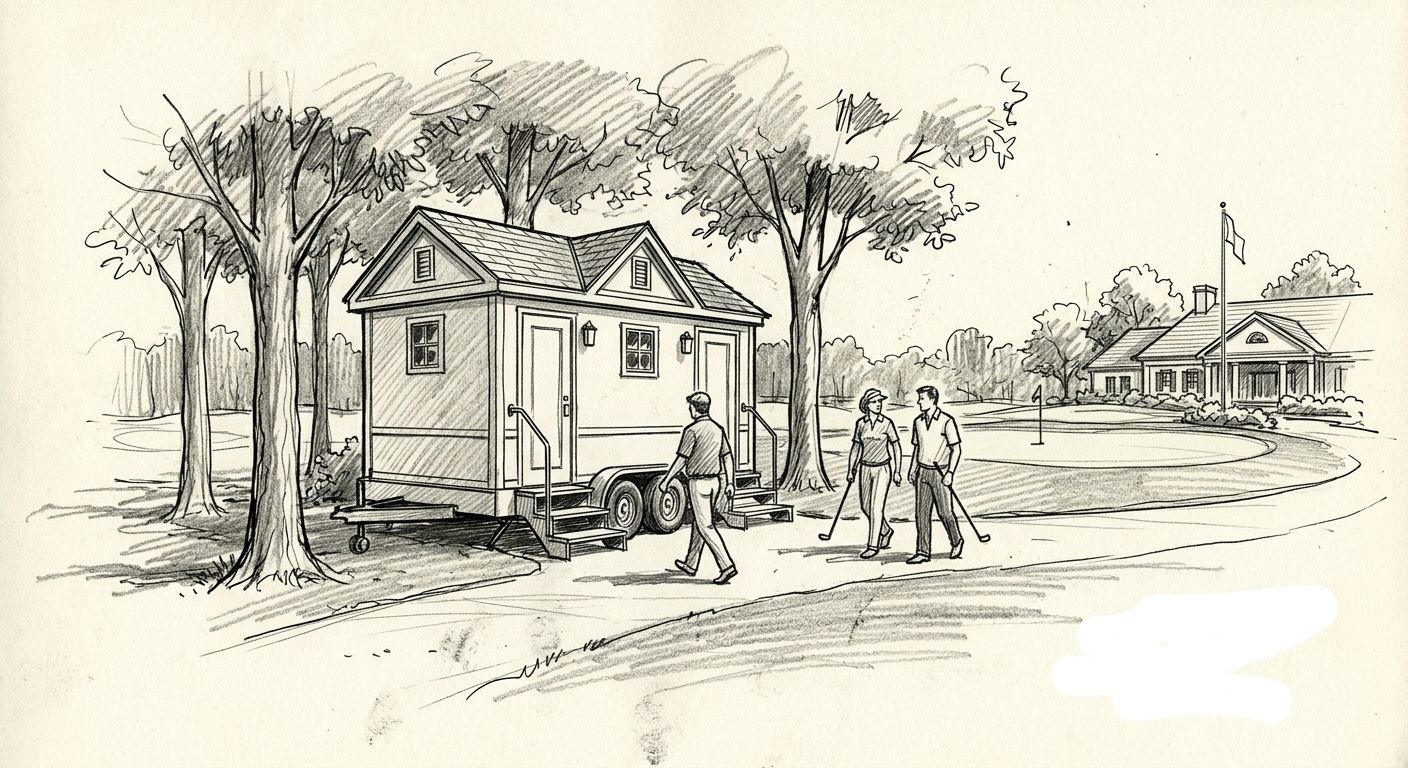
- A confirmed holding tank rental for job-site restrooms paired with your restroom setup, if you're running a trailer rather than standard portable units
- A level, stable pad with clear overhead and truck access for delivery and pump service
- A point of contact on-site who can confirm delivery windows and flag access issues before the truck shows up
- Any local permit or Cal/OSHA sanitation documentation your general contractor or site super requires
The Steps
1. Determine why you need a holding tank
A holding tank makes sense when there's no sewer tie-in, when a restroom trailer needs a wastewater reservoir, or when a temporary office trailer or wash station needs a place to send greywater. Confirm which of these applies before you size anything. A site with a working sewer connection doesn't need a standalone tank at all.
Common mistake: ordering a tank out of habit because "that's what the last job had," when this site actually has sewer access ten feet from the trailer pad.
2. Calculate your wastewater volume and crew size
Count workers per shift, not total roster. A 30-person crew split across two shifts of 15 uses less water at any given time than 30 people on-site at once. Add in any equipment wash-down or concrete work that generates greywater, since that volume adds up fast on a 2026 remodel with daily cleanup.
Common mistake: sizing off day-one headcount on a job that ramps to double the crew by week three.
3. Choose the tank type and size
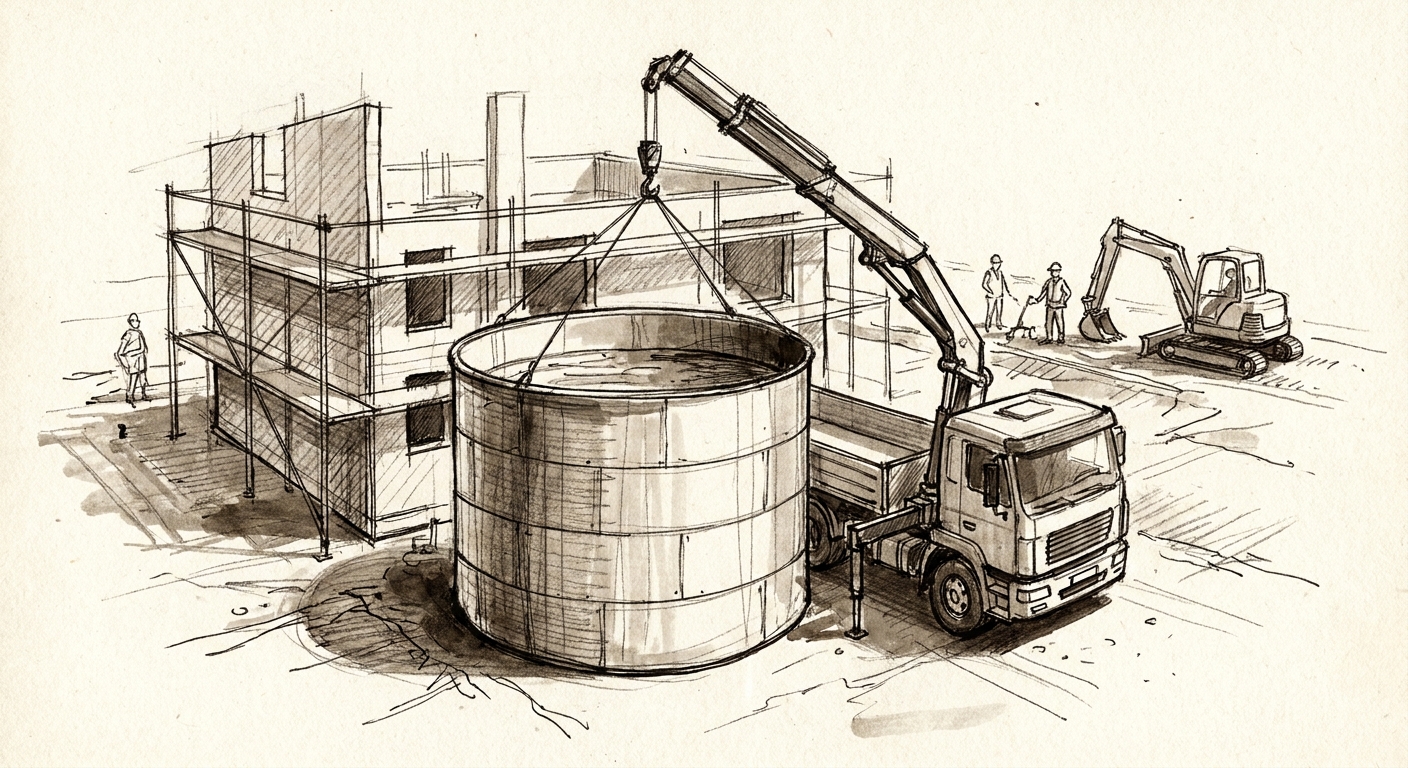
Standalone holding tanks range from small units for a single restroom trailer up to larger capacity for multi-trailer or long-duration sites. Match the tank to your service interval: a smaller tank pumped twice a week can outperform a larger tank pumped once a month, if your site has reliable truck access.
Common mistake: picking the biggest available tank "to be safe" without checking whether the site pad and access route can actually handle it.
4. Confirm site access and placement
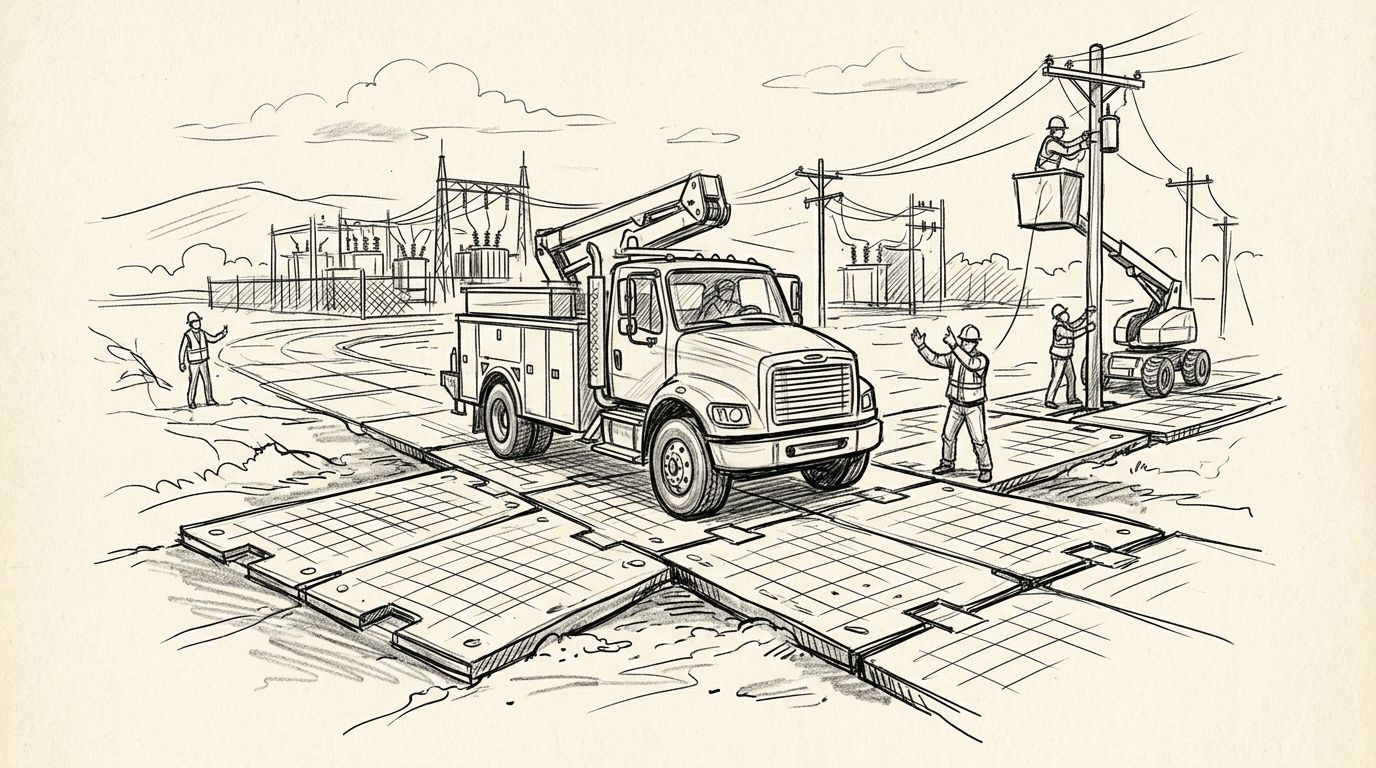
The pump truck needs a clear, drivable route to the tank on service days, every time. Placement next to a fence line, under low wires, or behind a container staging area causes delays that push your service schedule. Walk the route yourself before delivery day, not after.
Common mistake: placing the tank close to the restroom trailer for convenience while ignoring whether a truck can back up to it.
5. Schedule delivery timing
Line up tank delivery with your restroom or trailer delivery so the site isn't running without sanitation for a gap in between. On multi-phase jobs, coordinate this the same way you'd schedule a dumpster delivery and pickup: lock the date once site prep is confirmed, not before.
Common mistake: scheduling the tank before the pad is graded and level, forcing a reschedule.
6. Set a pumping and service schedule
Base the interval on actual usage, not a flat weekly default. A crew of 25 running two shifts will need more frequent service than a crew of 8 on a single shift. Build in a buffer for slow weeks like holidays, when the truck route may run on adjusted timing.
Common mistake: setting a fixed monthly service date and never adjusting it as crew size changes.
7. Plan removal at project close
Book tank pickup for the same week as final restroom or trailer pickup so the site doesn't carry unused equipment past project end. Confirm the tank is empty or scheduled for a final pump before pickup day, since a full tank slows the truck down and delays removal.
Common mistake: forgetting to schedule pickup until the site is already closed out, leaving equipment sitting idle.
Talk through your jobsite setup
Coordinate holding tanks, restrooms, and containers on one call.
Troubleshooting
Tank fills faster than expected. Usually means crew size was undercounted at setup. Bump the pump frequency for the next two weeks and recalculate based on actual headcount, not the original estimate.
Delivery truck can't reach the tank pad. Fix the access route before the next scheduled service, not after a missed pump-out. A blocked path on service day means the tank sits full until the next available slot.
Odor complaints from neighbors or other trades. Often tied to service interval being too long for current usage. Shorten the pump cycle and check that the tank's vent isn't obstructed by staging materials or fencing.
Standing water or mud blocks the pad after rain. Grade the pad with a slight slope away from the access route before winter storms hit. A pad that floods delays every truck on-site, not just the pump service.
Restroom trailer shows a full-tank warning early. Don't wait for the next scheduled pump. Call for an off-cycle service rather than letting the trailer sit unusable.
Permit inspector flags an unsecured tank area. Pair the tank zone with temporary fencing for the construction site rather than leaving it open, especially on sites with public sidewalk adjacency.
Tools and Resources
- Best holding tank rental for job-site restrooms for matching tank type to restroom setup
- How to schedule a dumpster delivery and pickup for coordinating multiple deliveries on one site
- Temporary fencing for construction sites for securing tank and restroom zones
- A site super or GC who can confirm crew shift counts weekly, since that number drives your service schedule more than anything else
What to Do Next
Once the tank, restroom, and fencing plan are locked, map out the rest of your site logistics: container placement, debris removal, and how they all land on the same delivery calendar. Coordinating one call for containers, restrooms, and fencing on the same jobsite is easier than juggling three vendors on three schedules in 2026.
FAQ
What is a holding tank used for on a construction site?
A holding tank stores wastewater on sites without sewer access, often paired with a restroom trailer that needs somewhere for its tank to drain. It gets pumped out on a set schedule until the project ends.
How big of a holding tank do I need for a construction project?
Tank size depends on crew size per shift and water use, not total roster count. A smaller tank pumped twice weekly often works better than an oversized tank pumped monthly if truck access is reliable.
Do I need a permit to rent a holding tank in San Jose?
Permit requirements depend on the site and jurisdiction, so check with your general contractor or the local building department before delivery. Cal/OSHA sanitation rules apply regardless of permit status.
How often does a holding tank need to be pumped?
Pumping frequency depends on crew size and water use, and should be reviewed weekly on jobs where headcount changes. A tank sized for 8 workers fills much faster once a crew doubles to 16.
Can a holding tank be rented separately from a portable restroom?
Yes, a standalone holding tank can be rented on its own for greywater or wash-down water even without a paired restroom. Most construction sites rent both together for a complete sanitation setup.
What's the difference between a holding tank and a portable restroom?
A portable restroom is the fixture the crew uses. A holding tank is the storage unit that collects wastewater from a restroom trailer or wash station until it's pumped. Standard portable restrooms have self-contained tanks and don't need a separate holding tank.
How much notice do I need to rent a holding tank for a construction project in 2026?
Book as soon as your site schedule is confirmed, ideally alongside your restroom or trailer delivery date. Last-minute requests are harder to fill during peak building season.
Does Valley Services deliver holding tanks outside San Jose?
Valley Services serves San Jose, Santa Clara, Sunnyvale, Mountain View, Milpitas, and the surrounding Bay Area. Call (408) 297-5404 to confirm delivery to your site.
One Last Thing
The detail that trips up most first-time renters isn't tank size, it's access. A tank sized correctly but placed where the pump truck can't reach it on service day causes more downtime than an undersized tank ever will. Walk the delivery route before you commit to a pad location, every time.
Call (408) 297-5404 or visit valleyservices.biz to talk through your holding tank and restroom setup before your next site opens.