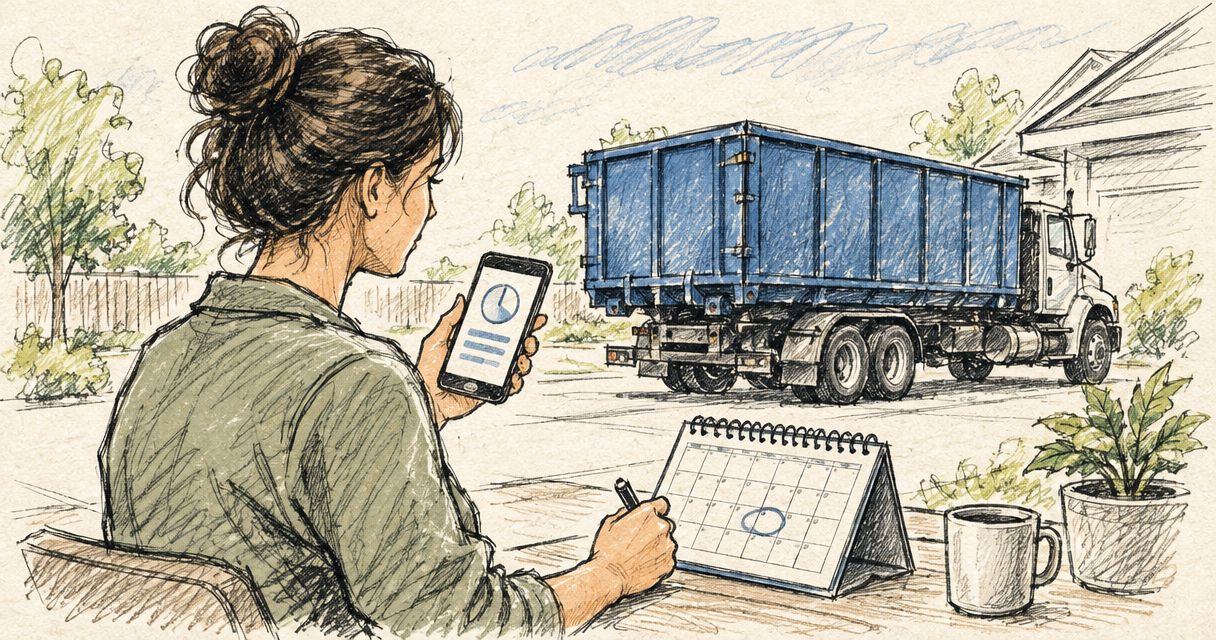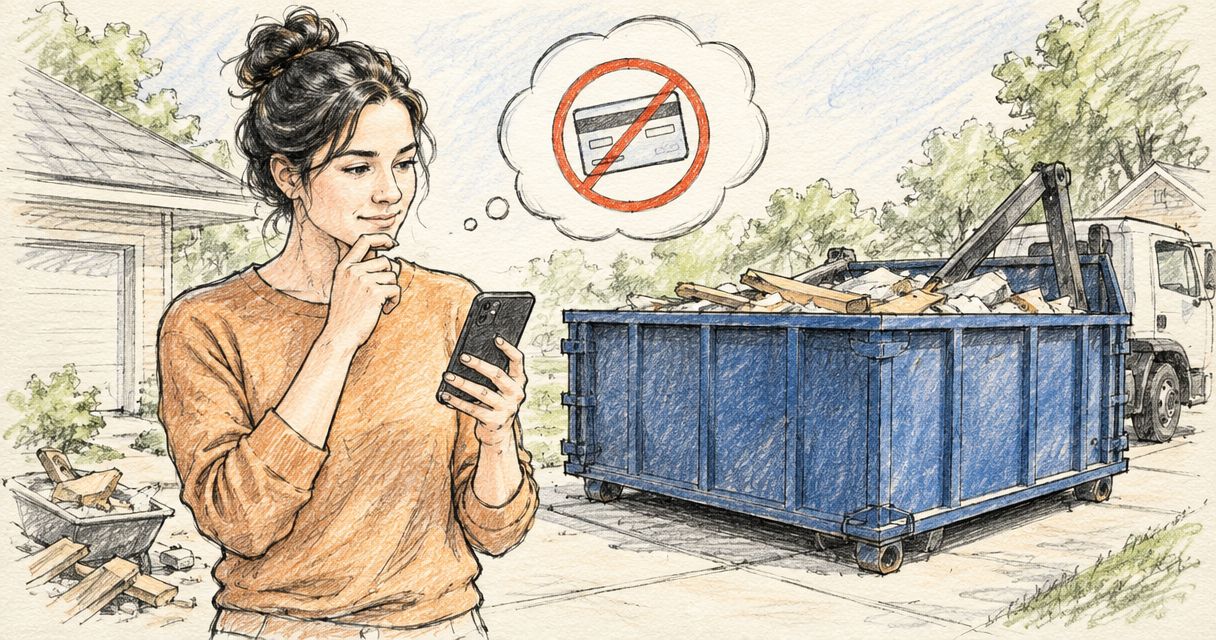
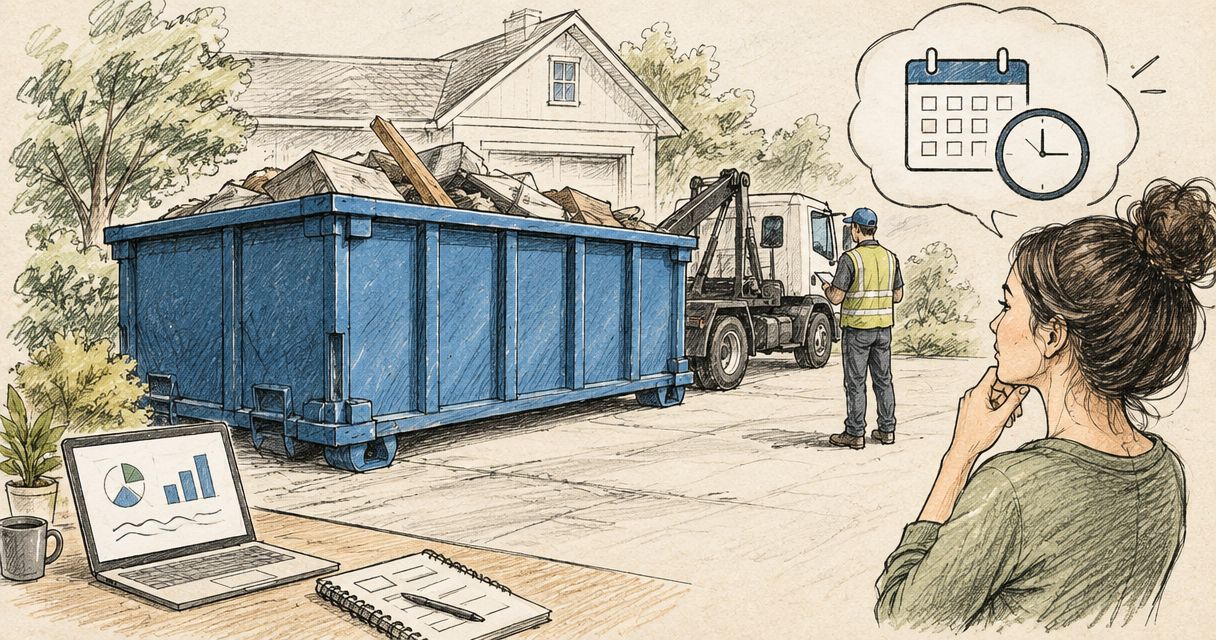
For a renovation that keeps producing debris all month, the cost of a roll-off container rental needs a job-specific quote covering the container, exact dates, material, weight allowance, and hauling plan. A full-month rental does not, by itself, establish whether exchanges, additional weight, or extensions are included. Confirm those terms before you schedule demolition.
- A full-month roll-off container quote needs exact dates, debris type, weight terms, and an exchange plan.
- Valley Services owns its San Jose C&D transfer station, keeping the disposal endpoint under its control.
- Container volume and permitted load weight are separate limits. Confirm both before loading.
- Match delivery, exchanges, and final pickup to the work schedule, not just the calendar.
How much does a full-month roll-off container rental cost?
The useful answer is the quote for your actual scope, not a monthly figure detached from the job. Request a written scope that identifies what happens at delivery, during loading, at each exchange, and at final pickup.
A container remaining on your property and a container being emptied repeatedly are different service plans. Make that distinction explicit. Start with the delivery and pickup sequence in this guide to scheduling a roll-off container delivery and pickup.
For your 2026 project, compare proposals against the same requirements:
| Quote component | What you need confirmed | Why it matters |
|---|---|---|
| Container | Selected size and approved material | The unit must suit the debris, not just fit the property |
| Rental period | Delivery date, pickup date, and how the period is counted | A calendar month and a fixed-day term are different |
| Load weight | Included allowance and permitted loading limits | Volume alone does not determine a safe load |
| Hauling | Initial delivery, exchanges, and final removal | A month-long job can need more than a container sitting in place |
| Disposal | Accepted material and disposal terms | The endpoint must accept what your crew loads |
| Changes | Extension, relocation, and revised-scope terms | Schedule changes need an agreed process |
Compare the complete service scope, not the word monthly. Keep the written confirmation with the job schedule so the superintendent, property manager, and person ordering service work from the same terms.
Why this matters on a month-long Bay Area job
A month-long rental ties up space as well as equipment. The container must remain reachable while deliveries, subcontractors, tenants, or occupants continue using the property.
If you place it where the next trade needs to stage material, the original plan stops working. If you leave pickup until after fencing or equipment blocks the approach, removal becomes a separate coordination problem.
The disposal endpoint also belongs in the plan. Valley Services owns and operates its C&D transfer station in San Jose. That puts the container service and disposal endpoint under the same operator's control, without turning that fact into a promise about a particular pickup time.
Valley Services suits Bay Area contractors who want roll-off container rental and the C&D disposal endpoint under one operator. You still need confirmed dates, accepted materials, and a workable access route for your specific job.
What does a full month mean in a rental agreement?
A calendar month contains 28, 30, or 31 days in 2026. A fixed 30-day rental period is therefore not always the same as renting from the beginning to the end of a calendar month.
Use actual dates when requesting service. Specify when the container must arrive and when the property must be clear again. Ask how delivery and pickup days count toward the agreed period.
Do not assume that the last day of demolition is the right pickup date. Final cleanup can produce debris after demolition ends, while paving, access restoration, or tenant handover can require earlier removal.
Set the end date around site handover
Work backward from the date the space must be usable. Identify the final debris-producing task, the cleanup period, and the removal window.
Name the person responsible for requesting pickup. A date on the construction schedule is not a substitute for confirming the service order with the rental company.
Separate an extension from an exchange
An extension keeps the rental period open longer. An exchange removes a loaded container and brings another container so work can continue. Neither action should be treated as automatically included in the other.
Ask how an exchange affects the rental term. Also establish how to request more time before the agreed pickup date passes. Put both answers in the job file.
Which month-long service plan fits your project?
Choose the plan around the way debris leaves the work area. A gradual cleanout, concentrated demolition, and phased renovation do not need the same hauling sequence.
| Service plan | Fit | Practical advantage | Limitation to address |
|---|---|---|---|
| Keep one container through the term | Gradual loading that stays within approved limits | Keeps a consistent loading location | Loading must stop before weight or fill limits are exceeded |
| Arrange exchanges during the term | Work that produces repeated loads | Restores loading capacity as work progresses | Each exchange needs truck access and schedule coordination |
| Rent around active work phases | Projects with gaps between debris-producing tasks | Avoids occupying the site during inactive phases | Each new delivery requires access planning |
These are planning approaches, not named rental packages. Confirm which approach the operator can provide for your dates and material.
Use one container only when the complete load fits the approved limits. Arrange exchanges when the work requires repeated removal. Plan around active phases when a container would otherwise occupy space without serving the work.
How do you choose container size for a month-long rental?
Rental duration does not determine container size. The amount, shape, and density of the debris do.
Valley Services offers blue steel roll-off containers from 8 to 40 cubic yards. Those figures describe volume. They do not establish the permitted weight for every material or the dimensions of the unit delivered to your property.
Give the operator a material list before choosing. Distinguish bulky furnishings and packaging from concrete, masonry, and other dense C&D material. Explain whether those materials will be generated together or in separate phases.
Check volume and weight separately
Bulky items take up space even when they leave gaps between pieces. Dense debris can reach the permitted load weight before the container looks full.
Ask for the loading instructions that apply to your material and selected container. Do not infer a concrete loading limit from the container's nominal volume. Keep the confirmed instructions where the crew can use them.
Check the actual placement footprint
Request the selected unit's dimensions and the delivery vehicle's access requirements. Walk the route from the street to the proposed placement area.
Account for gates, overhead obstructions, parked vehicles, slopes, and the truck's operating space. A container fitting into a parking area does not prove the truck can place or retrieve it there.
Why does the scope of a monthly rental vary?
The service required changes with the job. Give the same details to every operator when comparing a 2026 rental proposal:
- Container size: Identify the volume needed and the physical space available for placement.
- Debris type: List the actual materials, including any items that require separate acceptance confirmation.
- Load weight: Confirm the allowance and loading restrictions rather than estimating from fill height alone.
- Rental dates: State the delivery and removal dates, plus the process for an extension.
- Exchange plan: Explain whether one container will remain in place or repeated loads must leave the site.
- Location and access: Provide the job address, placement location, access restrictions, and any public-space approval requirements.
Avoid requests that say only large container or monthly rental. They leave the operator to clarify the same decisions later, sometimes after your work schedule is already set.
How do you plan delivery, exchanges, and pickup?
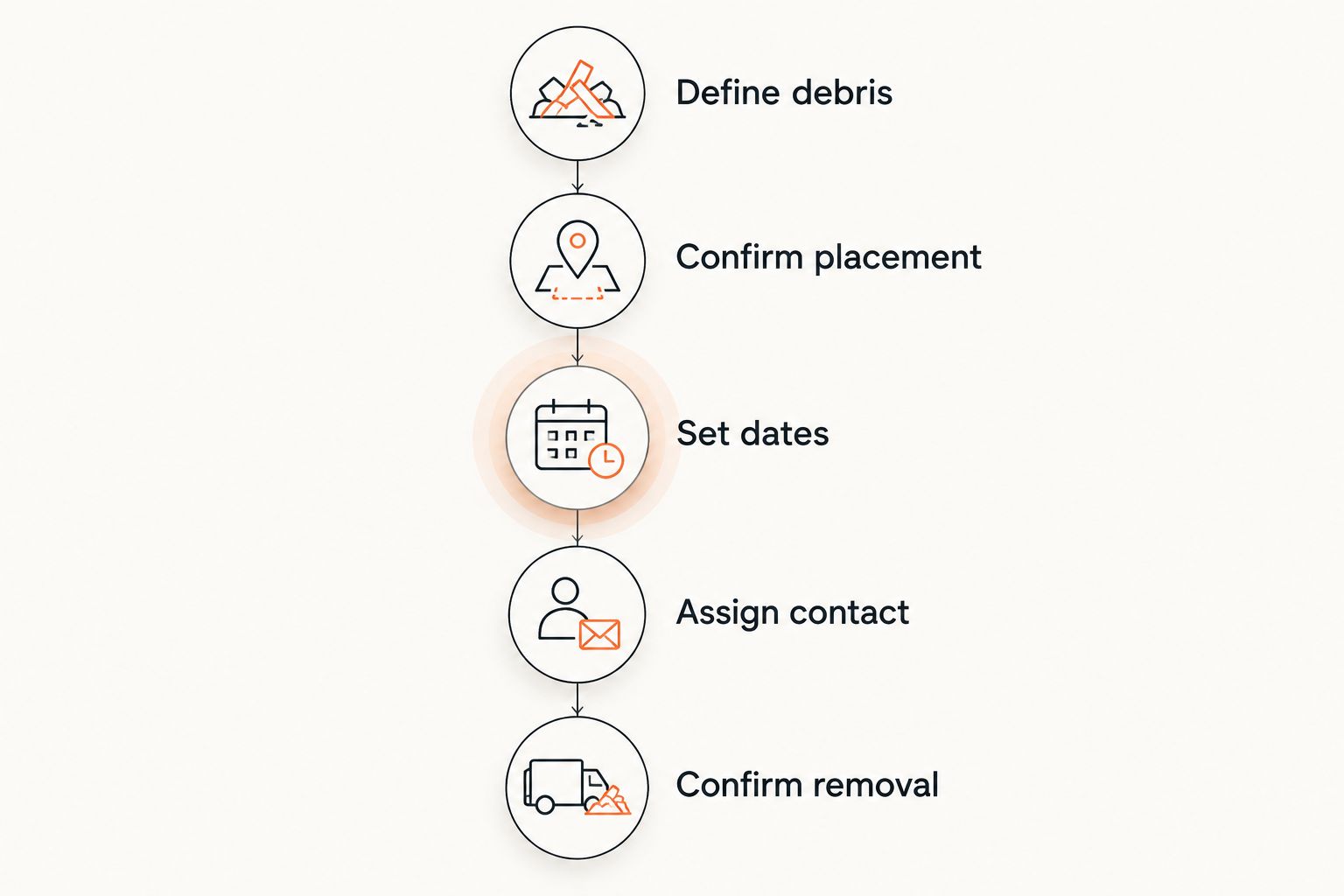
Tie container movements to debris-producing tasks. For a 2026 renovation, use the demolition sequence and handover requirements as the starting point, then confirm the service dates separately.
- Define debris. List the material and identify anything needing acceptance confirmation before loading.
- Confirm placement. Review the proposed location, truck approach, property authorization, and applicable public-space requirements.
- Set dates. Specify delivery, expected exchange windows, final cleanup, and removal.
- Assign contact. Name the person who can authorize changes and keep the truck route clear.
- Confirm removal. Verify the pickup request and clear access before the scheduled visit.
Keep the service contact informed when the construction sequence changes. An earlier demolition start, delayed inspection, or revised handover can change when you need container capacity and when the truck can reach it.
Protect access throughout the rental
Mark the loading area and keep the truck approach separate from material storage. Review that access before each exchange, not just at initial delivery.
For occupied properties, coordinate parking and pedestrian routes with the property manager. For jobsites, check that temporary fencing, K-rail, restrooms, and incoming deliveries do not block container service.
Confirm placement requirements locally
If the proposed location occupies a street or other public space, check the relevant jurisdiction's requirements before delivery. Property-owner permission and public-space authorization are different matters.
Do not apply a San Jose placement assumption to a job in Santa Clara, Sunnyvale, Mountain View, or Milpitas. Identify the jurisdiction and placement location first, then confirm the requirements that apply.
What should you ask before accepting the rental scope?
Ask questions that produce usable instructions. Your crew needs to know what to load, where to load it, and when to stop.
- Which materials are accepted for this order?
- What container size and loading limits apply?
- Which delivery and removal dates are confirmed?
- What hauling and disposal services are included?
- How are exchanges requested and authorized?
- What happens if the job needs more time?
- What access must remain clear for the truck?
- Who confirms final pickup?
Keep uncertain materials out of the container until acceptance is confirmed. Do not assume that all material removed from a building belongs in the same C&D load.
For a 2026 month-long project, review these answers again when the work changes. A revised material stream or additional demolition phase changes the service scope even if the original end date stays the same.
Is keeping one container all month the right approach?
Keeping one container works when loading remains within the approved limits and the placement area stays usable. Its advantage is a consistent loading point. Its constraint is finite capacity.
A monthly term does not create unlimited disposal capacity. If your crew produces repeated loads, include an exchange plan rather than expecting the first container to absorb the entire project.
Can a larger container replace an exchange plan?
A larger container adds volume, but it does not remove material-specific weight restrictions. It also requires a suitable placement area and a workable truck approach.
Choose size and hauling frequency together. Do not select the largest unit solely to avoid coordinating pickup during the job.
What if the project finishes before the month ends?
Confirm the early-removal process before ordering. Do not assume the agreement changes automatically because the work finishes sooner.
Request removal when the last approved debris is loaded and the site is ready. Leaving an unused container in place can interfere with parking, finish work, or property handover.
FAQ
How do I get a quote for a full-month roll-off container rental?
Provide the job address, exact rental dates, debris type, proposed placement, and expected exchange needs. Ask for written confirmation of the container, weight allowance, hauling, disposal, and extension terms.
Does a monthly rental include unlimited pickups?
Do not treat a monthly rental as an unlimited pickup agreement. Confirm which exchanges and hauling services are included in the written scope.
Is a full month always 30 days?
A calendar month contains 28, 30, or 31 days in 2026. Confirm whether your agreement uses calendar dates or a fixed-day rental term.
What size roll-off container should I rent for a month?
Choose container size from the debris volume, material weight, and placement requirements, not the rental duration. Valley Services offers roll-off containers from 8 to 40 cubic yards, with the specific loading instructions confirmed for your order.
Can I keep loading until the container looks full?
Stop at the approved fill and weight limits, not simply when the container looks full. Dense material can reach its permitted weight before it occupies the available volume.
Do I need permission to place a container in the street?
Check the applicable jurisdiction's public-space requirements before arranging street placement. Confirm the exact location and required authorization rather than relying on another city's rules.
What should I do if my renovation runs longer than expected?
Contact the rental operator before the agreed pickup date and request an extension. Confirm the revised term and whether the existing container needs an exchange.
One last thing
Plan the last pickup before the first delivery. The container needs a clear exit after your site has filled with equipment, materials, and finished work. Check that exit against the final construction phase, not only the initial placement plan.
Related guides
- How long you can keep a rented roll-off container
- How to load a roll-off container safely
- How to permit container placement in San Jose
For a month-long Bay Area job, reach out to Valley Services or call (408) 297-5404 to talk through your material, placement, and schedule.