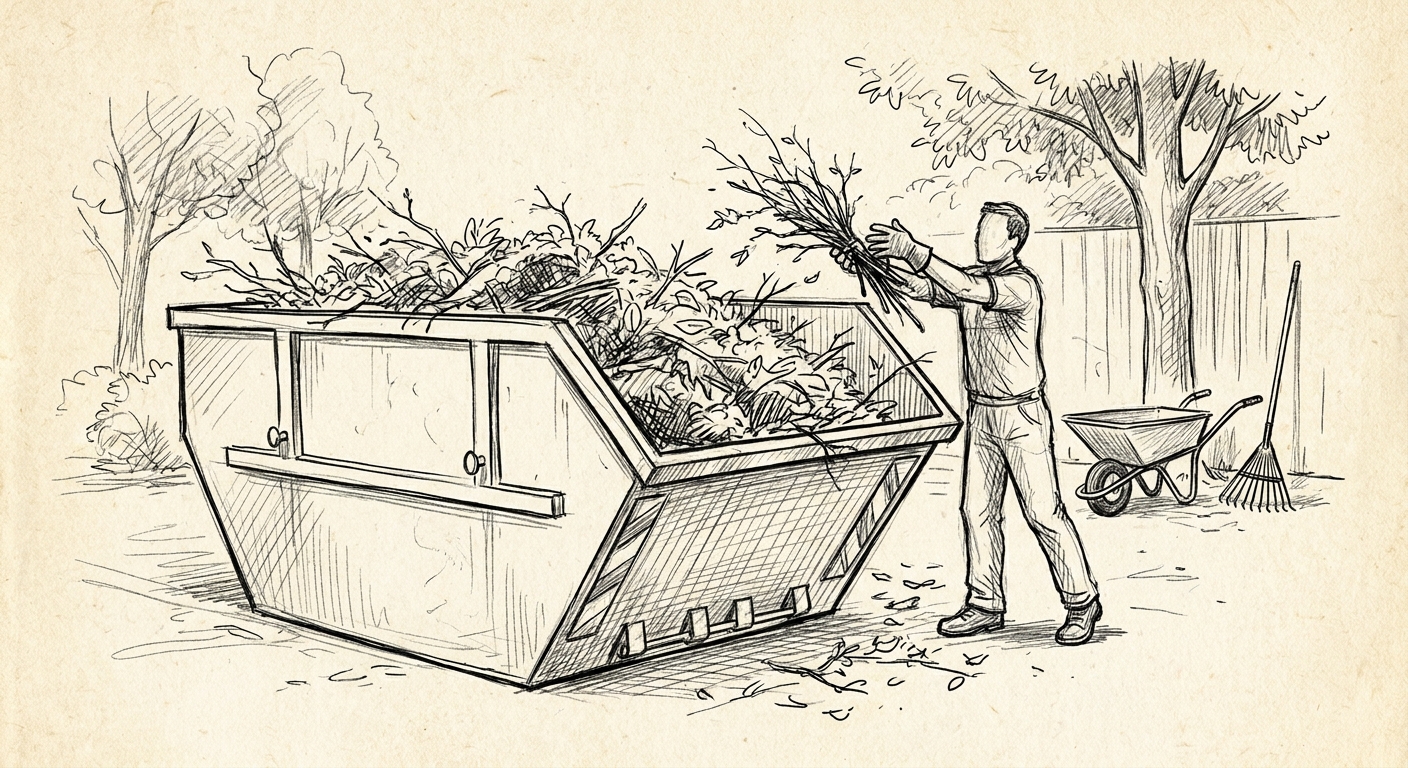
Yard waste piles up fast after a storm, a tree removal, or a weekend of clearing overgrown brush. A dumpster rental for yard waste gets that debris off your property in one haul instead of a dozen truck trips to the transfer station.
- A 15 to 20 yard roll-off container clears most single-tree or yard-overhaul jobs in 2026. Go bigger if you're unsure.
- Wet green waste adds weight fast: spread debris evenly and skip mixing in dirt to avoid overage charges.
- Valley Services delivers roll-off containers sized 10 to 40 yard across San Jose and the South Bay for yard waste jobs.
- Street placement usually needs a San Jose encroachment permit. Driveway placement usually does not.
Why this matters
Yard waste is heavier than most people expect. A pile of wet leaves and cut branches can weigh three times what it looks like from the curb. Guess wrong on container size or loading and you're either paying for a second haul or getting hit with an overage charge in 2026 rates.
Getting the size, the access, and the load order right on the first try saves a callback. Roll-off container rental exists to solve exactly this: one drop, one pickup, debris gone.
What you'll need
- A rough volume estimate of the debris pile (branches, sod, stumps, leaves)
- A container size decision, typically 10 to 30 yard for residential yard work
- A clear, flat drop spot with overhead access for the delivery truck
- Gloves, pruning shears, or a chainsaw to cut branches down to fit
- A tarp if rain is expected before pickup
- Knowledge of whether the container sits on private property or the street
If you're clearing a full property rather than a single yard, check the sizing guidance in dumpster rental for landscaping projects before you commit to a size.
The steps
1. Estimate your yard waste volume before you call
Walk the site and eyeball the pile in cubic yards, not truck loads. A single mature tree removal, trunk and branches, commonly fills a 15 to 20 yard container. A seasonal cleanup of hedges, leaves, and small branches usually fits in a 10 yard.
Common mistake: underestimating stump and root ball volume. Roots hold soil and rock, and that weight counts against your load even though it looks small on the pile.
2. Pick the right container size for the job
- 10 yard: small trimming jobs, a few shrubs, light seasonal cleanup
- 15 yard: one tree removal, moderate brush clearing
- 20 yard: multiple trees, a full backyard overhaul
- 30 to 40 yard: storm damage cleanup, full lot clearing, new landscape installs with heavy debris
When the job mixes yard waste with construction debris, like a landscape rebuild that includes old fencing or a torn-out patio, size up and separate materials as you load.
3. Prepare the drop site before delivery day
Clear the path the truck needs to reach your drop spot. No low-hanging branches, no parked cars blocking the driveway, no sprinkler heads under the container footprint. A blocked path on delivery day means a rescheduled drop and a delayed project.
Common mistake: forgetting overhead wires or a low tree limb along the driveway. The truck needs clean vertical clearance the whole way in.
4. Separate yard waste from dirt, rock, and treated wood
Green waste, dirt, and rock don't belong in the same load if you want to control weight. Straight yard debris (branches, leaves, sod, brush) is lighter per cubic yard than dirt or broken concrete. Mixing them concentrates weight fast and eats into your load capacity before the container even looks full.
If your project generates dirt or concrete alongside yard debris, plan for two streams rather than one mixed load.
5. Load with weight distribution in mind
Break branches down to lengths under the container wall height, load heavy material first, and distribute weight across the floor rather than piling it in one corner. Don't compact wet leaves or grass clippings by walking on them: compaction adds density and pushes you toward the weight limit without adding visible volume.
Full loading detail, including how overage charges get triggered, is covered in how to load a dumpster safely and avoid overage fees.
6. Schedule delivery and pickup around the actual work window
Don't schedule delivery for the same day you start cutting. Order the container to arrive a day ahead so it's sitting on site when the first branch comes down. For multi-day jobs, ask about a swap-out if the container fills before the work wraps.
Delivery and pickup timing details, including how far ahead to book in 2026, are in how to schedule a dumpster delivery and pickup.
7. Confirm whether you need a placement permit
A container sitting entirely on a driveway or private yard usually needs no permit. A container sitting on the street, blocking a lane or parking, needs a San Jose encroachment permit before it drops. Skipping this step is the single most common reason a yard waste job gets a city notice.
Talk through your yard waste job
Call or check container sizes before delivery day.
Troubleshooting
Container fills before pickup day. Call for an early swap rather than trying to stack debris above the rim. Overfilled containers get rejected at the transfer station.
Branches won't fit. Cut to lengths shorter than the container wall and load them at an angle, crossing layers instead of stacking straight.
Wet leaves and grass are adding weight fast. Let debris sit a day if rain hit before loading, and never compact wet material by hand or foot.
City flags the container on the street. Confirm the permit before delivery, not after a notice arrives. Moving to the driveway avoids the issue entirely if space allows.
Dirt and rock ended up mixed into the yard waste. Pull it out before pickup if you can. Mixed loads get billed differently than clean yard debris.
Truck can't reach the drop spot. Walk the delivery path yourself the morning of, looking for anything added since you scheduled: a parked trailer, a low branch that grew, a gate left latched.
Tools and resources
- Pruning shears or a chainsaw for branch reduction
- A tarp for debris exposed to rain before pickup
- Gloves and eye protection for loading
- A tape measure to confirm your drop spot clearance
- How to permit a dumpster placement in San Jose if the container needs street space
FAQ
What size dumpster do I need for yard waste?
A 10 yard container handles light trimming and seasonal cleanup, while a 15 to 20 yard container covers a single tree removal or a full backyard overhaul. Storm damage or full lot clearing in 2026 usually calls for 30 to 40 yard.
Can I put dirt and rocks in a yard waste dumpster?
You can, but mixing dirt and rock with green waste adds weight fast and eats into your load capacity. Separating the two streams keeps the load lighter and easier to manage.
How long can I keep a dumpster rental for a landscaping project?
Rental windows vary by job and are set at scheduling, with swap-outs available for multi-day projects that fill a container early. Confirm your window when you book delivery.
Do I need a permit to place a dumpster in my driveway in San Jose?
No, driveway and private property placement typically don't require a permit. A container placed on the street does, under San Jose's encroachment rules.
How much does wet yard waste weigh compared to dry debris?
Wet leaves, grass, and branches can weigh two to three times more than the same material dry. That weight difference is the main reason yard waste loads run heavier than they look.
Can I mix tree stumps and branches in the same container?
Yes, stumps and branches can share a container, but stumps carry hidden weight from packed soil and roots. Account for that weight when picking your container size.
What's the difference between a green waste bin and a dumpster rental?
A municipal green waste bin is sized for routine trimmings and picked up on a fixed schedule. A dumpster rental for yard waste handles large one-time volume like tree removal or full lot clearing on your own timeline.
How do I avoid overage fees on a yard waste dumpster?
Keep the load below the container's fill line, avoid compacting wet debris, and separate heavy material like dirt and rock from lighter green waste. Overage charges are almost always a weight problem, not a volume problem.
One last thing
The detail most homeowners miss in 2026: a full-grown stump with root ball attached can weigh more than the rest of a tree combined. Knock the loose soil off roots before it goes in the container, and you'll buy yourself real headroom on the load.
Call (408) 297-5404 or check valleyservices.biz to talk through container sizing for your yard waste job before delivery day.