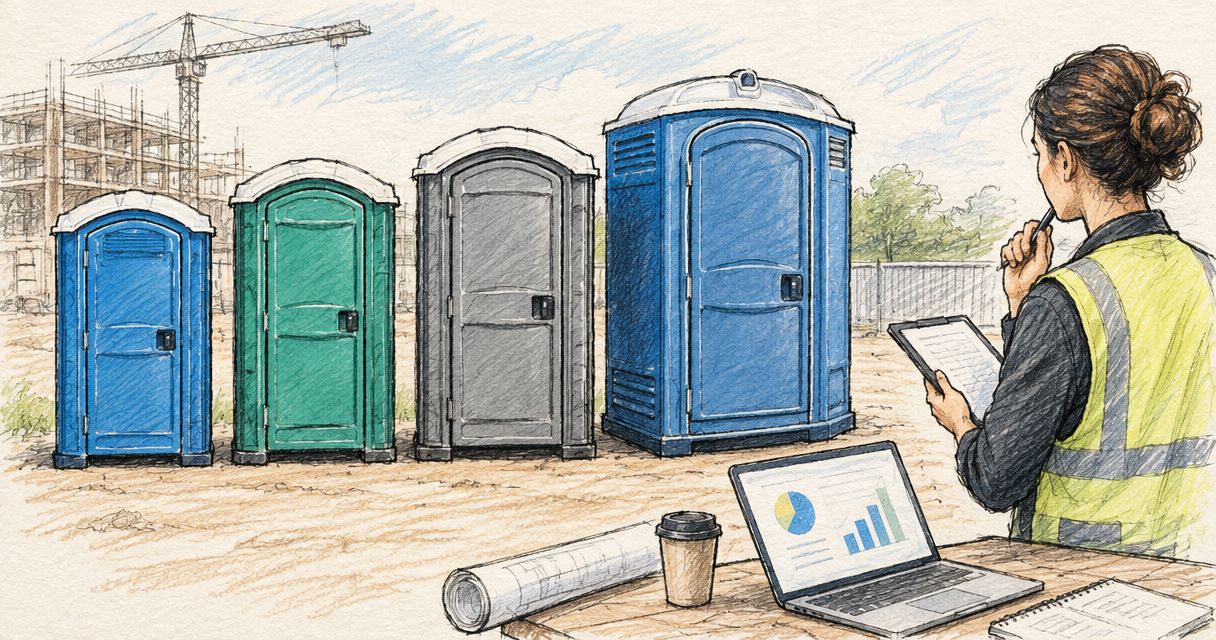
Portable restroom cost by unit type depends on plumbing complexity, stall count, and how often the unit needs service, not on a single flat rate. A standard non-flush unit sits at the low end of the range. A multi-stall restroom trailer with climate control sits at the high end. Everything else, ADA units, hand-wash stations, and holding tank size, falls somewhere in between based on capacity and service frequency.
- Standard portable restrooms are the lowest cost tier for Bay Area job sites in 2026.
- Restroom trailers with 4 or more stalls sit at the highest cost tier due to plumbing and climate control.
- Holding tank gallon capacity, not restroom style alone, drives service frequency and cost on remote sites.
- ADA-compliant units cost more than standard units because of the wider footprint and grab bar hardware.
- Valley Services prices job site restroom packages by crew size, duration, and unit type together.
Why This Matters
Contractors and event producers in San Jose, Santa Clara, and the wider South Bay often quote a single number for "porta potty rental" and then get surprised when the invoice reflects unit type, headcount, and service interval instead. The unit type you pick sets the baseline. The gallon capacity and pickup schedule move the number from there.
Getting the unit type wrong has two failure modes. Undersize the fleet and you trip Cal/OSHA sanitation minimums on a multi-crew site. Oversize it, ordering a luxury trailer for a framing crew, and you pay for plumbing and climate control nobody uses. Matching unit type to job type in 2026 is the actual cost lever, more than shopping vendors against each other.
Portable Restroom Cost by Unit Type in 2026
The unit type sets the cost tier before you ever get to duration or delivery zone. Standard units are the baseline every other type is priced against.
| Unit Type | Relative Cost Tier | Typical Capacity | Best For |
|---|---|---|---|
| Standard non-flush restroom | Lowest | Single stall, holding tank | General labor crews, short-term demo and framing jobs |
| Deluxe flushable restroom | Low-Mid | Single stall, flush mechanism, sink | Longer-duration jobs, retail and office buildouts |
| ADA-compliant restroom | Mid | Wider door, ramp, grab bars | Sites required to meet accessibility standards |
| Hand-wash station (standalone) | Low add-on | Foot pump, soap dispenser | Food service sites, multi-unit restroom clusters |
| Restroom trailer, 2-stall | Mid-High | Flush toilets, sinks, interior lighting | Corporate events, smaller weddings |
| Restroom trailer, 4+ stall | Highest | Multiple stalls, climate control | Large weddings, festivals, multi-day events |
Standard non-flush restrooms lead the low end of the range, and 4-stall restroom trailers lead the high end, with everything else priced on where it sits between those two poles. A portable toilet rental daily rate comparison breaks this down further by rental duration.
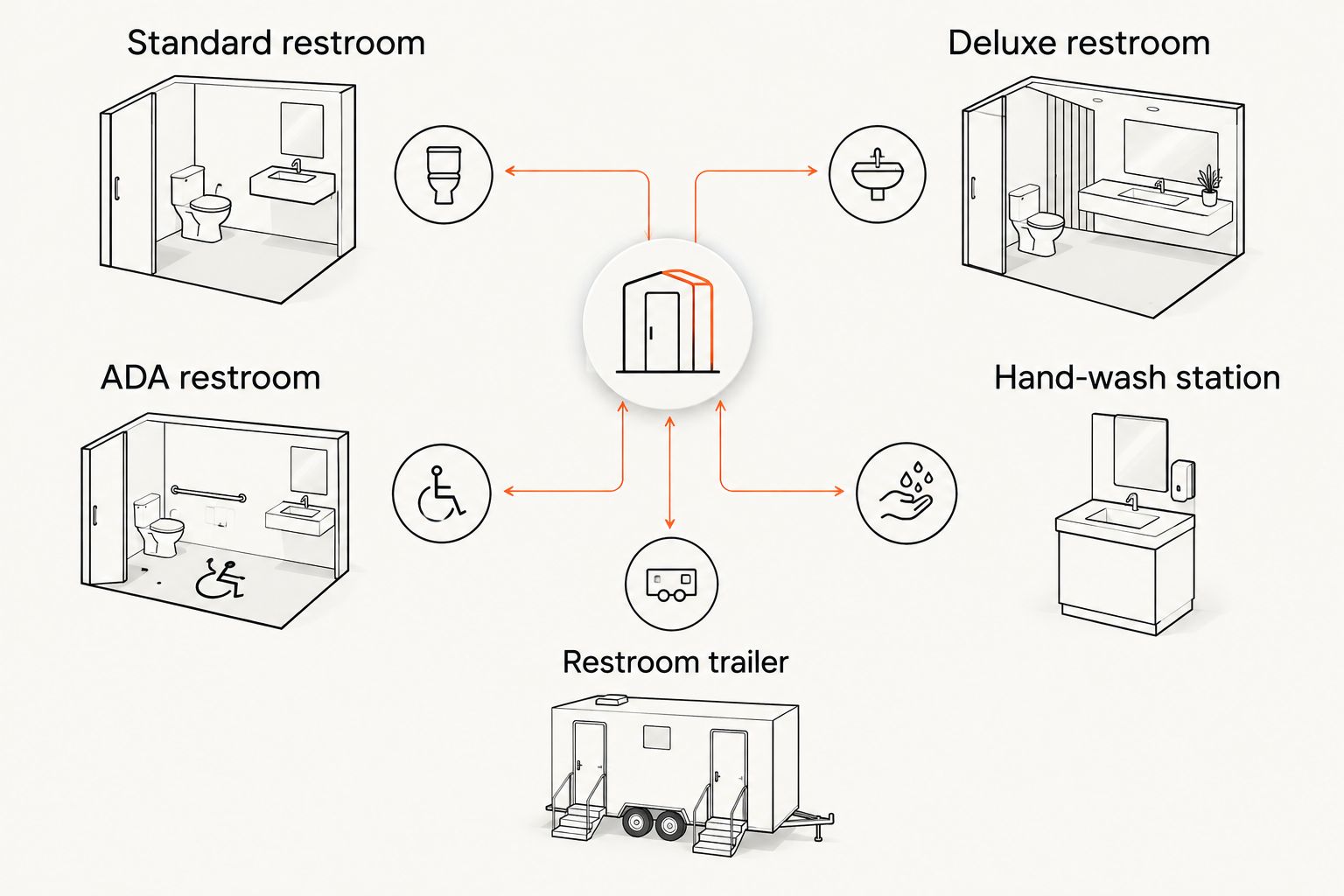
Methodology note: these tiers reflect equipment type, stall count, and plumbing complexity as they're typically deployed on Bay Area job sites and events in 2026, not a fixed rate card. The one limitation: a site's access conditions, such as a long driveway or restricted delivery window, can shift a unit up a service tier even when the restroom itself is the standard model.
Holding Tank Size and Service Interval
Tank capacity is the second lever, separate from restroom style. A remote site with no municipal sewer access relies on holding tank size to set how often service trucks need to return.
| Holding Tank Size | Gallon Capacity | Typical Service Interval | Best For |
|---|---|---|---|
| Small tank | 250 gallons | Weekly | Small crews, short jobs under 10 workers |
| Standard tank | 500 gallons | Weekly to biweekly | Mid-size crews, 10-25 workers |
| Large tank | 750 gallons | Biweekly | Larger crews, multi-week projects |
| Extra-large tank | 1,000 gallons | Biweekly to monthly | Remote sites, agricultural operations, long-duration builds |
A 250-gallon tank on a 25-person crew needs weekly service, while a 1,000-gallon tank on the same crew can stretch to a biweekly pickup. Sizing the tank to the crew, not just the restroom style, is what actually reduces service trips over a multi-month job. The holding tank sizing guide walks through crew-size math in more detail.
Methodology note: tank interval estimates are based on typical daily usage per worker and standard job site conditions in 2026. The limitation here is that food service, agricultural, and high-heat sites push usage above standard estimates and shorten the interval regardless of tank size.
Get your unit mix sized correctly
Call (408) 297-5404 or reach out online for a job-specific quote.
How to Use These Benchmarks
- Match unit type to crew size and duration first. A 3-week demo crew of 8 workers needs a standard unit, not a trailer.
- Size the holding tank to headcount, not to restroom style. A 500-gallon tank on a 30-person crew will need more frequent service than the interval table above suggests.
- Add ADA units when the site requires it, not as a default on every job. Confirm the requirement before ordering.
- Budget hand-wash stations separately when food service or health-code compliance is part of the job, since they're priced as an add-on, not bundled into restroom cost.
General contractors managing multi-phase jobs should also review how Cal/OSHA sanitation requirements set minimum unit counts before finalizing an order, since undercounting units is the most common budget miss on 2026 job sites.
FAQ
What drives portable restroom rental cost by unit type?
Unit type sets the baseline tier: standard non-flush units cost the least, restroom trailers cost the most. Stall count, plumbing, and holding tank size move the number within that range.
Is a restroom trailer worth it for a job site instead of an event?
Restroom trailers are built for events and upscale settings, not general job site use. Standard or deluxe units cover most construction crews at lower cost.
How many portable restrooms does a job site need in 2026?
OSHA guidance calls for at least one restroom per 20 workers on a site. Crews over 20 need additional units regardless of unit type.
Does holding tank size change the rental cost?
Yes. Larger tanks, up to 1,000 gallons, need less frequent service, which affects the total cost over a multi-week job even when the restroom style stays the same.
When does a job site need an ADA-compliant restroom?
ADA units are required when the site must accommodate workers or visitors with mobility needs. They cost more than standard units due to the wider door and grab bar hardware.
Are hand-wash stations included with restroom rentals?
No, hand-wash stations are typically priced as a separate add-on. Food service sites and multi-unit restroom clusters use them most.
How often does a standard portable restroom need service?
Standard job site units are typically serviced weekly. Larger crews or larger holding tanks can shift that interval.
One Last Thing
The unit count mistake shows up more often than the unit type mistake. Contractors size the restroom style correctly but forget that OSHA's one-per-20-worker guidance applies per shift, not per site, so a two-shift operation with 25 workers each shift needs restrooms sized for both shifts overlapping, not just the peak headcount on paper. Valley Services has been sizing restroom counts against Bay Area crew rosters since 1986, third generation, same yard on S 7th St in San Jose.
Call (408) 297-5404 or reach out through valleyservices.biz to get a unit mix sized to your crew and job duration for 2026.